
Conflict & Challenges category is where you learn to answer the toughest interview prompts about disagreements, setbacks, and high-pressure moments. You’ll find questions covering conflict with coworkers, misalignment with stakeholders, missed deadlines, mistakes, tough feedback, and difficult customers or clients. Each post breaks down what interviewers are really testing – emotional control, accountability, communication, and problem-solving. We show you how to tell the story without sounding defensive, blaming others, or oversharing. Expect clear frameworks, strong phrasing, and examples that highlight resolution and learning. Whether you’re early in your career or leading teams, these guides help you turn messy situations into credible, confident answers. Use this category to practice your stories until they sound calm, specific, and results-focused.
Conflict & Challenges
Ethical Dilemma Interview Questions (Values & Decisions)
When Right and Easy Diverge Warren Buffett once told Berkshire Hathaway managers: “Lose money for the firm and I will be understanding. Lose a shred of reputation for the firm and I will be ruthless.” This captures why ethical dilemma interview questions matter so much. A single ethical lapse can destroy decades of built reputation. … Read more
Adapting to Change Interview Question (Flexibility)

Change Is the Only Constant Darwin never actually said “survival of the fittest.” What he observed was survival of the most adaptable. This distinction matters because questions about adapting to change test exactly that: not whether you are the smartest or most skilled, but whether you can evolve when circumstances shift. A CHRO at Salesforce … Read more
Working Under Pressure Interview Question (Prioritization)

Pressure Reveals Character Navy SEAL training has a famous saying: “Under pressure, you don’t rise to the occasion. You sink to the level of your training.” This insight explains why questions about working under pressure matter so much in interviews. Interviewers want to see not just that you survived pressure but that you have developed … Read more
Challenge You Overcame Interview Question (Problem Solving)
Every Challenge Is a Problem-Solving Story Elon Musk once described how SpaceX nearly died after three consecutive rocket failures. With one rocket left and barely enough money for one more launch, the team dissected every failure, made changes, and succeeded on the fourth attempt. That kind of systematic response to challenge is exactly what interviewers … Read more
Biggest Professional Mistake Interview Question (Redemption)
Mistakes vs. Failures: Understanding the Difference Howard Schultz, who built Starbucks into a global brand, often talks about the costly mistake of expanding too fast in the mid-2000s, diluting the brand and nearly destroying the company. What made him a great leader was not avoiding that mistake but how he responded: closing 600 stores, refocusing … Read more
Tell Me About a Time You Failed (Ownership & Growth)
The Question Nobody Wants to Answer Sara Blakely, founder of Spanx and a self-made billionaire, credits her success partly to a childhood ritual. Every night at dinner, her father asked her and her brother: “What did you fail at today?” If they had nothing to report, he was disappointed. He was teaching them that failure … Read more
Conflict of Interest Examples (Ethical Choices)
When Interests Collide The Association of Certified Fraud Examiners reports that organizations lose an estimated 5% of revenue annually to fraud, much of it stemming from unmanaged conflicts of interest. This is why interview questions about conflict of interest examples probe your ethical compass. What do you do when personal relationships, financial interests, or other … Read more
Handling Angry Customers Interview Question (De-escalation)
Mastering High-Conflict Customer Scenarios While anyone can deliver exceptional service during a pleasant interaction, the true test of a professional lies in their ability to navigate hostility. The moment a customer raises their voice is the moment most untrained employees crumble, which is exactly why I always ask candidates about handling angry customers. I am … Read more
Dealing with Difficult Coworkers Interview Question (Setting Boundaries)
The Colleague Problem Everyone Has Faced A Gallup study found that one in five employees report having a coworker who makes their work life difficult. Questions about dealing with difficult coworkers go beyond normal disagreements. They probe how you handle genuinely challenging personalities: the blame-shifter, the chronic complainer, the credit-stealer, or the colleague who creates … Read more
Conflict Within a Team Interview Question (Mediation Skills)
When You Are Not the Conflict, But the Solution Google’s Project Aristotle research found that psychological safety, the ability to take risks without feeling insecure, was the top predictor of high-performing teams. When conflict within a team goes unresolved, that safety erodes quickly. This is why interviewers ask about mediation: they want people who restore … Read more
Disagreement With Your Boss Interview Question (Respectful Dissent)
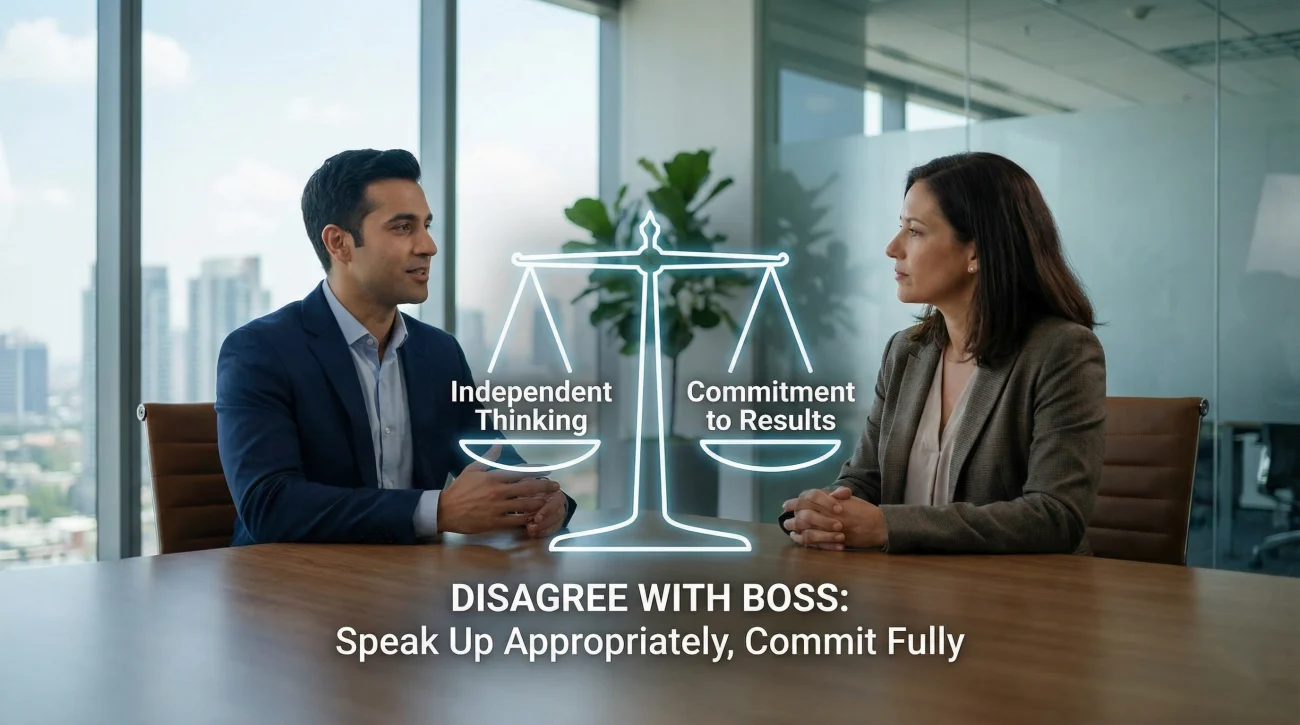
Walking the Line Between Pushover and Problem Jeff Bezos famously institutionalized “disagree and commit” at Amazon because he understood that the best ideas often come from constructive friction. Questions about disagreement with boss situations test whether you can navigate the tricky territory between blind compliance and disruptive rebellion. A VP of Engineering at Stripe shared … Read more
Conflict with a Coworker Interview Question (Resolution Steps)
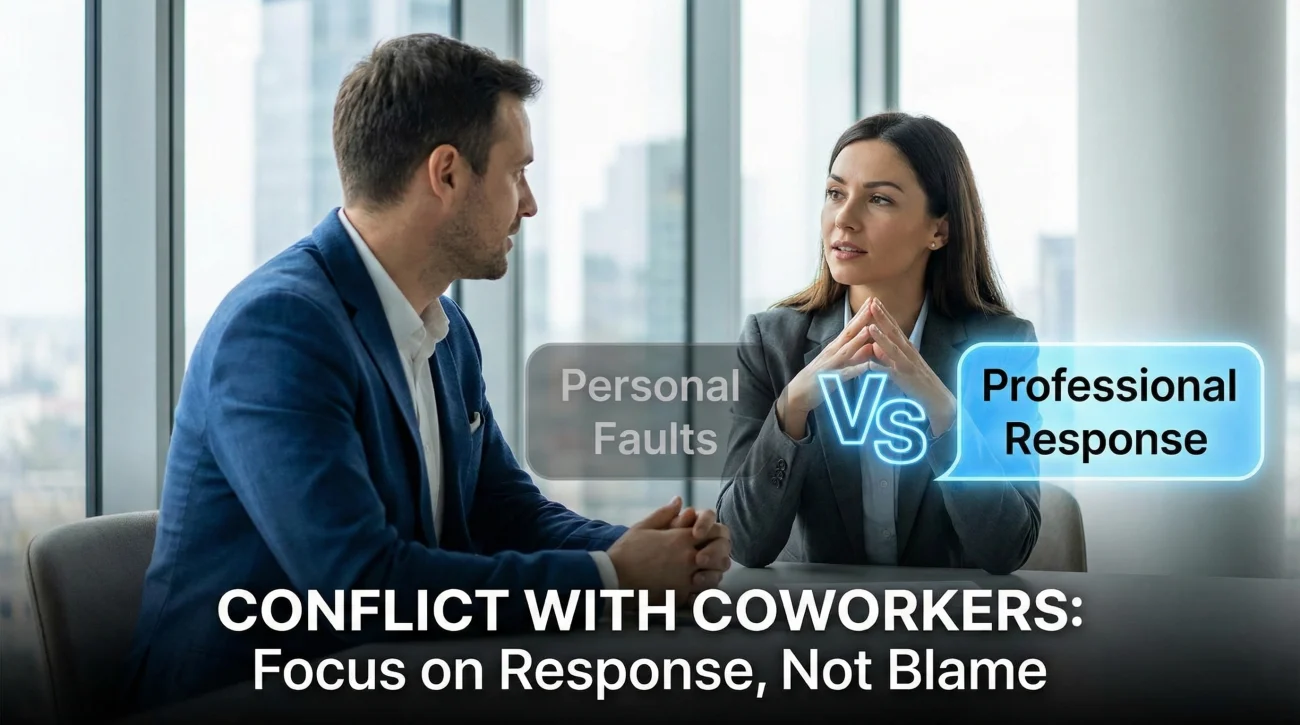
The Question That Tests Your Professionalism In over twelve years of interviewing candidates, I have heard hundreds of answers to the conflict with coworker question. The pattern that predicts failure is unmistakable: candidates who spend more time describing the other person’s faults than their own response almost never get hired. Last year, I interviewed two … Read more
Psychological Safety at Work (Building Trust in Teams)
Core definition: Psychological safety means people can speak up, ask questions, admit mistakes, and disagree without ridicule or retaliation. Why fear blocks solutions: Low safety creates silence, hidden mistakes, and false agreement, so problems surface late and conflict turns destructive instead of useful. What it is and is not: It is not “niceness” or lower … Read more
Constructive Criticism Examples (How to Give & Receive)
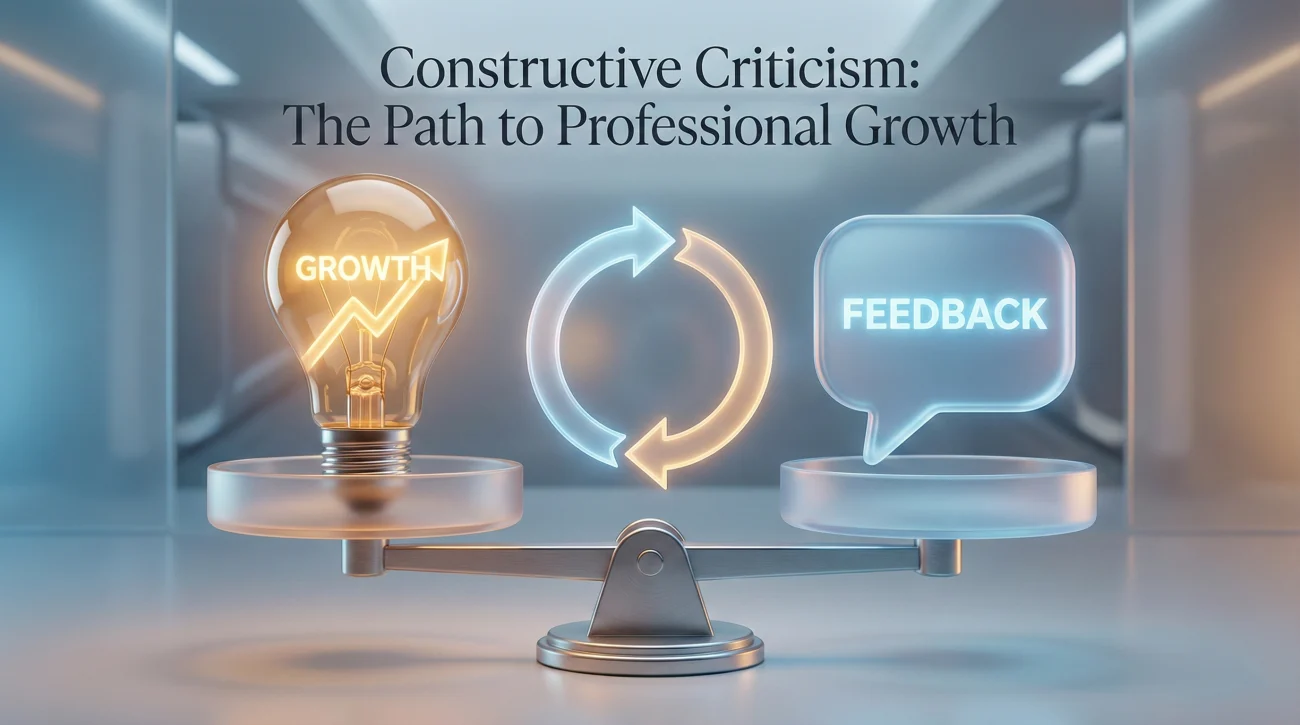
Why Criticism Matters: It separates growth from stagnation by treating feedback as information about the work, not a judgment of your worth. Constructive vs Destructive: Constructive feedback is specific, behavior-focused, and actionable, while destructive criticism is vague, personal, and offers no path forward. How To Give It Well: Deliver it privately and promptly, cite clear … Read more
Conflict Resolution Strategies (The 5 Styles)
Main point: Conflict strategy should change by context, not stay stuck on one default response. Five styles: Competing, collaborating, compromising, avoiding, and accommodating each balance assertiveness and cooperativeness differently. When to use what: Compete for urgent or safety calls, collaborate for high-stakes shared wins, compromise for moderate issues under time limits, avoid for trivial or … Read more
Conflict Interview Questions (Resolution & Resilience Guide)
What Conflict Questions Reveal: They test emotional intelligence, professionalism, and resilience by showing whether you blame others or take accountability. What Interviewers Evaluate: They listen for perspective-taking, self-awareness, ownership, and mature communication, not who “won” the disagreement. Answer Framework: Use a STAR-style structure with minimal context and spend most of your time on your actions, … Read more