
- What this guide is really saying: Behavioral interview questions are not hypotheticals, they ask for proof of what you actually did because employers use past behavior to predict future performance.
- What interviewers listen for: Specific details, clear ownership of your part, the actions you took, measurable outcomes, and a quick lesson learned.
- What to prepare: Build a small “story bank” of 5 to 7 flexible examples that cover leadership, teamwork or conflict, pressure problem-solving, adaptability, plus one failure you learned from.
- How to structure answers: Use STAR so the setup stays short, most of your time is on your actions, and you end with results that make the impact obvious.
- How to practice so it sounds natural: Inventory stories first, refine them out loud, record yourself, then run mock interviews with follow-up questions so you can adapt on the fly.
73% of employers now rely on behavioral interviews to predict candidate success – yet most job seekers walk in completely unprepared for these questions.
Traditional interview questions ask what you would do. Behavioral interview questions demand proof of what you actually did. This fundamental shift catches even experienced professionals off guard. While you might rehearse answers about your strengths, behavioral questions force you to recall specific moments under pressure, connect scattered experiences into coherent stories, and demonstrate skills you may not realize you possess.
The difference between landing an offer and receiving a rejection often comes down to how you navigate these questions. Employers aren’t just evaluating your past – they’re predicting your future performance based on real evidence from your professional history.
What Makes Behavioral Questions Different
Behavioral interviews operate on a simple premise: past behavior predicts future performance. Instead of asking hypothetical scenarios, interviewers probe actual experiences. This approach reveals patterns in how you think, act, and respond when challenges arise.
The Psychology Behind the Questions
Employers shifted to common behavioral interview questions because traditional methods proved unreliable. Anyone can claim they’re a team player or problem solver. Behavioral questions strip away rehearsed answers and force authenticity. When you describe a real conflict with a colleague, your body language shifts, details emerge naturally, and interviewers gain genuine insight into your capabilities.
The technique also levels the playing field. Recent graduates might lack extensive experience, but everyone has navigated challenges, adapted to change, or worked through disagreements. The question isn’t whether you have perfect experience – it’s whether you can articulate what you learned and how you grew. Classic opening questions like tell me about yourself set the stage, but behavioral questions dig deeper into actual performance.
What Interviewers Actually Evaluate
Behind every behavioral question lies a specific competency the employer needs. Questions about tight deadlines assess time management and composure under pressure. Conflict questions reveal communication skills and emotional intelligence. Leadership questions examine influence and accountability.
Smart interviewers listen for three elements: specificity in your examples, ownership of your role, and reflection on outcomes. Vague answers signal lack of genuine experience. Overuse of “we” statements suggests you weren’t the driver. Absence of results indicates you didn’t measure impact. The best responses demonstrate clear thinking, decisive action, and measurable results.
The Seven Question Categories You’ll Face
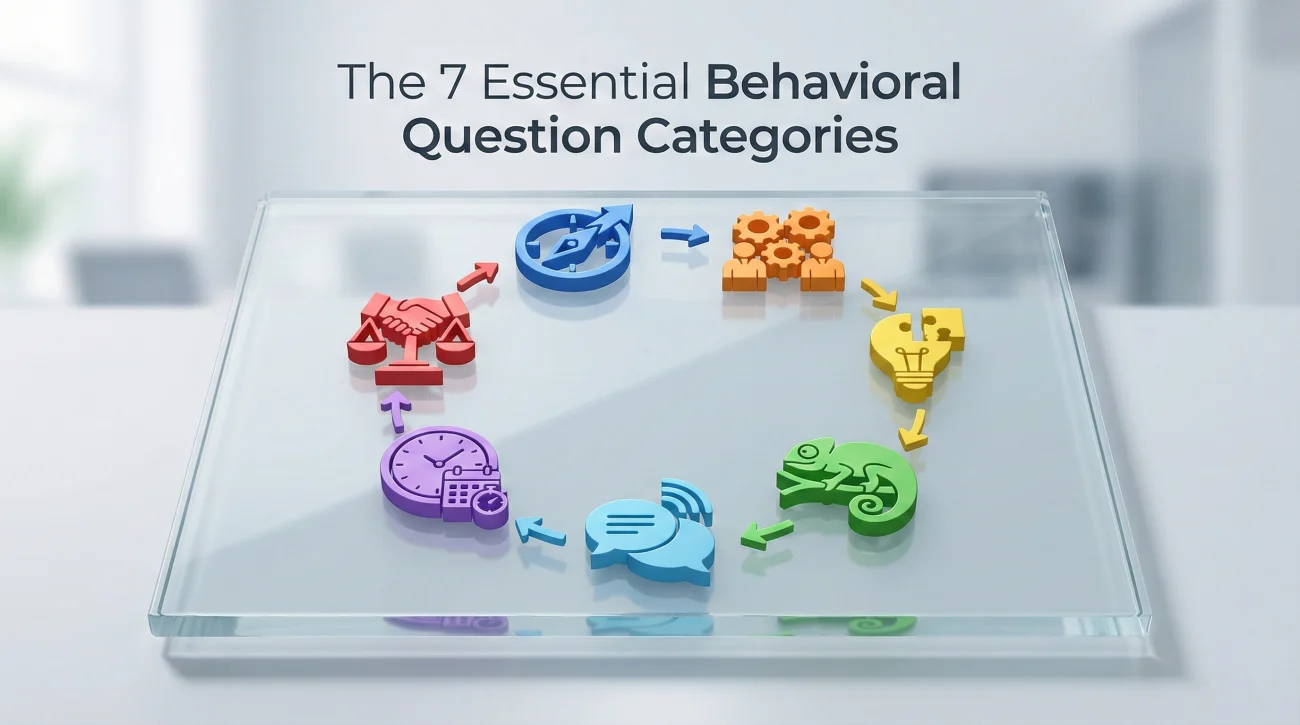
Behavioral questions cluster into seven core categories, each targeting specific workplace competencies. Understanding these patterns helps you prepare relevant stories and anticipate what interviewers seek.
Leadership and Initiative
Leadership questions probe your ability to influence outcomes and motivate others, regardless of your title. Interviewers want to know if you step forward when needed, make tough calls, and inspire confidence. These questions often begin with phrases like “Tell me about a time you led a project” or “Describe when you had to motivate a struggling team member.”
Teamwork and Conflict Resolution
Every workplace requires collaboration, which means navigating different personalities, work styles, and opinions. Questions in this category assess your communication skills, empathy, and ability to find common ground. Expect inquiries about working with difficult colleagues, managing disagreements, or contributing to group success.
Problem-Solving Under Pressure
Challenges arise in every role. Employers need people who stay calm, think critically, and find solutions when stakes are high. Behavioral interview examples in this category might include fixing a critical error before a deadline, recovering from a failed project, or resolving an urgent client crisis.
Adaptability and Learning
Markets shift, technologies evolve, and priorities change. Questions about adaptability reveal whether you view change as threat or opportunity. Interviewers listen for willingness to learn, comfort with ambiguity, and ability to pivot when circumstances demand it.
| Category | What It Reveals | Red Flags |
|---|---|---|
| Leadership | Influence, decision-making, accountability | Blaming others, avoiding responsibility |
| Teamwork | Communication, empathy, collaboration | Taking all credit, dismissing others’ ideas |
| Problem-Solving | Critical thinking, composure, resourcefulness | Panic response, no follow-through |
| Adaptability | Flexibility, growth mindset, resilience | Resistance to change, rigid thinking |
Building Your Answer Strategy
Structured responses transform scattered memories into compelling narratives. The most effective approach breaks your answer into clear components that guide both you and your interviewer through your story.

The Story Bank Approach
Rather than memorizing answers to specific questions, develop a collection of versatile stories from your experience. Each story should highlight different competencies, allowing you to adapt on the fly. A single experience dealing with a difficult stakeholder might demonstrate communication skills, problem-solving, and emotional intelligence depending on how you frame it.
Successful candidates typically prepare five to seven core stories covering major accomplishments, significant challenges, team projects, conflicts, failures, and learning experiences. These stories become your raw material. When an interviewer asks about leadership, you pull from this bank and emphasize the leadership elements. When they ask about pressure, you highlight the time constraints and stress management.
The star method interview framework provides the structure for organizing these stories. This approach ensures you include context, explain your specific role, describe your actions, and quantify outcomes. Many candidates jump straight to what they did without establishing why it mattered or what happened afterward. The framework prevents these gaps. Our dedicated guide at STAR Method Interview breaks down each component with industry-specific examples.
For a comprehensive guide on implementing this technique, the MIT Career Development Office offers detailed worksheets and examples. Their approach emphasizes spending 60% of your response on the actions you took, ensuring interviewers understand your specific contributions.
Adapting Stories on the Fly
Perfect preparation meets imperfect reality when interviewers ask unexpected questions. The key to how to answer behavioral interview questions effectively lies in flexible thinking. If asked about a time you failed and you’ve prepared a story about a successful project, identify the setbacks within that success and reframe your narrative.
Listen carefully to what the question actually asks. “Tell me about a time you disagreed with your manager” differs from “Tell me about a time you had to persuade someone to see your perspective.” The first seeks conflict navigation, the second assesses influence skills. Your story might be similar, but the emphasis shifts. For deeper preparation across various question types, explore our comprehensive interview questions library.
💡 When stuck, buy time by clarifying the question: “Are you asking about formal team leadership or situations where I took initiative without a leadership title?”
You’ll find more structured interview guidance at Indeed’s preparation resource, which includes sample responses and timing recommendations to keep answers under two minutes. Additionally, understanding what questions to ask interviewers shows your engagement – learn more in our guide on questions to ask employers.
The Three-Week Preparation Blueprint
Effective behavioral interview preparation requires systematic effort, not last-minute cramming. This timeline ensures you develop authentic stories, refine delivery, and build confidence through practice.
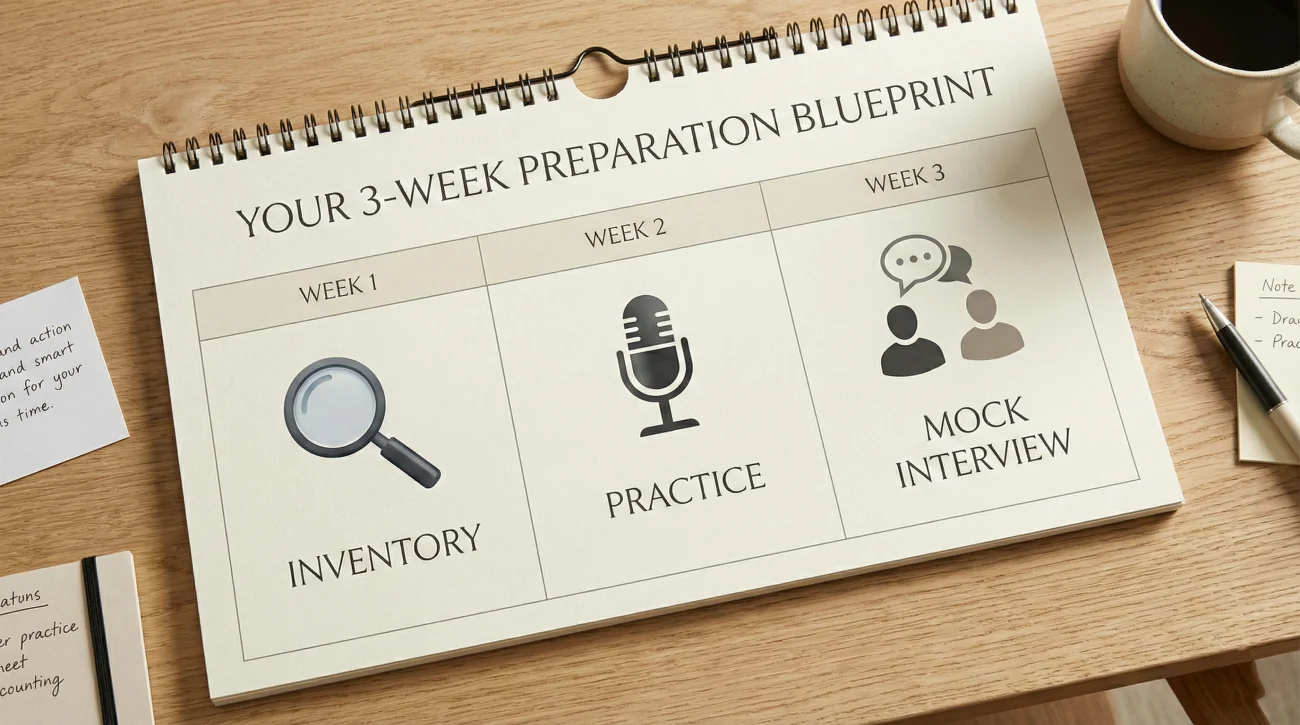
Week One – Inventory Your Experience
Start by mining your professional history for compelling material. Review past performance reviews, project summaries, and major accomplishments. For each role you’ve held, identify three significant challenges you faced and how you addressed them. Don’t limit yourself to workplace examples – volunteer work, academic projects, and personal initiatives all provide valid material, especially for early-career candidates.
Create a simple spreadsheet with columns for situation, your role, actions taken, results achieved, and skills demonstrated. Aim for 10-15 potential stories covering various competencies. This inventory becomes your source material for crafting polished responses.
Week Two – Practice and Refine
Transform raw experiences into structured narratives. Take your top seven stories and write them out using the framework discussed earlier. Read each aloud – awkward phrasing reveals itself when spoken. Cut unnecessary details that don’t advance your story. Add specific metrics where possible.
Record yourself answering sample questions. Watch for filler words, vague language, and rambling. Your goal is natural delivery, not memorized scripts. You should be able to tell each story in 90-120 seconds while hitting all essential points.
Employers increasingly value diverse perspectives in their teams, as research from LinkedIn’s talent research demonstrates. Their analysis shows organizations with inclusive interviewing practices generate significantly higher revenue per employee, emphasizing the importance of authentic, varied responses.
Week Three – Mock Interviews
Practice with someone who can provide honest feedback. Ask them to interrupt with follow-up questions, mimicking real interview dynamics. Can you maintain composure when probed for more detail? Do you handle unexpected angles on familiar stories? These sessions reveal gaps in your preparation and build the muscle memory needed for smooth delivery under pressure.
Focus on transitions between questions. Real interviews rarely follow neat categories. You might answer a leadership question, then face a conflict question, then jump to problem-solving. Practice moving between topics without losing focus or confidence.
Essential Resources in This Guide
This complete behavioral interview guide connects to specialized resources covering every aspect of preparation. Each article provides detailed strategies, examples, and frameworks to strengthen your interview performance.
| Article | Focus |
|---|---|
| STAR Method Interview Guide | Situation Task Action Result |
| Conflict Interview Questions | Resolution & Resilience Guide |
| Strengths and Weaknesses Interview Questions | The Strategic Guide |
| Leadership Interview Questions | Inspire & Guide |
| Work Ethic Interview Questions | Culture Fit & Values Guide |
❓ FAQ
🎯 How many stories should I prepare for behavioral interviews?
Prepare five to seven core stories that cover different competencies and situations. Each story should be adaptable to multiple questions. Focus on quality over quantity – three well-developed stories outperform ten vague ones. Include at least one failure example and one conflict resolution, as these commonly appear across industries.
💼 What if I don’t have professional experience for a behavioral question?
Draw from academic projects, volunteer work, sports teams, or personal challenges. Employers care more about how you think and act than where the experience occurred. A college group project can demonstrate teamwork just as effectively as a workplace example. Frame your answer around the transferable skills rather than the specific context.
⏰ How long should my behavioral interview answers be?
Aim for 90 seconds to two minutes per response. Shorter answers lack sufficient detail to assess your capabilities. Longer responses lose interviewer attention and suggest poor communication skills. Practice with a timer until you naturally hit this range. If interviewers want more detail, they’ll ask follow-up questions.
📋 Can I use the same story for different behavioral questions?
Yes, but adjust your emphasis based on what each question targets. A project where you led a team through tight deadlines could answer leadership questions, time management questions, or pressure questions by highlighting different aspects. Avoid repeating the exact same story twice in one interview – it suggests limited experience.
✨ What if my behavioral example didn’t have a positive outcome?
Negative outcomes work if you demonstrate learning and growth. Describe what went wrong, acknowledge your role without making excuses, and explain what you’d do differently. Employers value self-awareness and the ability to extract lessons from failure. Just don’t use a failure story for every question – balance matters.
Final Thoughts

Behavioral interviews aren’t designed to trip you up – they’re structured to reveal your authentic capabilities. The candidates who succeed don’t have perfect histories; they have prepared stories that demonstrate growth, resilience, and impact.
Your preparation pays dividends beyond a single interview. The process of inventorying experiences, identifying patterns in your professional development, and articulating your value creates clarity about your career trajectory. You gain confidence not just in answering questions, but in understanding what you bring to any role.
Mastering behavioral interview questions separates candidates who hope for the best from those who walk in knowing they’ll deliver. The framework, the practice, the self-reflection – these aren’t just interview tactics. They’re professional development tools that serve you throughout your career.
⚠️ Disclaimer: The interview strategies, sample answers, and negotiation tips provided in this guide are for educational purposes only. Hiring decisions are subjective and vary by company and industry. While these strategies are based on professional HR standards, they do not guarantee a specific job offer or result.