What Internal Auditor Interviews Evaluate
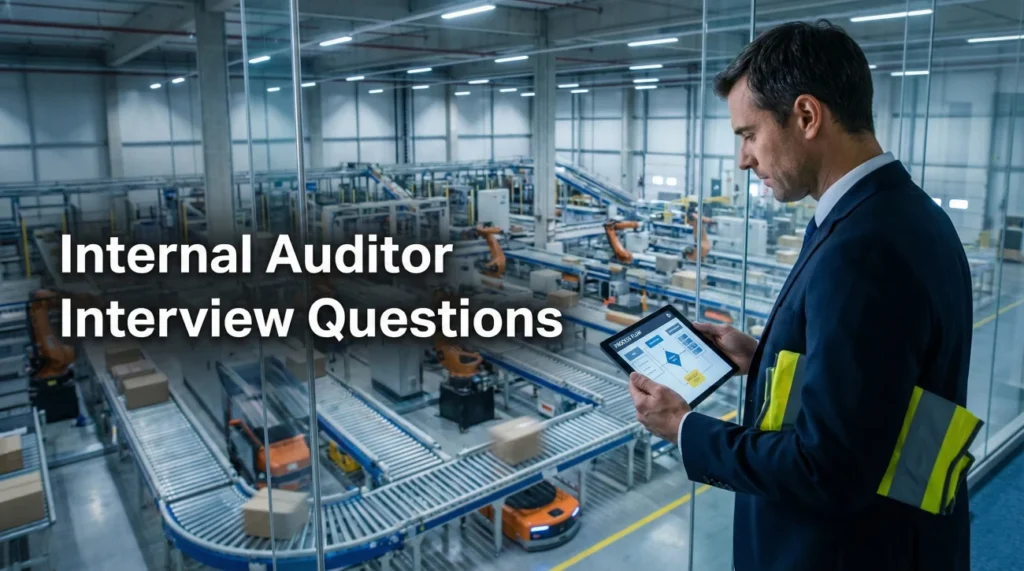
Internal auditor interview questions assess your ability to evaluate organizational processes, ensure compliance with company policies, and recommend improvements that enhance operational efficiency. Unlike external auditors who focus on financial statement accuracy, internal auditors serve as strategic partners who strengthen governance, risk management, and control processes across the entire organization.
This guide covers process improvement, compliance auditing, operational reviews, and professional standards. Internal audit functions have been expanding in many organizations as boards expect stronger governance, risk awareness, and control discipline. In interviews, what matters most is showing how you prioritize risk, communicate clearly, and turn findings into practical improvements.
Internal Audit Role and Standards
Q: What is the role of internal audit in an organization?
Internal audit operates independently within an organization, offering impartial assessments of governance, risk management, and control processes. Its primary goal is providing valuable insights and recommendations for organizational improvement. We evaluate these elements’ effectiveness and identify improvement areas to safeguard assets, enhance operations, and achieve strategic objectives.
The updated Global Internal Audit Standards emphasize aligning internal audit with organizational purpose and demonstrating value. Many functions report higher expectations from stakeholders, but teams often still work to mature strategy, coverage, and communication. Internal auditing contributes to organizational stability by providing assurance on operational efficiency, reliability of reporting, compliance with laws, safeguarding of assets, and ethical culture. This fosters public trust and confidence in the organization.
Q: Explain the three lines of defense model.
The three lines of defense is a risk management framework defining distinct responsibilities. The first line is operational management, responsible for designing and implementing controls within their departments. They own and manage risks directly in day-to-day operations. The second line includes risk management and compliance functions that develop and monitor controls, providing expertise and oversight.
Internal audit serves as the third line, providing independent assurance over the effectiveness of the first two lines. This independence is crucial; internal audit reports functionally to the board or audit committee, not to management whose activities they evaluate. The model ensures comprehensive risk coverage while maintaining clear accountability. Understanding this framework demonstrates how internal audit adds value through objective evaluation rather than duplicating management’s responsibilities.
Q: What are the 2024 Global Internal Audit Standards?
The 2024 Global Internal Audit Standards are mandatory components of the International Professional Practices Framework (IPPF), guiding worldwide professional practice. They replaced the prior standards and became effective in early 2025. The standards are organized into five domains: Purpose of Internal Auditing, Ethics and Professionalism, Governing the Internal Audit Function, Managing the Internal Audit Function, and Performing Internal Audit Services.
Key changes include new requirements for quality assurance programs, enhanced expectations on professional skepticism and ethics, and guidance on continuing professional development. CAEs must now develop internal audit strategies, resource strategies, and technology strategies. The updated standards emphasize coordination with internal and external assurance providers to avoid duplication and strengthen coverage. External quality assessments should be performed by qualified assessors with appropriate internal audit credentials and experience. Conformance demonstrates commitment to professional excellence.
Q: How do you maintain independence and objectivity?
Independence requires organizational positioning that permits internal audit to perform duties without interference. This typically means reporting functionally to the audit committee and administratively to executive management. I avoid auditing areas where I recently had operational responsibility, because prior involvement can create objectivity threats.
Objectivity is an unbiased mental attitude allowing work to be performed without compromising quality. I disclose any potential conflicts of interest before accepting assignments. I base conclusions solely on evidence, not relationships or preconceptions. The standards’ code of ethics highlights internal auditors’ duty to uphold integrity, objectivity, confidentiality, and competence. When threats to objectivity arise, I communicate them to appropriate parties and implement safeguards or recuse myself from the engagement.
Process Improvement and Operational Auditing
Q: How do you identify process improvement opportunities?
I identify improvement opportunities through systematic process analysis during operational audits. I map existing processes, identify control points, and evaluate efficiency and effectiveness. I look for redundancies, bottlenecks, manual workarounds, and deviations from documented procedures. Operational auditing is a core internal audit activity in many teams.
I benchmark against industry leading practices and regulatory requirements. I conduct interviews with process owners and frontline staff who often have valuable insights about inefficiencies. I analyze data for patterns indicating problems, such as high error rates, excessive processing times, or customer complaints. When I identified inventory management discrepancies at a manufacturing company due to poor documentation, recommending enhanced training and a new tracking system reduced discrepancies noticeably in the following quarter.
Q: Describe your approach to operational audits.
Operational audits evaluate efficiency and effectiveness of business processes beyond financial controls. I begin by understanding the process objectives and key performance indicators. I identify the risks that could prevent achieving those objectives and the controls designed to mitigate those risks. The traditional compliance-focused work has evolved toward business process optimization and operational excellence.
I test controls through observation, inquiry, documentation review, and reperformance. I compare actual performance to benchmarks and identify gaps. I develop recommendations that are practical, cost-effective, and aligned with organizational objectives. I communicate findings to process owners throughout the audit, not just at conclusion, fostering collaboration and buy-in for improvements. Post-audit, I follow up on implementation of recommendations and measure whether improvements achieved intended results.
Q: How do you prioritize audit recommendations?
I prioritize recommendations based on risk significance, potential impact, and implementation feasibility. High-priority items address significant risks, compliance violations, or material control weaknesses requiring immediate attention. Medium-priority items improve efficiency or address moderate risks with reasonable implementation timelines. Lower-priority items represent enhancements or best practice adoptions.
I consider the cost-benefit relationship of each recommendation. A control that costs more to implement than the risk it mitigates may not be appropriate. I discuss prioritization with management to understand resource constraints and competing priorities. I ensure recommendations are actionable with clear ownership and realistic timelines. Recommendations tied to organizational strategy tend to gain more traction because leaders can see the tradeoff between risk, cost, and outcomes.
Q: How do you measure audit impact?
I track quantitative and qualitative metrics demonstrating internal audit’s value. Quantitative measures include cost savings from implemented recommendations, error reduction percentages, and process time improvements. I have implemented structured risk assessment and standards-aligned workpapers to improve audit efficiency and consistency across teams.
Qualitative measures include stakeholder satisfaction, management’s perception of audit value, and contribution to strategic objectives. I document outcomes from prior recommendations to demonstrate return on audit investment. The new standards emphasize demonstrating internal audit’s contribution to organizational success. I present impact metrics to the audit committee, showing how audit activities help manage risks and improve operations. This demonstrates value beyond mere compliance checking.
Compliance Auditing
How do you approach compliance audits?
Compliance audits verify adherence to laws, regulations, policies, and procedures. I begin by identifying applicable requirements through regulatory research and policy review. I create a compliance checklist based on current requirements, as regulations evolve constantly. Compliance and regulatory reviews are a common part of many audit plans.
I test compliance through document review, transaction testing, and process observation. I evaluate whether controls ensure ongoing compliance, not just point-in-time adherence. When I identify compliance gaps, I assess the severity and potential consequences, whether regulatory penalties, reputational damage, or operational risk. I recommend both remediation of specific gaps and systemic improvements to prevent recurrence. I stay informed about regulatory changes through subscriptions and participation in professional organizations like the IIA.
How do you handle findings of non-compliance?
When I discover non-compliance, I first ensure I understand the requirement correctly and gather sufficient evidence documenting the violation. I assess the severity: is this a technical violation with minimal impact or a material breach with significant consequences? I consider whether the non-compliance is isolated or systemic, recent or ongoing.
I communicate findings to management promptly, especially for significant violations requiring immediate remediation. I work collaboratively to understand root causes and develop corrective actions. For serious violations that may require external reporting, I escalate to the CAE and legal counsel. I document findings thoroughly, including evidence, impact assessment, and management’s response. Follow-up audits verify that corrective actions were implemented effectively and compliance is maintained.
How do you stay current with regulatory changes?
I maintain subscriptions to regulatory updates and industry publications. I’m a member of the Institute of Internal Auditors and regularly attend webinars, workshops, and conferences. The IIA provides standards, certifications, education, research, and technical guidance. Continuous learning matters, and strong teams treat training and coaching as part of the job.
I monitor changes from relevant regulatory bodies and assess their impact on the organization. I participate in professional networks and collaborate with compliance colleagues who track specific regulatory areas. When new regulations emerge, I assess implications for audit coverage and update audit programs accordingly. Applying updated guidance can strengthen compliance checks and improve audit efficiency. Continuous learning ensures audit procedures reflect current requirements.
Risk Assessment and Audit Planning
Q: How do you develop an internal audit plan?
Audit planning starts with a comprehensive risk assessment that identifies and prioritizes organizational risks. I gather input from the board, executive management, and business unit leaders about their risk concerns. I analyze prior audit findings, external developments, and industry trends. The plan should be risk-based, focusing resources on areas with greatest risk and potential impact.
The updated standards raise expectations for documented strategy and longer-range planning beyond year-over-year workplans. I develop a vision, strategic objectives, and supporting initiatives reviewed with the board and senior management. The plan allocates resources across risk areas: cybersecurity and IT audits combine for approximately 17% of plans, operational auditing 19%, financial reporting 16%, and compliance 14%. I build flexibility to address emerging risks and ad hoc requests while maintaining planned coverage.
Q: Describe your risk assessment methodology.
Risk assessment during fieldwork involves multiple techniques. I evaluate the design and effectiveness of internal controls through interviews, observation, and testing. I perform substantive procedures verifying accuracy and completeness through analytical procedures and detailed testing. I identify control gaps where controls are missing or inadequate, increasing risk of errors or fraud.
Common risk themes include cybersecurity, talent and staffing, regulatory change, and technology disruption. I use stakeholder input plus data to keep the plan aligned with what could materially impact the organization. I consider emerging risks and adapt audit approach based on risks identified during fieldwork. A good audit strategy includes clear scope, reporting objectives, sufficient time, good communication with team members, and factors directing team efforts toward highest risks.
Q: How do you use data analytics in auditing?
Data analytics has become foundational to internal audit. Many CAEs want stronger data analytics capability on their teams, and adoption is becoming a baseline expectation for modern internal audit. I use analytics to analyze complete populations rather than relying solely on sampling, identifying anomalies that might otherwise go undetected.
I apply analytics for continuous monitoring and continuous auditing, enabling proactive rather than reactive reviews. For example, analyzing transaction patterns can identify potential fraud or compliance violations before they escalate. I use predictive analytics to assess potential future risks. The new standards encourage leveraging technology and data analytics to enhance audit quality, including tools for risk assessment, monitoring, and reporting that enable more proactive and predictive auditing.
Q: How do you coordinate with other assurance providers?
The updated standards emphasize coordinating with internal and external assurance providers. This includes the external auditors, compliance function, risk management, and specialized functions like IT security. Coordination improves efficiency by avoiding duplication and ensures comprehensive coverage of organizational risks.
I share audit plans and findings where appropriate, maintaining confidentiality requirements. I leverage the work of other assurance providers when their procedures meet our quality standards. For areas like SOX support or specialized cybersecurity testing, some organizations co-source or outsource parts of the work to gain expertise and coverage. Coordination significantly improves efficiency and effectiveness of the organization’s governance, risk management, and overall assurance coverage.
Internal Audit Knowledge Check
Test Your Internal Audit Expertise
1. What is the primary role of internal audit?
- To own and operate controls for the business
- To provide independent assurance and recommendations on governance, risk, and controls
- To replace compliance and risk management
- To approve every business decision
2. In the three lines model, internal audit is best described as:
- The first line that operates controls
- The second line that owns risk policy
- The independent assurance line that evaluates how the first two lines manage risk
- A substitute for the audit committee
3. A risk-based audit plan should prioritize:
- Only the areas requested by management
- Areas with the highest impact and likelihood, considering control maturity and change
- Only financial reporting
- Only last year’s findings
4. What makes a recommendation actionable?
- It is written in technical jargon
- It has clear ownership, practical steps, and a realistic timeline tied to risk
- It lists every possible control
- It avoids cost considerations
5. Independence is best protected by:
- Reporting only to the process owner
- Clear reporting lines to the board/audit committee and safeguards against conflicts
- Avoiding all stakeholder communication
- Only auditing easy areas
6. When you find non-compliance, your first move should be to:
- Publish the finding immediately
- Confirm the requirement, gather evidence, and assess severity and scope
- Assume it is isolated without checking
- Ignore it if it seems small
7. What is a common sign of weak control design?
- A control is documented
- The control does not address the risk or lacks clear evidence/criteria
- The control is automated
- The control is performed monthly
8. What is a good practice for audit reporting to executives?
- Lead with methodology details
- Lead with the finding, impact, and recommended action, then provide supporting detail
- Hide limitations to appear confident
- Only include raw data tables
9. Data analytics is most useful in internal audit when it:
- Replaces professional judgment
- Helps identify anomalies and focus testing on higher-risk items
- Eliminates the need for documentation
- Avoids stakeholder communication
10. Coordination with other assurance providers helps because it:
- Lets internal audit avoid difficult topics
- Reduces duplication, improves coverage, and clarifies accountability
- Transfers ownership of risk to internal audit
- Removes the need for follow-up
11. A strong audit workpaper should be:
- Only a screenshot
- Clear, supportable, and sufficient for another reviewer to understand what was done and why
- Minimal to save time
- Written only for the preparer
12. After issuing a report, a strong follow-up practice is to:
- Assume management will implement everything
- Track remediation, validate completion, and reassess residual risk
- Close findings immediately
- Avoid measuring outcomes
13. What is an example of a process improvement opportunity?
- Adding approvals without purpose
- Reducing manual handoffs while improving control evidence and clarity
- Removing controls to speed up work
- Ignoring root causes
14. A good way to handle disagreement with management is to:
- Escalate immediately without discussion
- Align on facts and risk, show evidence, and propose options with tradeoffs
- Change conclusions to avoid conflict
- Stop communicating until the report is issued
15. Professional skepticism means:
- Distrusting everyone by default
- Critically evaluating evidence and challenging assumptions when risk is higher
- Avoiding collaboration
- Only using analytics tools
16. What is a responsible approach to AI in internal audit?
- Let AI make final conclusions without review
- Use AI to accelerate work, then validate results and protect confidentiality
- Avoid AI entirely
- Use AI only for formatting slides
17. What is a common root cause behind repeat findings?
- Too much reporting
- Unclear ownership, weak design, or lack of sustained monitoring
- Too many dashboards
- Overly detailed workpapers
18. A strong metric for audit impact is one that:
- Tracks only activity volume
- Connects recommendations to risk reduction, efficiency, or improved decision-making
- Avoids qualitative feedback
- Ignores implementation status
19. When scoping an audit, you should define:
- Only the report template
- Objectives, boundaries, key risks, and what evidence will support conclusions
- Only who will be interviewed
- Only prior-year findings
20. The best description of internal audit maturity is:
- Doing more audits per year
- Consistent risk-based coverage, strong communication, and measurable follow-through
- Avoiding advisory work
- Only focusing on compliance checklists
❓ FAQ
📜 What certifications matter for internal auditors?
The Certified Internal Auditor (CIA) is the primary certification for many internal auditors. It demonstrates mastery of internal audit standards and practices. The Certification in Risk Management Assurance (CRMA) adds value for those focusing on risk management. CPA and CISA certifications complement internal audit expertise, particularly for financial and IT audit specializations respectively.
🔍 How do I demonstrate process improvement skills?
Provide specific examples with quantifiable results. Describe the process you evaluated, issues identified, recommendations made, and outcomes achieved. For instance, implementing a stronger vendor evaluation workflow or inventory tracking that reduced errors and improved traceability. Show you understand root cause analysis and develop practical, implementable solutions. Demonstrate follow-through by discussing how you tracked recommendation implementation.
🎯 How do I show knowledge of current standards?
Reference the 2024 Global Internal Audit Standards and key changes from the 2017 version. Discuss the five domains and specific requirements like strategic planning, technology strategies, and assurance coordination. Mention your approach to conformance and any gap assessments conducted. Show awareness that standards require continuous professional development and commitment to quality improvement.
💼 How do I discuss collaboration with management?
Describe how you build relationships while maintaining independence. Explain your communication approach throughout audits, not just at conclusion. Discuss how you handle disagreements professionally and develop recommendations collaboratively. Show you understand internal audit’s dual role as assurance provider and trusted advisor. The new standards emphasize stakeholder engagement and strategic alignment with organizational objectives.
🌟 What technology skills should I highlight?
Data analytics is widely valued, and many leaders want stronger capability on their teams. Discuss experience with audit management systems, continuous monitoring tools, and data visualization. Mention familiarity with AI applications and how you use them responsibly (privacy, validation, and human judgment). Show you understand how technology enhances audit quality and efficiency. Demonstrate willingness to continuously develop technology skills as the profession evolves.
Advancing Your Internal Audit Career
Preparing for internal auditor interview questions requires demonstrating both technical expertise and strategic thinking. Articulate your understanding of internal audit standards, process improvement methodologies, and compliance requirements with specific examples showing measurable impact. Many teams expect internal audit to go beyond checklist compliance and contribute to risk-informed decision-making, so your responses should reflect that broader role.
Research the organization’s industry, risk profile, and audit structure before interviewing. Prepare to discuss your approach to risk assessment, how you develop actionable recommendations, and how you measure audit impact. Demonstrate the combination of analytical skills, communication abilities, and professional judgment that distinguishes effective internal auditors. For comprehensive interview preparation, explore internal audit career resources to position yourself for roles that leverage your governance and risk management expertise.
⚠️ Disclaimer: The interview strategies, sample answers, and negotiation tips provided in this guide are for educational purposes only. Hiring decisions are subjective and vary by company and industry. While these strategies are based on professional HR standards, they do not guarantee a specific job offer or result.