Common STAR Method Mistakes (And How to Avoid Them)

Common Star Method Mistakes

When Good Stories Go Wrong You know the STAR framework. You have prepared your stories. Yet something goes sideways during the actual interview, and answers that seemed solid in practice fall flat with interviewers. Common star method mistakes often have nothing to do with lacking good experiences. They stem from how you structure and deliver … Read more

STAR Method Result (Quantifying Success)

Star Method Result

Why “Result” is non-negotiable: It proves your Actions worked, turning a nice story into evidence interviewers can actually evaluate. Quantify whenever possible: Use clear before-and-after metrics like time, cost, revenue, error rate, productivity, or customer impact so your outcome is memorable and credible. If numbers are limited: Make qualitative results specific with proof signals like … Read more

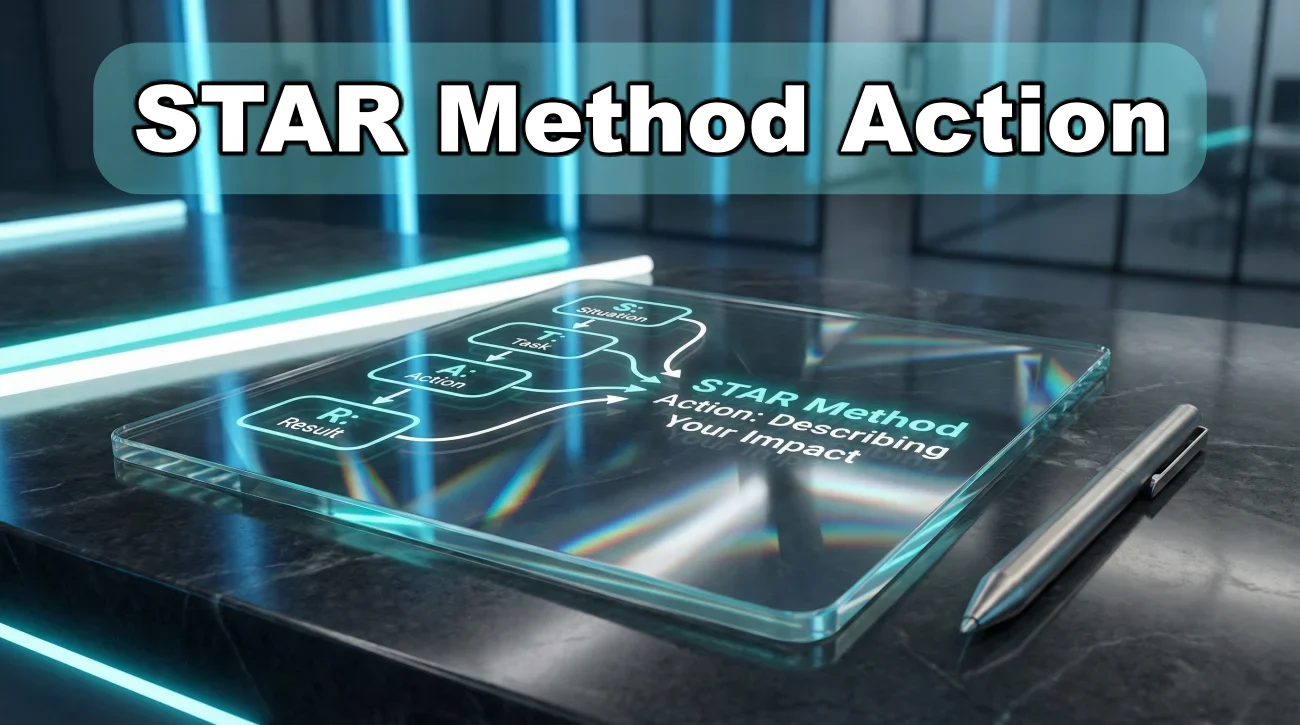
STAR Method Action (Describing Your Impact)

Star Method Action

Why Action Matters Most: Action is the core of STAR because it proves competency through what you did and why, so it should take roughly 50–60% of your answer time. Own Your Contribution: Use “I” for most statements, clarify your specific piece in team work, and acknowledge collaboration without hiding behind “we.” Explain Your Reasoning: … Read more

STAR Method Task (Defining the Challenge)

Star Method Task

What “Task” does: It bridges Situation to Action by stating your exact responsibility and what success looked like. Task vs Situation: Situation describes the environment, Task defines your goal inside it with a clear target (metric, deadline, scope). What to include: Specific objective, success criteria, and the key constraints that made it hard (time, budget, … Read more

STAR Method Situation (Setting the Scene)

Star Method Situation

Situation Purpose: Set only the minimum context so your Task, Action, and Result make sense, not a mini history of the company or project. What To Include: State your role, the relevant environment (team or company context), and the timeframe or scale only when it clarifies constraints and impact. Common Mistakes: Rambling backstory, vague setup … Read more