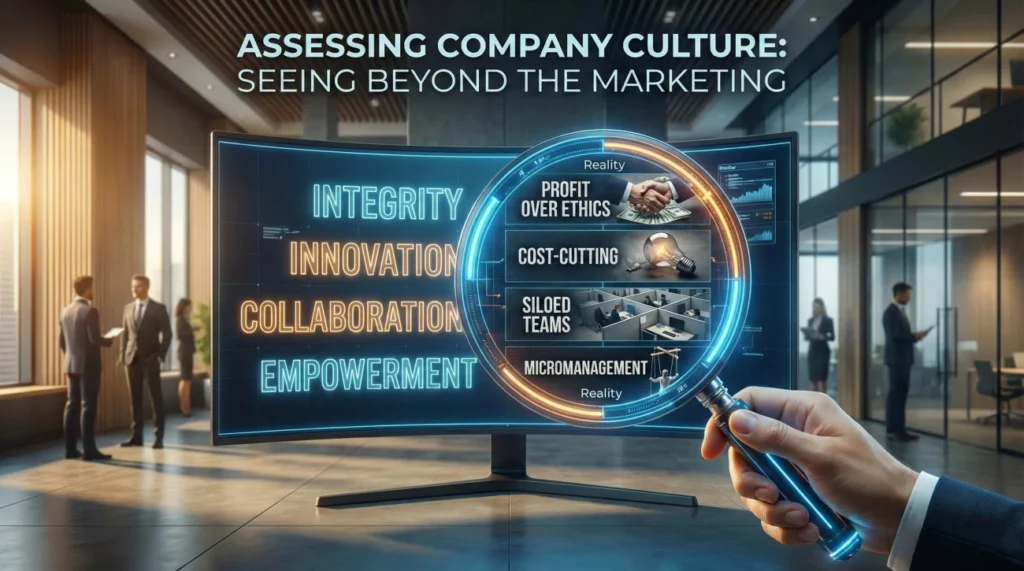
- Why culture talk misleads: Most companies use the same “collaborative, innovative, fast-paced” language, so you must judge culture by lived behavior, not slogans.
- Decode buzzwords with follow-ups: When you hear phrases like “family” or “wear many hats,” ask for concrete day-to-day examples, metrics, and programs that prove what they mean.
- Listen to how they answer: Pauses, vagueness, deflection, or inconsistent stories across interviewers often reveal culture gaps more clearly than polished messaging.
- Ask reality-testing questions: Focus on how they handle mistakes, conflict, feedback, turnover, and work-life boundaries, because stress moments expose true norms.
- Verify outside the interview: Cross-check with review patterns and LinkedIn tenure signals, and talk to current or former employees to confirm what you heard.
Why Culture Claims Don’t Match Reality
Every company claims collaborative, innovative, fast-paced culture with work-life balance. These generic descriptions mean nothing because they describe aspirations rather than reality. Understanding assessing company culture requires looking past marketing language to evaluate how organizations actually operate. The culture you experience daily determines job satisfaction more than role responsibilities or compensation, yet most candidates accept vague platitudes without probing whether stated values match lived experiences.
The challenge lies in distinguishing authentic culture from performative claims. Companies master corporate-speak that sounds impressive while revealing nothing substantive. “We’re like a family” might mean supportive community or toxic enmeshment. “Fast-paced environment” could indicate exciting growth or chaotic dysfunction. “Work hard, play hard” sometimes means balanced engagement, often means burnout disguised as fun. When exploring broader questions to ask in an interview, culture assessment questions require the most sophisticated evaluation since answers rarely provide straightforward information.
Getting Beyond Corporate Buzzwords
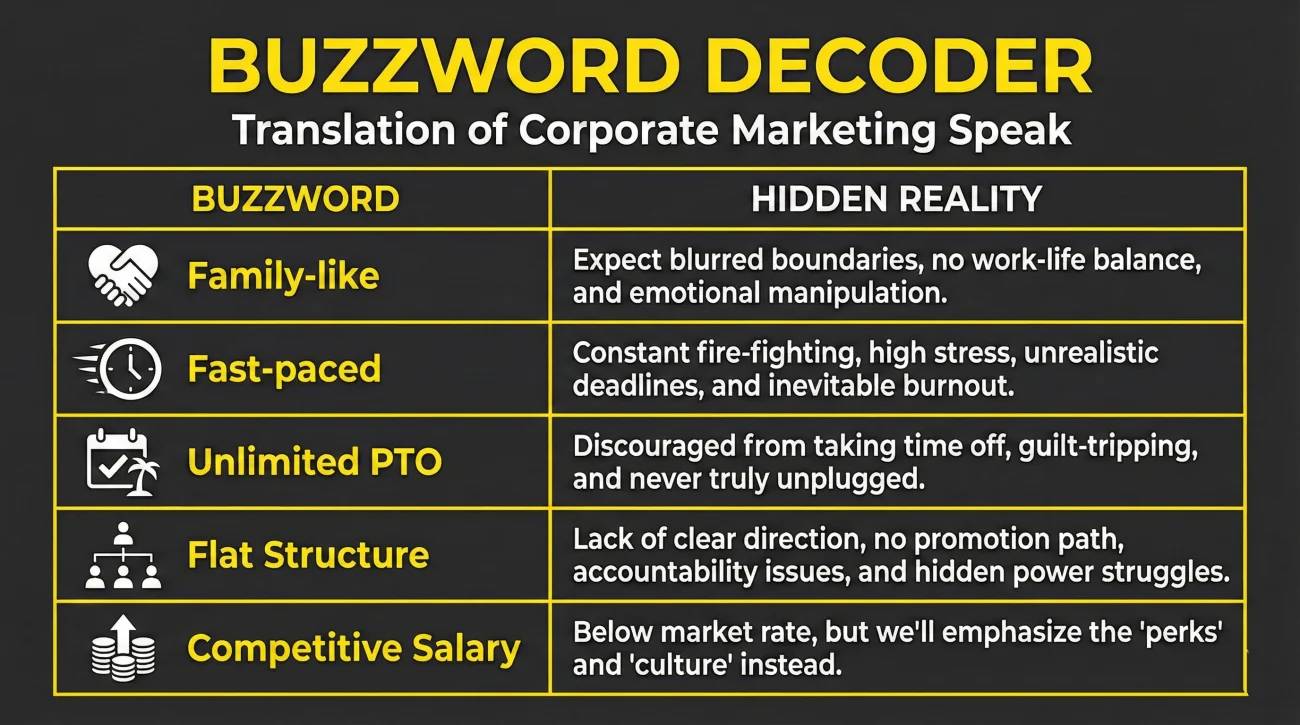
Understanding evaluating company culture starts with recognizing common buzzwords that sound meaningful but communicate nothing. These phrases appear in every company description regardless of actual culture.
Decoding Meaningless Phrases
Certain descriptions sound positive but mask problematic realities. Learning to translate corporate-speak into honest assessment helps you understand what you’re actually walking into.
| What They Say | What It Might Mean | Questions to Ask |
|---|---|---|
| “We’re like a family” | Blurred boundaries, guilt-based retention | “How do you handle work-life boundaries?” |
| “Fast-paced environment” | Chaos, poor planning, constant emergencies | “Can you give examples of typical daily pace?” |
| “We wear many hats” | Understaffed, unclear roles, scope creep | “How is workload distributed across the team?” |
| “Results-oriented culture” | Outcome obsession ignoring process or wellbeing | “How do you balance results with sustainable practices?” |
| “Entrepreneurial spirit” | Lack of structure, everyone figures it out alone | “What support systems exist for new employees?” |
💡 Pro tip: When interviewers use buzzwords, immediately ask for specific examples. “Can you give me a concrete example of how that shows up day-to-day?” forces substance beyond marketing language.
Demand Specific Evidence
Generic culture claims require specific supporting evidence. Ask for examples, metrics, and concrete demonstrations of how stated values operate in practice. Companies with authentic cultures provide specific examples readily. Those with aspirational cultures struggle to move beyond platitudes.
- 📊 Metrics: “What’s your average employee tenure?”
- 🎯 Examples: “Can you share a recent example of that value in action?”
- 💡 Programs: “What specific initiatives support that value?”
- 📋 Outcomes: “How do you measure whether that’s working?”
Reading Between the Lines
Understanding reading company culture requires paying as much attention to how people answer as what they say. Hesitation, vague responses, or deflection reveal more than polished corporate messaging.
Response Patterns That Signal Issues
Certain answer patterns consistently indicate cultural problems. When multiple interviewers give inconsistent answers about culture, when responses sound rehearsed rather than authentic, or when people struggle to provide examples, these signals suggest gaps between claimed and lived culture.
Expert advice: Pay attention to pauses and hesitations when asking about culture. If someone needs to think hard about whether work-life balance exists or struggles to describe the culture, that struggle itself tells you something important.
Consistency Across Interviewers
Ask the same culture questions to multiple interviewers and compare answers. Consistent specific responses indicate genuine shared culture. Inconsistent or vague answers suggest either people don’t know the culture or experience it differently based on team or role.
| Positive Signal | Warning Signal |
|---|---|
| Specific consistent examples across interviewers | Generic or contradictory descriptions |
| Enthusiastic personal stories about culture | Robotic corporate messaging without personality |
| Honest about challenges and how they’re addressed | Claiming everything is perfect with no issues |
| Immediate examples without hesitation | Long pauses or “let me think” when asked about culture |
| Team members speaking freely and authentically | Careful guarded responses that sound pre-approved |
Non-Verbal Cues
In video or in-person interviews, watch body language when discussing culture. Genuine enthusiasm shows through facial expressions and energy. Discomfort, forced smiles, or lack of eye contact when describing culture suggests people don’t fully believe what they’re saying.
If interviewers seem uncomfortable, defensive, or vague when discussing culture, trust that discomfort. They’re often signaling problems they can’t explicitly state during formal interviews.
Strategic Questions That Reveal Culture
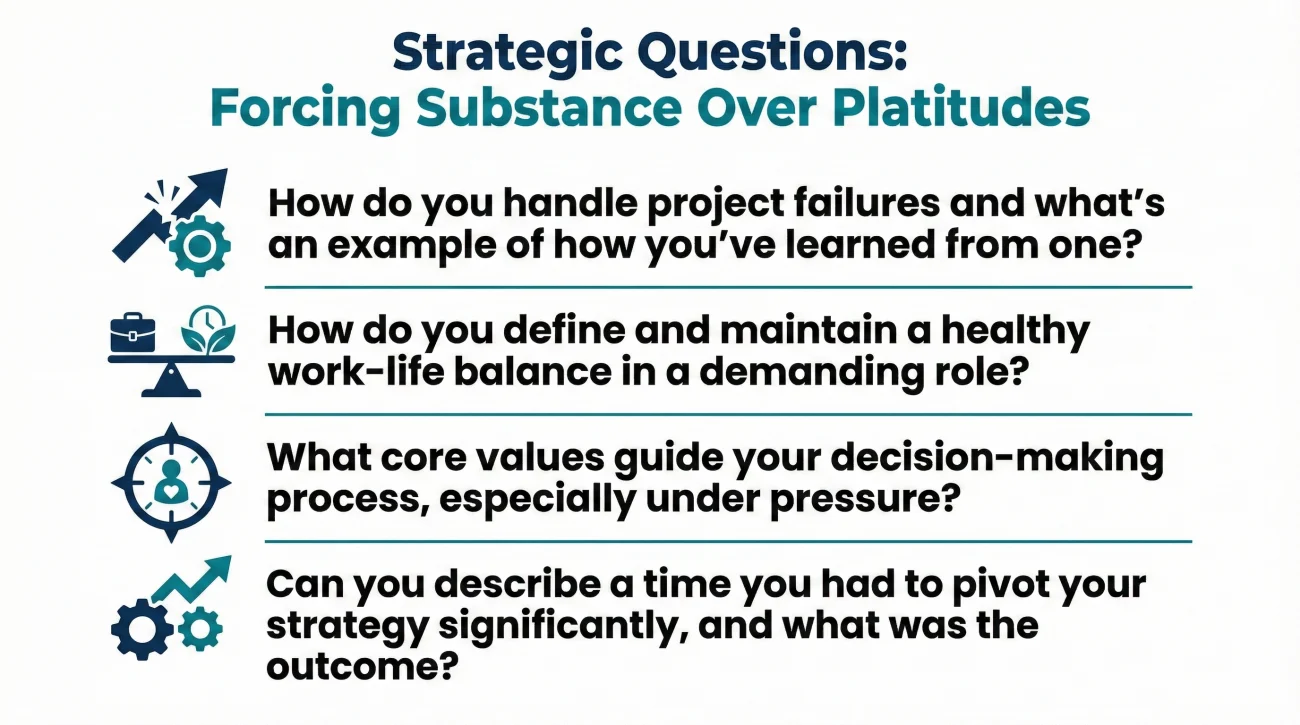
Effective culture fit assessment uses specific questions designed to expose reality rather than accepting surface claims. These questions force concrete answers that reveal how culture actually operates.
Behavioral Culture Questions
Questions about past behavior reveal more than hypothetical questions about values. Ask for specific examples of how the company handled situations that test stated values. Companies claiming to value transparency can describe times they communicated difficult news openly. Those claiming work-life balance can share examples of protecting employee boundaries.
- “Tell me about a time when the company lived up to its values in a difficult situation”
- “Can you share an example of when work-life balance was protected despite pressure?”
- “Describe how the company handled a recent failure or setback”
- “Give me an example of how employee feedback changed something significant”
Questions About Failure and Conflict
How organizations handle failure, mistakes, and disagreements reveals authentic culture more than how they celebrate success. Ask about conflicts, mistakes, and difficult situations to understand whether the culture creates psychological safety or fear.
Expert advice: Ask “Tell me about a recent mistake someone on the team made and how it was handled.” If they struggle to think of any mistakes or pivot to discussing success, that’s itself revealing – either people hide mistakes or leadership can’t acknowledge them.
Questions About Departures and Retention
Why people leave reveals culture more honestly than why they stay. Companies comfortable discussing turnover and learning from departures typically have healthier cultures than those defensive about exits or claiming everyone who leaves “wasn’t a good fit.”
| Question | What Healthy Response Sounds Like |
|---|---|
| “What’s your average employee tenure?” | Provides specific number, acknowledges variations by role |
| “Why do people leave this company?” | Honest about common reasons, learning from feedback |
| “Why did the last person in this role leave?” | Straightforward explanation without defensiveness |
| “What percentage of people get promoted internally?” | Can provide rough data and recent examples |
Red Flags for Toxic Culture
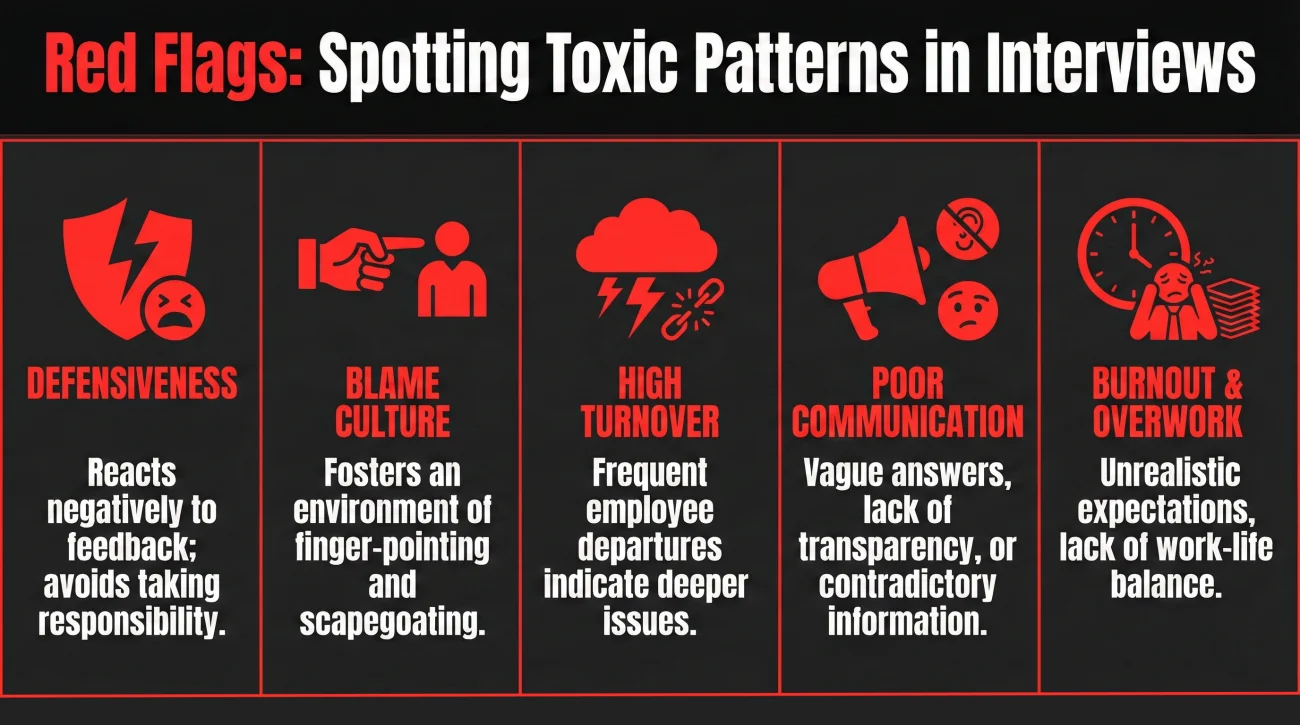
Understanding identifying toxic culture requires recognizing patterns that consistently indicate unhealthy environments. These red flags appear across industries and company sizes.
Communication Red Flags
How people communicate during interviews reveals workplace communication culture. Interrupting each other, speaking over candidates, or showing disrespect toward other departments signals broader cultural dysfunction.
- 🚫 Defensiveness: Becoming upset or defensive about culture questions
- 🚫 Blame culture: Badmouthing former employees or other departments
- 🚫 Secrecy: Refusing to discuss turnover, comp, or policies
- 🚫 Inconsistency: Different stories from different interviewers
- 🚫 Pressure tactics: Rushing decisions or dismissing concerns
Leadership and Management Signals
How leadership treats employees reveals culture more than mission statements. Watch for how managers speak about their teams, whether they take credit for team work, and whether they acknowledge their own mistakes and growth areas.
If leadership can’t articulate what they’ve learned from failures or how they’ve grown, they likely don’t create environments where others can admit mistakes either. This predicts blame cultures where people hide problems.
Work-Life Balance Indicators
Claims about work-life balance require scrutiny. Ask what happens when people take vacation – do they truly disconnect or face expectation of availability? What time do emails typically send? How often do weekend emergencies occur? Specific answers reveal whether balance claims are real or aspirational.
Researching Culture Outside Interviews
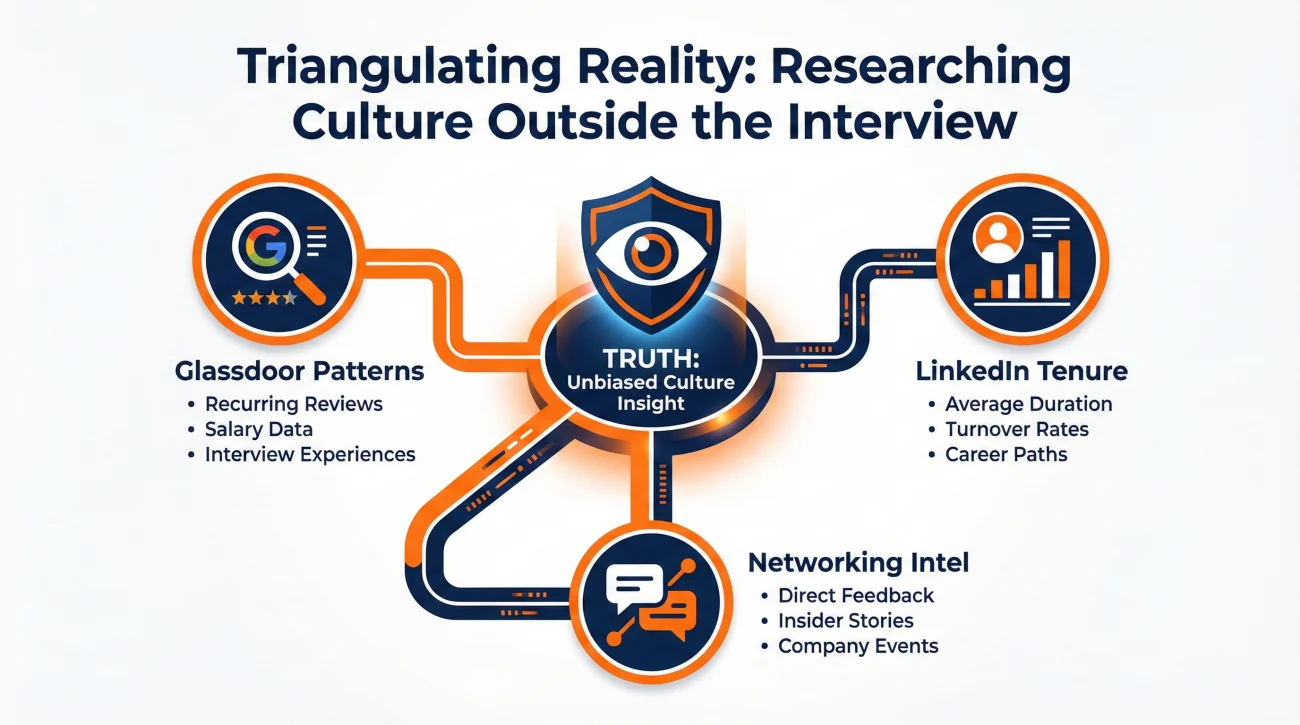
Interview conversations provide one perspective, but external research offers additional context for culture assessment. Multiple sources paint more complete pictures than any single conversation.
Reading Reviews Strategically
Sites like Glassdoor provide employee perspectives but require careful reading. Focus on patterns across multiple reviews rather than individual complaints. Recent reviews matter more than old ones. Look for specific examples rather than vague complaints.
Expert advice: When reading Glassdoor, ignore outlier reviews (exceptionally positive or negative) and focus on themes repeated across 5-10 recent reviews. Patterns revealing consistent issues or strengths provide more reliable information than individual extreme experiences.
Social Media and LinkedIn Signals
Company social media presence reveals how they present themselves publicly. LinkedIn profiles of current and former employees show tenure patterns, career progression, and what people emphasize about their experience. Mass departures or pattern of short tenures signal cultural problems.
Networking for Inside Information
Nothing beats talking to current or former employees off the record. LinkedIn connections, mutual contacts, or professional networks can provide candid insights impossible to gather during formal interviews. Frame questions around learning about the experience rather than gossip.
❓ FAQ
🎯 How many culture questions should I ask?
Ask 2-3 specific culture questions to each interviewer, phrasing them differently to avoid sounding repetitive. Comparing answers across interviewers reveals whether culture is consistent or varies by team. Prioritize questions about topics most important to you – work-life balance, feedback culture, or whatever matters most for your satisfaction.
💼 What if interviewers give vague answers about culture?
Follow up with requests for specific examples: “Can you give me a concrete example of how that shows up?” If they still can’t provide specifics, that vagueness itself is valuable information suggesting either they don’t know the culture well or it doesn’t actually align with claims. Either way, proceed cautiously.
⏰ Should I trust Glassdoor reviews?
Use them as one data point among many. Focus on patterns across multiple recent reviews rather than individual extreme complaints or praise. Glassdoor provides employee perspectives but can skew negative since dissatisfied people write more reviews. Compare Glassdoor themes with what you observe during interviews.
📋 What if culture seems good but pay is below market?
That’s a personal trade-off decision. Great culture with lower pay might suit you if you value environment over income. However, be skeptical of companies using “great culture” to justify below-market compensation. Strong cultures often pay competitively because they value retaining good people.
✨ Can culture vary by team within the same company?
Absolutely. Large organizations often have microcultures that vary significantly by department or manager. Ask specifically about the team you’d join rather than accepting company-wide culture claims. Talk to potential teammates, not just HR, to understand the specific team environment.
Final Thoughts
Mastering assessing company culture requires looking past generic buzzwords and marketing language to evaluate how organizations actually operate. Every company claims collaborative, innovative, fast-paced culture with work-life balance. These descriptions mean nothing without specific examples, concrete metrics, and consistent stories across multiple interviewers demonstrating how stated values manifest in daily practice.
Strategic culture assessment demands specific questions that force substance beyond platitudes. Ask for examples of how companies handled failures, protected work-life balance under pressure, or implemented employee feedback. Watch how people respond – hesitation, vagueness, or defensiveness reveals as much as the words themselves. Compare answers across interviewers to identify whether culture is genuinely shared or varies significantly by team.
Remember that culture determines job satisfaction more than role or compensation. Even dream positions become miserable in toxic environments, while imperfect roles in healthy cultures often exceed expectations. Invest the effort to truly understand culture before accepting offers. Trust patterns over promises, specific examples over vague claims, and your instincts about whether people seem genuinely enthusiastic or carefully performing scripted responses.
⚠️ Disclaimer: The interview strategies, sample answers, and negotiation tips provided in this guide are for educational purposes only. Hiring decisions are subjective and vary by company and industry. While these strategies are based on professional HR standards, they do not guarantee a specific job offer or result.