The CEO of the Unit
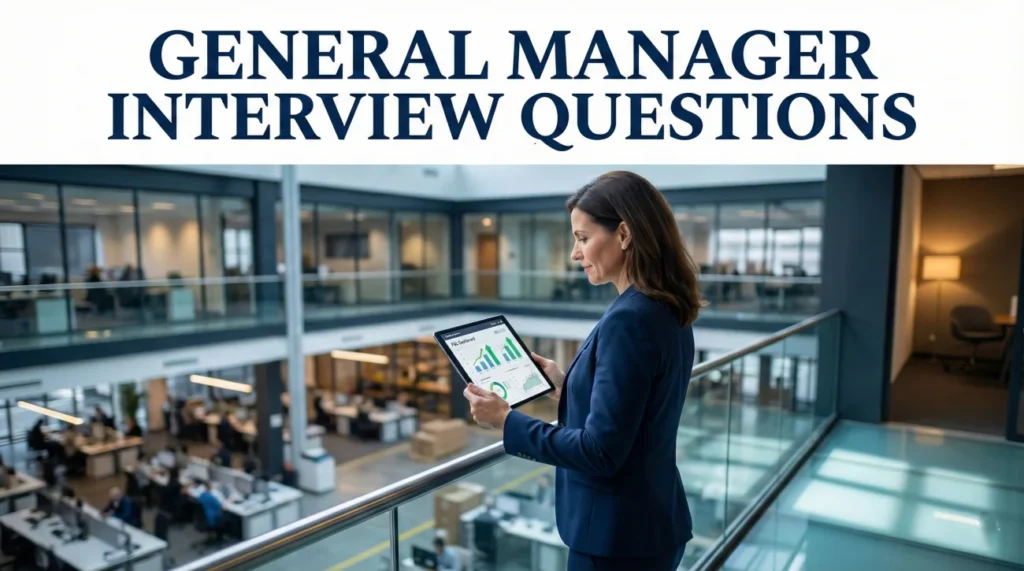
General manager interview questions feel less like a chat and more like a business review. The interviewer is trying to see whether you think in inputs and outputs: people, process, revenue, costs, and the decisions that move the numbers without breaking the culture.
Hiring panels typically dig into P&L fluency, labor and inventory control, customer standards, and talent management. Strong candidates talk about systems: forecasting, routines, coaching, and the few levers that reliably change performance week after week.
Financial Acumen & P&L Management
If you don’t make money, you don’t have a business. This is the most critical section for a GM interview.
Q: Walk me through how you analyze a P&L statement.
Answer: I read it in three passes. First, I look at the Top Line (Revenue): Did we hit sales targets? If not, why? Second, I look at Prime Cost (COGS + Labor). These are the controllable expenses. Is food cost high due to waste? Is labor high due to overtime? Third, I look at the Bottom Line (EBITDA/Net Profit). I check “Flow Through” – for every extra dollar of sales, how much actually made it to the bank? I look for variances against the budget and previous year to identify trends, not just isolated numbers.
Q: How do you control Labor Cost without sacrificing service quality?
Answer: I focus on “Productivity,” not just dollars. I schedule based on forecasted volume (using historical data and local events), not gut feeling. I use a mix of fixed and variable staff. During slow periods, I cut variable hours aggressively but keep key leaders to maintain standards. I also cross-train staff so one person can cover multiple roles during lulls, ensuring efficiency without under-staffing critical touchpoints.
Q: Describe a time you turned around an underperforming unit financially.
Answer: I took over a unit losing 5% annually. I audited the P&L and found COGS were 4% over variance due to unrecorded waste and theft. I implemented strict inventory controls (daily counts on high-value items) and re-trained the team on portioning. Simultaneously, I launched a local marketing campaign to drive lunch traffic. Within 6 months, we stabilized COGS and increased revenue by 10%, swinging the unit to a 8% profit margin.
Q: What is “Flow Through” (or Flow Rate) and why does it matter?
Answer: Flow Through measures how much of incremental revenue makes it to profit. If sales go up by $1,000, and profit goes up by $500, the flow through is 50%. It matters because it shows operational discipline. If sales go up but profit stays flat (0% flow), it means we are spending carelessly to get that growth (e.g., too much overtime or marketing spend). I aim for a healthy flow through (typically 50-60% depending on industry) to maximize the value of growth.
Operational Excellence & Strategy
Strategy is easy; execution is hard. Can you build a machine that runs smoothly every day?
Q: How do you ensure consistency in customer experience across shifts?
The Strategy: Standardization.
Answer: I enforce “Standard Operating Procedures” (SOPs) religiously. I don’t rely on tribal knowledge. I use checklists for opening, mid-shift, and closing. I conduct random “quality audits” during different dayparts to catch drift. Most importantly, I train my Shift Leaders to have the same eye for detail as I do, so the standard doesn’t drop when I leave the building.
Q: Your inventory variance is high. How do you fix it?
The Strategy: The “Why” Hunt.
Answer: High variance means theft, waste, or paperwork errors. I start with the paperwork (invoices vs. entry). If that is clean, I look at waste logs (are staff recording dropped items?). If that is clean, I look at theft. I implement “Blind Counts” for inventory and review camera footage during closing. I tighten the “key control” policy immediately. I do not stop until the leak is plugged.
Q: How do you handle a vendor who keeps delivering sub-par products?
The Strategy: Accountability.
Answer: I document every failure with photos and reject the delivery at the door. I meet with the account manager and show them the data: “3 out of 4 deliveries were late or damaged.” I demand a credit and a corrective action plan. If they fail again, I switch vendors. My loyalty is to my customers’ quality, not to the vendor’s feelings.
Q: Describe your strategy for “Local Store Marketing” (LSM).
The Strategy: Community Integration.
Answer: I don’t just rely on corporate ads. I build relationships within a 3-mile radius. I partner with local schools for fundraisers, drop off samples at nearby office buildings, and join the local Chamber of Commerce. I empower my team to be ambassadors. Effective LSM drives loyalty because customers see us as “their” local spot, not just a faceless chain.
Q: How do you manage maintenance and facility issues?
The Strategy: Preventive Maintenance (PM).
Answer: Reactive maintenance is expensive (emergency rates). I use a PM schedule for all major equipment (HVAC, refrigeration). I budget for CAPEX (Capital Expenditure) annually to replace aging assets before they fail. A broken AC unit in July kills sales faster than bad service, so I treat the facility as a revenue-generating asset.
Q: How do you prepare for a corporate audit or health inspection?
The Strategy: audit-Ready Daily.
Answer: I don’t “prepare” because we are ready every day. I create a culture where “audit-ready” is the baseline. We do mini-audits weekly. If an inspector walks in, I greet them confidently because I know my logs are signed and my cooler temps are correct. Trying to fix things 10 minutes before an audit never works.
Leadership & Talent Management
A GM is only as good as their team. You must be the Chief Culture Officer.
Q: How do you turn around a “Toxic Culture” in a unit you just took over?
Answer: I start by listening. I interview every employee to understand the pain points. Then, I set a new standard: “This is what we stand for now.” I remove the “Culture Killers” quickly, even if they are top performers. You cannot build a new house on a rotten foundation. I celebrate the “Culture Carriers” who align with the new vision. Consistency in behavior (from me) builds trust over time.
Q: Describe your succession planning process.
Answer: I believe my job is to work myself out of a job. I identify “High Potentials” early. I give them “Stretch Assignments” (e.g., letting a Shift Lead run the inventory order). I mentor them on the “Why,” not just the “How.” My goal is to have my Assistant Manager ready to take my GM seat within 12-18 months, which frees me to take on a Multi-Unit role.
Q: How do you handle a high-turnover environment?
Answer: I focus on the “First 90 Days.” Most turnover happens then. I improve the onboarding process so new hires feel welcomed and competent, not thrown to the wolves. I conduct “Stay Interviews” with current staff to ask why they stay and what might make them leave. I address the root causes (bad schedules, lack of respect) rather than just constantly hiring to fill the bucket.
Crisis Management
When the building floods or PR disaster strikes, the GM must stand tall.
A video of your staff behaving badly goes viral on social media.
The Strategy: Acknowledge & Act.
Answer: I notify Corporate PR immediately. I do not engage in online arguments. I investigate the incident internally to get the facts. If the staff member was wrong, I take disciplinary action. I communicate with the team about the impact of social media. I focus on rebuilding trust through consistent, positive service in the store, knowing that the internet moves on quickly if we don’t fuel the fire.
A natural disaster is approaching. Do you stay open or close?
The Strategy: People over Profit.
Answer: Safety is the only metric. I monitor official channels. If there is a risk to staff getting home safely, I close early. Profit from a few extra hours is not worth an employee injury or lawsuit. I secure the assets (board up windows, back up data) and communicate clearly to staff: “We are closed. Stay safe. I will update you by 8 AM tomorrow.” Leadership is protecting your people.
You catch your Assistant Manager stealing.
The Strategy: Zero Tolerance.
Answer: It is heartbreaking but requires immediate action. I secure the evidence (video, logs). I consult HR/Legal. I terminate the employment immediately. I do not cover it up to save face. I address the remaining leadership team to reassure them and reset the expectations on integrity. A breach of trust at the leadership level cannot be tolerated.
General Manager IQ Quiz
Test Your Business Acumen
1. “EBITDA” stands for:
- Earnings Before Income, Tax, Debt, Assets
- Earnings Before Interest, Taxes, Depreciation, and Amortization
- Every Business Is To Do Accounting
- Estimated Budget In The Daily Account
2. “Prime Cost” consists of:
- Rent and Utilities
- Cost of Goods Sold (COGS) + Total Labor Cost
- Marketing and Admin
- Food Cost only
3. “Flow Through” measures:
- Water pressure
- The percentage of incremental sales that converts to profit
- Customer traffic flow
- Inventory turnover
4. “COGS” stands for:
- Company Operating Goods System
- Cost Of Goods Sold
- Cash On Goods Services
- Count Of General Supplies
5. “Turnover Rate” (HR) refers to:
- Selling inventory
- The percentage of employees leaving the company within a period
- Cleaning tables
- Monthly revenue
6. “P&L” is:
- Policies and Laws
- Profit and Loss Statement
- People and Leadership
- Product and Logistics
7. “CAPEX” (Capital Expenditure) is for:
- Daily expenses like payroll
- Long-term investments like new equipment or renovations
- Buying food
- Marketing ads
8. “LSM” stands for:
- Last Sales Meeting
- Local Store Marketing
- Labor Saving Method
- Loss Safety Management
9. “Gross Margin” is:
- Total Sales
- Sales Revenue minus Cost of Goods Sold
- Net Profit
- Labor Cost
10. “Variable Costs” change with:
- The weather
- Sales volume (e.g., food, hourly labor)
- The rent
- Insurance premiums
11. “Fixed Costs” include:
- Food cost
- Rent, Insurance, Salaried Management
- Hourly wages
- Paper supplies
12. “Shrinkage” is:
- Inventory loss due to theft or error
- Cold weather effect
- Inventory loss due to theft, waste, or admin error
- Reducing staff
13. “ROI” stands for:
- Rate Of Income
- Return On Investment
- Risk Of Injury
- Real Operational Index
14. “Bottom Line” refers to:
- Revenue
- Net Profit (the last line of the P&L)
- The floor
- The lowest price
15. “Top Line” refers to:
- Profit
- Gross Revenue/Sales
- The ceiling
- The CEO
16. “Variance Analysis” involves:
- Checking variety
- Comparing actual results against the budget/forecast to identify gaps
- Analyzing competitors
- Changing the menu
17. “Forecasting” is:
- Predicting weather
- Predicting future sales and expenses to plan operations
- Guessing
- Reviewing the past
18. “SOP” means:
- Standard Operating Procedure
- Standard Operating Procedure
- Sales On Phone
- Special Offer Price
19. “Stakeholders” for a GM include:
- Customers only
- Customers, Employees, Owners/Investors, and the Community
- Staff only
- Suppliers only
20. “KPI” is:
- Key Person Indicator
- Key Performance Indicator
- Keep People Interested
- Key Profit Item
❓ FAQ
🎓 Do I need an MBA to become a General Manager?
Not necessarily. Many GMs come up through operations. What matters is financial literacy, leadership consistency, and the ability to run systems. An MBA can help, but results and discipline usually win.
📉 How do I explain controlling labor without hurting service?
Talk about scheduling to forecast, cross-training, and protecting key positions during peak periods. Mention productivity and standards, not just cutting hours.
🔄 What is a strong way to describe turning around a struggling unit?
Use a simple storyline: diagnose the drivers (sales, labor, COGS, service), fix the controls, coach the team, then track weekly metrics. Show one concrete lever you pulled and the result.
🧑🤝🧑 How do I handle culture problems in a unit with high turnover?
Start with clarity and consistency: expectations, training, recognition, and removing toxic behavior even when output is high. Turnover drops when people feel respected and supported.
🏢 How do I work with corporate while still owning my business?
Show partnership and accountability. Follow standards, communicate early about risks, and bring data with solutions. Corporate teams respond well to operators who do not hide problems and do not make excuses.
Final Thoughts
In a GM interview, general manager interview questions are aiming at one outcome: confidence you can run the full unit. Hiring teams want a leader who can drive profit, protect standards, and build a bench of talent without burning the operation out.
Close by naming the routines you run weekly (forecasting, coaching, audit readiness) and the metrics you live by.
⚠️ Disclaimer: The interview strategies, sample answers, and negotiation tips provided in this guide are for educational purposes only. Hiring decisions are subjective and vary by company and industry. While these strategies are based on professional HR standards, they do not guarantee a specific job offer or result.