This Isn’t a Job Interview (And That’s the Point)
Three years into my HR career, I wanted to transition into talent development. I had no direct experience. No connections in that world. No clear path forward.
So I started asking people for coffee.
Not job interviews. Not networking in the “here’s my resume” sense. Just conversations. Twenty-minute meetings where I asked questions and listened. Within six months, one of those coffee chats turned into a job offer I never formally applied for.
That’s the power of informational interview questions asked with genuine curiosity rather than hidden agendas. People want to help. They just need to be asked properly.
Why This Approach Works When Applications Don’t
Job applications go into systems. They get filtered by algorithms, scanned by recruiters, stacked against hundreds of other applications. The odds are brutal.
Informational interviews bypass all of that. You’re not competing. You’re connecting. And connections remember you when positions open that never get posted publicly.
Expert Advice: The best jobs often get filled before they’re advertised. Someone mentions they’re hiring, and a colleague says “I know someone perfect.” Be that someone. Informational interviews put you in position.
The Hidden Job Market Is Real
Estimates suggest 70-80% of jobs are filled through networking rather than formal applications. That’s not a cliché. It’s how hiring actually works. Managers prefer candidates who come recommended by people they trust. Informational interviews build that trust before you need it.
Getting the Meeting
The outreach message determines everything. Get it wrong, and you’re ignored. Get it right, and busy professionals make time.
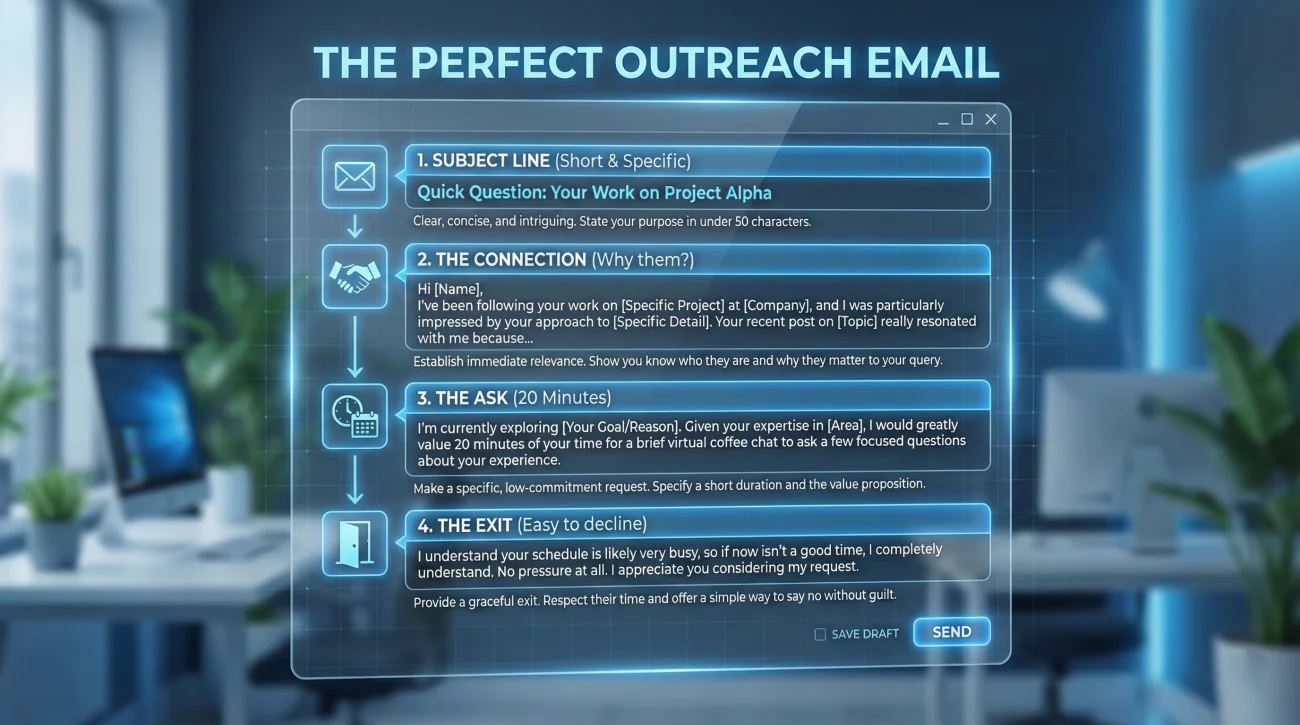
What Actually Works
Keep it short. Explain why them specifically. Ask for a small time commitment. Make declining easy.
Subject: Quick question about your career path
Hi [Name],
I came across your profile while researching careers in [field]. Your transition from [previous role] to [current role] caught my attention because I’m considering a similar path.
Would you have 20 minutes sometime in the next few weeks for a brief call? I’d love to hear how you approached that transition and what you wish you’d known earlier.
Completely understand if your schedule doesn’t allow. Either way, thanks for the work you share on [LinkedIn/their blog/etc.].
Best,
[Your name]
Notice what’s missing: no resume attachment, no request for job leads, no lengthy explanation of your entire career history. Clean, specific, respectful of their time.
Who to Ask
Start with second-degree connections. People who share a mutual contact, alumni from your school, members of professional groups you belong to. The shared context gives you a reason to reach out that cold contacts lack.
Don’t aim too high initially. The CEO probably won’t respond. The senior individual contributor three levels above you might. Build your network from the middle, not the top.
Questions That Unlock Real Conversations
The questions you ask signal whether you’ve done your homework or you’re wasting their time. Avoid anything Google could answer. Focus on insights only they can provide.
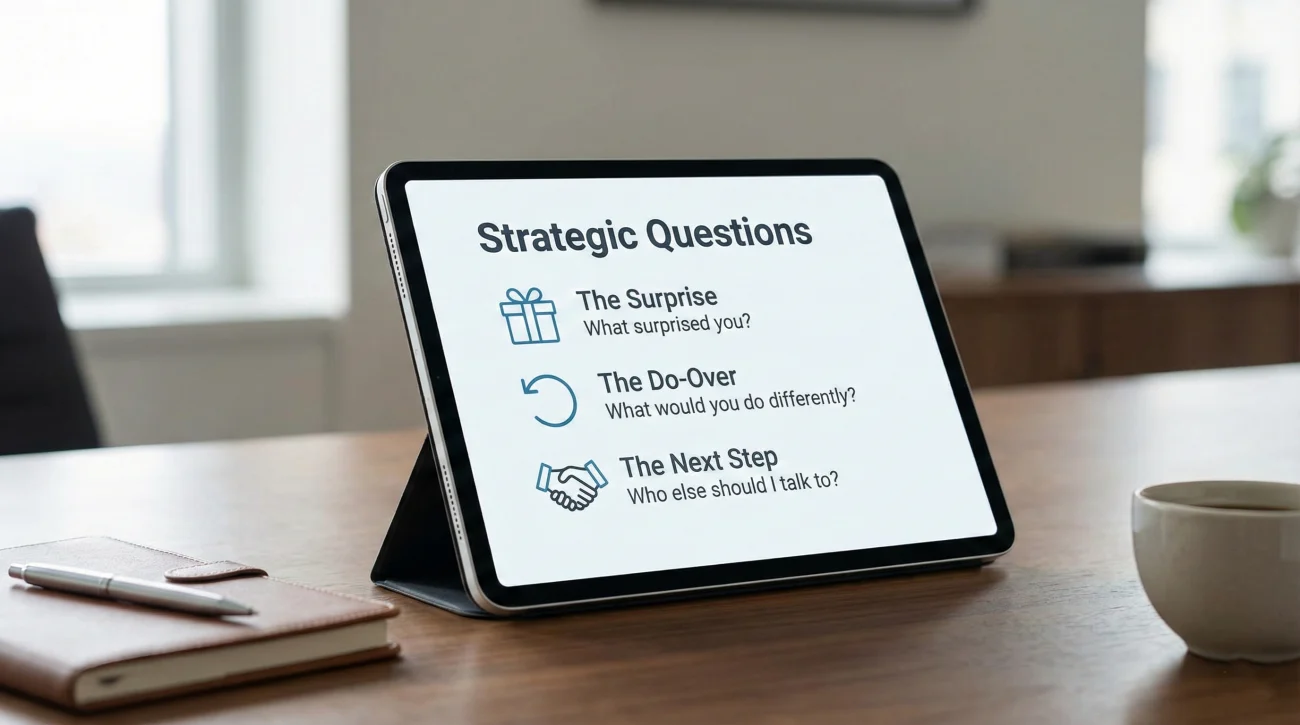
Understanding Their Path
What surprised you most about this field once you were actually in it?
This question reveals the gap between external perception and internal reality. The answer often includes warnings about challenges you wouldn’t anticipate and rewards you wouldn’t expect.
If you were starting over today with what you know now, what would you do differently?
People love giving advice they wish they’d received. This question generates specific, actionable insights rather than generic career platitudes.
How did you make the transition from [their previous role] to [current role]?
If their path resembles what you’re attempting, their specific steps become your potential roadmap.
Understanding the Industry
What skills or experiences do you see becoming more valuable in this field over the next few years?
Forward-looking questions show you’re thinking strategically, not just trying to get hired tomorrow.
What’s the biggest misconception people have about working in this area?
The answer helps you avoid saying something naive in future interviews and demonstrates you understand the field has nuance.
Who else would you recommend I speak with to learn more?
This question, asked at the end, is gold. One conversation leads to three more. Networks grow exponentially when you ask for introductions.
During the Conversation
You’re not selling yourself. You’re learning. That distinction changes everything about how you show up.
Listen More Than You Talk
Aim for an 80/20 split. They talk 80% of the time. You ask questions, listen actively, and follow up on interesting threads. If you’re doing most of the talking, you’ve turned an informational interview into a pitch, and they’ll notice.
“The best informational interviews I’ve had were with people who seemed genuinely curious about my experience. They asked follow-up questions. They took notes. They made me feel like my perspective mattered. Those are the people I remember when I hear about openings.”
Take Notes Visibly
Writing things down signals respect. It says their insights are valuable enough to record. It also helps you remember details for your follow-up message.
Respect the Time Limit
You asked for 20 minutes. At 18 minutes, check in: “I’m mindful of your time. Should we wrap up, or do you have a few more minutes?” This courtesy gets noticed. If they want to continue, they’ll say so. If they have another meeting, you haven’t put them in an awkward position.
What Not to Do
Informational interviews have unwritten rules. Breaking them burns the bridge you’re trying to build.
Never Ask for a Job Directly
The moment you ask “Are you hiring?” or “Can you get me an interview?”, you’ve revealed the conversation was transactional all along. They feel used. The relationship dies.
If they want to help with job opportunities, they’ll offer. And they’re more likely to offer when they don’t feel pressured.
Don’t Bring Your Resume Unless Asked
Handing over a resume uninvited turns the conversation into something it wasn’t supposed to be. If they ask for your resume, great. Otherwise, keep it in your bag.
Warning: Treating informational interviews as stealth job applications destroys your reputation fast. People talk. One bad experience can close doors across an entire professional community.
Don’t Oversell Yourself
You’re there to learn, not to impress. Talking about your achievements when they didn’t ask makes you seem like you missed the point of the meeting. Trust that your questions, curiosity, and follow-through will create a positive impression without explicit selling.
The Follow-Up That Actually Matters
What you do after the meeting determines whether this becomes a relationship or a forgotten conversation.
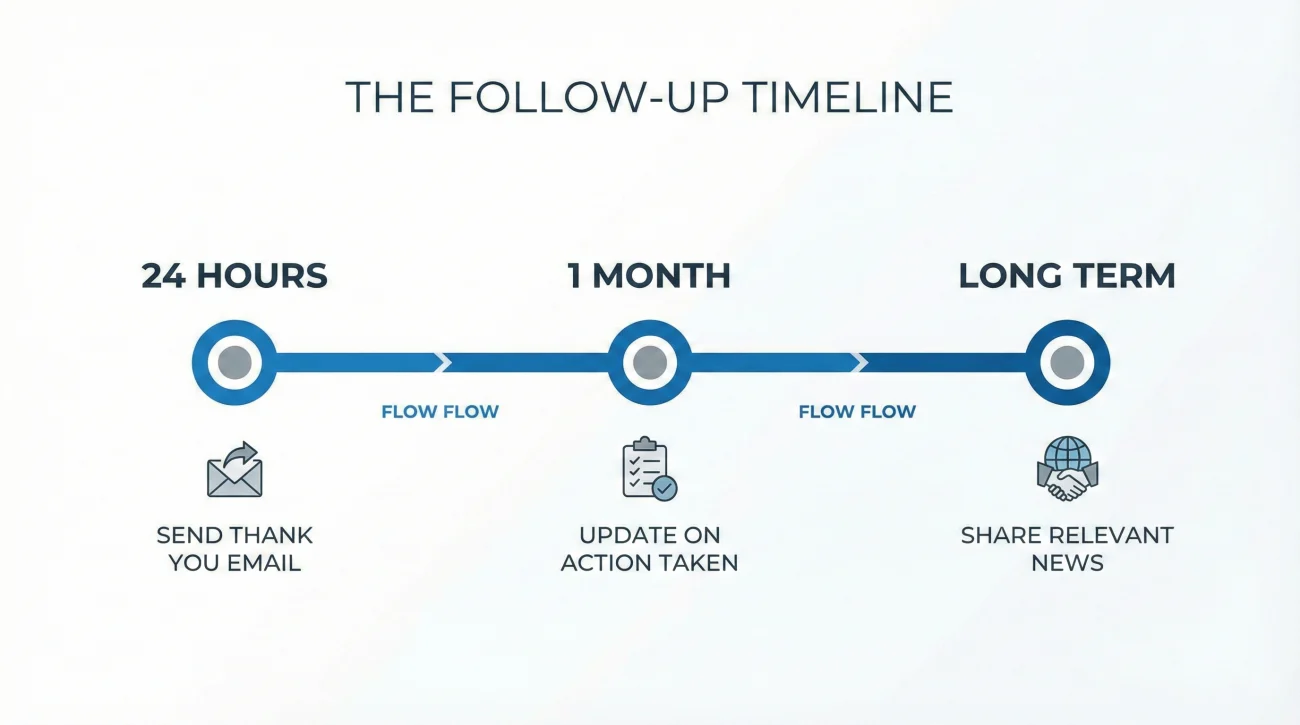
Send Thanks Within 24 Hours
Subject: Thank you for your time today
Hi [Name],
Thank you for taking time to speak with me this morning. Your insight about [specific thing they said] was particularly helpful. I hadn’t considered [how it applies to your situation].
I’m going to follow up on your suggestion to [specific action item from conversation]. I’ll let you know how it goes.
Really appreciate your generosity with your time.
Best,
[Your name]
Notice the specificity. Reference something particular they said. Mention a concrete action you’re taking based on their advice. Generic thank-yous are forgettable. Specific ones show you were actually listening.
Stay Connected Over Time
The relationship doesn’t end with one conversation. Share an article relevant to something you discussed. Update them when you take action on their advice. Congratulate them on professional milestones you see on LinkedIn.
These small touchpoints maintain the connection without being intrusive. When an opportunity arises months later, they remember you because you stayed on their radar.
Developing your approach to these conversations is part of broader networking strategies that compound over time.
When Informational Becomes Opportunity
Sometimes informational interviews turn into job leads organically. Here’s how to handle that transition gracefully.
If They Mention an Opening
Express genuine interest: “That sounds fascinating. I’d love to learn more about what you’re looking for.” Let them lead. They’ll tell you how to proceed if they want you to pursue it.
Following Up When You’re Actively Searching
If you’ve built a relationship through informational interviews and later begin a job search, you can reach out:
“I’ve started actively exploring new opportunities in [field]. You mentioned last time that [relevant insight]. I’d welcome any thoughts you might have on where to focus my search, or anyone else you’d suggest I speak with.”
Notice you’re still not asking for a job directly. You’re asking for guidance. If they know of something, they’ll tell you. If they want to advocate for you internally, they will. The relationship you’ve built does the work.
Questions People Ask About This Process
🔢 How many informational interviews should I conduct?
When actively exploring a new direction, aim for 5-10 conversations to get a real understanding of the field. Quality matters more than quantity, but you need enough data points to spot patterns.
😶 What if they don’t respond to my outreach?
Most people won’t respond. That’s normal, not personal. Send one polite follow-up after a week. If still no response, move on. Plenty of other people will say yes.
☕ Should I offer to pay for their coffee?
Yes, always offer. They’re giving you their time. If they insist on paying, let them. But the offer matters.
💻 Is virtual or in-person better?
In-person creates stronger connections when geography allows. Video calls are perfectly acceptable when schedules or distance make meeting difficult. Either beats not having the conversation.
🌐 What if I don’t have any connections in the field I want to enter?
Start with alumni networks, LinkedIn groups, and professional associations. Cold outreach works when the message is specific and respectful. Everyone’s network started somewhere.
The Coffee Chat That Changed My Career
That job offer I mentioned at the beginning? It came from my seventh informational interview. The woman I met with wasn’t hiring when we spoke. But four months later, she created a position because she remembered our conversation.
She told me later: “You asked questions that showed you actually understood what we do. Most people who reach out just want something from me. You seemed genuinely interested in learning.”
That’s the secret to informational interview questions that open doors. Genuine curiosity beats strategic networking every time. People can tell the difference. And the ones who can help you most are exactly the ones who will notice if you’re faking it.
Ask real questions. Listen to the answers. Follow up with action. Let the relationships develop naturally. The opportunities follow.
⚠️ Disclaimer: The interview strategies, sample answers, and negotiation tips provided in this guide are for educational purposes only. Hiring decisions are subjective and vary by company and industry. While these strategies are based on professional HR standards, they do not guarantee a specific job offer or result.