An Introvert’s Confession From the Other Side of the Table
I’m going to tell you something most candidates don’t expect from an HR professional: I’m an introvert. After every full day of interviews, I need hours of quiet recovery time. Large networking events drain me completely. Small talk feels like work.
And I’ve built a successful twelve-year career conducting thousands of interviews.
Introvert interview tips aren’t about pretending to be extroverted. They’re about leveraging your natural strengths, managing your energy strategically, and reframing what interviewers actually need to see from you.
This guide comes from personal experience on both sides of the interview table. Everything here has been tested by introverts, including me, who landed offers despite dreading the interview process.
Reframing Introversion as Strength
Most interview tips for shy people start from the assumption that introversion is a handicap to overcome. That’s backwards.
Introverts bring qualities that many hiring managers actively seek: thoughtfulness before speaking, deep listening, careful observation, and the ability to work independently. Your challenge isn’t hiding your nature. It’s communicating these strengths effectively.
What Interviewers Actually Look For
I’ve debriefed with hundreds of hiring managers over the years. Very few complain about candidates being too quiet or too thoughtful. They complain about candidates who don’t listen, who give surface-level answers, who seem to be performing rather than engaging genuinely.
Introverts naturally avoid most of these mistakes. Your tendency to think before speaking? That’s what interviewers call “being thoughtful.” Your preference for depth over breadth? That’s what they call “attention to detail.”
Expert Advice: Stop trying to act extroverted. Instead, demonstrate your introvert strengths deliberately and let interviewers see the value you bring.
Depth Over Volume
Extroverted candidates often talk more. Introverts can use this to their advantage by saying less but saying it better. One well-crafted, specific example beats three generic ones.
I interviewed a candidate last year who spoke perhaps 40% as much as other candidates for the same role. Every word counted. Her stories were specific, her reasoning was clear, and her questions showed genuine curiosity rather than trying to impress. She got the offer.
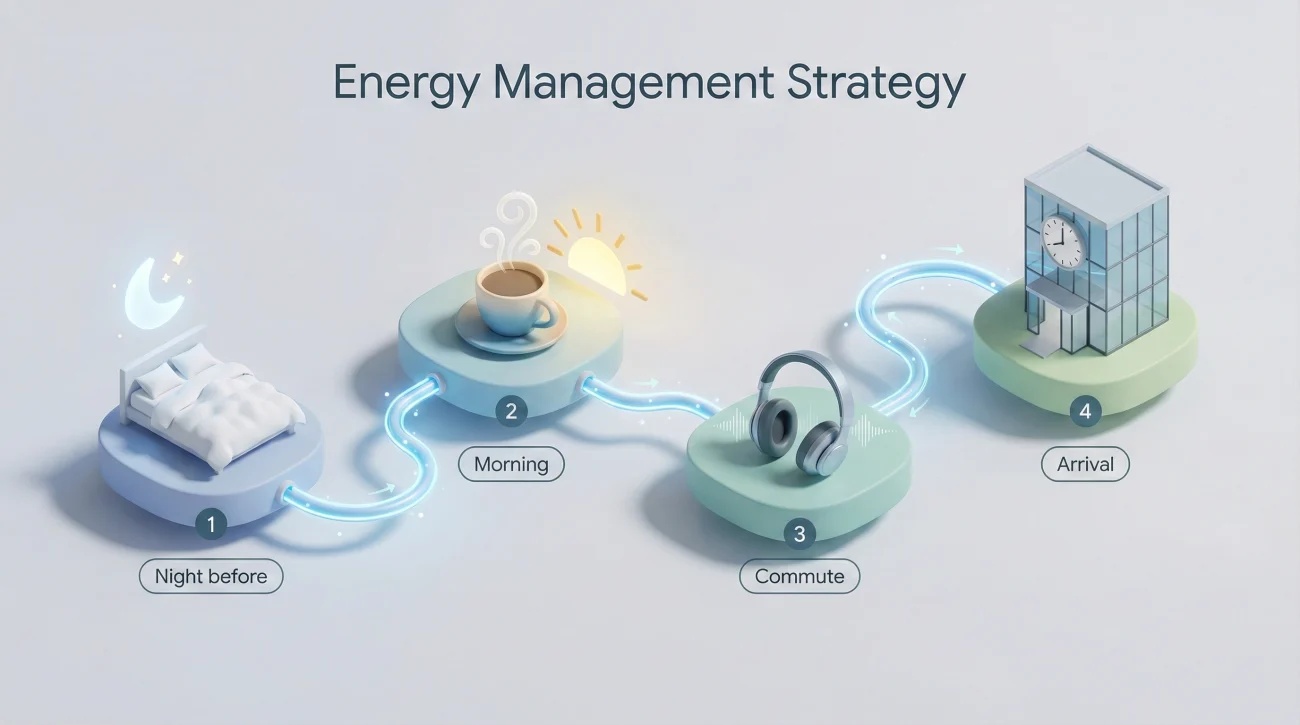
Energy Management Strategy
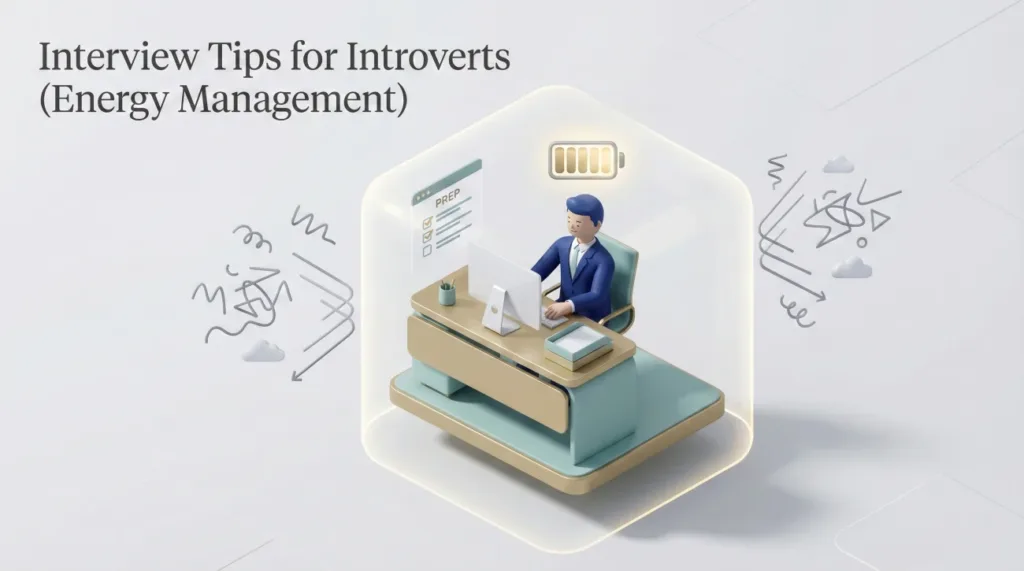
Energy management interviews matter more for introverts than extroverts because sustained social interaction depletes rather than energizes us.
The Day Before and Morning Of
Protect your energy reserves. Don’t schedule anything draining before your interview. If possible, have a quiet morning with minimal social interaction. This isn’t selfish preparation. It’s strategic resource management.
I learned this the hard way early in my career. I scheduled a networking breakfast before an important interview, thinking it would “warm me up.” I arrived at the interview already depleted. Never again.
- 🌙 Night before: Early bed, no social events
- ☀️ Morning: Quiet routine, solo coffee, minimal phone calls
- 🚗 Commute: Silence or calming music, not podcasts or calls
- ⏰ Arrival: 15 minutes early to sit quietly and center yourself
Managing Energy During the Interview
Long interview days with multiple rounds exhaust introverts faster than extroverts. Build in micro-recovery moments where possible.
When offered water or a restroom break, take it even if you don’t desperately need it. Those two minutes alone can restore surprising amounts of energy. If you’re moving between rooms, walk slowly and breathe deeply rather than chatting with your escort.
💡 Pro Tips: Request your interview schedule in advance so you can mentally prepare for each session and identify where your energy peaks and valleys might fall.
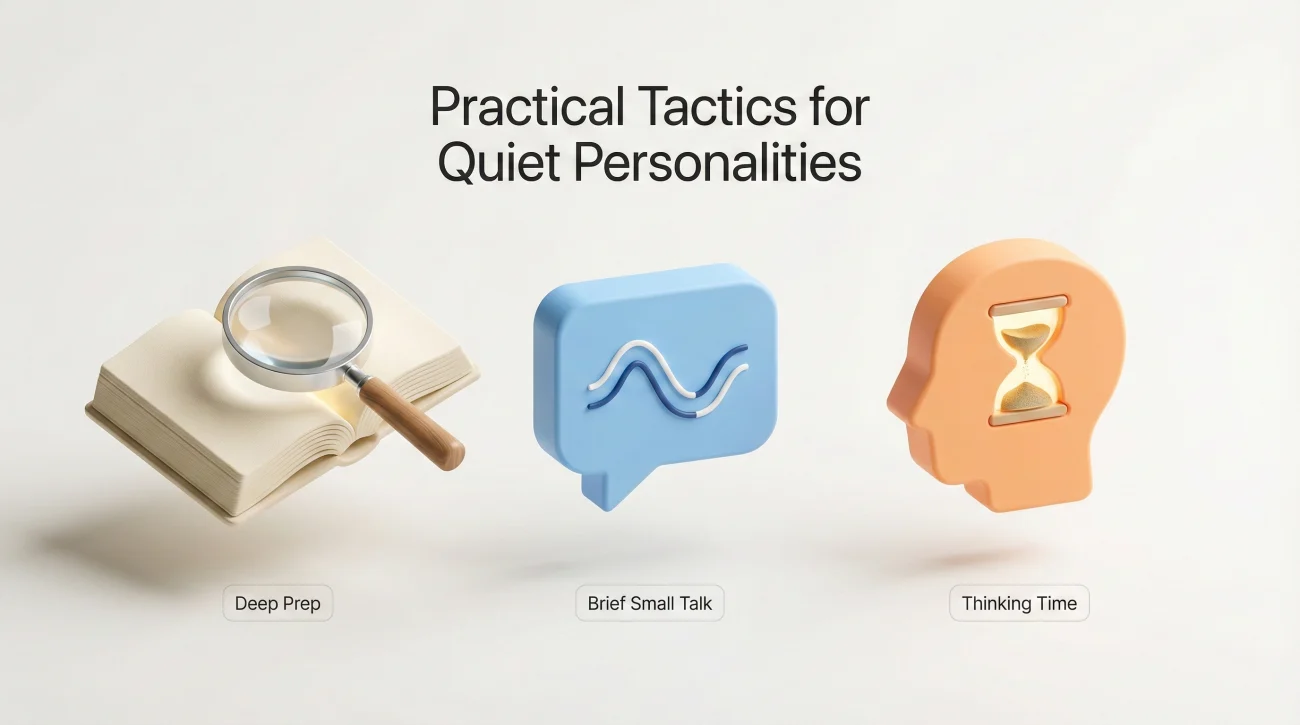
Practical Tactics for Quiet Personalities
These introverts job interviews strategies address specific challenges we face.
Preparation Depth
Introverts typically prepare more thoroughly than extroverts, and this is an advantage. Use it fully. When you know your material deeply, you can relax into natural conversation rather than searching for things to say.
Prepare specific stories with concrete details. Have numbers and outcomes ready. Know the company well enough that genuine questions arise naturally. This preparation reduces the cognitive load during the interview, freeing energy for engagement.
The Small Talk Question
How do I handle small talk when it drains me?
Keep small talk brief but warm. Prepare two or three safe topics: something about the building, a recent company news item, the commute. Having these ready prevents the exhausting search for conversation starters.
Then transition to substantive topics quickly. Most interviewers prefer getting to the real conversation anyway. “This is a beautiful office. How long has the team been here?” followed by “I’m excited to learn more about the role” moves things forward naturally.
Creating Thinking Time
Extroverts think out loud. Introverts think internally. Interviews often favor the thinking-out-loud approach, but you can adapt.
Phrases like “That’s a great question, let me think about the best example” buy processing time without seeming slow. You can also repeat or paraphrase the question, which shows engagement while giving your internal processor time to work.
“I used to panic when I didn’t have an immediate answer. Now I say ‘I want to give you a thoughtful response’ and take a few seconds. Interviewers seem to appreciate it more than rapid-fire answers.”
That’s from a marketing director I placed who describes herself as “painfully introverted.” She’s now known for her thoughtful communication style, which she presents as a deliberate choice rather than a limitation.
Communicating Quiet Strengths
A quiet personality interview can position itself as an asset rather than something to overcome.
Your Listening Advantage
Introverts are often better listeners than extroverts. Make this visible. Reference specific things the interviewer said earlier. Ask follow-up questions that show you processed their words carefully. Take notes that demonstrate attention.
One interviewer told me, “She remembered something I mentioned casually in the first five minutes and connected it to her answer an hour later. That attention to detail impressed me more than anything on her resume.”
Independent Work Capacity
Many roles require self-direction and focused independent work. Introverts excel here. When asked about work style, don’t just say you can work independently. Provide examples where your ability to focus deeply produced results others couldn’t achieve.
For strategies on presenting yourself authentically while highlighting your strengths, our interview success tips guide provides additional frameworks.
Asking Better Questions
Introverts often ask better questions because we’ve been observing and processing rather than planning what to say next. Use this. Your questions can demonstrate the analytical thinking and genuine curiosity that made you a strong candidate in the first place.
Warning: Don’t force yourself to ask questions just to fill time. One insightful question beats five generic ones.
Handling Draining Interview Formats
Panel interviews and group interviews pose particular challenges for introverts.
Panel Interviews
Multiple people firing questions can overwhelm introverts. Prepare by accepting that you can’t connect deeply with everyone. Identify the key decision-maker and focus most of your energy there while maintaining professional engagement with others.
Distribute your eye contact, but don’t stress about giving everyone equal attention. Natural conversation isn’t perfectly balanced, and forced equality feels robotic.
Group Interviews
When interviewing alongside other candidates, you don’t need to be the loudest voice. Speak when you have something substantive to contribute. Build on others’ points thoughtfully. Let extroverts fill silence while you contribute quality.
Interviewers in group settings actively look for candidates who listen and collaborate, not just those who dominate airtime.
| Challenge | Introvert Approach | Why It Works |
|---|---|---|
| Small talk | Brief warmth, quick transition | Shows social awareness without draining energy |
| Thinking time | Acknowledge, then pause | Frames thoughtfulness as deliberate |
| Long interview days | Strategic micro-breaks | Preserves energy for key moments |
| Panel pressure | Focus on key decision-maker | Concentrates limited energy effectively |
| Group competition | Quality over quantity contributions | Differentiates through substance |
❓ FAQ
🎯 Should I tell interviewers I’m an introvert?
Not directly. Instead, frame your qualities positively: “I’m someone who thinks carefully before speaking” or “I do my best work with focused independent time.”
💼 What if they ask about being outgoing?
Distinguish between social skills and social energy. You can be excellent in client meetings while preferring quiet independent work. Emphasize your ability to engage effectively when needed.
⏰ How do I recover energy between interview rounds?
Take bathroom breaks even when not needed. Step outside briefly if possible. Close your eyes and breathe deeply. Avoid chatting with other candidates in waiting areas.
📋 Are introverts at a disadvantage for leadership roles?
Research shows introverted leaders often outperform extroverted ones, particularly with proactive teams. Emphasize your listening skills, thoughtful decision-making, and ability to create space for others.
✨ What if I completely run out of energy mid-interview?
Request a brief break if possible. If not, slow down your responses and focus on speaking less but more clearly. Quality becomes even more important when quantity is limited.
Final Thoughts
The best introvert interview tips don’t ask you to become someone else. They help you present your authentic self effectively while managing the unique energy demands interviews place on quiet personalities.
Your introversion brought you valuable skills: deep thinking, careful listening, independent capability, and thoughtful communication. The goal isn’t to hide these. It’s to let interviewers see them clearly. When you do that, being an introvert becomes exactly what gets you hired.
⚠️ Disclaimer: The interview strategies, sample answers, and negotiation tips provided in this guide are for educational purposes only. Hiring decisions are subjective and vary by company and industry. While these strategies are based on professional HR standards, they do not guarantee a specific job offer or result.