
The Power of Strategic Silence
Count how many times you say “um” or “uh” in a one-minute answer. Most people are shocked when they actually track it. Ten. Fifteen. Sometimes more.
Each filler word chips away at your credibility. But here’s what transformed my own interview performance years ago: the solution isn’t speaking faster to avoid gaps. It’s embracing silence.
Speaking confidently doesn’t mean filling every second with sound. The most authoritative communicators I’ve observed across twelve years of hiring share one trait: they’re comfortable with pauses. They think, then speak. No fillers needed.
This guide shows you how to develop that same comfort, starting with understanding why filler words happen and how to replace them with something far more powerful.
Why Your Brain Reaches for Fillers
Filler words aren’t a sign of low intelligence or poor preparation. They’re a natural verbal placeholder your brain uses to maintain conversational flow while processing the next thought.
The problem is context. In casual conversation, occasional “ums” go unnoticed. In interviews, where every word carries weight, they accumulate into an impression of uncertainty or lack of preparation.
The Anxiety Amplifier
Interview nerves accelerate filler word usage dramatically. Your brain works harder under pressure, which creates more processing gaps. Simultaneously, the fear of silence makes you desperate to fill those gaps with something, anything.
A speech coach I worked with, Elena, explained the vicious cycle:
“Nervous speakers say ‘um’ to buy thinking time, then notice they said ‘um,’ then get more nervous about sounding uncertain, which makes them say more fillers. Breaking the cycle requires accepting that silence is not the enemy.”
Common Filler Triggers
- Transitioning between ideas
- Searching for specific words or numbers
- Responding to unexpected questions
- Buying time while deciding how much detail to provide
- Feeling uncertain about your answer
💡 Pro Tips: Track your personal triggers by recording yourself answering practice questions. You’ll notice patterns in when fillers appear.
The Pause Technique
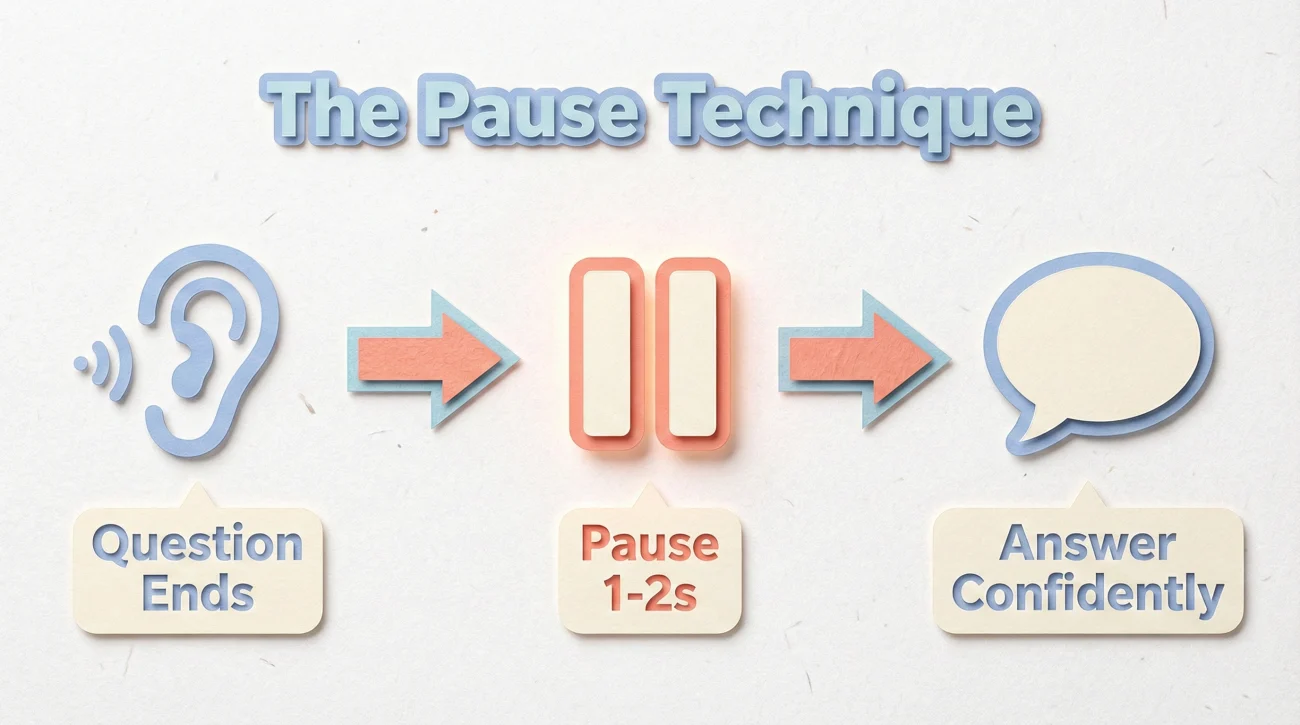
The pause technique interview strategy replaces verbal fillers with deliberate silence. Instead of saying “um” while thinking, you simply pause. Nothing more.
This feels excruciating at first. Your brain screams that the silence is lasting forever, that you look unprepared, that the interviewer is judging you. None of that is true.
The Perception Gap
What feels like a ten-second pause to you registers as maybe two seconds to your listener. Try this exercise: pause for three actual seconds while someone watches. Ask them to estimate the duration. Most people guess one second or less.
Interviewers interpret thoughtful pauses as confidence and deliberation. They interpret filler words as uncertainty and nervousness. The choice is clear.
How to Implement It
Start with the end of questions. When an interviewer finishes asking something, pause before responding. Take a breath. Organize your first sentence. Then begin speaking clearly.
This initial pause accomplishes several things: it shows you’re thinking carefully, it gives you time to structure a coherent response, and it breaks the pattern of reactive answering that leads to fillers.
Expert Advice: The moment after a question ends is when you have the most permission to pause. Use it deliberately rather than rushing to respond.
- ⏸️ Question ends: Pause 1-2 seconds before responding
- 🔄 Between points: Brief pause when transitioning ideas
- 🎯 Before key points: Pause to signal importance
- 🤔 When searching for words: Silent pause instead of filler
Training Your Brain to Pause
Eliminating interview filler words requires deliberate practice. Your verbal patterns have developed over years. They won’t change from reading an article.
The Recording Method
Record yourself answering common interview questions. Play it back and count every filler word. Most people are genuinely surprised by the number. Awareness alone begins changing behavior.
Then record again, consciously replacing each potential filler with silence. Compare the recordings. The paused version sounds more authoritative, even though you felt uncomfortable during recording.
Practice With Accountability
Ask a friend to raise their hand every time you say a filler word during a mock interview. The immediate feedback interrupts the automatic pattern and makes you hyper-aware of the habit.
How long does it take to significantly reduce filler words?
Most people see noticeable improvement within two weeks of daily practice. Complete elimination takes longer and isn’t necessary. Occasional fillers are natural. Constant fillers are the problem.
Daily Conversation Training
Don’t limit practice to mock interviews. In everyday conversations, consciously pause before responding. Practice ordering coffee without saying “um.” Describe your weekend plans to a colleague using deliberate pauses instead of fillers.
I started doing this years ago during regular meetings. Within a month, colleagues commented that I seemed more authoritative without understanding why. The pause technique had become natural.
Beyond Fillers: Complete Confident Speech
Confident speech interview performance involves more than eliminating fillers. Your pace, pitch variation, and ending patterns all contribute.
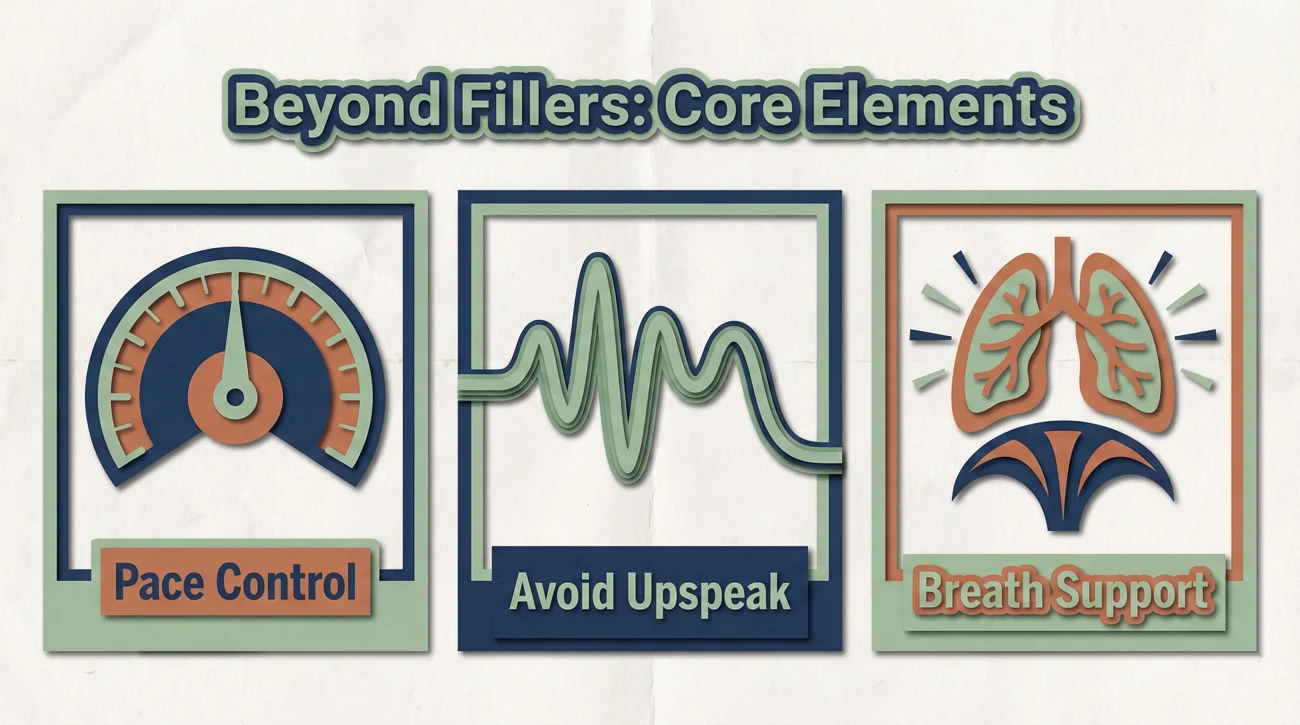
Controlling Your Pace
Nervous speakers rush. They want to finish before something goes wrong. This racing pace makes it harder to think clearly, which creates more fillers, which increases anxiety.
Deliberately slow down. Speak at about 120-150 words per minute for interviews. That pace sounds confident and allows listeners to absorb your points.
Avoiding Upspeak
Upspeak means ending declarative statements with rising intonation, as if asking a question. “I managed a team of five?” sounds uncertain. “I managed a team of five.” sounds confident.
Note: Upspeak makes statements sound like requests for approval, undermining your authority even when your content is strong.
Breath and Voice Support
Shallow breathing produces a thin, reedy voice that sounds nervous. Breathing deeply before speaking and supporting your voice from your diaphragm produces a richer, more confident tone.
Before important responses, take a breath that expands your belly, not just your chest. This simple adjustment changes how your voice sounds and how you feel.
Real Scenarios: Fillers vs. Pauses
See the difference in how these responses land:
| With Fillers | With Pauses |
|---|---|
| “So, um, I basically, uh, led the project, you know, from like the planning phase through, um, completion.” | “I led the project.” [pause] “From planning through completion.” |
| “That’s a good question, um, let me think, uh, I would say, um, probably my experience with, you know, data analysis.” | “That’s a good question.” [pause] “My experience with data analysis stands out.” |
| “Well, uh, the biggest challenge was, um, kind of like getting everyone, uh, aligned.” | [pause] “The biggest challenge was getting everyone aligned.” |
The content is essentially identical. The impression is dramatically different. The paused versions command attention. The filled versions dissipate it.
For more strategies on presenting yourself effectively during interviews, explore our expert interview guidance for comprehensive preparation techniques.
Handling Difficult Moments
What about stop saying um in interviews when you genuinely don’t know the answer? When your mind goes blank?
First, a longer pause is acceptable here. The interviewer knows you’re thinking. Silence communicates that you’re taking the question seriously.
If you need more time, narrate your thinking briefly: “I’m considering a few different examples.” This fills space meaningfully while you organize thoughts, without resorting to verbal static.
For genuinely unknown answers, confident admission beats stammering guesses: “I haven’t worked with that specific technology.” [pause] “However, I’ve learned similar tools quickly in the past.”
Expert Advice: Confident speakers know what they know and what they don’t. They communicate both clearly without apology or excessive qualification.
❓ FAQ
🎯 Is it okay to pause for several seconds?
Yes, within reason. Pauses up to 3-4 seconds are generally comfortable. Longer pauses work better with acknowledgment: “Let me think about that carefully.”
💼 What if pausing feels too awkward?
The discomfort fades with practice. What feels like an eternity to you seems natural to listeners. Push through the initial awkwardness and trust the technique.
⏰ Should I eliminate all filler words?
Complete elimination isn’t necessary or natural. Aim for dramatic reduction. A few fillers across an hour conversation are unremarkable. Multiple fillers per sentence are problematic.
📋 Do phone interviews require different techniques?
Fillers are more noticeable without visual cues. The pause technique becomes even more important. Use slightly shorter pauses since silence feels longer over the phone.
✨ Can speaking too slowly seem unprepared?
There’s a balance. Slow enough to sound thoughtful, fast enough to sound engaged. Around 130 words per minute works well for most interview contexts.
Final Thoughts
Speaking confidently is a learnable skill, not an innate trait. The candidates who sound most assured in interviews often weren’t born that way. They practiced replacing verbal clutter with purposeful silence.
Start today. Record yourself. Count your fillers. Then practice the pause. Within weeks, you’ll sound like a different person, the person interviewers remember as thoughtful, confident, and worth hiring.
⚠️ Disclaimer: The interview strategies, sample answers, and negotiation tips provided in this guide are for educational purposes only. Hiring decisions are subjective and vary by company and industry. While these strategies are based on professional HR standards, they do not guarantee a specific job offer or result.