They Are Comparing You in Real Time
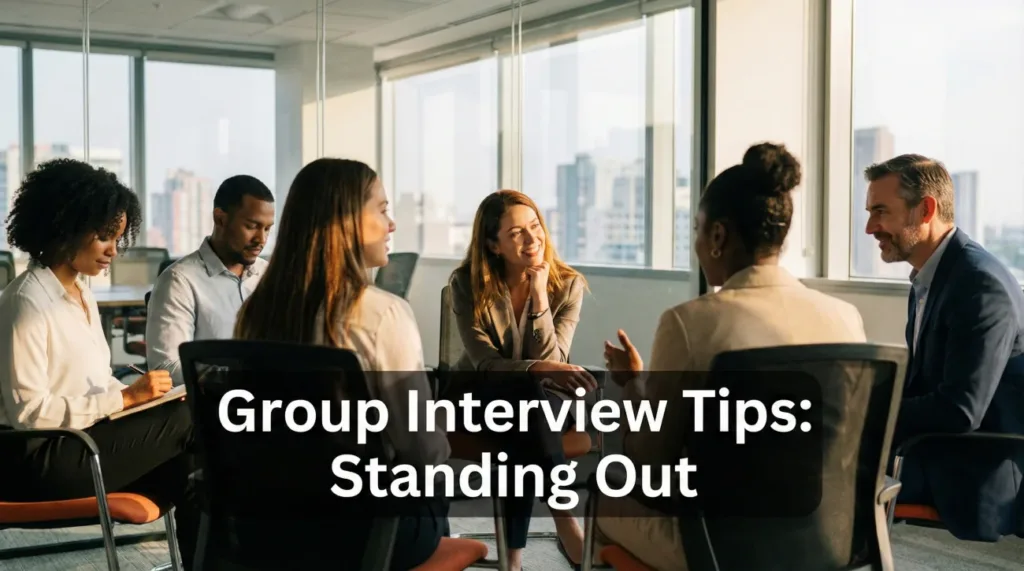
In a typical interview, the hiring manager meets candidates one by one, comparing memories and notes afterward. In a group interview, that comparison happens live. You answer a question, then watch someone else answer the same question better or worse. The interviewer watches your reaction.
This is the uncomfortable reality of group interview tips: your performance is not evaluated in isolation. Every word you say is measured against what the person next to you just said. Every moment of silence becomes a missed opportunity that someone else seizes.
I have run group interviews for retail positions, graduate programs, and management trainee roles. The candidates who advance rarely give the longest or most polished answers. They demonstrate something harder to fake: the ability to contribute without dominating, to stand out without making others look bad.
Expert Advice: “The biggest mistake I see in group interviews is treating it like a competition to win. The candidates who try to ‘win’ by talking the most, interrupting, or one-upping others almost never get called back. We are looking for team players, not individual stars who will create conflict.”
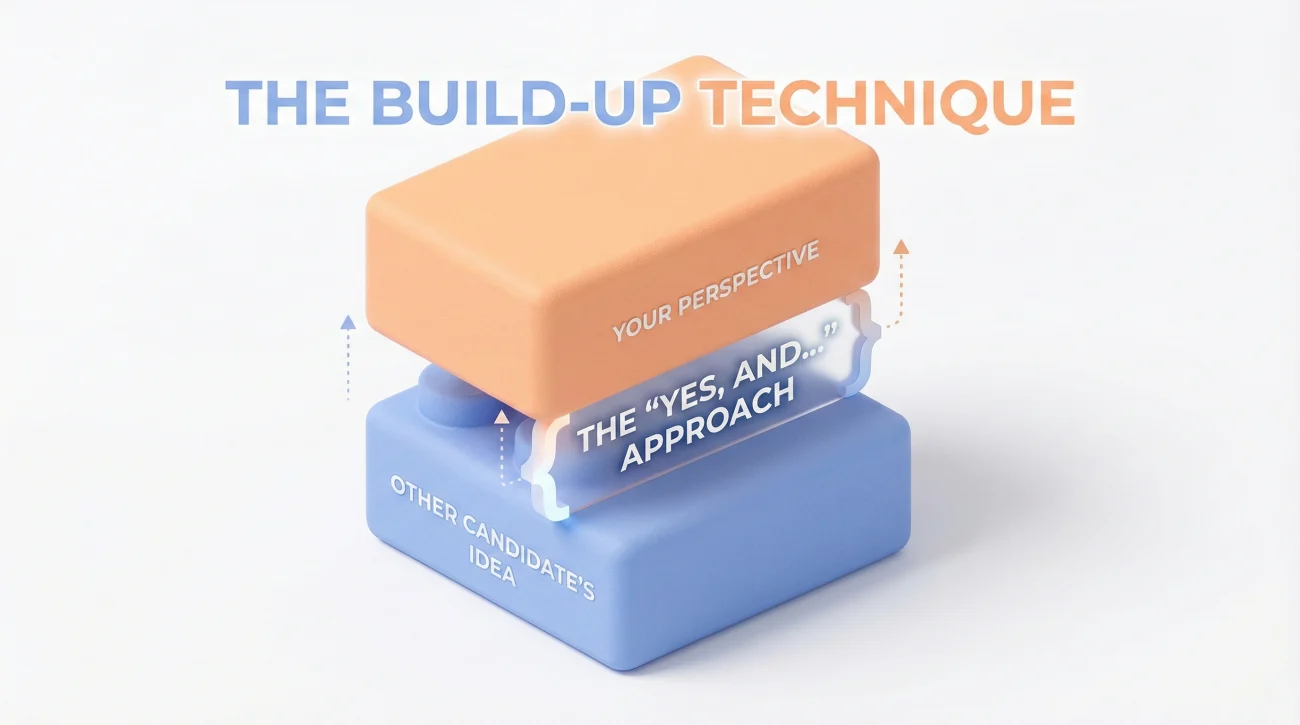
The Build-Up Technique
Here is the counterintuitive strategy that works: instead of competing with other candidates, build on what they say. This demonstrates listening skills, collaborative thinking, and confidence without arrogance.
How It Works
When another candidate finishes speaking, acknowledge their point before adding your own perspective. This is not about agreeing with everything. It is about showing you paid attention and can think beyond your own prepared answers.
🚫 Weak response (ignoring others)
“I think the most important quality for this role is communication skills because…” (Launches into prepared answer without acknowledging anyone)
✅ Strong response (building up)
“Sarah made a great point about adaptability. I would add that communication skills tie directly into that because adapting to new situations requires…” (Shows listening + adds value)
A hiring manager I know calls this the “yes, and” approach, borrowed from improv comedy. You accept what was offered and build something new on top of it. Interviewers notice immediately because so few candidates do it.
When to Respectfully Disagree
Building up does not mean constant agreement. Sometimes the best contribution is a different perspective, delivered respectfully.
💡 Pro Tip: Frame disagreement as addition, not correction. Say “Another angle to consider…” instead of “Actually, I think you’re wrong because…”
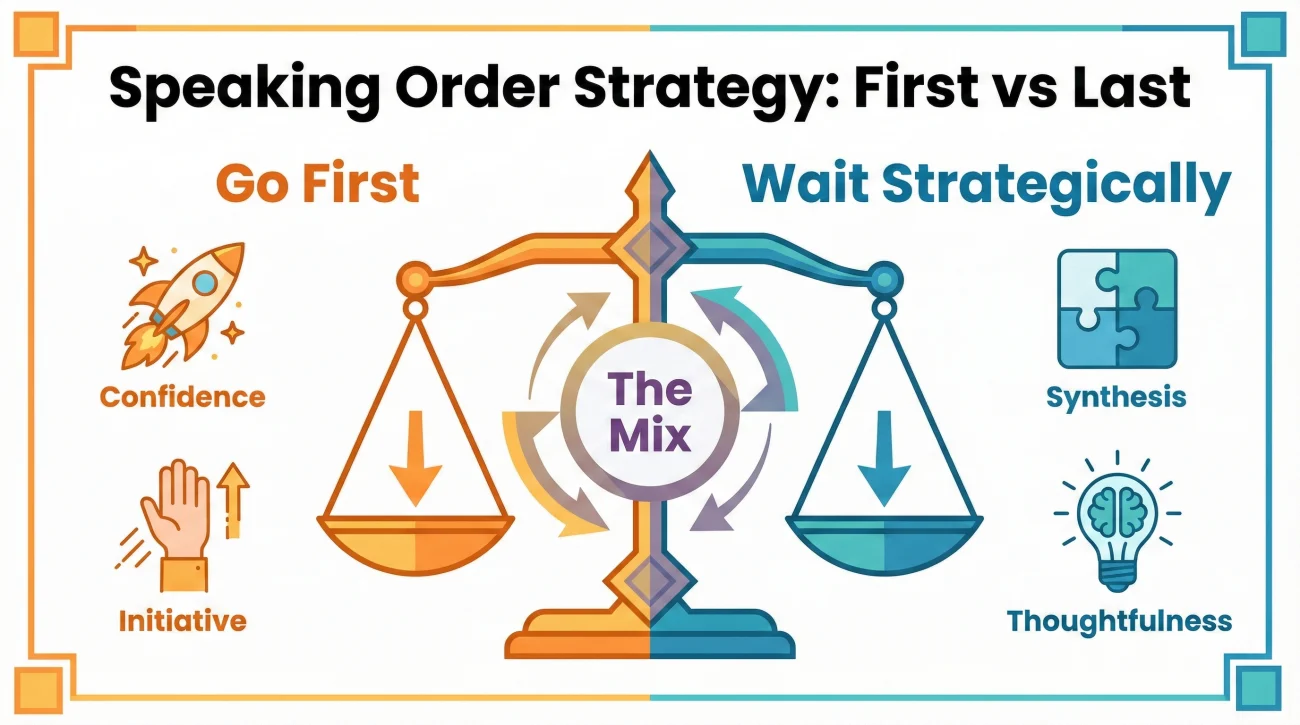
The Speaking Order Strategy
When should you speak first? When should you wait? This tactical decision affects how interviewers perceive you.
Going First
Volunteering to answer first signals confidence and initiative. Interviewers notice who steps up when everyone else hesitates. However, going first also means you cannot build on others’ answers, and you set a standard that might be surpassed.
Go first when:
- You have a strong, prepared answer for that specific question
- The room is silent and someone needs to break the ice
- You have not spoken much yet and need to establish presence
Strategic Waiting
Waiting to speak last gives you the advantage of hearing all other answers and offering something different or synthesizing the best points. It also lets you appear thoughtful rather than eager.
Wait when:
- You want time to formulate a more complete answer
- Others are rushing to speak and you want to stand out by being calm
- You can add a unique perspective after hearing what others miss
The ideal strategy is mixing both. Go first sometimes, wait sometimes. Interviewers track patterns. Candidates who always jump in first seem overeager. Candidates who never volunteer seem passive.
What They Watch When You Are Not Talking
Here is what most candidates miss: interviewers evaluate you constantly, not just when you speak. Your body language while others talk reveals as much as your answers.
Are you actually listening or just waiting for your turn?
Interviewers watch your eyes. If you are mentally rehearsing your next answer while someone else speaks, it shows. Nodding, maintaining eye contact with the speaker, and taking brief notes all signal genuine engagement.
How do you react when someone gives a better answer?
Your face when a competitor delivers a brilliant response tells the interviewer everything about your emotional intelligence. Visible frustration or dismissiveness is a red flag. A genuine nod of appreciation shows maturity.
What do you do during awkward silences?
When a question hangs in the air and nobody wants to answer, the person who calmly steps in demonstrates leadership. The person who looks at the floor hoping someone else will go demonstrates the opposite.
Expert Advice: “I once watched a candidate lose the job by rolling her eyes when another candidate gave a long answer. Her own responses were excellent, but that single reaction told me she would be difficult to work with. We hired someone with weaker answers but better interpersonal awareness.”
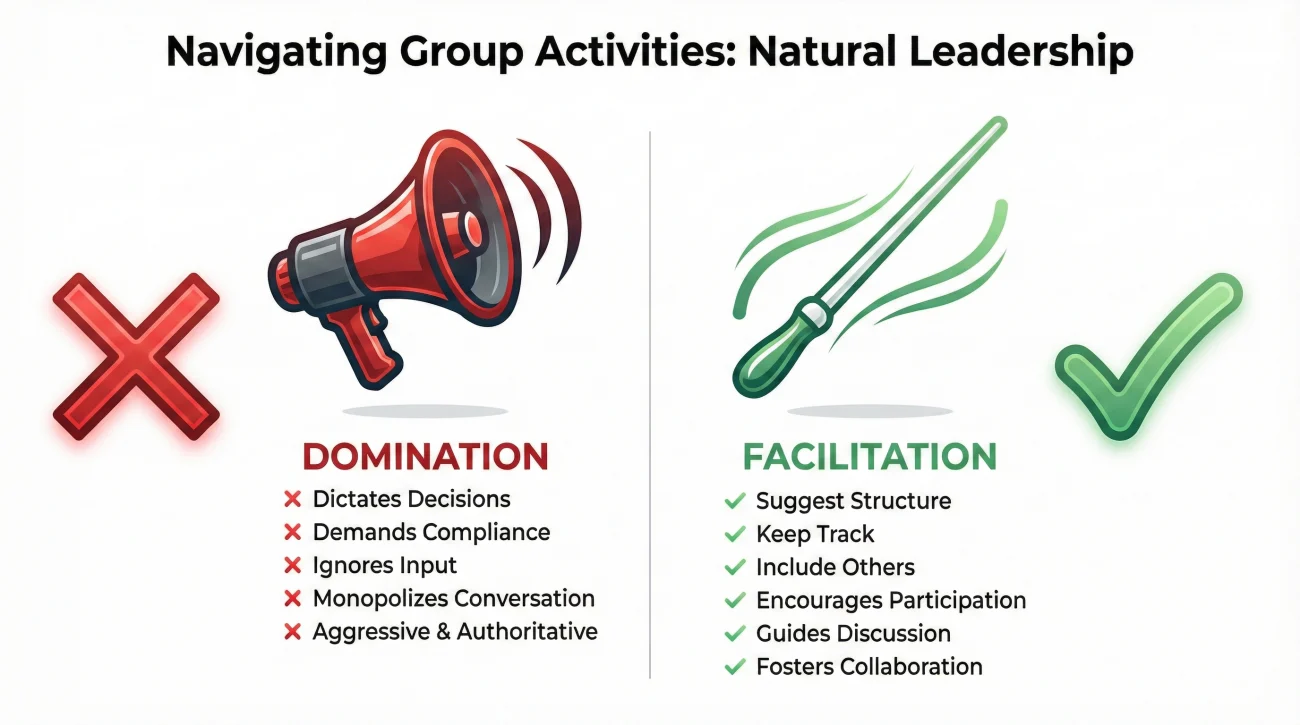
Many group interviews include collaborative exercises: solve a problem together, design a product, plan an event. These activities reveal more about you than any interview question.
Demonstrating Natural Leadership
Do not announce “I will be the leader” or immediately start directing others. That aggressive approach backfires. Instead, demonstrate leadership through action: suggest a structure for the discussion, keep the group on track when conversation drifts, make sure quieter members have a chance to contribute.
A training manager I worked with described her ideal group activity candidate: “Someone who moves the group forward without claiming credit. Who asks ‘what do you think?’ as often as they share their own ideas. Who notices when someone has been quiet and draws them in.”
Handling Dominant Candidates
Sometimes another candidate tries to take over the entire exercise. Pushing back aggressively creates conflict that reflects poorly on everyone. Instead, redirect politely:
- “That is one approach. Let us hear what others think before we decide.”
- “Good point. Building on that, what if we also considered…”
- “I want to make sure we are using everyone’s expertise. [Name], you mentioned experience in this area. What is your take?”
These responses demonstrate diplomacy and team orientation, exactly what interviewers want to see.
Preparing for the Unknown
Group interviews are harder to prepare for because you cannot predict what other candidates will say or how they will behave. The best preparation focuses on flexibility.
Building Your Story Bank
Prepare five to seven stories from your experience that demonstrate different qualities: leadership, teamwork, problem-solving, creativity, resilience. In a group setting, you may need to pivot quickly if someone else tells a similar story. Having multiple options prevents you from being caught with nothing to say.
What If You Know Other Candidates?
Sometimes you will recognize people in the waiting room, perhaps from your industry, university, or previous applications. Acknowledge them warmly. Do not let competition create awkwardness. Interviewers observe pre-interview dynamics and notice candidates who seem threatened by capable competition.
💡 Pro Tip: Arrive ten minutes early. Candidates who arrive first often set the social tone of the waiting room and get informal face time with any staff member who greets them.
❓ FAQ
🗣️ Someone keeps dominating the conversation. How do I cut in?
Wait for a natural pause, then jump in with “Building on that point…” or “I would like to add…” Do not apologize for speaking. Interviewers notice who gets bulldozed and who finds a way to contribute.
😬 I blanked when it was my turn. Now what?
Say “Let me think about that for a moment” rather than stammering. A brief pause looks thoughtful. Then give a shorter answer than you planned. Something coherent beats something rambling.
🤝 The other candidates seem way more qualified. Should I just give up?
No. Interviewers are not always looking for the most experienced person. They want someone who fits the team. Your collaborative attitude and communication skills can outweigh someone else’s extra credentials.
👥 Do I address the interviewer or the whole group when answering?
Both. Start by looking at the person who asked, then scan the room to include everyone. In group activities, speak to the group. Making eye contact only with the interviewer looks like you are ignoring your potential future colleagues.
📊 What if the group activity goes badly?
Stay positive. If your team’s solution falls apart, focus on how you handled the chaos rather than the outcome. Interviewers care more about your process and attitude than whether the exercise produced a perfect result.
Final Thoughts
A group interview tests something no one-on-one conversation can: how you function when directly compared to competitors in real time. The candidates who advance are not necessarily the smartest or most articulate. They are the ones who contribute without dominating, listen without disengaging, and build others up while still making their own mark.
These group interview tips work because they align with what interviewers actually evaluate: team fit, emotional intelligence, and collaborative potential. Stand out by being the person everyone would want on their team, not the person trying to beat everyone else. For additional interview strategies across different formats, visit our comprehensive interview preparation resources.
⚠️ Disclaimer: The interview strategies, sample answers, and negotiation tips provided in this guide are for educational purposes only. Hiring decisions are subjective and vary by company and industry. While these strategies are based on professional HR standards, they do not guarantee a specific job offer or result.