- The “Storytelling” Era is fading: With AI and rapid skill shifts, employers are less impressed by charisma and more focused on verifiable evidence.
- The 65% Reality: LinkedIn data suggests jobs are changing so fast that past titles are poor predictors of future success, forcing interviewers to dig for “proof of adaptability.”
- Evidence reduces risk: You win the offer not by having the best personality, but by providing the strongest data signals (metrics, specific tools, clear outcomes).
Why “Good Stories” Are No Longer Enough
For years, the standard advice for interview prep was simple: “Tell a great story.” If you could craft a compelling narrative using the STAR method (Situation, Task, Action, Result) and deliver it with confidence, you were often safe.
But recently, I have seen a shift in the debrief room. Candidates who tell smooth, polished stories are getting passed over. Why? Because in a market flooded with noise and AI-generated resumes, “smooth” often feels “risky.”
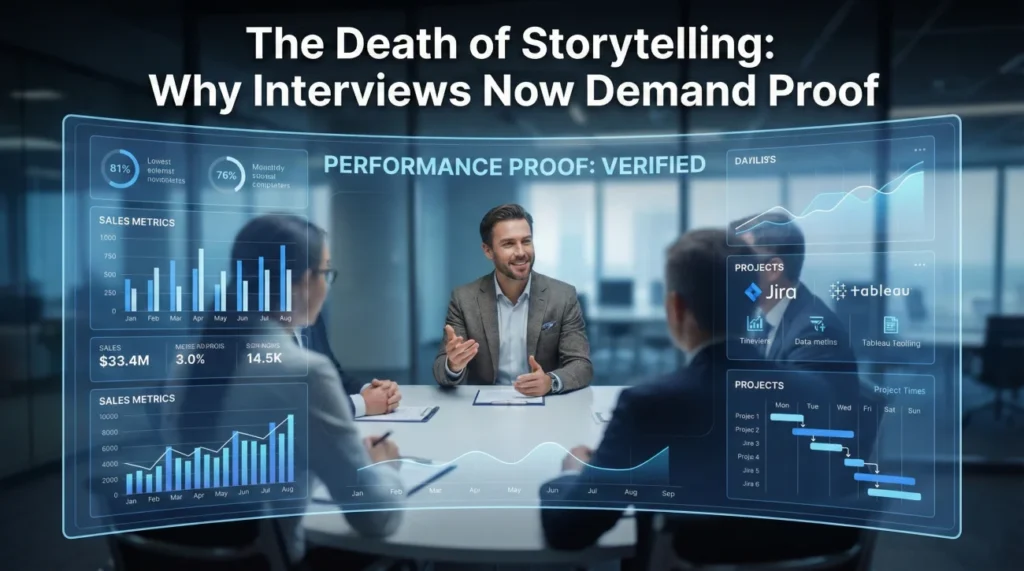
Hiring managers are no longer just looking for someone who sounds the part. They are conducting what I call “Evidence-Based Interviews.” They are looking for hard signals – specific metrics, tool proficiency, and tactical details – that prove you can do the work today, not just that you held the title yesterday. This article explains why this shift is happening and how to re-engineer your answers to pass the “proof test.”
The Data: The Great Skills Shift
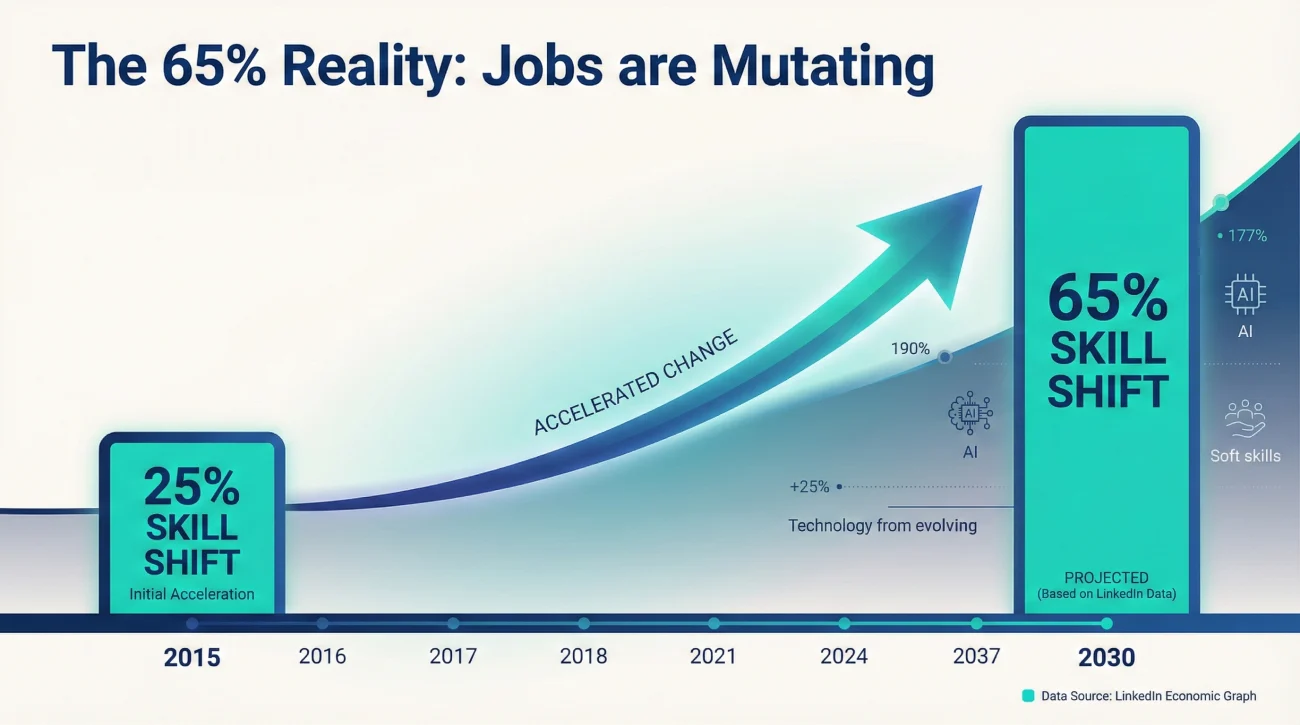
This isn’t just a vibe shift; it is a structural change in the labor market. The core issue is that jobs themselves are mutating faster than ever before.
According to LinkedIn’s “Skills on the Rise” data, skill sets for jobs have changed by around 25% since 2015, and this is expected to reach at least 65% by 2030. That is a staggering number. It means that what you did five years ago might effectively be obsolete in a modern role.
For a hiring manager, this creates anxiety. They cannot rely on your past job title as a proxy for your competence because the definition of that job has likely changed. They have to dig deeper. They need evidence that you are learning and adapting now.
The Signal-to-Noise Problem
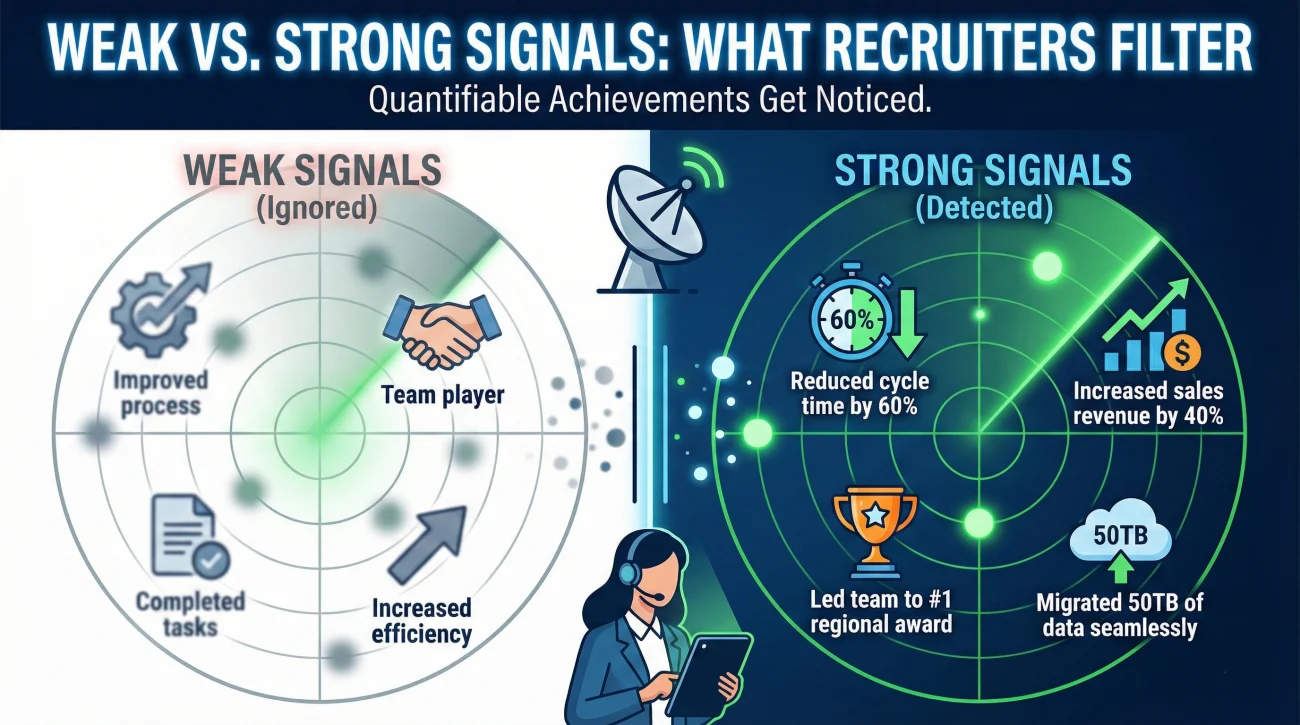
With the rise of GenAI, it has never been easier to generate a perfect-sounding cover letter or script a perfect interview answer. As a result, recruiters are drowning in “perfect” candidates on paper.
To cut through this noise, interviewers are becoming detectives. We are trained to look for “Strong Signals” (specifics that are hard to fake) and filter out “Weak Signals” (generic claims). If your interview answers stay at the high level of “I led a team to success,” you are sending a weak signal.
| Weak Signal (Risky) | Strong Signal (Safe) |
|---|---|
| “I improved the process significantly.” | “I reduced cycle time from 5 days to 2 days by automating the approval step.” |
| “I managed a large budget.” | “I oversaw a $2.5M quarterly budget with a variance of less than 3%.” |
| “I used data to make decisions.” | “I built a Tableau dashboard to track churn, which revealed a drop in Q3 retention.” |
The “Consistency Test” in Action
One tactical change you might notice is the repetition of questions. Candidates often get annoyed when a VP asks the same question the Director asked in the previous round. “Did they not talk to each other?” you might wonder.
📌 Note: We absolutely talk to each other. When we ask the same question twice, it is often a deliberate Consistency Test. If you told the Director you “led” the project, but you tell the VP you “supported” the project, that discrepancy raises a red flag. In an evidence-based process, your details must align perfectly across every conversation. The safest way to handle this is to have your “evidence log” memorized so your numbers never drift.
Case Study: Transforming an Answer
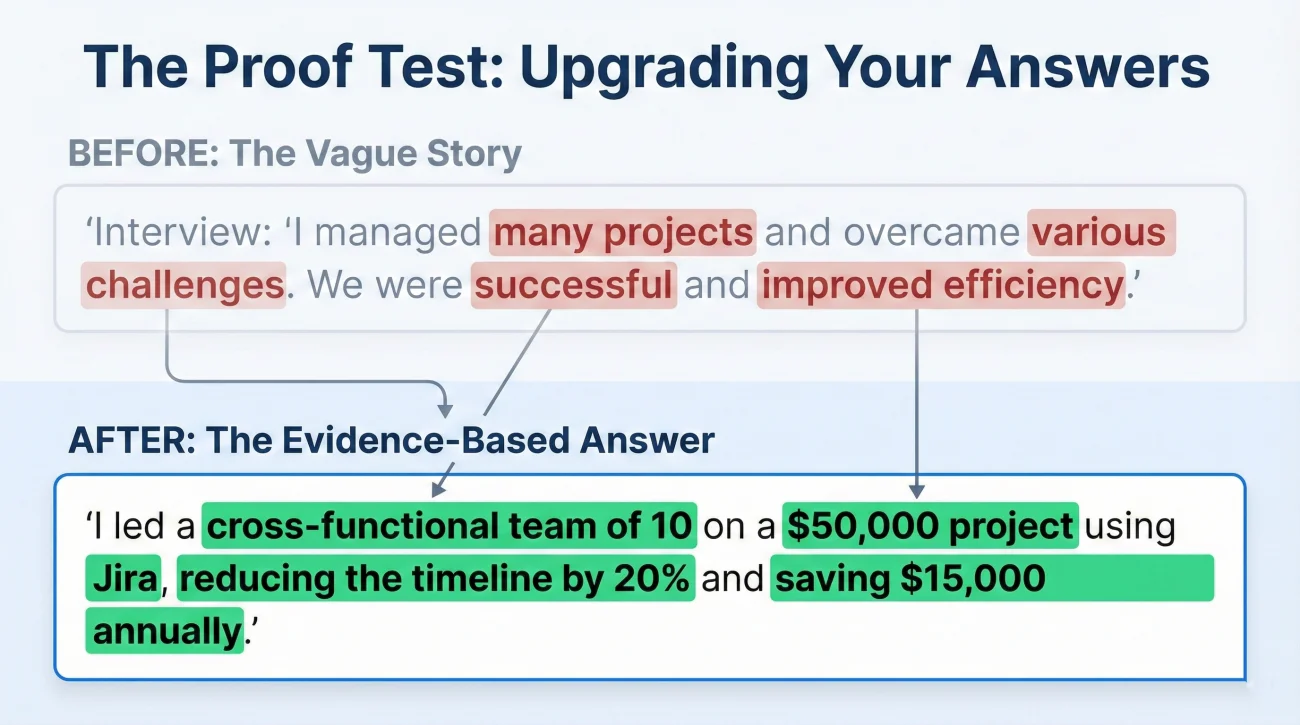
Let’s look at how to take a standard interview response and upgrade it for this new evidence-first reality. Imagine the question is: “Tell me about a time you handled a difficult stakeholder.”
“We had a stakeholder who was very resistant to the new software. I set up a meeting with him to understand his concerns. After listening to his feedback, I was able to explain the benefits, and eventually, he came on board and supported the launch.”
Critique: Nice story, but vague. “Resistant” and “benefits” could mean anything.
“The Head of Sales was refusing to adopt the new CRM because he believed data entry would slow down his team. I set up a demo using his actual Q2 data to show that the new tool would actually save reps 2 hours per week. Once he saw the time-savings metric, he agreed to a pilot program for 5 of his reps, which we launched the following Monday.”
Verdict: Specific title, specific objection, specific data proof, specific outcome.
How to Build Your “Evidence Pack”
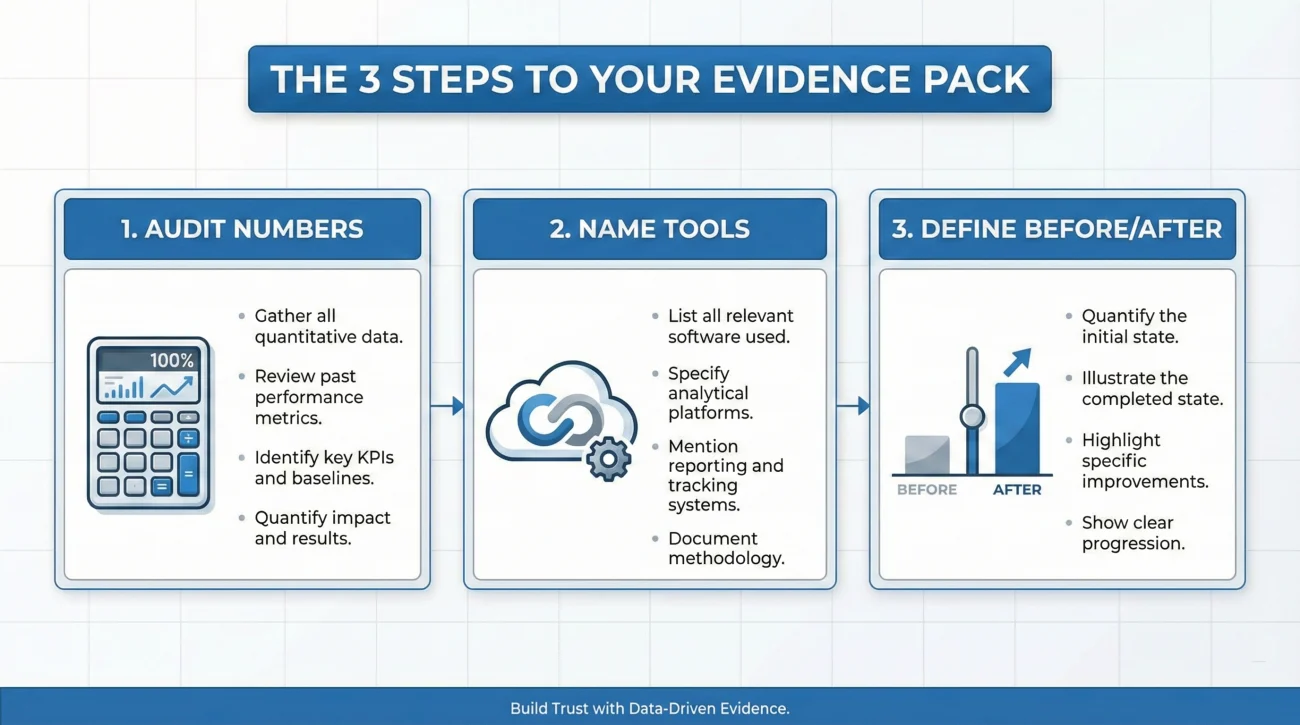
To succeed in this environment, you need to prepare differently. Do not just memorize bullet points. Build an “Evidence Pack” for your brain.
1. Audit Your Numbers
Go through your last three roles. For every major project, find a number. If you don’t have revenue numbers, look for: time saved, volume increased, error rates reduced, or team size managed. If you can’t measure it, it is harder to sell it.
2. Name Your Tools
Don’t say “software.” Say “Jira.” Don’t say “spreadsheets.” Say “Excel Pivot Tables and VLOOKUPs.” Specificity implies competence. In the age of AI, knowing exactly how the work gets done is a major differentiator.
3. Define the “Before” and “After”
Evidence is most powerful when it shows contrast. Structure your answers to clearly define the state of the world before you touched it, and the state of the world after. The gap between those two states is your value.
Smart Interviewing = Standardized Proof
The job market is shifting away from “potential” and toward “proof.” This can feel intimidating, but it is actually freeing. You don’t have to be the most charismatic person in the room anymore. You just have to be the most credible.
By anchoring your answers in data, specific tools, and consistent details, you make it easy for the hiring manager to defend your candidacy to their boss. You become the low-risk hire. And in a volatile market, low risk is the highest value you can offer.
❓ FAQ
🤖 Will AI screen out my resume before a human sees it?
Often, yes. Applicant Tracking Systems (ATS) use keyword matching to rank applications. This is why using specific “evidence” words (like tool names and hard skills found in the job description) is critical for getting your foot in the door.
🗣️ What if I don’t have exact numbers for my past work?
If you lack hard data, use “proxy metrics.” For example, instead of “increased sales,” say “managed the busiest shift of the week” or “handled 50+ customer tickets daily.” Estimates are acceptable as long as you are transparent that they are estimates.
📝 Should I bring a portfolio to the interview?
Yes, if applicable. Having a “brag sheet” or a physical/digital document that visualizes your work (charts, screenshots, project timelines) is the ultimate form of evidence. It anchors the conversation in reality.
🔄 Why do they keep asking me the same questions?
They are testing for consistency and depth. If your story changes or falls apart under repeated questioning, it signals a lack of ownership. Treat every repetition as a chance to add more specific evidence.
Sources & Data References
This article references data on the changing landscape of skills and hiring trends. For more details, please see:
- 📊 LinkedIn Talent Solutions: Skills on the Rise: The Global Shift in Job Requirements
⚠️ Disclaimer: The interview strategies, sample answers, and negotiation tips provided in this guide are for educational purposes only. Hiring decisions are subjective and vary by company and industry. While these strategies are based on professional HR standards, they do not guarantee a specific job offer or result.