- The market has shifted: Data shows a decrease in “quits” and openings, meaning employers are holding onto staff and hiring slower.
- Silence isn’t always rejection: In a risk-averse market, delays often mean internal approval lags, not a lack of interest.
- Safety wins: You cannot force a faster process, but you can become the “low-risk” candidate by confirming timelines and next steps in writing.
The “Soft Freeze” Feel
If you have been interviewing recently, you might have noticed a pattern. The conversations go well. The hiring manager seems engaged. You leave the Zoom call feeling like it’s a done deal. And then: silence.
Not the permanent silence of a ghosting (though that happens), but a fuzzy, undefined waiting period. The “we’ll get back to you early next week” turns into ten days. The “final approval” takes a month.
In my years working in HR and recruiting, I have seen the market cycle through manic highs and slow lows. Right now, we are in a specific phase that I call the “Safe & Slow” era. It is frustrating for candidates, but it is not personal. It is structural.
When the economy tightens, companies do not stop hiring entirely, but they do change how they hire. They become risk-averse. Approvals that used to take one email now require three signatures. This article explains exactly why the timeline feels so stretched right now, and how you can protect your sanity by managing the process, rather than just waiting for it.
The Data: Why It’s Not Just You
It is easy to spiral when you are refreshing your inbox. You start dissecting your interview answers, wondering if you were too enthusiastic or not technical enough. But before you blame your performance, look at the macro data.
The “vibes” of the job market are actually quantifiable. We look at the JOLTS report (Job Openings and Labor Turnover Survey) to understand the temperature of the room.
The “Quits” and “Openings” Correlation
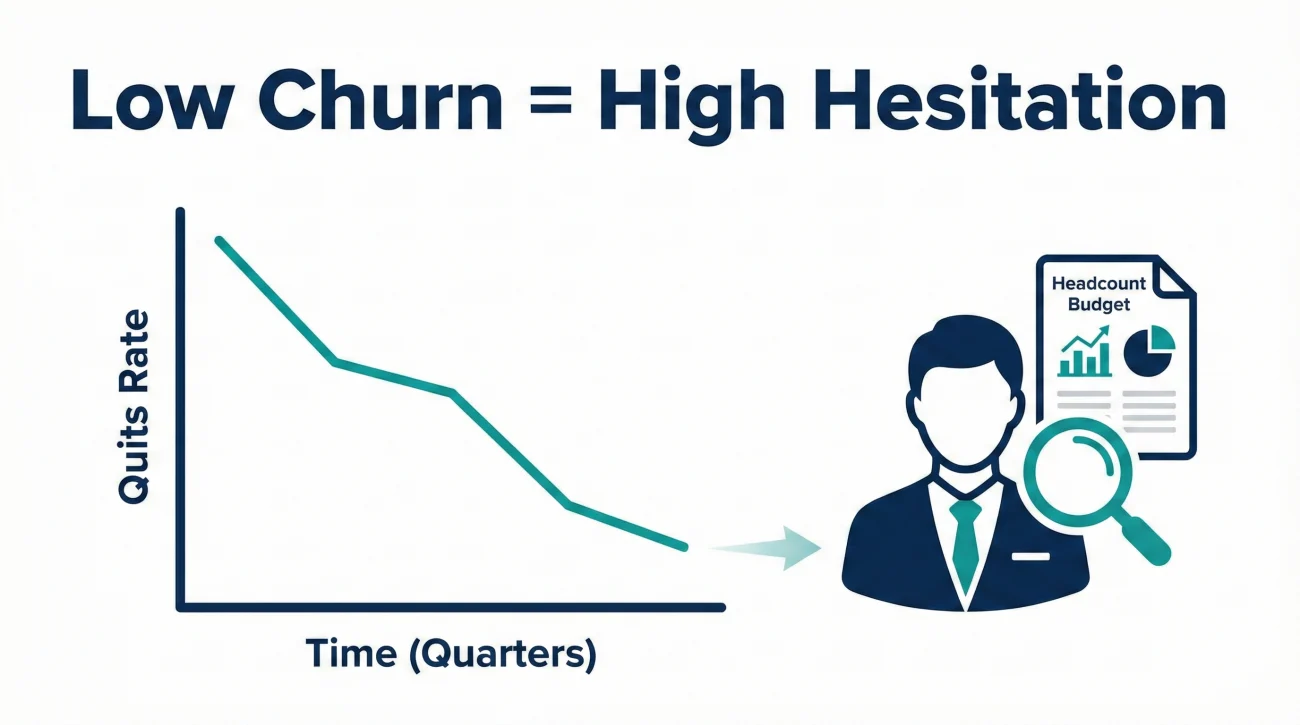
According to the JOLTS data released by the Bureau of Labor Statistics (BLS) and analyzed by platforms like Indeed Hiring Lab for late 2025, we are seeing a distinct cooling trend. Specifically, the “quits rate” has stabilized or dropped.
Why does this matter to you as a candidate? When fewer people quit their jobs, fewer seats open up naturally. The “churn” that usually creates liquidity in the job market slows down.
When job openings drop, hiring managers feel the pressure. They know that if they hire the wrong person, they might not get approval to backfill that role again for a long time. This creates a culture of hesitation.
Key Point: In a slow market, hiring managers are not just looking for “talent.” They are looking for safety. They need to be 100% sure before they release an offer letter.
The 23-Day Average is a Myth
You may see studies, like those from Glassdoor, citing an average time-to-hire of roughly 22.9 days in the US. In a slow market, treat this number with extreme caution.
That average includes low-level roles that are filled in 48 hours. for professional, mid-to-senior level corporate roles, the timeline is stretching significantly. A process that took three weeks in 2021 might take six to eight weeks today. This is not necessarily a sign of incompetence on the recruiter’s part; it is often a sign of increased internal scrutiny on headcount budget.
The View from the HR Side
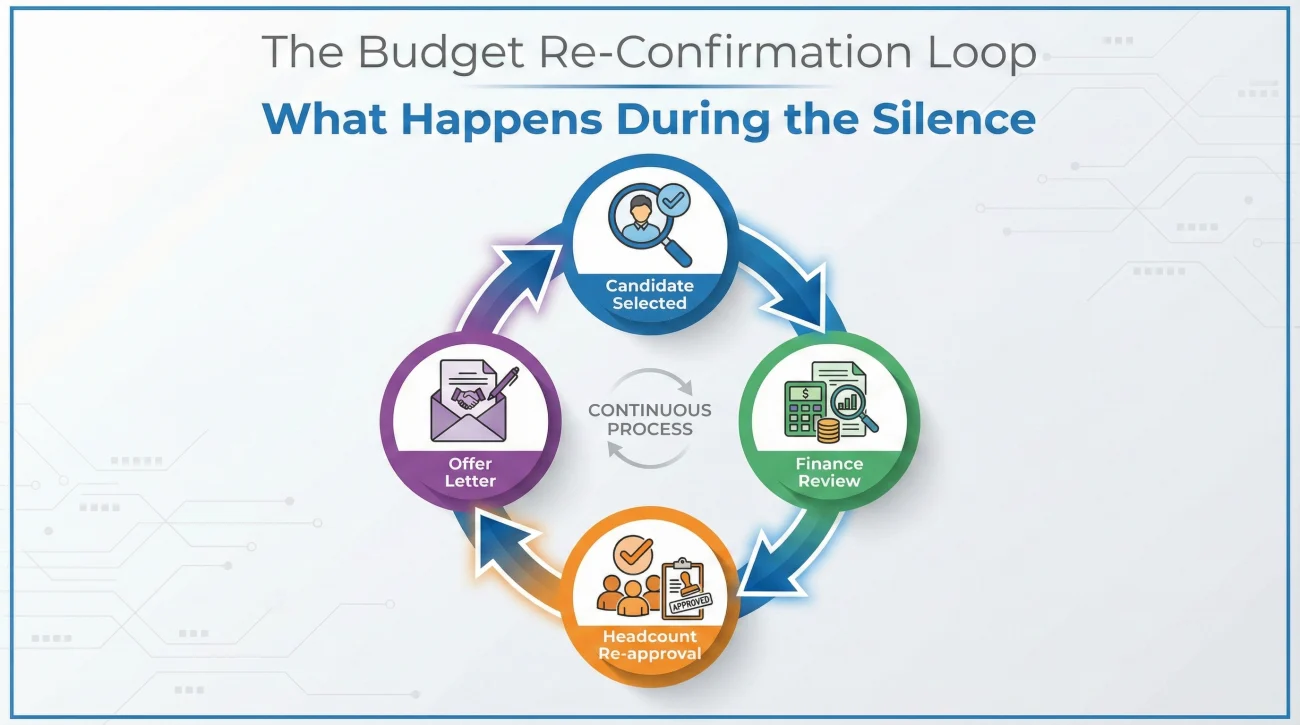
To navigate this, you need to understand what is happening behind the curtain. When a process goes silent, candidates often assume the team is interviewing other people. That is possible. But in this specific market, there is often a more boring culprit: bureaucracy.
💡 Field Note: In my experience leading HR teams, the most common delay in a slow market isn’t “finding a better candidate.” It’s the Budget Re-Confirmation Loop. We might have the budget approved in January, but by the time we select a finalist in March, Finance requires a “re-approval” to ensure the headcount is still critical. This happens entirely in the background. You, the candidate, just experience two weeks of radio silence.
This is where “Interview Hygiene” becomes your competitive advantage. You cannot speed up their Finance department. But you can ensure that when the approval does come through, you are still top of mind and perceived as professional, not desperate.
Process: How to “Confirm” Your Way to Safety
In a hot market, you can be messy and still get hired because companies are desperate for speed. In a slow market, process failures – like missing emails, forgotten attachments, or aggressive follow-ups – are red flags.
Your goal is to be the “Safe Candidate.” The Safe Candidate is organized. They confirm receipt. They clarify timelines. They create a paper trail (written trail) that makes the recruiter’s life easier.
Mini-Scenario: The “Void” After Round 2
Let’s look at a common scenario. You just finished a strong Round 2 interview with the Hiring Manager.
You wait 5 days. You hear nothing. You send an email saying, “Just checking in! I haven’t heard back yet. Is there an update?”
Result: You sound worried. The recruiter feels guilty/annoyed because they don’t have an update yet.
Immediately after the interview (or within 24 hours), you send a thank you note that acts as a confirmation log. You confirm what was discussed and the timeline they mentioned.
By confirming the timeline upfront, you buy yourself peace of mind. If they said “we will know by Friday,” you have permission to wait until the following Tuesday to follow up. You are not nagging; you are adhering to the agreed-upon schedule.
The 3 Things You Must Confirm in Writing
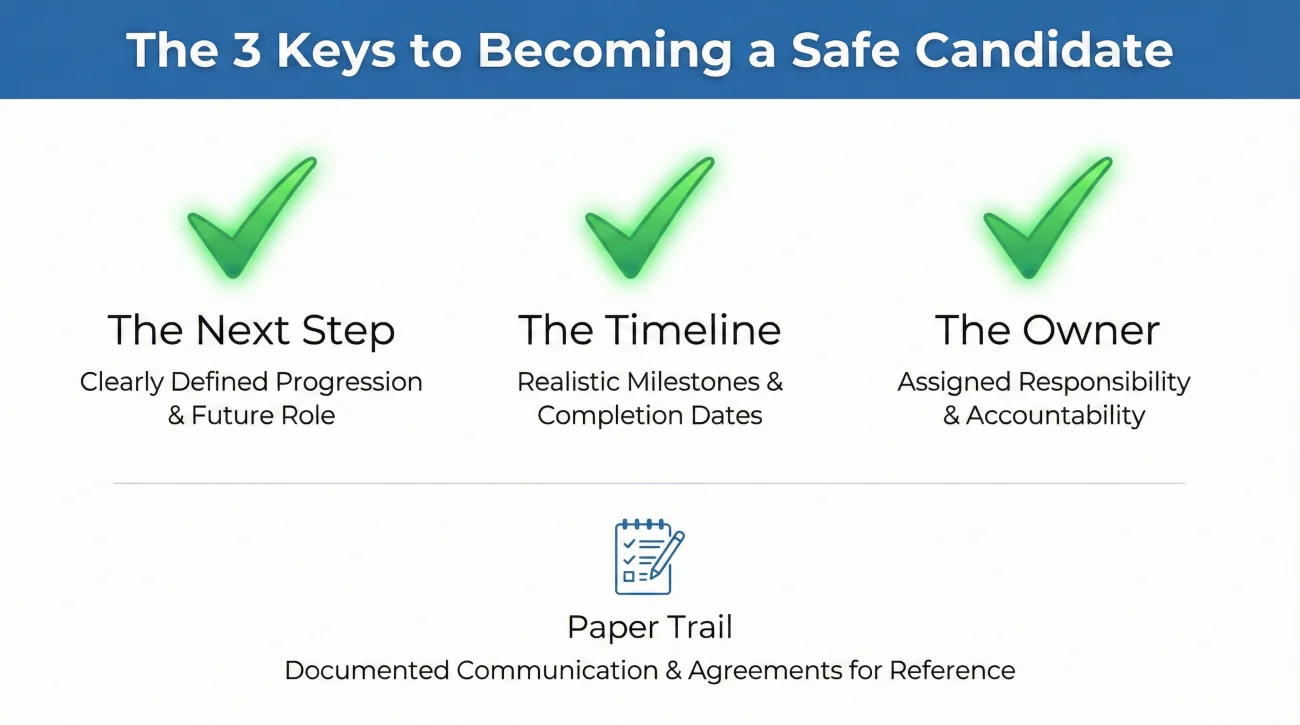
Never leave a screening or interview stage without trying to get these three data points. If you can’t get them verbally, try to confirm them in your follow-up note.
- ✅ The Next Step: Is it a panel? A case study? A final chat with the VP?
- ✅ The Timeline: “When do you hope to have this person start?” or “When do you expect to move to the next round?”
- ✅ The Owner: Who is managing the scheduling? Is it the recruiter you spoke to, or a coordinator?
Scripts for the “Slow Market” Follow-Up
When the timeline drifts, and it will, you need a way to check in that acknowledges the market reality without sounding passive-aggressive.
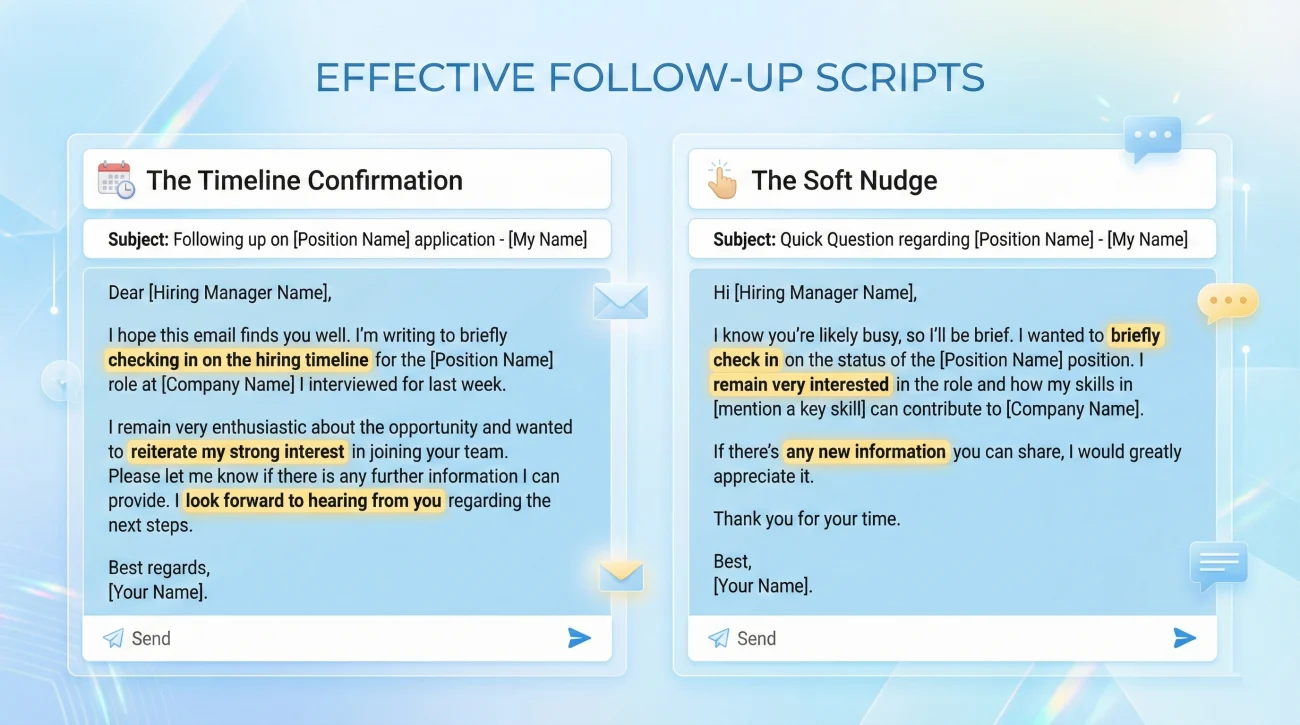
The Timeline Confirmation (Post-Interview)
Use this immediately after a round to lock in the expectations.
Subject: Thank you / [Role Name] – [Your Name]
Hi [Name],
Thank you for the time today to discuss the [Role Name] position. I particularly appreciated the context on [specific topic discussed].
As mentioned, I’ve noted that you expect to finalize the shortlist by [Date/Day]. I will look out for an update around then.
Best,
[Your Name]
The “Soft Nudge” (When They Are Late)
If the deadline they gave you has passed by 2-3 business days, use this. It assumes positive intent.
Subject: Update on [Role Name] timeline?
Hi [Name],
Hope you’re having a good week.
I know timelines can shift this time of year, but I wanted to check in on the [Role Name] process. Are we still on track for a decision this week, or do you anticipate needing more time on your end?
I am still very interested in the team, so just let me know what the new window looks like.
Best,
[Your Name]
Smart Interviewing = Smart Tracking
The market is undoubtedly tougher than it was a few years ago. The data on job openings and hiring velocity confirms it. But letting that data paralyze you is a mistake.
In a slow market, the candidate who keeps their cool, maintains a clean written record, and respects the recruiter’s chaotic timeline is the candidate who stands out. You provide the stability that they are currently lacking internally. Control the process, log your dates, and keep your follow-ups professional.
❓ FAQ
📉 Why is the hiring process taking so long right now?
Market data indicates a drop in job openings and “quits,” leading to risk aversion. Companies are adding more approval layers and scrutiny to budgets, which stretches the timeline between interviews and offers.
📅 How long should I wait to follow up after an interview?
If they gave you a specific date, wait 1-2 business days past that date. If they gave no date, a standard rule of thumb is one week (5 business days) after the interview.
📧 What should I say if the recruiter ghosts me?
Send one final “closing the loop” email. Ask if the role has been filled or put on hold. If there is no response to that, archive the application and move your energy to new opportunities.
🚩 Does a long wait mean I was rejected?
Not necessarily. In the current market, long waits often signal internal budget delays, scheduling conflicts, or “soft freezes” on headcount rather than a direct rejection of your candidacy.
Sources & Data References
This article references labor market data to explain current hiring trends. For further reading on the raw numbers, please refer to the following:
- 📄 Bureau of Labor Statistics (BLS): Job Openings and Labor Turnover Summary (JOLTS)
- 📊 Indeed Hiring Lab: JOLTS Analysis (Dec 2025 Data / Feb 2026 Context)
⚠️ Disclaimer: The interview strategies, sample answers, and negotiation tips provided in this guide are for educational purposes only. Hiring decisions are subjective and vary by company and industry. While these strategies are based on professional HR standards, they do not guarantee a specific job offer or result.