- It is not just you: Data confirms that employer ghosting has risen significantly, often happening even after final rounds.
- The “Why” is usually structural: Most ghosting isn’t personal malice; it’s a lack of clear ownership between the Recruiter and Hiring Manager on who sends the rejection.
- Control the close: You cannot force a reply, but you can use a “Close the Loop” email to professionally end the waiting period on your own terms.
The Silence After the “Perfect” Interview
There is a specific type of pain in modern job hunting. You go through three rounds of interviews. You do the case study. The chemistry feels right. The hiring manager ends the call with, “We are really excited about you, we’ll be in touch by Friday.”
Friday comes and goes. Then Monday. You send a polite follow-up. Nothing. Two weeks later, you still haven’t received a rejection email. You have just been ghosted.
As an HR professional, I wish I could say this is rare. Unfortunately, employer ghosting has shifted from an occasional glitch to a common market behavior. However, taking it personally will only hurt your confidence for the next opportunity. To navigate this, we need to look at why it happens and how you can manage your communication strategy to get closure – even if they don’t give it to you.
The Reality Check: Ghosting by the Numbers
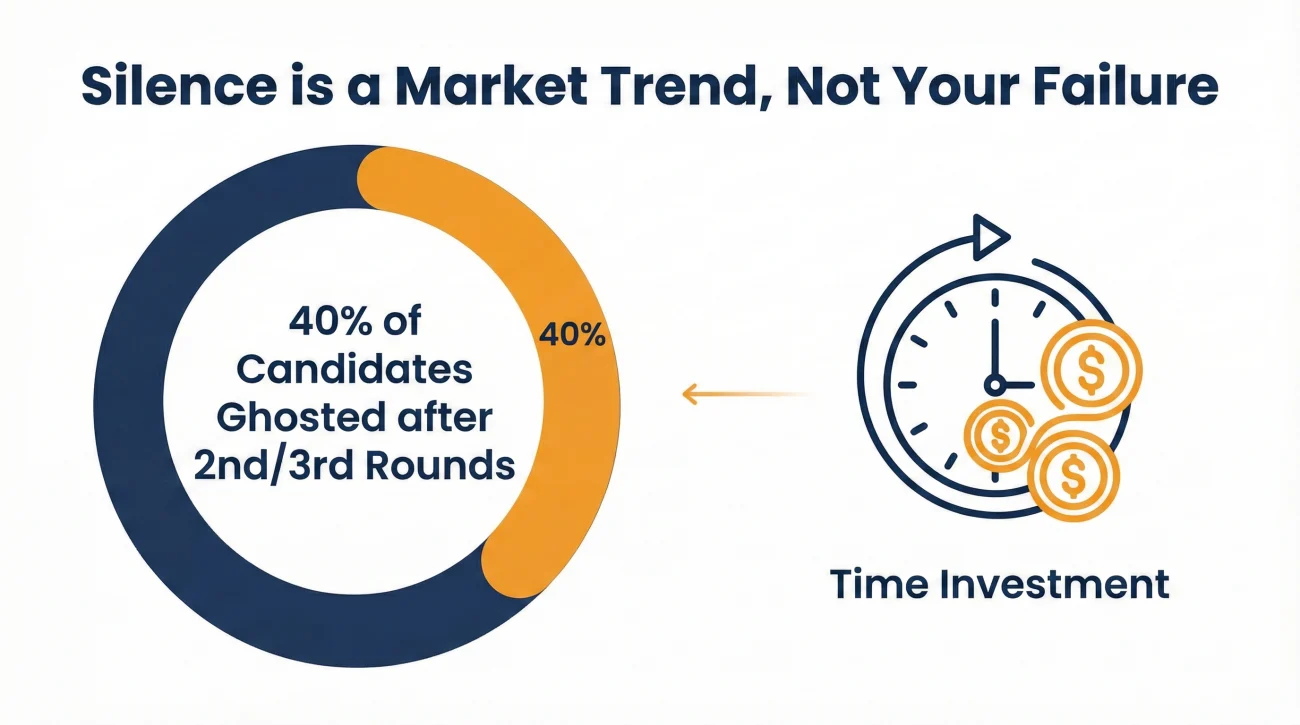
First, validate your experience with data. You are not imagining that it is getting worse. Reports from major employment platforms show a clear upward trend in silence.
According to recent analysis highlighted by the Washington Post and data from Indeed, nearly 40% of job seekers report being ghosted after a second or third interview. This isn’t just ignoring an initial application; this is silence after a significant investment of time.
It Goes Both Ways
Interestingly, data from SHRM (Society for Human Resource Management) suggests this is a two-way street. Employers are also reporting a rise in candidates ghosting interviews and first days. Why does this matter to you?
Because the recruitment ecosystem has become transactional and overwhelmed. Recruiters are managing higher volumes of applicants with smaller teams. When the system is strained, “polite rejections” are the first thing to fall off the to-do list.
Key Point: Ghosting is rarely an act of malice. It is almost always an issue of capacity and priority. They didn’t decide to ignore you; they just never decided to email you.
Why Teams Ghost (The Internal Mess)
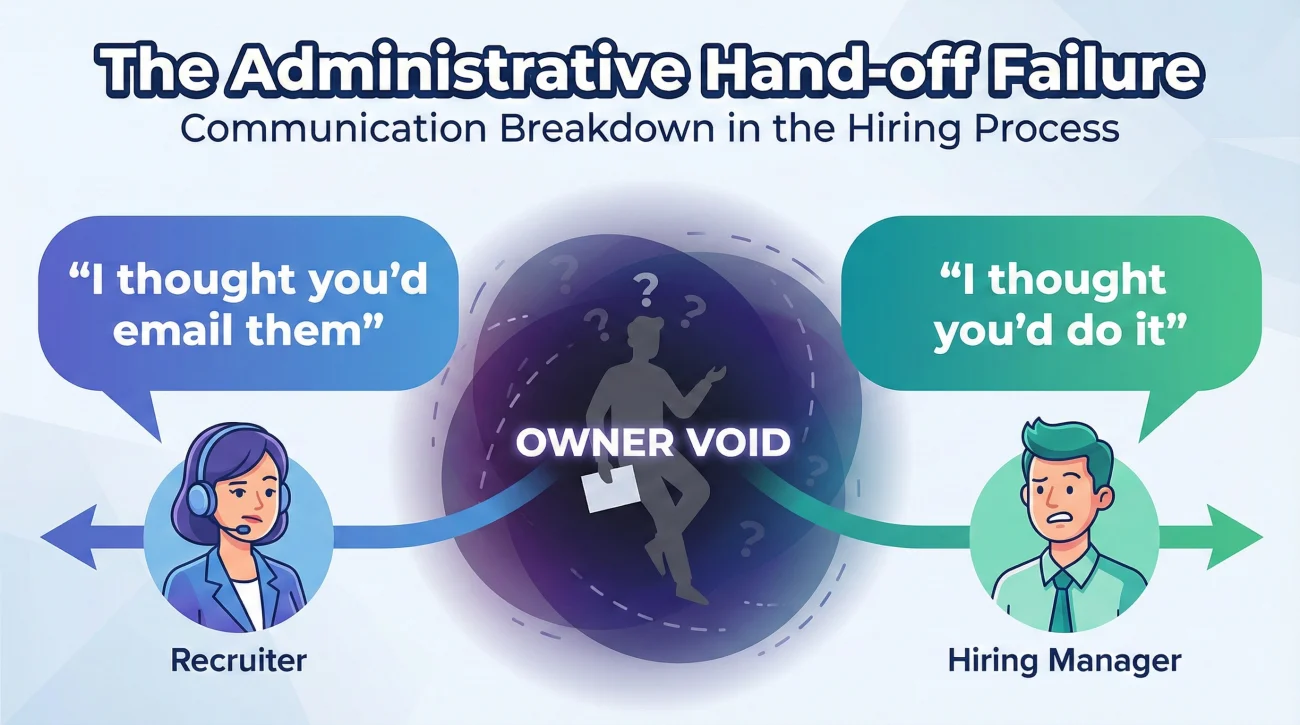
If you knew what was happening internally, you would be less angry and more confused by the inefficiency. Often, ghosting happens in the “hand-off” zones.
📌 Note: The most common cause of post-interview ghosting is the “Owner Void.” The Recruiter thinks the Hiring Manager is going to send the personal rejection because they had a good rapport. The Hiring Manager thinks the Recruiter is sending the standard system rejection. Neither of them does it. The candidate sits in the void, waiting for an email that nobody is assigned to write.
Understanding this helps you write better follow-ups. You aren’t fighting against someone who hates you; you are fighting against a broken administrative process.
The 3-Step “Anti-Ghosting” Communication Strategy
You cannot force a company to be polite. But you can protect your own sanity by setting clear boundaries. Here is the communication framework I recommend to keep control of the timeline.
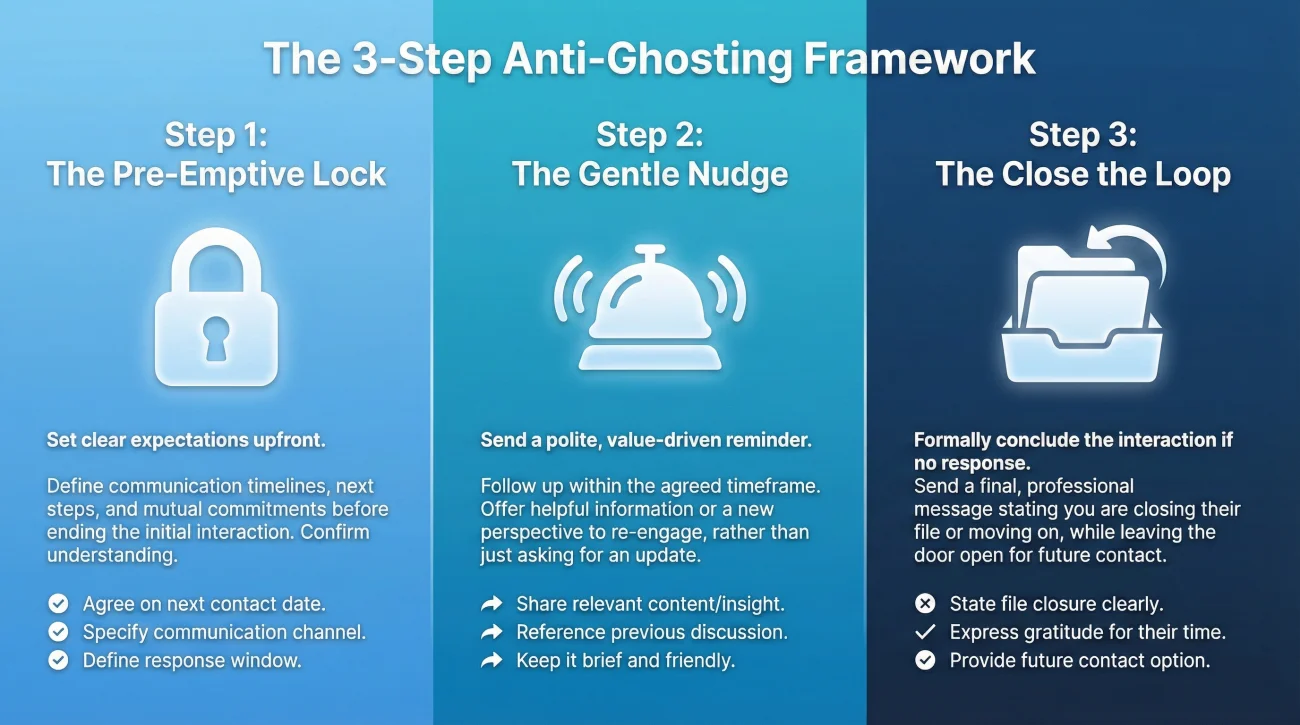
Step 1: The Pre-Emptive Lock (End of Interview)
Ghosting often happens because expectations weren’t set. Before you leave the call, ask for the timeline.
“I know you have other candidates to see. When do you anticipate making a decision on the next round, so I can keep an eye on my inbox?”
Step 2: The Gentle Nudge (Post-Deadline)
If they said “Tuesday” and it is now “Thursday,” send one polite nudge. Do not ask “Did I get the job?” Ask about the timeline.
Subject: Checking in / [Role Name] – [Your Name]
Hi [Name],
I hope your week is going well.
I wanted to briefly check in on the [Role Name] position. I know timelines can shift, so I just wanted to see if you had an update on the next steps or if you need any further information from me?
Best,
[Your Name]
Step 3: The “Close the Loop” (The Power Move)
This is the most important script. If you sent the nudge and waited another week with no response, do not keep chasing. It makes you look desperate.
Instead, send a “Negative Close.” You assume the answer is no, and you inform them you are moving on. This often triggers a reply because it removes the guilt/pressure from them, or it simply gives you closure.
Subject: Closing the loop / [Role Name]
Hi [Name],
Since I haven’t heard back, I assume you have moved forward with other candidates for the [Role Name] role.
I am going to archive this on my end to focus on other processes, but I wanted to thank you again for the time. I really enjoyed meeting the team. If a relevant role opens up in the future, please do keep me in mind.
All the best,
[Your Name]
Common Mistakes When Silence Hits
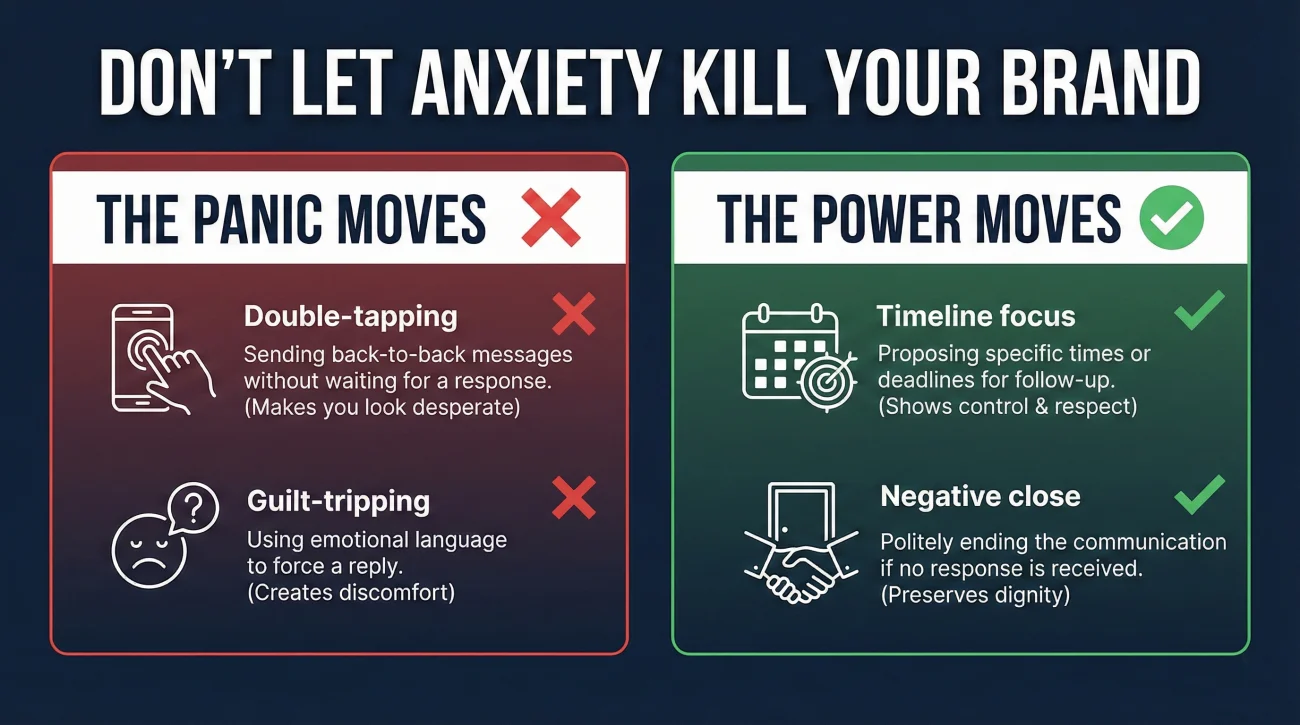
When anxiety spikes, candidates often make tactical errors that turn a “delayed process” into a “rejection.”
❌ The Double-Tap: Sending “Did you get my email?” two days after your first follow-up. This signals panic. Always wait at least 5 business days between non-urgent emails.
❌ The Guilt Trip: Writing “I was really expecting to hear back…” It is true, but it doesn’t work. It just makes the recruiter avoid you more.
“Any update? I really need to know soon.”
“I have a few other interviews moving to final rounds, so I want to be respectful of your time and mine regarding the timeline for this role.”
Control the Process, Not the Outcome
The hardest part of modern interviewing is separating your self-worth from the employer’s silence. Remember: Silence is data. If a company ghosts you after a final round, they are showing you how they communicate during difficult times.
Use the “Close the Loop” script to take your power back. Once you send that email, mark the job as “Closed” in your own tracker. If they surprise you later, great. If not, you have already moved on.
❓ FAQ
👻 Is it okay to follow up if I think I’ve been ghosted?
Yes, but limit it to one or two messages maximum. Send a check-in one week after the missed deadline. If there is no reply, send a final “closing the loop” email one week later, then stop.
✉️ Who should I follow up with: the Recruiter or Hiring Manager?
Start with the Recruiter, as they own the process. If you had a strong connection with the Hiring Manager and the Recruiter isn’t responding, it is acceptable to send one brief, polite note to the Manager.
😡 Should I post about being ghosted on LinkedIn?
Generally, no. While it feels good to vent, future employers may see it as a risk. It is better to vent privately to friends and keep your public professional brand focused on your skills and positivity.
⏳ How long is “too long” to wait?
If you have had no contact for 10 business days (two weeks) after a final interview, and your follow-up has been ignored, it is safe to assume the role has gone to someone else or is on hold.
Sources & Data References
To understand the current landscape of interview communication and ghosting trends, refer to these reports:
- 📄 Indeed: Ghosting in Hiring Report
- 📰 Washington Post: Why Job Seekers and Employers Keep Ghosting Each Other
- 📊 SHRM: Talent Trends & Hiring Challenges
⚠️ Disclaimer: The interview strategies, sample answers, and negotiation tips provided in this guide are for educational purposes only. Hiring decisions are subjective and vary by company and industry. While these strategies are based on professional HR standards, they do not guarantee a specific job offer or result.