Why Generic Interview Advice Fails Most Candidates
Standard interview advice tells candidates to research companies, prepare answers, and dress professionally, but this surface-level guidance reaches every competitor identically. The differentiating wisdom emerges from understanding how different formats demand distinct approaches, which behavioral signals actually matter, and why post-interview strategy determines outcomes as powerfully as performance itself.
Effective interview navigation requires moving past generic platitudes toward strategic frameworks for each stage. Understanding behavioral interview questions helps you craft compelling stories, while mastering self-introduction frameworks controls first impressions. The professionals who consistently convert interviews into offers master these nuanced distinctions that generic advice overlooks.
Format-Specific Strategy Development
Understanding interview tips and strategies starts with recognizing that different interview formats require fundamentally different preparation and execution approaches rather than one-size-fits-all tactics.
Virtual and Remote Interview Optimization
Video interviews introduce technical variables and communication constraints that in-person settings don’t create. Camera positioning, lighting quality, background professionalism, internet stability, and eye contact simulation all impact impression formation before content even matters. Additionally, virtual fatigue compounds across back-to-back sessions while reduced nonverbal feedback makes audience engagement assessment more difficult. Strategic virtual preparation addresses these specific challenges rather than assuming traditional interview advice translates directly to remote contexts.
| Interview Format | Unique Challenges | Strategic Focus |
|---|---|---|
| Phone Screens | No visual cues, brief timeframe, initial filter | Vocal energy, concise messaging, key qualifications emphasis |
| Video Interviews | Technical setup, camera presence, virtual fatigue | Environmental control, eye contact simulation, energy projection |
| Panel Interviews | Multiple evaluators, diverse priorities, complex dynamics | Audience management, inclusive engagement, balanced responses |
| Group Interviews | Peer competition, collaborative assessment, visibility balance | Strategic contribution, team enablement, differentiation |
| Assessment Centers | Extended evaluation, multiple exercises, sustained performance | Energy management, consistency, authentic behavior |
Panel and Group Interview Navigation
Multiple interviewer formats create complexity beyond answering questions well. You must manage diverse stakeholder priorities, engage everyone equitably, and demonstrate collaborative capability while still differentiating yourself. Panel interviews require addressing different evaluator concerns within single responses while maintaining coherent narrative. Group interviews demand balancing self-promotion with team enablement as assessors evaluate both individual contribution and collaborative behavior simultaneously.
Expert advice: The most sophisticated interview preparation customizes strategy for specific formats rather than applying generic best practices that ignore how interview structure fundamentally shapes evaluation priorities.
Strategic Research and Intelligence Gathering
Effective career interview guidance emphasizes research depth and application rather than superficial company information memorization that impresses no one.
Beyond Basic Company Research
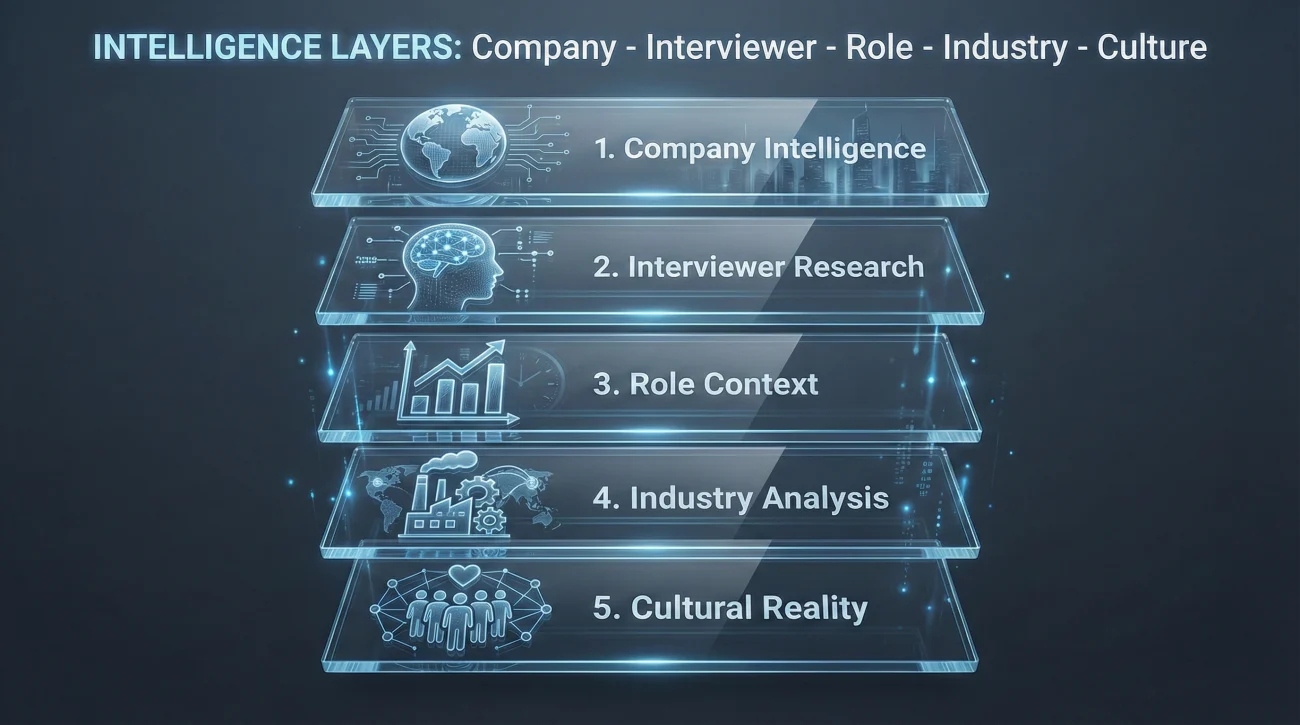
Reading About pages and mission statements provides baseline knowledge every candidate possesses. Strategic research uncovers competitive positioning, recent strategic shifts, cultural realities versus marketing narratives, interviewer backgrounds and priorities, and specific challenges the role addresses. This intelligence enables tailored responses demonstrating genuine understanding rather than regurgitated website content. Sources include employee reviews, news coverage, industry analysis, LinkedIn profiles, and network intelligence from current or former employees providing unfiltered insights companies won’t share directly.
Interviewer Background Intelligence
Understanding who evaluates you allows response customization addressing their specific priorities and communication preferences. Technical leaders value different capabilities than HR professionals. Executives prioritize strategic thinking while managers assess execution reliability. LinkedIn research, company directories, and mutual connections reveal educational backgrounds, career trajectories, professional interests, and recent accomplishments you can reference naturally during conversations. This preparation creates connection beyond generic responses applicable to any interviewer.
- 🔍 Company intelligence: Competitive position, strategic priorities, recent news, culture signals
- 👤 Interviewer research: Background, expertise areas, communication style, shared connections
- 📊 Role context: Why position exists, team challenges, success metrics, growth trajectory
- 🏢 Industry analysis: Market trends, competitive dynamics, regulatory environment, disruption threats
- 💡 Cultural reality: Employee reviews, glassdoor patterns, work-life signals, advancement norms
Communication Excellence Beyond Content
Strong professional interview help addresses how you communicate alongside what you communicate since delivery quality impacts impression formation as powerfully as content substance.
Body Language and Presence
Nonverbal communication creates continuous impression stream that either reinforces or undermines verbal content. Posture signals confidence or nervousness. Eye contact demonstrates engagement or evasion. Gestures emphasize points or distract attention. Facial expressions convey enthusiasm or disinterest. These nonverbal elements require conscious management because unconscious defaults often contradict intended messages, particularly during stressful interviews when anxiety manifests through closed body language, reduced eye contact, and minimal animation despite verbally expressing enthusiasm.
Active Listening Demonstration
Most candidates focus so intensely on their own responses that they miss interviewer signals revealing priorities, concerns, or reaction to answers. Active listening creates competitive advantage through recognizing when responses resonate versus when clarification proves necessary, adapting communication based on real-time feedback, and asking informed follow-up questions demonstrating comprehension. This responsiveness distinguishes strategic communicators from those delivering rehearsed monologues regardless of audience signals.
💡 Pro tip: Record practice interviews reviewing both content and delivery; most candidates discover significant gaps between intended communication and actual nonverbal signals they unconsciously project.
Post-Interview Strategy and Negotiation
Comprehensive interview preparation advice extends beyond interview performance to post-interview navigation determining whether strong performance converts to compelling offers.
Offer Evaluation and Negotiation
Many candidates approach negotiation as single conversation about salary when effective negotiation begins during initial interviews through strategic positioning and continues through comprehensive package evaluation addressing compensation, benefits, title, responsibilities, flexibility, and growth opportunities. Understanding your market value, organizational constraints, and negotiation leverage determines whether you capture deserved compensation or accept suboptimal packages through poor preparation or negotiation avoidance.
| Post-Interview Phase | Critical Actions | Common Mistakes |
|---|---|---|
| Immediate Follow-up | Thoughtful thank you, key points reinforcement, timeline clarification | Generic thanks, missed opportunities for reinforcement, no timeline inquiry |
| Offer Evaluation | Total package analysis, market comparison, long-term trajectory assessment | Salary-only focus, insufficient research, emotion-driven decisions |
| Negotiation | Data-backed requests, multiple variable discussions, collaborative framing | Arbitrary demands, salary-only focus, adversarial positioning |
| Decision Process | Systematic evaluation, gut check integration, timeline management | Rushed decisions, ignoring concerns, accepting poor fit for compensation |
Managing Multiple Opportunities
Strong interview performance often generates multiple offers requiring strategic timing management, transparent communication with all parties, and systematic evaluation preventing rushed decisions or relationship damage. Stalling tactics, timeline alignment requests, and honest priority communication maintain positive relationships while gathering necessary information for informed decisions. Poor multiple-offer management burns bridges and forces premature commitments candidates later regret.
Psychological and Emotional Management
Interview success requires managing psychological challenges that undermine otherwise qualified candidates through anxiety, imposter syndrome, and interpretation errors affecting confidence and performance.
Interview Anxiety Strategies
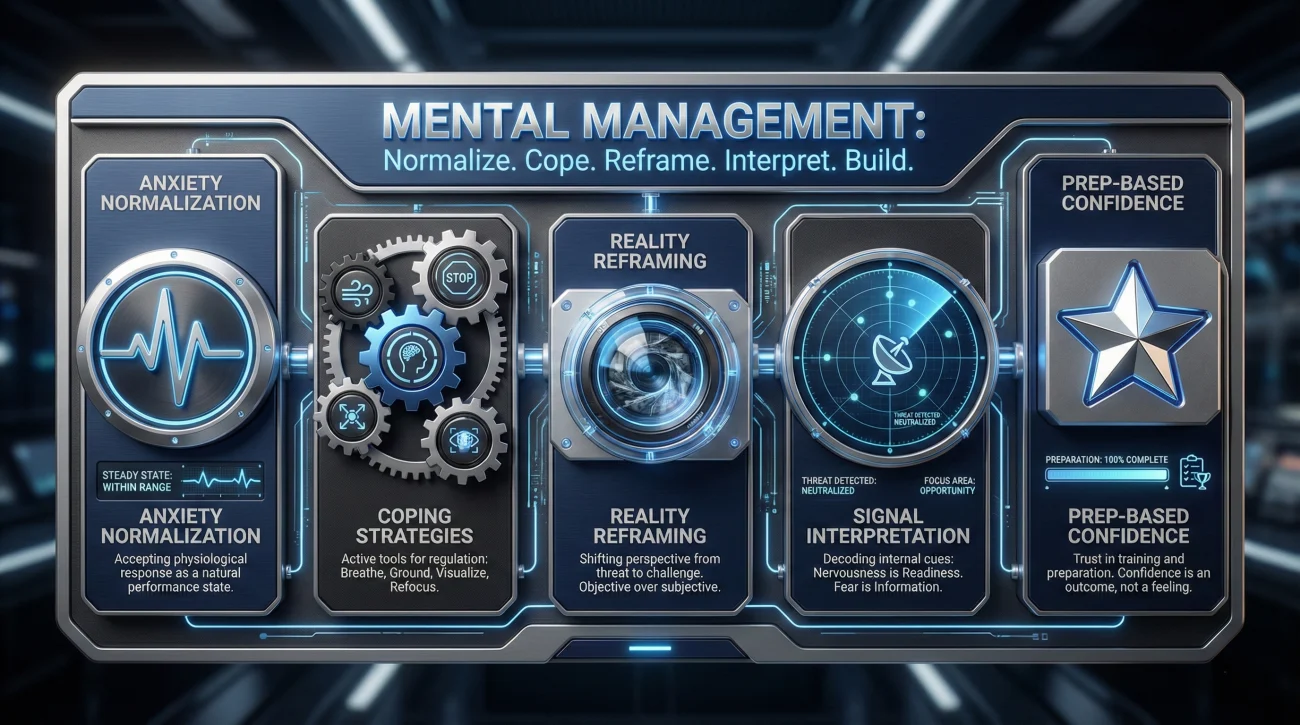
Moderate anxiety enhances focus and energy while excessive anxiety impairs cognitive function, reduces communication quality, and creates negative impression spirals. Managing anxiety requires understanding physiological responses, developing coping mechanisms, reframing interview stakes realistically, and building confidence through systematic preparation addressing uncertainty sources. Some candidates benefit from professional support addressing severe anxiety preventing effective interview participation.
Interview Signal Interpretation
Candidates frequently misinterpret interviewer behavior drawing incorrect conclusions about performance or interest level. Brief interviews don’t necessarily signal disinterest; interviewers may have limited time. Challenging questions indicate assessment rigor rather than disapproval. Delayed responses often reflect organizational process rather than candidate problems. Accurate signal interpretation prevents emotional reactions to misread situations while helping candidates recognize genuine positive or negative indicators when they occur.
- Recognize anxiety as normal rather than performance indicator requiring elimination
- Develop specific coping strategies for physiological anxiety manifestations
- Avoid catastrophizing based on single questions or interviewer expressions
- Distinguish between actual rejection signals and process-related delays
- Build confidence through preparation rather than false positive thinking
❓ FAQ
🎯 How much interview preparation is actually necessary?
Preparation requirements scale with role complexity and competition level. Entry positions may need 5-10 hours while senior roles benefit from 20+ hours covering company research, answer preparation, format-specific practice, and strategic positioning development.
💼 Should I prepare different stories for different interview formats?
Core stories remain consistent but delivery and emphasis adapt to format constraints. Phone screens require concise versions while panel interviews need inclusive engagement. Prepare flexible stories you can adjust rather than format-specific completely different narratives.
⏰ How do I balance authenticity with strategic positioning?
Authenticity means presenting genuine capabilities and preferences honestly while strategic positioning emphasizes aspects most relevant to the role. You’re not fabricating qualities but highlighting authentic strengths matching organizational needs.
📋 What if I bomb an interview despite good preparation?
Reflect on what went wrong, extract learning, and move forward without dwelling. Every experienced professional has bombed interviews; it’s normal. Focus on continuous improvement rather than perfection. Sometimes organizational fit simply doesn’t exist regardless of performance quality.
✨ How important is post-interview follow-up really?
Follow-up rarely changes hiring decisions but reinforces positive impressions and maintains relationship quality. It’s expected professional courtesy rather than deal-maker. Focus on thoughtful, specific messages rather than generic thanks or excessive follow-up creating desperation impression.
Final Thoughts
Interview success requires moving beyond generic guidance toward strategic preparation for each format and stage. Master strategic questions to ask interviewers that demonstrate research depth, and develop leadership communication that differentiates you from competitors applying identical tactics.
Comprehensive interview advice recognizes that preparation involves technical skill alongside psychological management, that formats demand different approaches, and that post-interview strategy matters as much as performance. The investment you make understanding these distinctions separates you from competitors using one-size-fits-all tactics that ignore how interview mechanics actually shape decisions.
⚠️ Disclaimer: The interview strategies, sample answers, and negotiation tips provided in this guide are for educational purposes only. Hiring decisions are subjective and vary by company and industry. While these strategies are based on professional HR standards, they do not guarantee a specific job offer or result.