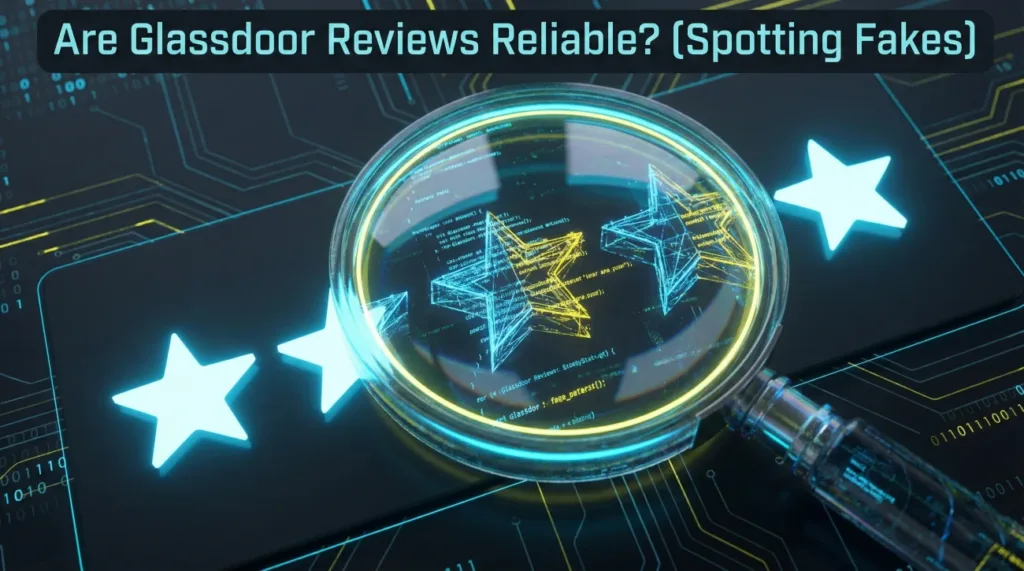
You Cannot Trust Everything You Read
Glassdoor reviews feel like insider access to company truth. Current and former employees anonymously sharing what it is really like to work there, unfiltered by corporate PR. Except it is not that simple.
Companies know candidates read these reviews. Some actively manage their Glassdoor presence, encouraging happy employees to post positive reviews or even planting fake ones. Disgruntled former employees write scathing reviews that may not represent typical experiences. The truth is buried somewhere in the middle, and figuring out glassdoor reviews reliability requires reading between the lines.
I have seen companies with genuinely toxic cultures maintain 4-star ratings through coordinated positive review campaigns. I have also seen decent companies dragged down by a handful of bitter former employees. Neither extreme tells the full story.
Expert Advice: “At my last company, HR sent quarterly reminders asking employees to ‘share their experience’ on Glassdoor. They never explicitly asked for positive reviews, but the timing always coincided with performance bonuses. The implication was clear.”
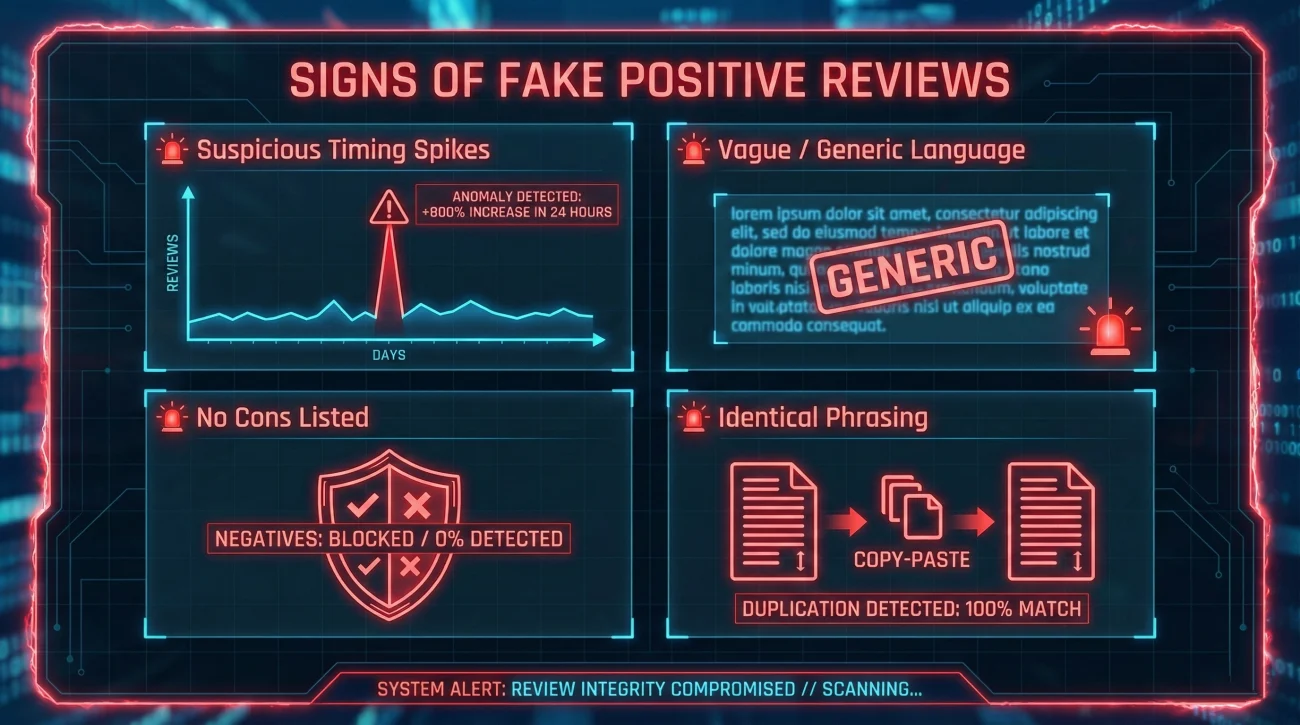
Signs of Fake Positive Reviews
Companies that manipulate their Glassdoor presence leave patterns if you know what to look for.
Suspicious Timing Patterns
Sort reviews by date. If you see clusters of positive reviews appearing within days of each other, especially after a wave of negative ones, that is a red flag. Organic reviews trickle in gradually. Coordinated campaigns create spikes.
💡 Pro Tip: Look for positive reviews posted right after negative ones. Companies often respond to criticism by mobilizing supporters.
Vague, Generic Language
Real employees mention specific teams, projects, tools, or office locations. Fake reviews stay generic: “Great culture,” “Excellent leadership,” “Good work-life balance.” They read like marketing copy because they often are.
Fake-sounding review
“Amazing company with great benefits and wonderful people. Management truly cares about employees. Would highly recommend!”
Real-sounding review
“The engineering team in Austin is solid, though the Chicago office has higher turnover. Benefits are competitive but the 401k match could be better. Management varies by department.”
Reviews With No Meaningful Cons
Every company has downsides. Reviews that list cons like “Sometimes the coffee runs out” or “Parking can be tricky” are likely planted. Real employees mention real frustrations: compensation, management issues, workload, career growth limitations.
Identical Phrasing Across Reviews
If multiple reviews use the same unusual phrases or highlight the same obscure benefits, they may have been written from a template or by the same person. Genuine reviews have varied vocabulary and priorities.
Identifying Bitter Outliers
Not all negative reviews reflect reality either. Some come from employees who were fired for cause, had personality conflicts, or had unusually bad experiences that are not typical.
Extreme Emotional Language
Reviews calling the company “evil,” using all caps, or reading like rants often come from someone processing anger rather than providing balanced feedback. These may contain truth but are filtered through intense emotion.
Single Incident Focus
If a negative review fixates on one manager, one policy change, or one incident, it may not represent the broader company experience. Look for patterns across multiple reviews rather than isolated complaints.
Post-Layoff Timing
Reviews posted immediately after announced layoffs or during company crises reflect that specific moment, not normal operations. People who just lost jobs rarely write balanced reviews.
How to Read Reviews Strategically
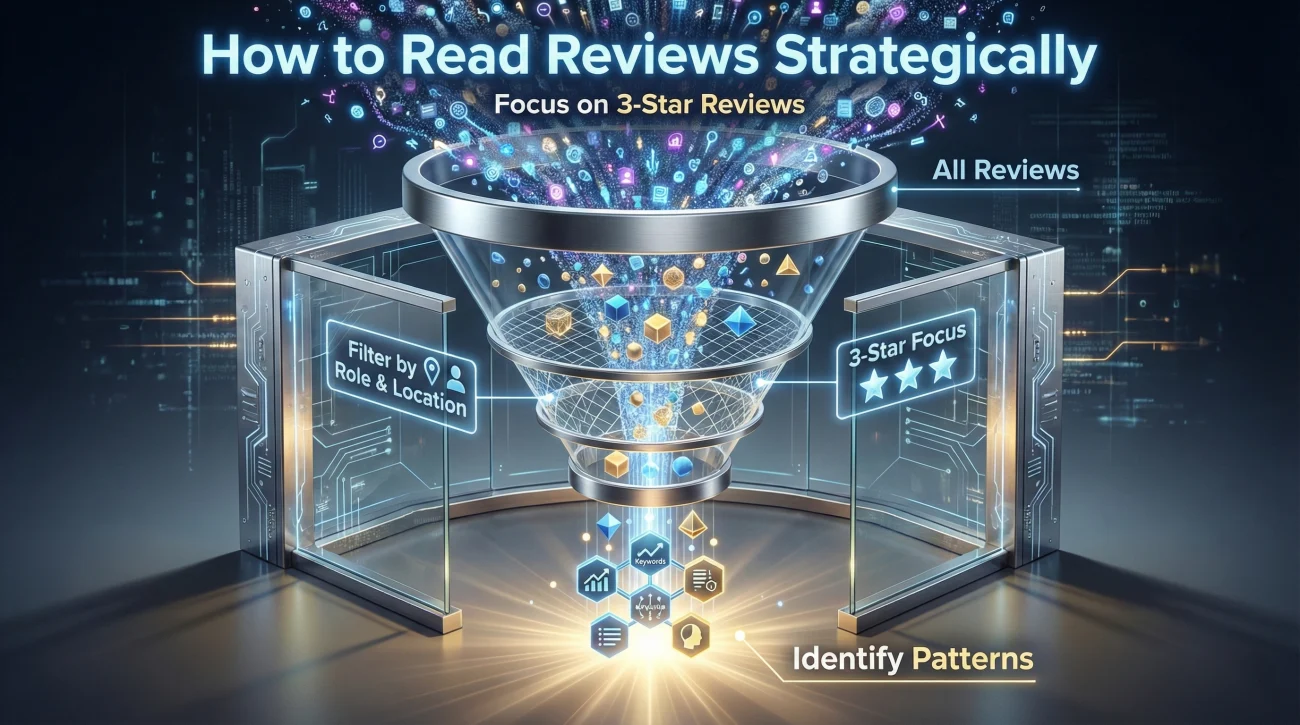
Focus on Three-Star Reviews
The most honest reviews are often rated three stars. These reviewers liked some things and disliked others, suggesting nuanced experience rather than agenda-driven writing. Five-star and one-star reviews are more likely to be manipulated or emotional.
Filter by Role and Location
A company can be great for engineers and terrible for salespeople, or wonderful in one office and dysfunctional in another. Filter reviews by the role and location you are applying for. Company-wide ratings hide important variation.
Look for Consistent Patterns
If ten different reviewers across three years mention the same problem, that problem is real. If one person complains about something nobody else mentions, it may have been their specific situation. Consensus matters more than individual opinions.
| Red Flag Pattern | What It Might Mean |
|---|---|
| Multiple mentions of “long hours” | Workload expectations are genuinely high |
| Repeated “poor management” complaints | Leadership development is weak company-wide |
| Consistent “low pay” mentions | Compensation is below market rate |
| “No growth opportunities” appears often | Promotions are rare or political |
| High turnover mentioned repeatedly | Retention is a known issue |
True Story: “I read every Glassdoor review for a company before accepting an offer. The consistent complaint was micromanagement. I asked about it in the final interview, got a defensive non-answer, and declined the offer. Six months later, a friend who took that job confirmed the micromanagement was real.”
Beyond Glassdoor
Do not rely on one source. Cross-reference with other platforms and methods:
- Indeed reviews: Different user base, sometimes different perspective
- Blind: Anonymous professional network with unfiltered discussions
- LinkedIn: Check how long employees stay and where they go next
- Personal network: Current or former employees you know directly are the most reliable source
If Glassdoor says great things but Blind is full of horror stories, dig deeper. Consistency across platforms increases credibility.
Using Review Insights in Interviews
Your Glassdoor research should inform questions you ask, not accusations you make. Frame concerns as curiosity rather than confrontation.
Asking About Common Concerns
If reviews consistently mention an issue, you can explore it diplomatically:
- Long hours mentioned: “Can you describe what a typical week looks like for this role? Are there busy seasons?”
- Management concerns: “How would you describe the management style on this team?”
- Growth limitations: “What does career progression look like for someone in this role?”
- High turnover noted: “How long has the current team been together?”
These questions let you verify review claims without revealing you read negative feedback.
Reading Their Responses
Watch how interviewers respond to culture questions. Defensive or evasive answers often confirm review concerns. Thoughtful, specific answers suggest the company acknowledges imperfections and works on them.
💡 Pro Tip: A good sign is when interviewers acknowledge challenges honestly: “Yes, Q4 gets intense, but we compensate with flexibility in quieter months.” Red flag: “I do not know where that perception comes from.”
Weighing Reviews in Your Decision
After interviews, you may have an offer to evaluate. Glassdoor becomes part of your decision-making, not just preparation. Weight reviews based on:
- Recency: Reviews from the past year matter more than older ones
- Role relevance: Reviews from similar positions to yours carry more weight
- Specificity: Detailed reviews with specific examples are more reliable
- Pattern strength: Issues mentioned by multiple reviewers are likely real
No company has perfect reviews. The question is whether the negatives are dealbreakers for you personally.
❓ FAQ
⭐ The company has 4.5 stars. Can I trust that?
Not automatically. Check review volume and patterns. High ratings with few reviews are suspicious. Also filter by your specific role and location. The company might be great overall but problematic in your department.
📉 The rating is 2.5 stars. Should I run?
Not necessarily. Read the actual reviews. Sometimes low ratings reflect past problems that new leadership has addressed. Or the negative reviews might be from departments unrelated to yours. Context matters.
🗣️ Can I bring up Glassdoor reviews in my interview?
Carefully. Ask about themes without citing Glassdoor directly: “I am curious about work-life balance here” rather than “Glassdoor says people work 60-hour weeks.” The former sounds curious; the latter sounds confrontational.
🆕 The company is new and has few reviews. What now?
Limited data means higher uncertainty. Lean more heavily on interviews, LinkedIn research, and any personal connections. Ask directly about culture and watch for defensive responses.
✍️ Should I write a Glassdoor review after I leave a job?
Wait until emotions settle. Reviews written in the heat of departure tend to be extreme. After a few months, you can offer more balanced perspective that actually helps future candidates.
Final Thoughts
Glassdoor is a useful research tool, not a source of truth. Understanding glassdoor reviews reliability means reading critically: spotting fake positives, filtering emotional negatives, and looking for patterns rather than individual opinions. The middle-ground reviews often reveal the most, and consistency across multiple sources increases confidence.
Use Glassdoor as one input among many. Combine it with LinkedIn research, conversations with your network, and observations from the interview process itself. The goal is forming a realistic picture of what working there would actually be like. For more research strategies and interview preparation, visit our comprehensive interview guide.
⚠️ Disclaimer: The interview strategies, sample answers, and negotiation tips provided in this guide are for educational purposes only. Hiring decisions are subjective and vary by company and industry. While these strategies are based on professional HR standards, they do not guarantee a specific job offer or result.