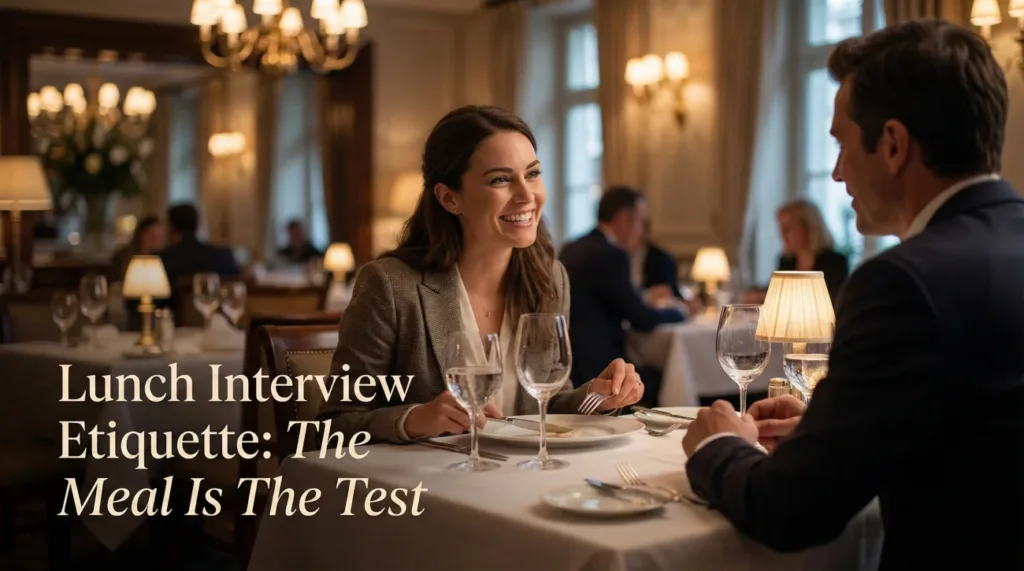
This Interview Is About Your Character
A lunch interview is not about your qualifications. They already know your resume. They could have asked technical questions in a conference room. By taking you to a restaurant, they are testing something harder to evaluate in a formal setting: who you are as a person.
How do you treat people who cannot help your career? Do you know which fork to use? Can you hold a conversation while managing food? Are you someone they would want to share meals with for years of working together?
I learned this lesson early in my HR career. A brilliant candidate demolished every interview question, but at lunch he snapped his fingers at the server and complained about the bread being cold. We did not make an offer. His technical skills were perfect, but nobody wanted to work alongside that behavior.
This is the uncomfortable truth behind lunch interview etiquette: your answers matter less than your manners. The meal is the test.
The Waiter Test Is Real
CEOs and hiring managers have written openly about using the “waiter test” to evaluate candidates. How you treat restaurant staff reveals how you will treat colleagues, subordinates, and anyone else who cannot advance your career.
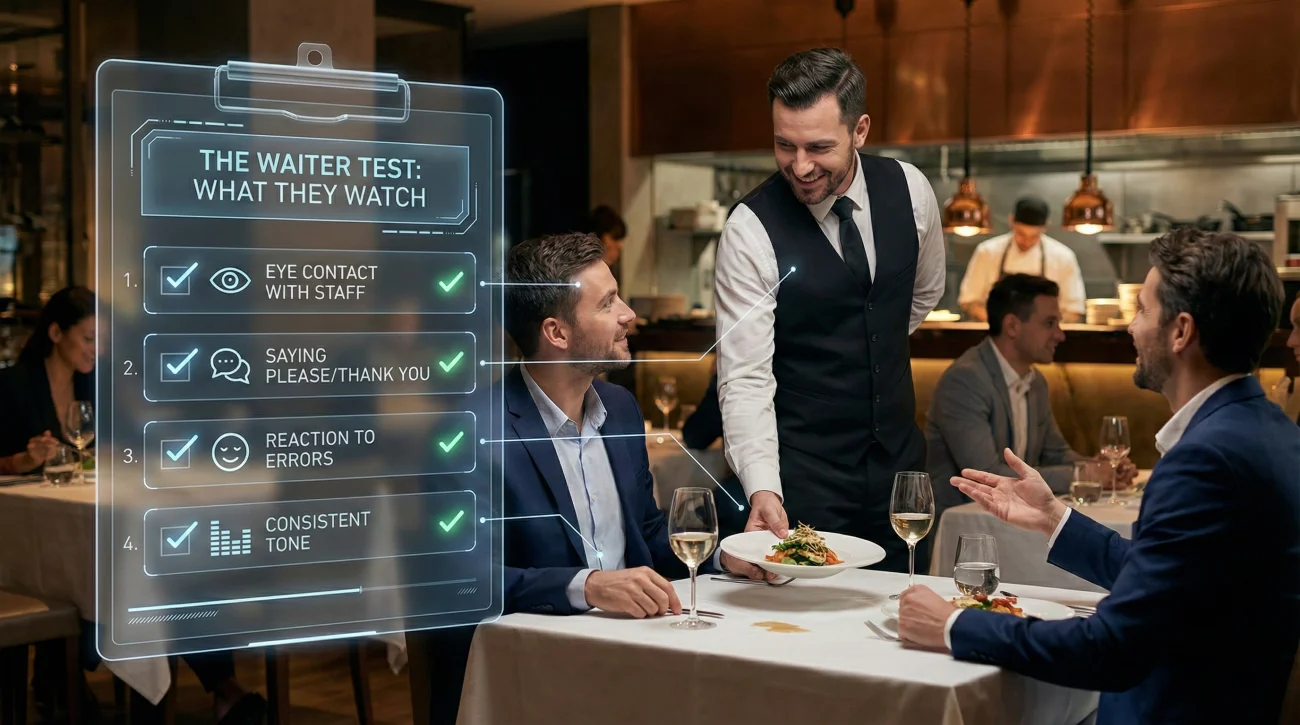
What They Watch For
- Do you make eye contact with the server and say please and thank you?
- How do you react if something is wrong with your order?
- Do you acknowledge the busser who refills your water?
- Is your tone the same with staff as it is with the interviewer?
These observations happen quietly. The interviewer will not announce “I am now evaluating your character.” But they are watching.
Expert Advice: “I once hired someone specifically because of how she handled a lunch mishap. The server accidentally spilled water near her plate. She immediately said ‘No problem, accidents happen’ and helped clean up. That thirty-second interaction told me more about her than an hour of interview questions.”
Handling Service Problems
If your food arrives wrong or takes too long, stay calm. Do not complain to the interviewer or make a scene. A simple, polite request to the server is fine: “I think there might be a mix-up. I ordered the chicken.” Then move on. How you handle small frustrations predicts how you will handle workplace frustrations.
What to Order
Your food choice sends signals you may not intend. Order strategically.
Safe Choices
| Order This | Avoid This | Reason |
|---|---|---|
| Grilled chicken or fish | Ribs, wings, lobster in shell | Messy foods require hands and create awkward moments |
| Salad with small pieces | Whole leaf salads, spaghetti | Difficult to eat gracefully while talking |
| Sandwich cut in half | Oversized burgers, tacos | Hard to take small bites between conversation |
| Mid-range price | Most expensive or cheapest item | Expensive looks presumptuous; cheapest looks insecure |
💡 Pro Tip: If unsure, ask the interviewer what they recommend or what is good here. This buys time to see what price range they order in.
The Alcohol Question
Even if the interviewer orders wine or a cocktail, you can decline. “I will stick with water, thank you” requires no explanation. If you do drink, limit yourself to one glass and do not finish it. A lunch interview is not the time to test your tolerance.
A senior recruiter I know has a rule: “If a candidate orders a second drink at a lunch interview, I mentally move them down the list. One drink shows social comfort. Two drinks shows poor judgment.”
Managing the Meal and Conversation
The logistics of eating while being evaluated create unique challenges.
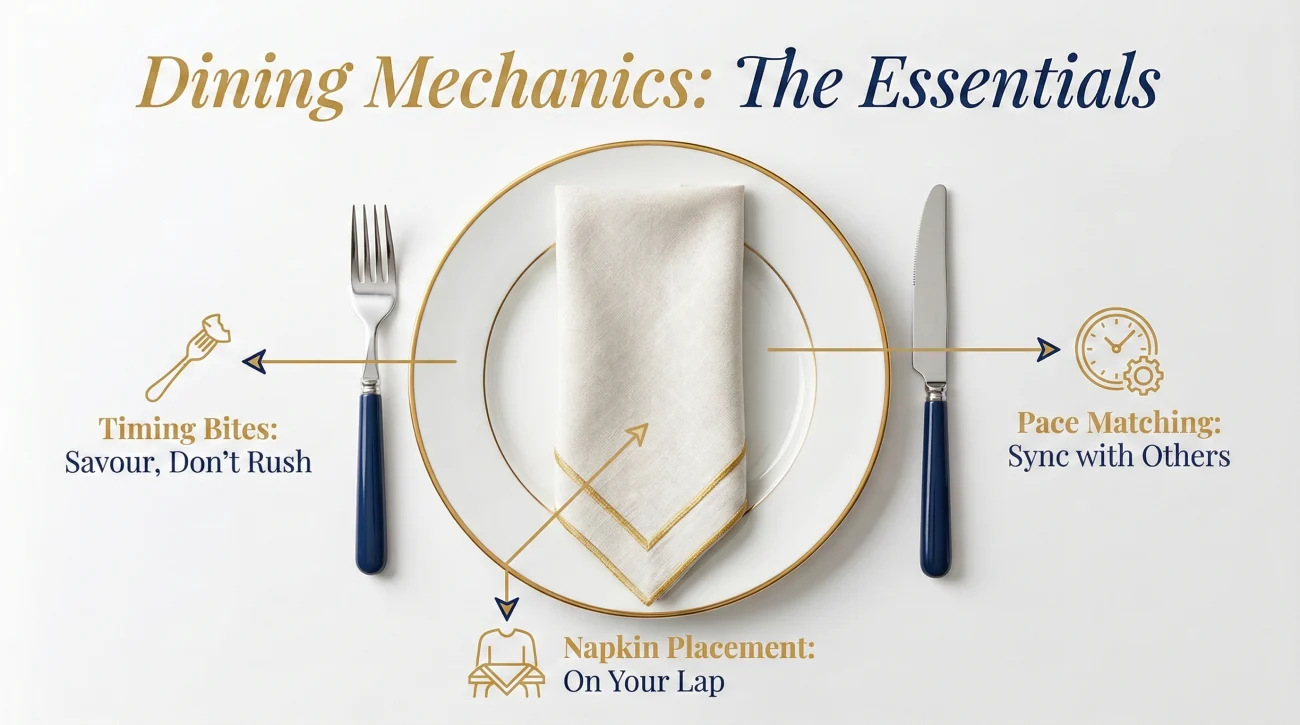
Timing Your Bites
Take small bites so you can swallow quickly if asked a question. Nothing is more awkward than being asked about your greatest achievement while chewing. Watch the interviewer’s patterns. Take bites when they are eating or talking, not when they finish a question.
Matching Their Pace
Finish your meal around the same time as the interviewer. If you finish much earlier, you will sit awkwardly watching them eat. If you finish much later, you delay their return to work. Adjust your eating speed throughout the meal to stay synchronized.
Basic Table Manners
- Place your napkin on your lap immediately after sitting
- Wait for everyone to receive food before starting to eat
- Keep elbows off the table while eating
- If you need to leave the table, place your napkin on your chair, not the table
- When finished, place your napkin loosely beside your plate
These details seem minor, but interviewers from traditional industries or senior positions often notice and judge table manners harshly.
Who Pays?
The person who invited you pays. This is not negotiable. Do not reach for the check, do not offer to split, do not suggest leaving the tip. These gestures feel polite but create awkwardness.
When the check arrives, simply say “Thank you for lunch, I really enjoyed our conversation.” Then let them handle it. Attempting to pay after they invited you suggests you do not understand professional norms.
Expert Advice: “A candidate once insisted on splitting the check after I invited him to lunch. He thought he was being generous. I thought he was being awkward and did not understand business etiquette. It was not a dealbreaker, but it made me question his professional polish.”
What to Talk About
The lunch setting encourages broader conversation than a conference room interview. Use this to your advantage while avoiding traps.
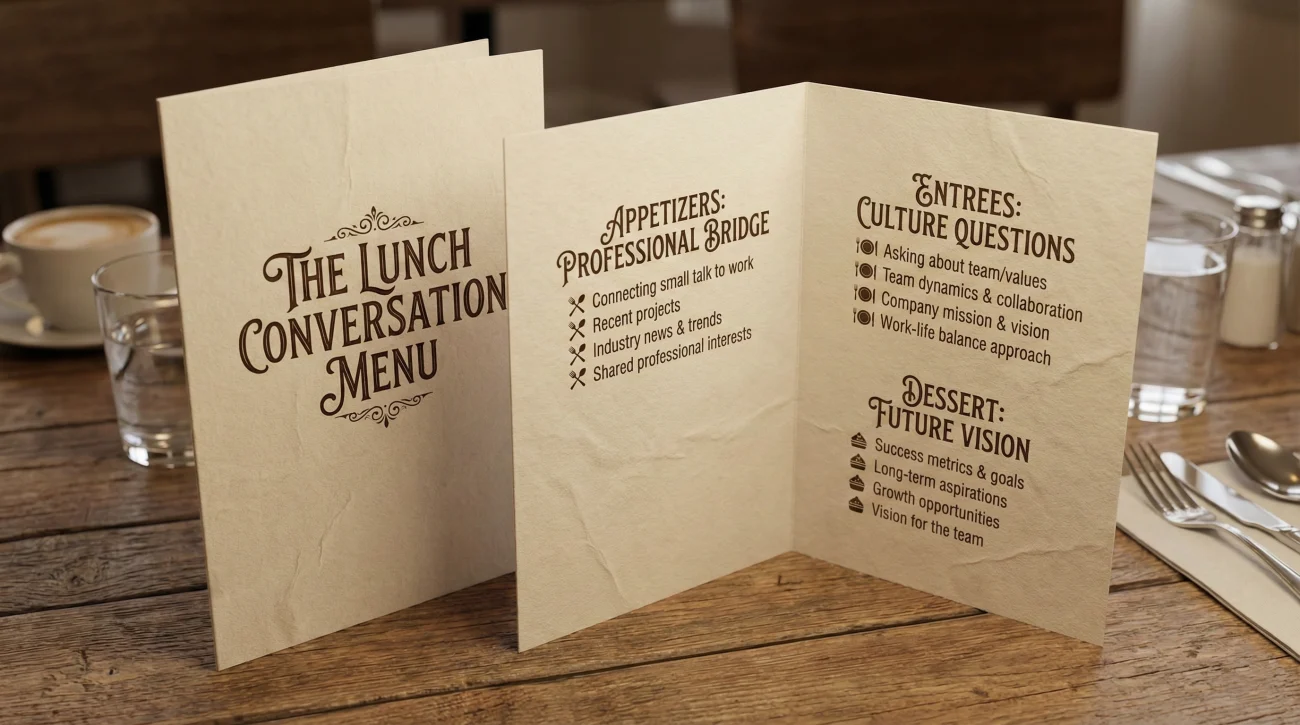
Steering the Conversation
If small talk about weather or traffic is dying, bridge to professional topics naturally: “Speaking of getting around the city, I noticed your office is in a great location for access to clients. How do you find working from this area?” This moves toward business while staying conversational.
Questions That Work at Lunch
The informal setting allows for questions you might not ask in a formal interview:
- “What made you decide to join this company?”
- “What do you enjoy most about the culture here?”
- “If you could change one thing about how the team works, what would it be?”
These questions invite genuine responses and show you care about fit, not just getting hired.
Expert Advice: “The best lunch interview question I ever received was ‘What would success look like in this role after one year?’ It showed the candidate was already thinking about delivering results, not just landing the job. That question changed how I saw him.”
❓ FAQ
🥗 I am vegan and they picked a steakhouse. Help.
Contact them beforehand and politely ask if another restaurant might work. Most people appreciate knowing early rather than watching you struggle with the menu. If changing is not possible, steakhouses usually have salads and sides you can combine.
🍷 They ordered wine. Do I have to drink?
No. “I will stick with water, thanks” needs no explanation. If you do drink, nurse one glass slowly. Ordering a second drink at a business lunch is a red flag that experienced interviewers notice.
😬 I spilled sauce on my shirt. Is this interview over?
Laugh it off briefly, dab it with your napkin, and move on. Everyone spills occasionally. How you recover matters more than the spill itself. Making a huge deal of it is worse than ignoring it.
💳 The check came. Should I grab it?
Never. They invited you; they pay. Do not reach for it, do not offer to split, do not suggest leaving the tip. Simply say “Thank you for lunch” and let them handle it.
🍽️ They want to order dessert but I need to get back to work. What do I do?
Stay. If they are ordering dessert, they are still evaluating. Order coffee or a small dessert to keep them company. Rushing out signals you are not prioritizing this opportunity.
Final Thoughts
The lunch interview evaluates what no conference room can reveal: your character, your manners, and how you treat people when professional performance is not being explicitly measured. Order food you can eat gracefully, treat every restaurant employee with genuine respect, and remember that the waiter test is not a myth.
Mastering lunch interview etiquette means understanding that the meal itself is the test. Your qualifications got you to the table. Your behavior at the table determines whether you get the job. For additional guidance on navigating different interview scenarios, visit our interview preparation resources.
⚠️ Disclaimer: The interview strategies, sample answers, and negotiation tips provided in this guide are for educational purposes only. Hiring decisions are subjective and vary by company and industry. While these strategies are based on professional HR standards, they do not guarantee a specific job offer or result.