The Trap of “This Is Just a Casual Chat”
When someone invites you for a coffee chat about a potential opportunity, they are not being casual. They are being strategic. The informal setting lowers your guard, encourages you to speak freely, and reveals how you behave when you do not think you are being evaluated.
You are always being evaluated.
I have seen candidates ruin their chances in coffee chats by treating them as actual casual conversations. They complained about their current boss, shared too many personal frustrations, or relaxed so much they forgot to sell themselves. The hiring manager walked away with plenty of information, just not the kind that leads to job offers.
The core skill for a coffee chat interview is maintaining professional presence while appearing relaxed. It is a performance of casualness, not actual casualness.
Expert Advice: “I use coffee chats specifically to see who candidates are when they think the interview is not happening yet. The ones who stay professional while being personable move forward. The ones who treat it like catching up with a friend usually do not.”
What a Coffee Chat Actually Is
Coffee chats serve different purposes depending on who initiated them. Understanding the context changes how you should prepare.
When a Recruiter Reaches Out
If a recruiter or hiring manager invites you for coffee to “learn more about your background,” this is a preliminary interview disguised as networking. They are determining whether you are worth bringing into the formal process. Treat it with the same preparation you would give any first-round interview.
When You Reached Out
If you requested an informational coffee meeting with someone at a company you want to work for, the dynamic shifts. You are there to learn, not to pitch yourself aggressively. However, you are still being evaluated. If an opening exists, they will consider whether to recommend you based on this conversation.
When a Contact Introduced You
The trickiest scenario is when a mutual contact sets up a “casual coffee” between you and a hiring manager. Both sides pretend it is not an interview while both sides know it absolutely is. Match their energy. Be professional but not stiff, prepared but not rehearsed.
💡 Pro Tip: Before any coffee chat, research who you are meeting. Know their role, their background, and recent company news. Showing up unprepared to a “casual” meeting signals you would be unprepared for real work.
Logistics That Signal Professionalism
The informal setting does not excuse informal behavior. Small details communicate your professional standards.
Arriving First
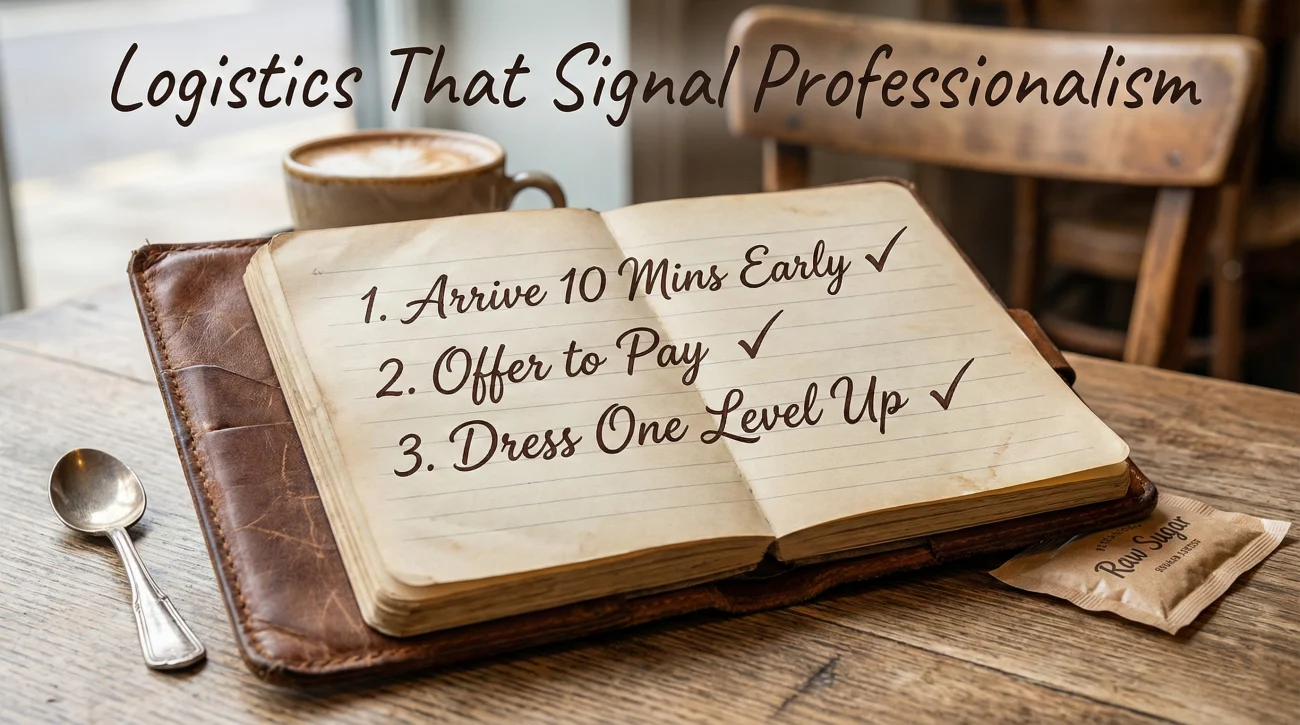
Get to the coffee shop ten minutes early. Find a table away from heavy traffic and noise. When they arrive, you should already be settled, not rushing in apologizing for being late. Being seated and ready when they walk in shows respect for their time and demonstrates organizational skills.
Who Pays for Coffee
If they invited you, offer to pay but do not insist if they decline. If you requested the meeting, you should definitely pay. When splitting feels awkward, pay for yours and offer: “Let me get this round.” The cost is minimal; the impression of generosity and professionalism is not.
What to Wear
Dress one level above the company’s typical attire. If they are a casual startup, wear clean jeans and a nice shirt rather than shorts and a t-shirt. If they are corporate, skip the suit but wear business casual. The goal is looking polished without appearing to have misread the setting.
“I showed up to a coffee chat in a full suit because I was nervous. The hiring manager was in jeans. She said nothing about it, but I could tell the mismatch made the conversation feel oddly formal. Next time I researched the company culture and dressed appropriately. Much better dynamic.”
Balancing Personal and Professional
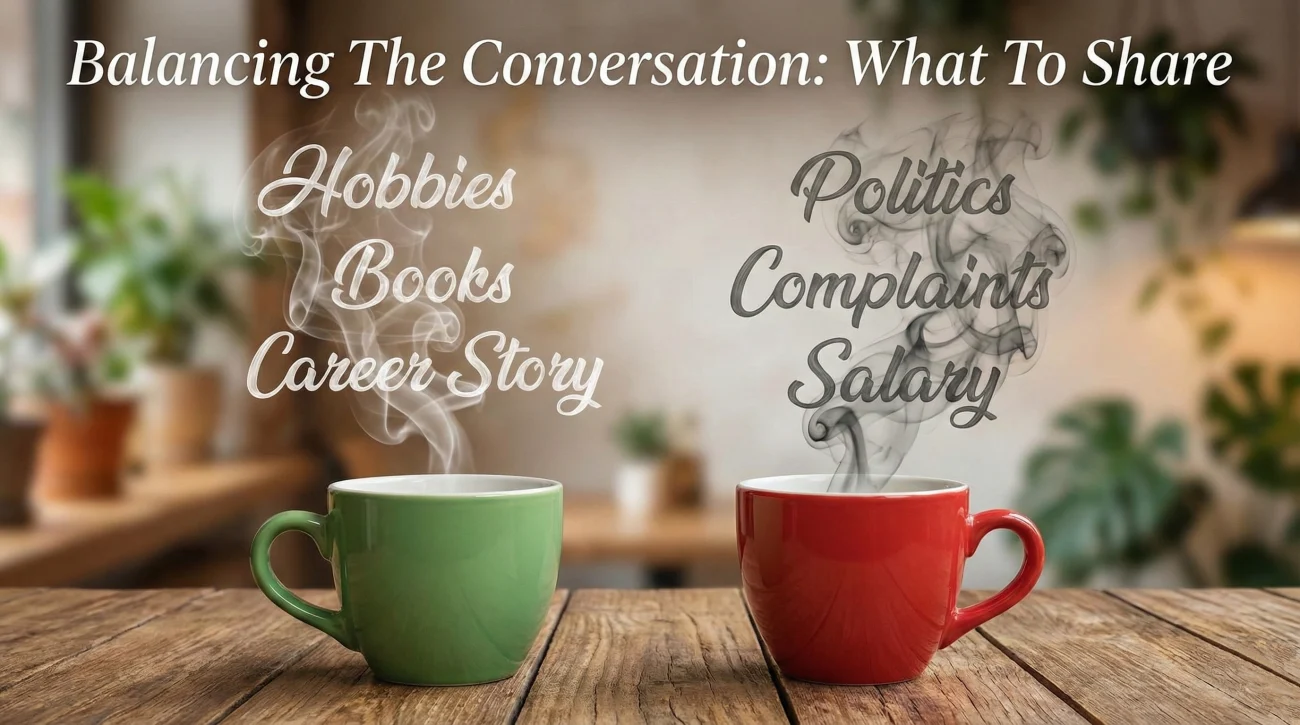
The hardest part of a coffee chat is finding the right mix. Too professional feels stiff and misses the point of the informal setting. Too personal feels unprofessional and raises questions about your judgment.
Safe Personal Territory
- How you became interested in your field
- What you enjoy about your work
- Hobbies that show personality without controversy
- Travel experiences or local recommendations
- Books, podcasts, or industry events you found valuable
Topics to Avoid
- Complaints about your current job or boss
- Politics, religion, or anything divisive
- Personal problems or health issues
- Salary expectations (save for formal interviews)
- Gossip about industry figures they might know
A mentor once told me the coffee chat rule: share stories that make you interesting, not stories that make them uncomfortable. If you would not tell the story in a team meeting, do not tell it over coffee either.
Should You Bring Your Resume?
This question causes unnecessary stress. Here is the simple answer: have one in your bag, but do not pull it out unless asked.
Placing a resume on the coffee shop table immediately signals “this is a formal interview” and breaks the casual atmosphere they may have intentionally created. If they want to see your resume, they will ask. If they do not ask, they either already have it or prefer to learn about you through conversation.
What if they ask and you do not have one?
Say “I did not want to presume this was a formal meeting, but I would be happy to send it over after we chat.” Then follow through within an hour of the meeting ending. This shows thoughtfulness about the setting while still being prepared to deliver professional materials.
Closing the Conversation
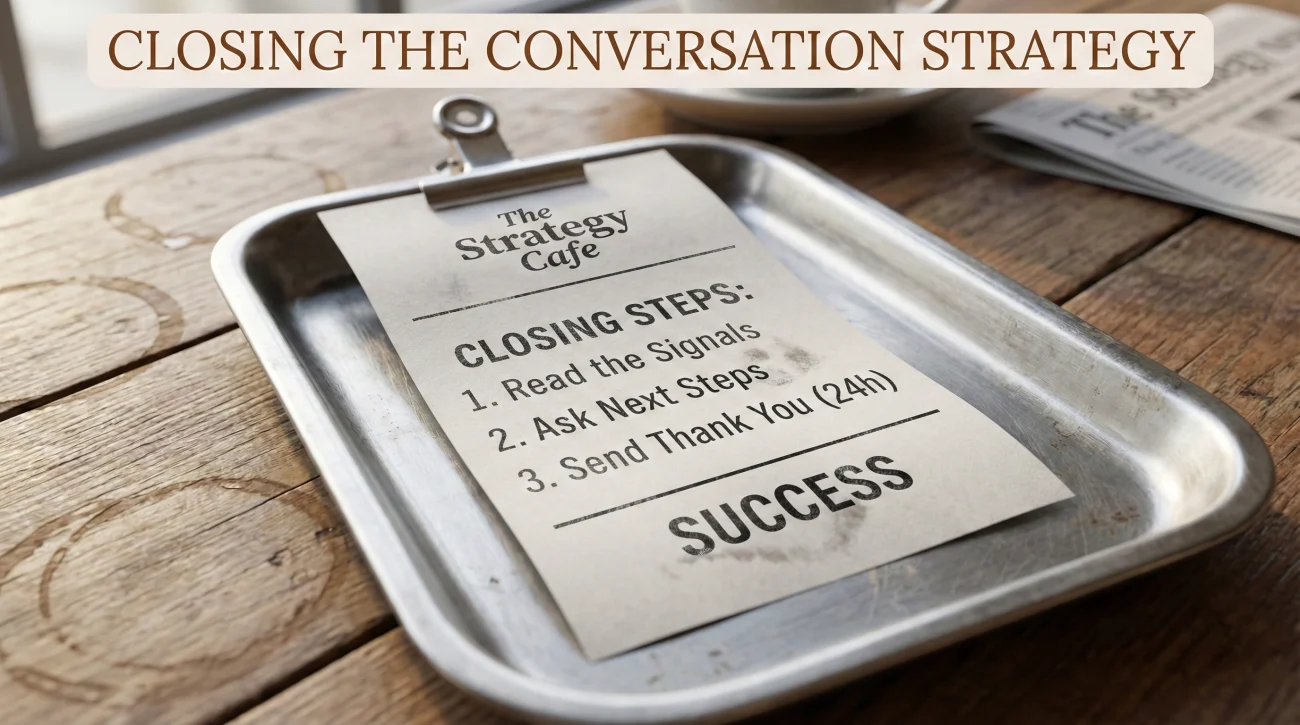
How you end a coffee chat determines what happens next. A weak close wastes the opportunity. A strong close creates momentum.
Reading Their Signals
Watch for signs they need to wrap up: checking their watch, finishing their drink, making comments about their next meeting. Do not overstay. Ending slightly before they expect shows you respect their time.
Asking for Next Steps
If this is an informal interview, close with a direct but non-pushy question:
“This has been really helpful. I am genuinely excited about what your team is working on. What would be the best next step if I wanted to explore this further?”
This gives them an opening to suggest a formal interview, introduce you to a hiring manager, or indicate there is no current opportunity. Whatever their answer, you have moved the conversation forward instead of leaving it vague.
The Follow-Up
Send a thank-you message within twenty-four hours. Reference something specific from your conversation to show you were engaged. If they mentioned a book, article, or topic you discussed, follow up with a relevant link or thought. This keeps you memorable without being annoying.
❓ FAQ
☕ Who gets to the coffee shop first?
You do. Arrive ten minutes early, grab a table away from noise, and be settled when they walk in. Being ready shows respect for their time and puts you in control of the environment.
👔 Jeans or slacks? I genuinely do not know.
Research the company culture. Startup? Clean jeans and a nice shirt. Corporate? Business casual. When in doubt, dress one level above what you think they wear daily. Overdressing slightly beats underdressing.
🤐 They asked about my current job. How honest can I be?
Never complain about your boss or company, even if the coffee feels casual. Focus on what you are seeking, not what you are escaping. Anything negative you say will make them wonder what you will say about them someday.
🚪 How do I know when it is over?
Watch for signals: checking their watch, finishing their drink, comments about their next meeting. When you see these, offer an exit: “I do not want to keep you if you need to get going.” Let them decide whether to extend.
📧 They said “Let’s stay in touch.” Does that mean anything?
Sometimes yes, sometimes polite brush-off. Send a follow-up email within 24 hours referencing something specific from your conversation. If they respond warmly, it was genuine. If crickets, move on but keep them in your network for later.
Final Thoughts
The coffee chat interview tests your ability to be professional without being stiff, personal without being inappropriate, and strategic without being obvious. The casual setting is not an invitation to drop your guard. It is an opportunity to show you can navigate ambiguous social situations with grace.
Prepare like it is an interview. Dress like it is a business meeting. Converse like you are meeting a future colleague. The candidates who master this balance turn thirty-minute coffees into career opportunities. For more guidance on navigating different interview formats, explore our comprehensive interview resources.
⚠️ Disclaimer: The interview strategies, sample answers, and negotiation tips provided in this guide are for educational purposes only. Hiring decisions are subjective and vary by company and industry. While these strategies are based on professional HR standards, they do not guarantee a specific job offer or result.