Everyone Looks. The Question Is How.
Let us be honest: you are going to look up your interviewer on LinkedIn before meeting them. So will every other candidate. So do interviewers when reviewing your application. This mutual digital reconnaissance is standard practice, not creepy behavior in the modern job search.
What makes the difference between useful research and uncomfortable stalking is what you look for and how you use what you find. Done well, stalking interviewer linkedin profiles helps you build rapport and ask better questions. Done poorly, it makes you seem obsessive or manipulative and can sabotage an otherwise promising interview.
I have seen both extremes. A candidate once mentioned my college graduation year in a way that felt invasive, like she had memorized my resume and was checking items off a list. Another candidate referenced a shared professional connection naturally, which led to a great conversation. Same source of information, completely different outcomes based on delivery.
What to Look For
Not all profile information is equally useful. Focus on details that can spark natural conversation or help you understand their perspective.
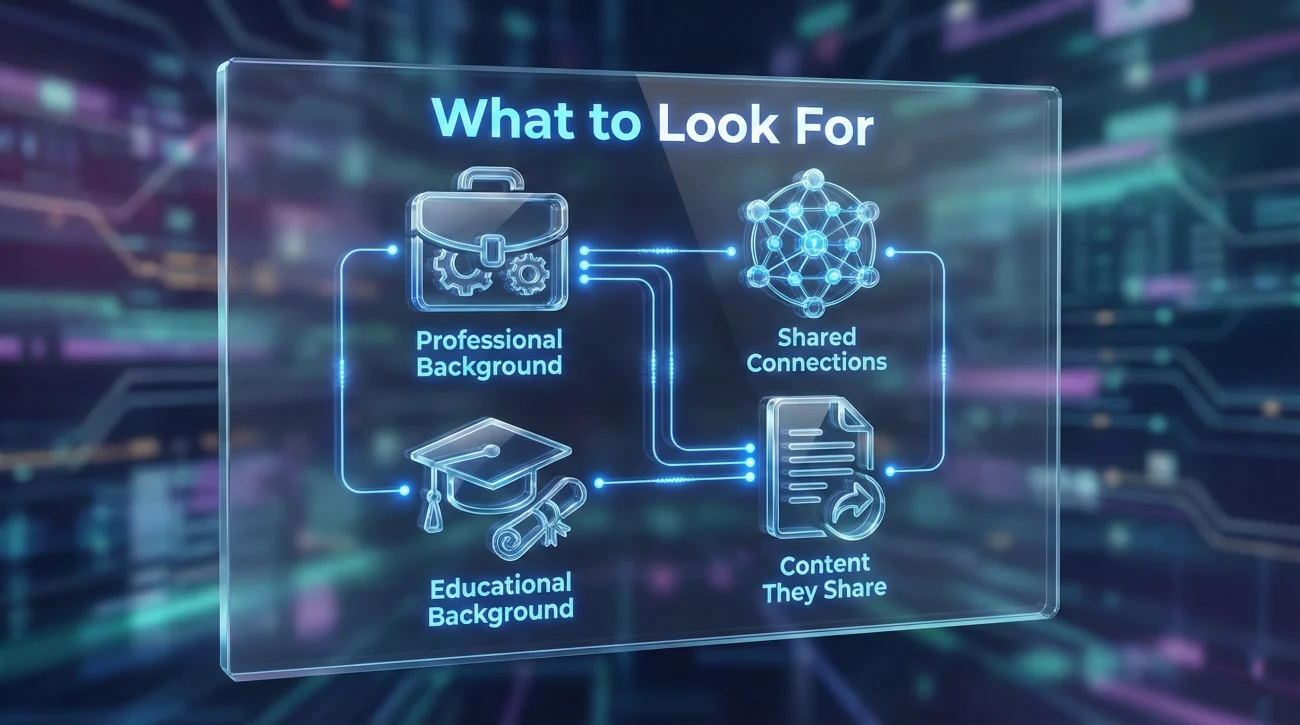
Professional Background
- Career path: How did they arrive at this role? Internal promotion or external hire?
- Time at company: Long tenure suggests insider knowledge; recent hire means they might relate to your position as a newcomer.
- Previous companies: Any overlap with your experience or industry?
- Skills and endorsements: What do they consider their strengths?
Shared Connections
Mutual connections are gold for small talk. You can ask how they know a shared contact or mention you worked with someone they are connected to. This creates instant common ground.
💡 Pro Tip: If you share a strong mutual connection, consider reaching out to that person before the interview for insider perspective on the company or the interviewer’s style.
Educational Background
Same university, same program, same extracurriculars? These are easy conversation starters. Alumni bonds are real, and interviewers often feel warmer toward candidates from their schools.
Content They Create or Share
If they post articles, comment on industry topics, or share professional content, you gain insight into what they care about. Referencing their perspective on a topic shows you did more than skim their profile.
True Story: “A candidate mentioned an article I posted about remote team management and asked a thoughtful follow-up question. It was flattering and showed initiative. But he did it naturally in conversation, not like he was checking boxes from a research list.”
Where Research Becomes Creepy
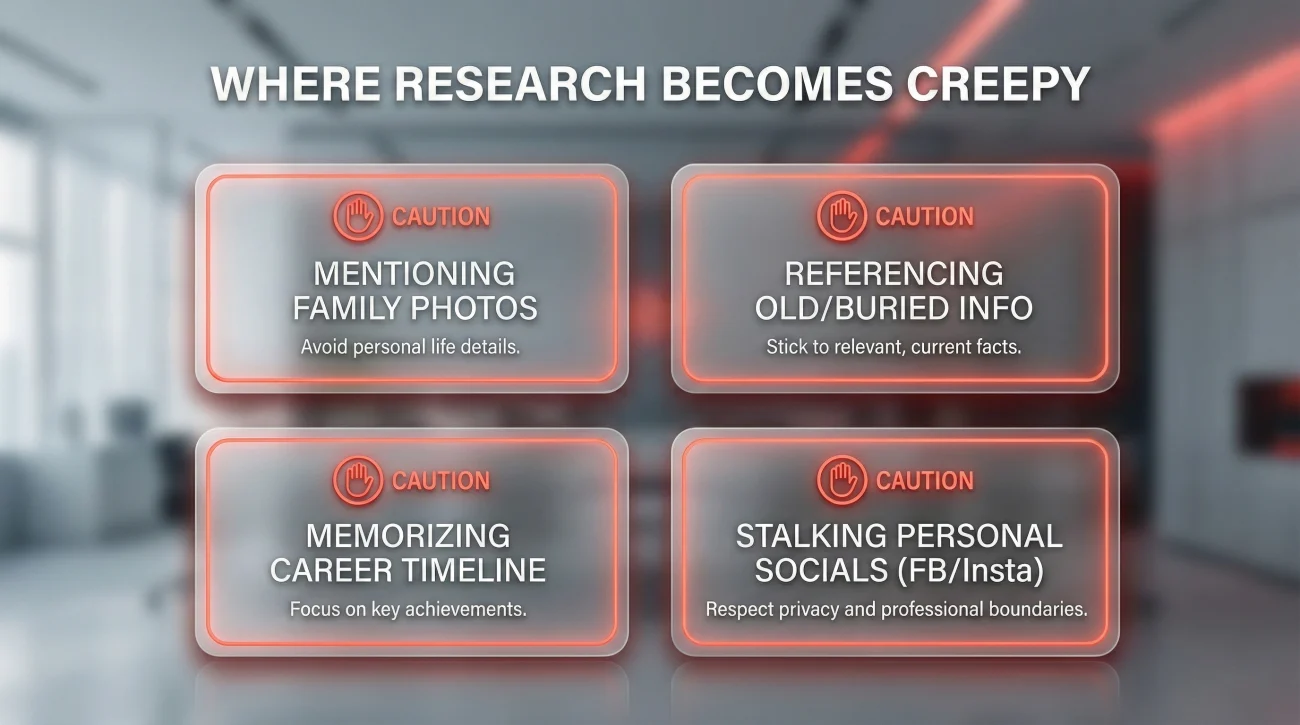
The line between prepared and invasive is real. Crossing it makes you memorable for the wrong reasons.
Mentioning personal photos or family details
“I saw your daughter’s graduation photos” is never appropriate, even if their profile is public. Personal content is off-limits in professional settings. Pretend you did not see it.
Referencing old or buried information
Bringing up a job they held fifteen years ago or a post from 2019 suggests you scrolled way too far. Stick to recent and prominent information.
Demonstrating you memorized their profile
Rattling off their career timeline makes you sound like you prepared a dossier. Reference one or two relevant points naturally, not a comprehensive summary of their professional history.
Finding them on other platforms
LinkedIn is expected. Finding their personal Instagram, Twitter, or Facebook and mentioning content from there crosses a line. Even if they have weak privacy settings, using that information professionally is uncomfortable.
“A candidate mentioned that we shared a hobby based on something he saw on my personal Facebook. I had not connected with him anywhere. The rest of the interview I kept wondering what else he had found. He did not get a callback.”
Using Your Intel Naturally
The art is making your research invisible. Information should flow into conversation as if you are just naturally curious and attentive, not like you studied for an exam.
Small Talk Openers
| What You Found | Awkward Way | Natural Way |
|---|---|---|
| Same alma mater | “I saw on LinkedIn you went to Michigan.” | “Go Blue! I noticed we are both Michigan alumni.” |
| Previous company | “You worked at Google from 2018 to 2021.” | “I saw you came from Google. What was the transition like?” |
| Shared connection | “We both know Sarah Chen according to LinkedIn.” | “I think we might have a mutual connection in Sarah Chen?” |
| Article they posted | “I read all five articles you posted this year.” | “Your recent piece on market trends was interesting.” |
Notice the pattern: awkward versions announce that you researched them. Natural versions let the information emerge organically.
Asking Better Questions
Your research shapes the questions you ask. Knowing their background helps you ask about their specific experience rather than generic topics.
- “You have been here five years. How has the team evolved in that time?”
- “With your background in consulting, how different is the pace here?”
- “I noticed you moved from engineering into management. What prompted that shift?”
When and How to Research
Timing your LinkedIn research matters. Looking too early means you might forget details. Looking right before feels rushed.
The Ideal Timing
Research interviewers the night before your interview, not the morning of. This gives you time to process what you find and think about natural ways to reference it. Morning-of research creates anxiety and scrambling.
If you learn your interviewer’s name last-minute, a quick profile scan is still better than nothing. Focus on job title, time at company, and any obvious shared connections.
Multiple Interviewers Strategy
For panel interviews or multiple rounds, research each person but prioritize depth over breadth. Know everyone’s name and role, but focus detailed research on whoever seems most senior or most relevant to your potential role.
Create a simple note for each interviewer:
- Name and pronunciation if unclear
- Their role and how long they have been there
- One potential conversation point (shared connection, background, content they posted)
Expert Advice: “I met four people during my interview day. I knew all their names, where each went to school, and one professional detail about each. When I referenced these naturally throughout the day, each person seemed genuinely impressed that I had prepared for them specifically.”
Should You View Anonymously?
LinkedIn lets you browse in private mode so people cannot see you viewed them. For interview research, I recommend staying visible. Interviewers expect candidates to look them up. Seeing that you viewed their profile signals preparation, not stalking.
The exception: if you are passively job searching and do not want your current employer knowing you are browsing competitors, private mode makes sense for general exploratory research. But for confirmed interviews where you want to make a strong impression, let them see you did your homework.
❓ FAQ
👀 They will see I viewed their profile. Is that bad?
No. They expect it. Most interviewers check whether candidates looked them up. Viewing their profile signals preparation. Not viewing might actually seem careless.
🔗 Should I connect with them on LinkedIn before the interview?
Generally no. Wait until after you have met in person. Sending a connection request beforehand can feel presumptuous. After the interview, a personalized request is perfectly appropriate.
🤷 Their profile has almost no information. Now what?
Try Google with their name and company. Check the company website for team pages or press releases mentioning them. Some people keep minimal LinkedIn profiles but appear elsewhere.
👥 Multiple interviewers. Do I research all of them?
Yes, at least briefly. Focus deeper research on whoever seems most senior or most relevant to your role. But knowing each person’s name and basic background prevents awkward moments.
😅 I already know them through the industry. Should I pretend I do not?
Do not pretend. Acknowledge the connection naturally: “I think we actually met briefly at that conference last year.” Pretending ignorance when you have real history is weirder than admitting you recognize them.
Final Thoughts
Researching your interviewer is expected and smart. The skill is using that information to build genuine connection rather than demonstrating how much you know about them. Find common ground, understand their perspective, and let your research inform the conversation without dominating it.
Strategic stalking interviewer linkedin profiles gives you advantages: relevant small talk topics, better questions, and insight into what they might value. Just remember that the goal is rapport, not surveillance. Use your intel to connect, not to impress them with your detective skills. For more interview preparation tips, explore our complete interview guide.
⚠️ Disclaimer: The interview strategies, sample answers, and negotiation tips provided in this guide are for educational purposes only. Hiring decisions are subjective and vary by company and industry. While these strategies are based on professional HR standards, they do not guarantee a specific job offer or result.