Inside a Recruiter’s Inbox
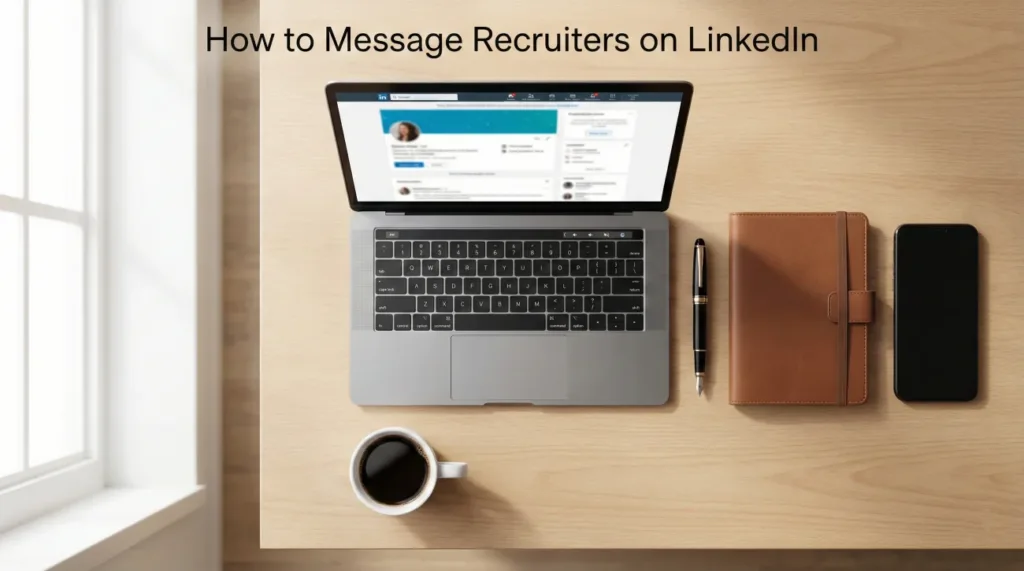
My friend Lisa runs talent acquisition for a Series C startup. Last month, she showed me her LinkedIn inbox: 847 unread messages.
Eight hundred and forty-seven people who wanted something from her. Most would never get a response. Not because Lisa doesn’t care. Because physically reading 847 messages is impossible while also doing her actual job.
When you’re reaching out to recruiters, you’re competing against that pile. Your message needs to be different enough to stop the scroll and relevant enough to deserve a reply. Most messages fail both tests within the first sentence.
Expert Advice: Recruiters delete messages that make them work. If your message requires them to guess what you want, research who you are, or figure out why you’re relevant, it’s going in the trash.
What Actually Gets Responses
After interviewing a dozen recruiters about their inbox habits, clear patterns emerged.
The Three-Second Test
Recruiters decide within three seconds whether to read your full message or keep scrolling. Your first line must answer: “Why should I care about this person?”
Lines that pass the test:
- “I’m a senior backend engineer with 6 years at Amazon, interested in the Staff Engineer role you posted.”
- “Your posting for Director of Marketing caught my attention. I built and led the demand gen team at [Company] that grew pipeline from $2M to $12M.”
- “I noticed you’re hiring product managers for [Company]’s fintech vertical. I spent 4 years building payment products at Stripe.”
Lines that fail:
- “Hi! I’m interested in opportunities at your company.”
- “I’m a results-driven professional seeking my next challenge.”
- “I’d love to connect and learn about roles that might be a fit.”
The difference is specificity. Failed messages require the recruiter to dig through your profile figuring out what you actually do. Successful messages communicate relevance immediately.
Message Templates That Convert
Use these as starting points. Adapt the specifics to your situation.
Responding to a Specific Job Posting
Hi [Name],
I saw [Company]’s posting for [Exact Job Title]. My background seems aligned: [one sentence proving relevance with specifics].
I’ve applied through the portal, but wanted to reach out directly in case that helps. Happy to share more context about my experience with [relevant skill/domain].
Thanks for your time.
[Your name]
Why this works: References a specific role. Proves relevance immediately. Acknowledges they have a system while offering direct access to you. No demands. Easy to respond to or ignore without guilt.
General Inquiry (No Specific Role)
Hi [Name],
I’m a [role] with [X years] experience in [domain]. Currently exploring opportunities in [target area], and I noticed [Company] is doing interesting work in [specific thing you know about them].
Are there any [role type] positions open or coming up that might be worth discussing?
Either way, appreciate what you’re building there.
[Your name]
Why this works: Establishes credibility fast. Shows you’ve researched them. Asks a direct question that’s easy to answer. Ends with genuine compliment that doesn’t feel like manipulation.
Following Up After Rejection
Hi [Name],
Thanks for letting me know about the [Role] decision. I appreciated the process and everyone I spoke with.
If anything changes or similar roles open up, I’d welcome another conversation. I’m particularly interested in [specific aspect of company] and would be glad to stay on your radar.
Best,
[Your name]
Why this works: Graceful response to rejection. Keeps door open without being pushy. Specific interest makes you memorable for future roles.
Warm Outreach (Mutual Connection)
Hi [Name],
[Mutual connection] suggested I reach out. I’m a [role] with experience in [domain], and [he/she] thought my background might be relevant for what [Company] is building.
Would you have 10 minutes to chat about what you’re looking for in [team/function]? Happy to share my background and see if there’s potential alignment.
Thanks,
[Your name]
Why this works: Referral triggers social obligation. Specific ask (10 minutes) feels manageable. Frames as mutual exploration, not desperate request.
Timing Your Outreach
When you send matters almost as much as what you send.
Best Times to Message
| Timing | Response Rate | Why |
|---|---|---|
| Tuesday-Thursday, 8-10 AM | Highest | Recruiters check messages early before calls fill their day |
| Monday morning | Medium | Inbox overflowing from weekend; easier to get lost |
| Friday afternoon | Low | Weekend mindset; your message sits until Monday buried under others |
| Weekends | Very low | Most recruiters disconnect; message ages before they see it |
Follow-Up Timing
No response after 5-7 business days warrants one follow-up. Keep it short:
Hi [Name],
Just bumping this in case it got buried. Let me know if the [Role/opportunity] I mentioned might be worth a quick conversation.
Thanks,
[Your name]
After two messages with no response, stop. They’ve seen your messages. They’re choosing not to reply. Additional follow-ups become harassment. Move on to other opportunities.
What Gets You Blocked
Some behaviors don’t just reduce response rates. They get you flagged or blocked entirely.
Immediate Delete Triggers
“Here’s my resume, let me know if you have any roles that fit.”
This dumps work onto the recruiter. They’re not going to analyze your resume to figure out where you might fit. That’s your job.
“I’m open to anything, just looking for my next opportunity.”
Desperation repels. Lack of direction makes you impossible to place. Recruiters hire for specific roles, not general needs.
“I saw we’re connected so I thought I’d reach out.”
Connection alone isn’t a reason to message. You need relevance. Why you specifically? Why now? What do you want?
Aggressive Follow-Up
Warning: Multiple messages within days, calls after being ignored, InMails followed by emails followed by LinkedIn comments. Recruiters share warnings about candidates who can’t take a hint. Don’t become a cautionary tale.
Obvious Mass Messaging
Recruiters can tell when you’ve copy-pasted the same message to 50 people. No personalization. No mention of their company specifically. Generic subject lines. These get deleted without reading past the first sentence.
The Connection Request Debate
Should you connect first, then message? Or message directly via InMail?
Connection Request with Note
LinkedIn limits connection request notes to 300 characters. Use them wisely:
“Hi [Name], I’m a senior PM with fintech experience exploring opportunities at [Company]. Would love to connect in case relevant roles come up. Thanks!”
This works for building long-term relationships. The recruiter accepts, you’re in their network for future roles, and you can message freely later.
Direct InMail
For time-sensitive opportunities (you see a role posted today), skip the connection request. Use InMail to introduce yourself and express interest immediately. The role might be filled by the time they accept your connection request.
Developing effective approaches to recruiter outreach takes practice and refinement based on what generates responses.
Internal Versus External Recruiters
The person you’re messaging matters. Adjust your approach accordingly.
Internal (In-House) Recruiters
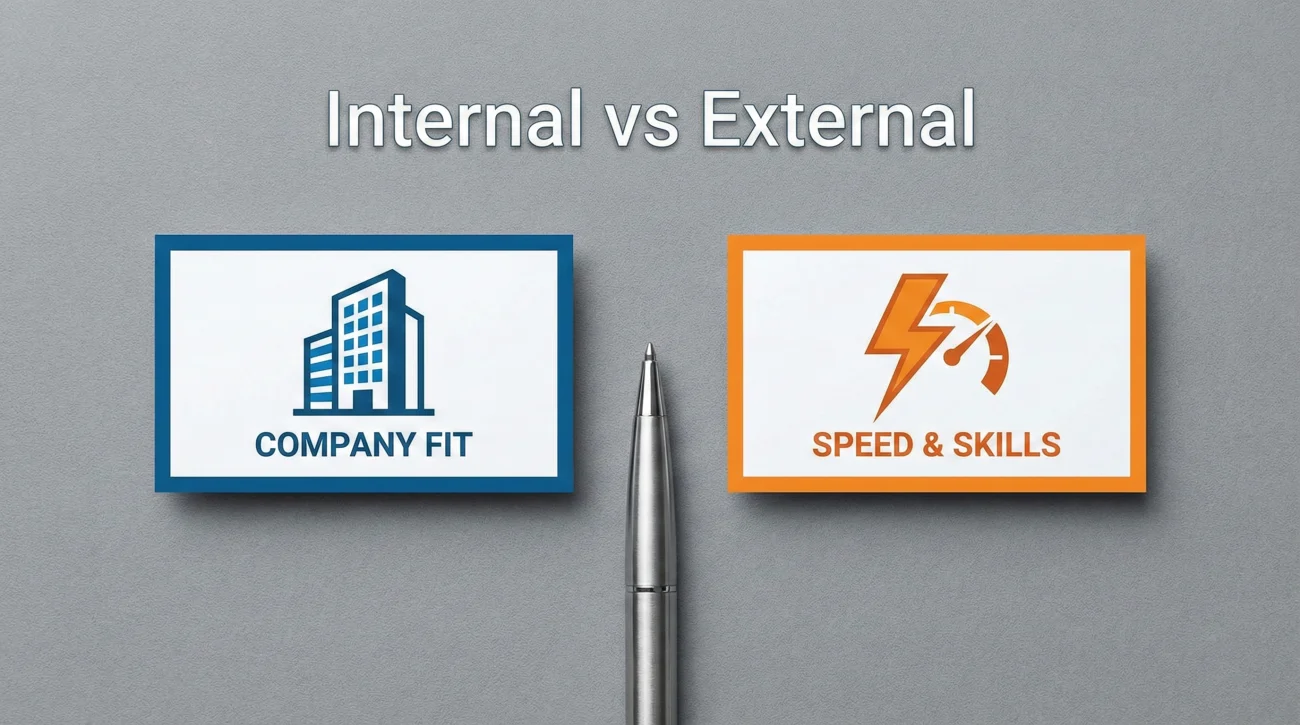
They work for one company. They know the culture, teams, and hiring managers personally. They care about fit beyond just skills. Reference something specific about their company. Show you understand what they’re building.
External (Agency) Recruiters
They work with multiple clients. They’re optimizing for placement velocity. Lead with hard skills and experience that match common searches. They need to quickly categorize you for their database.
| Aspect | Internal Recruiter | External Recruiter |
|---|---|---|
| What to emphasize | Culture fit, specific interest in company | Hard skills, experience breadth |
| Research required | High (know their company well) | Medium (know their typical clients) |
| Follow-up approach | Patient, relationship-focused | More direct, transaction-focused |
| Long-term value | Future roles at that company | Multiple opportunities across clients |
Playing the Long Game
The best recruiter relationships develop before you need them.
Engage With Their Content
Many recruiters post regularly about hiring, job search tips, or industry observations. Comment thoughtfully. Share their posts occasionally. When you eventually message them, you’re not a stranger. You’re someone they recognize from their feed.
Refer Candidates to Them
Know someone perfect for a role they’re posting? Make the introduction. Recruiters remember people who help them fill positions. When you need something later, you’ve already deposited into the relationship bank.
Stay in Touch Strategically
Not constantly. But when you have genuine updates (new role, completed certification, shipped major project), a brief message keeps you visible. “Hi [Name], wanted to share that I just [update]. Hope things are going well with [something specific about them].” Simple. Non-demanding. Maintains the relationship.
When They Actually Respond
You got a reply. Now what?
Move Quickly
Respond within hours, not days. Recruiters move fast. Slow responses signal low interest or poor communication skills. Neither helps your candidacy.
Answer Questions Directly
If they ask for your resume, send it immediately. If they ask about salary expectations, give a range (or deflect to “I’m focused on the right fit, happy to discuss compensation once we confirm mutual interest”). If they propose a call time, confirm or offer alternatives right away.
Match Their Tone
Some recruiters are formal. Some are casual. Mirror their communication style. If they write in complete sentences with proper punctuation, do the same. If they’re more conversational, adjust accordingly.
Questions Candidates Ask
🤔 Is it okay to message recruiters if I’m not actively job searching?
Yes, actually ideal. Building relationships before you need them gives you advantages when opportunities arise. Just be honest about your situation.
💳 Should I pay for LinkedIn Premium to message recruiters?
InMail credits help if you’re actively searching and need to reach recruiters outside your network. For casual networking, free connection requests usually suffice.
👻 What if a recruiter ghosts me after initial interest?
Common and usually not personal. Roles get filled, priorities shift, budgets freeze. One follow-up is fine. After that, move on. They’ll resurface if something fits later.
📧 Should I message the recruiter and the hiring manager?
Generally, start with the recruiter. Going around them can annoy both parties. Exception: if you have an existing relationship with the hiring manager, that’s a warm introduction.
🔢 How many recruiters should I reach out to at once?
Quality over quantity. Ten thoughtful, personalized messages beat a hundred copy-pasted ones. Aim for 5-10 highly relevant contacts per week during active search.
The Message That Got Me Hired
Years ago, I sent a message to a recruiter at a company I admired. Nothing fancy. Just specifics about why their work interested me and exactly what experience I could bring. Forty-three words total.
She responded within two hours. Three weeks later, I had an offer.
The magic wasn’t in elaborate persuasion or clever wordplay. It was clarity. I knew what I wanted. I knew why I was relevant. I said both directly. She didn’t have to guess.
Reaching out to recruiters isn’t about standing out through gimmicks. It’s about making their job easy. Be specific about who you are. Be clear about what you want. Be relevant to what they’re hiring for. Do that, and you’ll rise above the 847 other messages in their inbox.
⚠️ Disclaimer: The interview strategies, sample answers, and negotiation tips provided in this guide are for educational purposes only. Hiring decisions are subjective and vary by company and industry. While these strategies are based on professional HR standards, they do not guarantee a specific job offer or result.