You Are Talking to a Machine
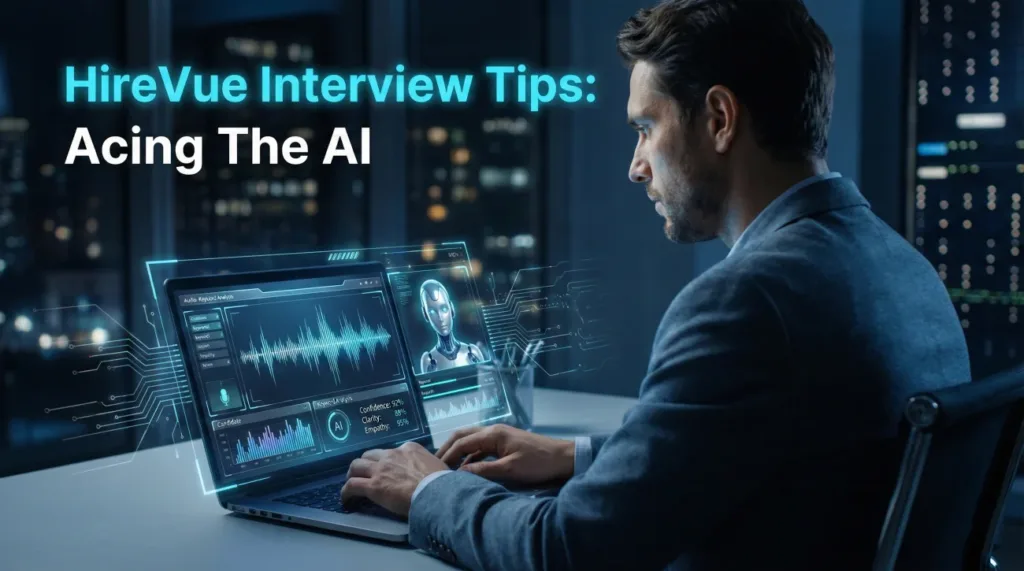
There is no polite way to say this: in a HireVue interview, you are performing for software. No human will watch you stumble over that first question. No recruiter will notice your nervous laugh or feel sympathy when you lose your train of thought. An algorithm will analyze your recorded responses, assign you a score, and decide whether a real person ever sees your face.
This changes everything about how you should prepare.
Traditional interview advice assumes a human on the other side, someone who can read between the lines, appreciate your personality, forgive a rocky start if you recover well. HireVue interview tips require a different mindset entirely. The AI does not care about your charm. It cares about measurable signals: the words you use, how you structure your answers, your vocal consistency, and whether your delivery matches your content.
I have coached candidates through hundreds of these recordings. The ones who succeed treat the camera like a judge reviewing evidence, not a friend having a conversation. That mental shift makes all the difference.
What the Algorithm Actually Measures
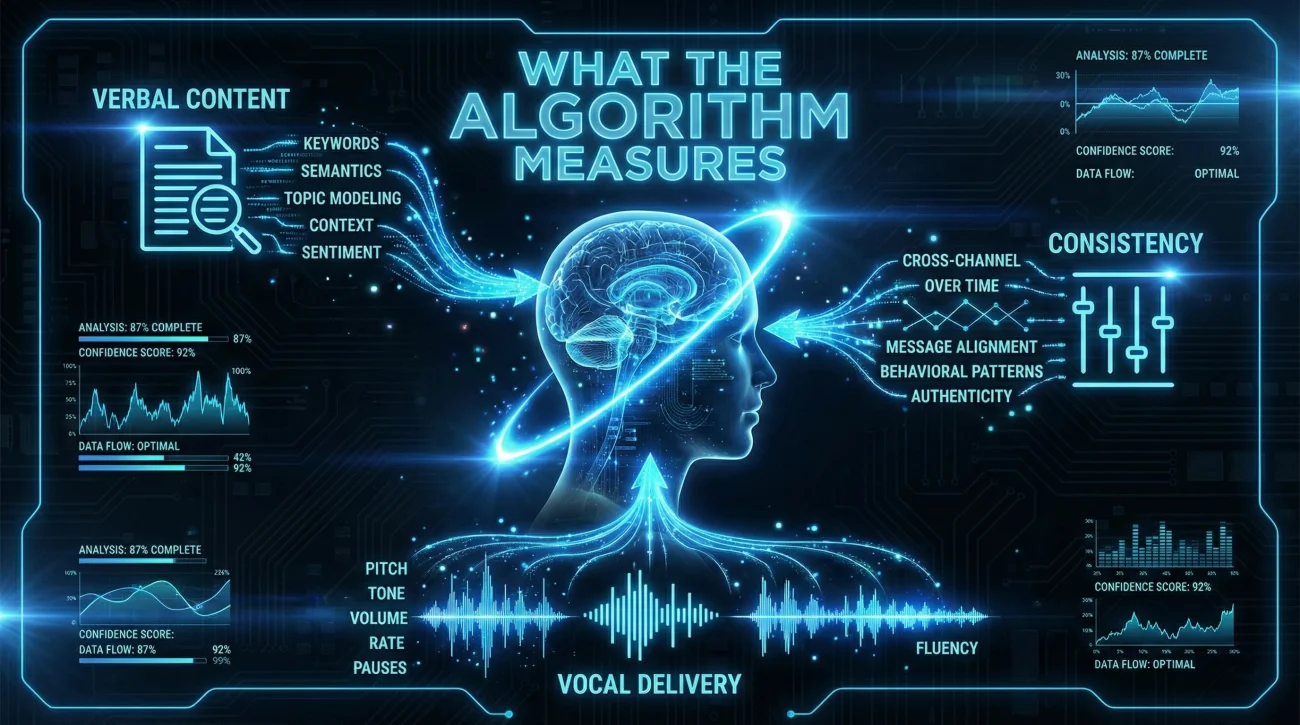
HireVue removed facial recognition scoring after public backlash, but the system still analyzes plenty. Understanding what it measures helps you optimize your performance.
Your Words and Structure
The AI transcribes your response and analyzes word choice. It looks for keywords from the job description and evaluates how logically you structure your answer. Rambling hurts you. Clear, organized responses help you.
A recruiting director I worked with at a Fortune 500 company told me their HireVue system flagged candidates who never mentioned terms from the job posting. The algorithm interpreted this as poor job fit, even when the answers were otherwise strong.
💡 Pro Tip: Print the job description and highlight five key skills. Work at least three of them naturally into your responses.
Your Voice and Tone
The system evaluates pace, pauses, filler words, and vocal variation. Speaking in monotone signals low enthusiasm. Speaking too fast signals nervousness. The algorithm prefers confident, measured delivery with natural emphasis on key points.
One candidate I coached kept saying “like” and “you know” throughout her responses. Her content was excellent, but the AI scored her lower on communication skills. We recorded her practicing until she could deliver clean answers, and her next HireVue submission passed.
The Consistency Check
Here is something most candidates miss: the AI looks for alignment between what you say and how you say it. If you claim to be passionate about leadership but deliver the answer in a flat, disengaged tone, the system notices the mismatch. Your energy must match your words.
Expert Advice: “I reviewed our HireVue analytics for a year and found that candidates who scored highest had one thing in common: their vocal energy matched their content. When they talked about achievements, they sounded proud. When they discussed challenges, they sounded thoughtful. The AI detected this alignment and rewarded it.”
Managing the Countdown Timer
The timer creates pressure that derails unprepared candidates. You typically get thirty seconds to read the question and think, then two to three minutes to record your response. That countdown ticking in the corner triggers panic if you have not practiced.
Using Your Prep Time
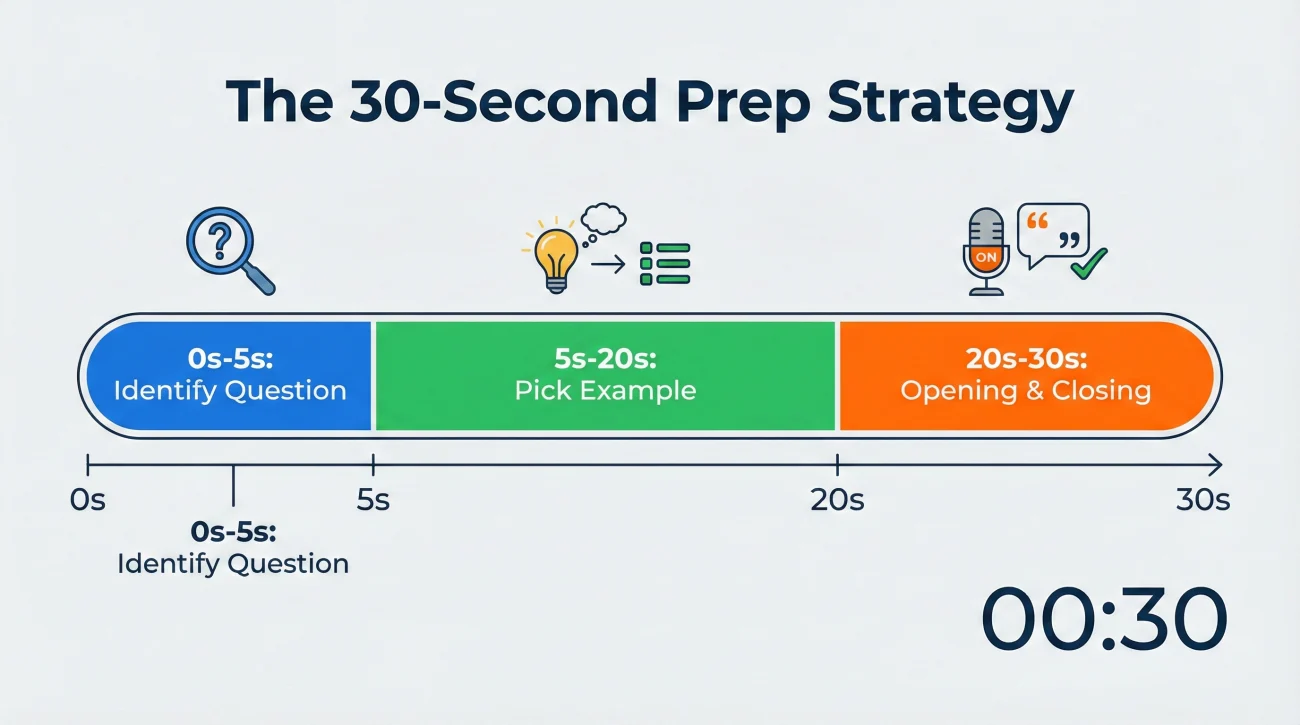
Thirty seconds feels short until you learn to use it efficiently. Do not try to script a complete answer. Instead, mentally outline three points you want to hit, then trust yourself to fill in the details while speaking.
I teach candidates to use a simple formula during prep time:
- First five seconds: Identify the question type (behavioral, situational, technical)
- Next fifteen seconds: Pick one specific example or scenario
- Final ten seconds: Note your opening line and closing point
This structure prevents the blank-mind freeze that wastes precious thinking time.
Pacing Your Response
Two minutes is longer than it feels when you are nervous. Most candidates rush through their answer in sixty seconds and then sit awkwardly, unsure whether to add more. Others ramble past the time limit and get cut off mid-sentence.
Practice with a timer until you internalize what ninety seconds feels like. Aim to use eighty percent of the available time, leaving a small buffer for a strong closing statement.
Warning: Getting cut off by the timer looks unprepared. Always watch the clock and wrap up before it hits zero.
Technical Setup That Matters
Your technical setup directly affects how the AI perceives you. Poor lighting, bad audio, or wrong camera angle can hurt your score before you say a word.
| Element | What to Do | Why It Matters |
|---|---|---|
| Lighting | Face a window or use a ring light in front of you | Shadows on your face make you harder to read |
| Camera position | Eye level, not looking up or down | Looking down appears disengaged; looking up appears uncertain |
| Background | Plain wall or tidy, professional space | Clutter distracts and looks unprofessional |
| Audio | Quiet room, consider using headphones with mic | Background noise affects transcription accuracy |
| Eye contact | Look at the camera lens, not the screen | Creates the appearance of direct eye contact |
A colleague who reviews HireVue submissions told me she can predict scores within seconds of a video starting. Candidates with professional setups consistently outperform those recording from beds, coffee shops, or poorly lit rooms.
The Practice Method That Works
Reading about hirevue video interview techniques helps less than actually recording yourself. The disconnect between how you think you sound and how you actually sound is often shocking.
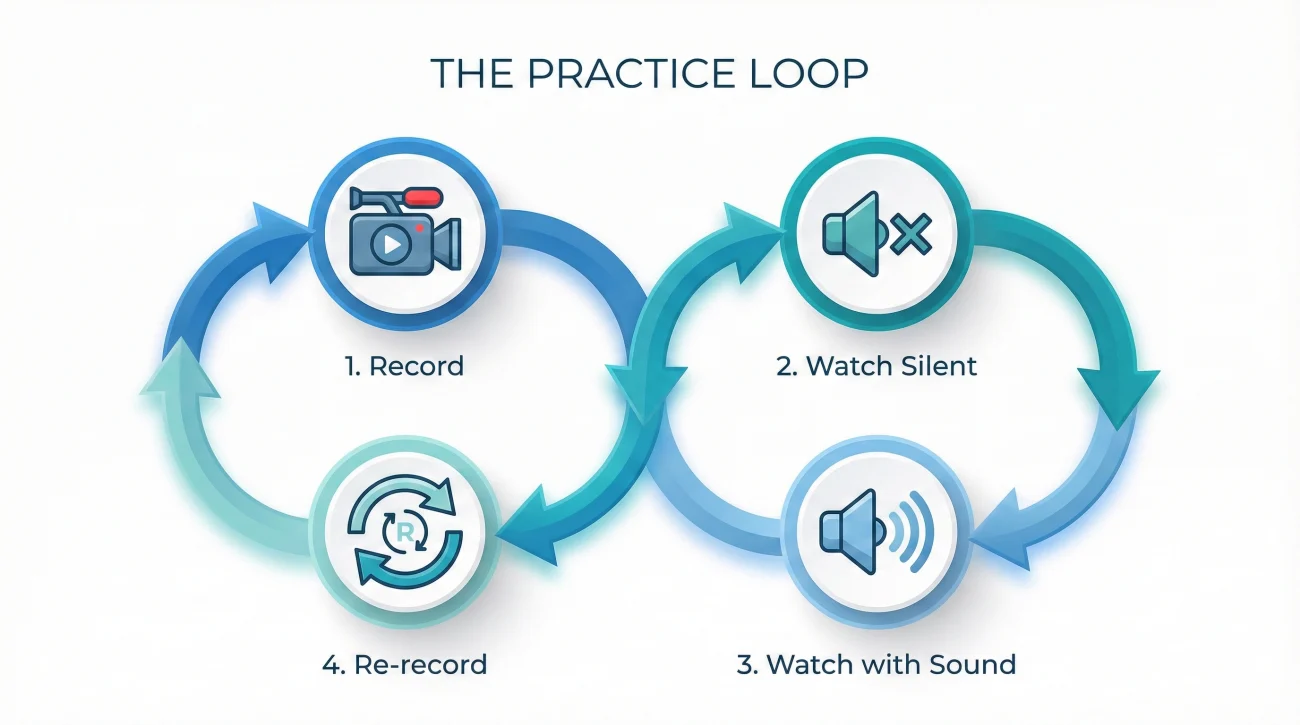
Here is the practice routine I recommend:
- Record yourself answering five common questions using your phone or laptop camera
- Watch each recording with the sound off first, observing your body language and facial expressions
- Watch again with sound, noting filler words, pace issues, and unclear sections
- Re-record until you can deliver clean, confident answers consistently
Most candidates hate watching themselves on video. Do it anyway. The discomfort of practice is nothing compared to the disappointment of failing a screen you could have passed.
Expert Advice: “I failed my first three HireVue interviews before I started recording practice sessions. Watching myself was painful, but I discovered I looked at the ceiling when thinking, spoke twice as fast as I realized, and ended every answer with an uncertain upward inflection. Fixing those habits changed my results completely.”
Questions to Expect
HireVue questions fall into predictable categories. Preparing for each type gives you templates to adapt rather than starting from scratch under pressure.
Tell me about yourself
Structure this as a professional narrative: current role, relevant experience, why this opportunity. Keep it under ninety seconds. This is often the first question and sets the tone for everything that follows.
Describe a time you overcame a challenge
Use the STAR format: Situation, Task, Action, Result. Be specific about what you personally did, not what your team accomplished. Include a measurable outcome if possible.
Why do you want to work here?
Reference specific aspects of the company and role that genuinely interest you. Generic answers like “it seems like a great company” score poorly. Mention something from your research that shows you understand their mission or recent achievements.
Where do you see yourself in five years?
Connect your answer to growth within the company. Saying you want to be elsewhere in five years raises questions about your commitment. Frame ambition in terms of what you could contribute as you develop.
❓ FAQ
🔄 I messed up. Can I redo it?
Depends on the company. Some allow one retry per question, others lock you in after you hit submit. Read the instructions carefully before starting. Multiple attempts may be visible to reviewers.
⏱️ The timer stresses me out. Any tricks?
Practice with a stopwatch until you internalize what ninety seconds feels like. During the actual interview, glance at the timer only twice: once at the start, once when wrapping up. Staring at it constantly makes you rush.
👀 Where exactly should I look?
Straight into the camera lens, not at your own face on screen. Tape a small sticker next to your webcam as a reminder. Looking at yourself is natural but creates awkward eye contact on the recording.
🎭 How enthusiastic should I be?
More than feels natural. Energy that seems slightly over-the-top in person often reads as normal on video. Record yourself and watch back. If you look bored, amp it up. If you look manic, dial it down.
🌐 My internet is unreliable. What now?
Use ethernet instead of WiFi if possible. Close all other applications. If your connection drops mid-recording, most platforms let you resume. Contact the company immediately if technical issues prevent completion.
Final Thoughts
A HireVue interview is not a conversation. It is a performance for an algorithm, and the candidates who succeed treat it that way. Set up your space professionally, practice until your delivery is clean, use keywords from the job description, and manage the timer so you never get cut off.
These hirevue interview tips work because they address what the AI actually measures rather than what traditional interview advice assumes. The system rewards clarity, structure, and alignment between content and delivery. Give it what it wants, and you will move past the screen to talk with actual humans. For more strategies on different interview formats, explore our complete interview preparation guides.
⚠️ Disclaimer: The interview strategies, sample answers, and negotiation tips provided in this guide are for educational purposes only. Hiring decisions are subjective and vary by company and industry. While these strategies are based on professional HR standards, they do not guarantee a specific job offer or result.