Everyone Reads the About Page. You Need to Go Deeper.
Every candidate walks into an interview having skimmed the company website. They know the mission statement, maybe the founding story, probably the names of a few products. This surface-level research is the bare minimum, and interviewers can tell immediately when that is all you have done.
The candidates who stand out talk about recent news the company made, challenges facing the industry, how the company compares to competitors, and specific initiatives that excite them. They sound like someone who has genuinely thought about working there, not someone who googled the company name fifteen minutes before the interview.
Learning how to research a company properly takes two to three hours of focused work. That investment pays off dramatically when you can have an actual conversation about the business rather than reciting facts from the careers page. The difference between surface research and deep research is the difference between sounding like every other candidate and sounding like someone who belongs there.
True Story: “I interviewed a candidate who mentioned our Q3 earnings call and asked about our strategy shift in the European market. I was stunned. Most candidates cannot even name our main competitors. She got the job partly because that research showed genuine interest.”
The Research Layers
Think of company research like peeling an onion. Each layer reveals more valuable information that fewer candidates bother to find.
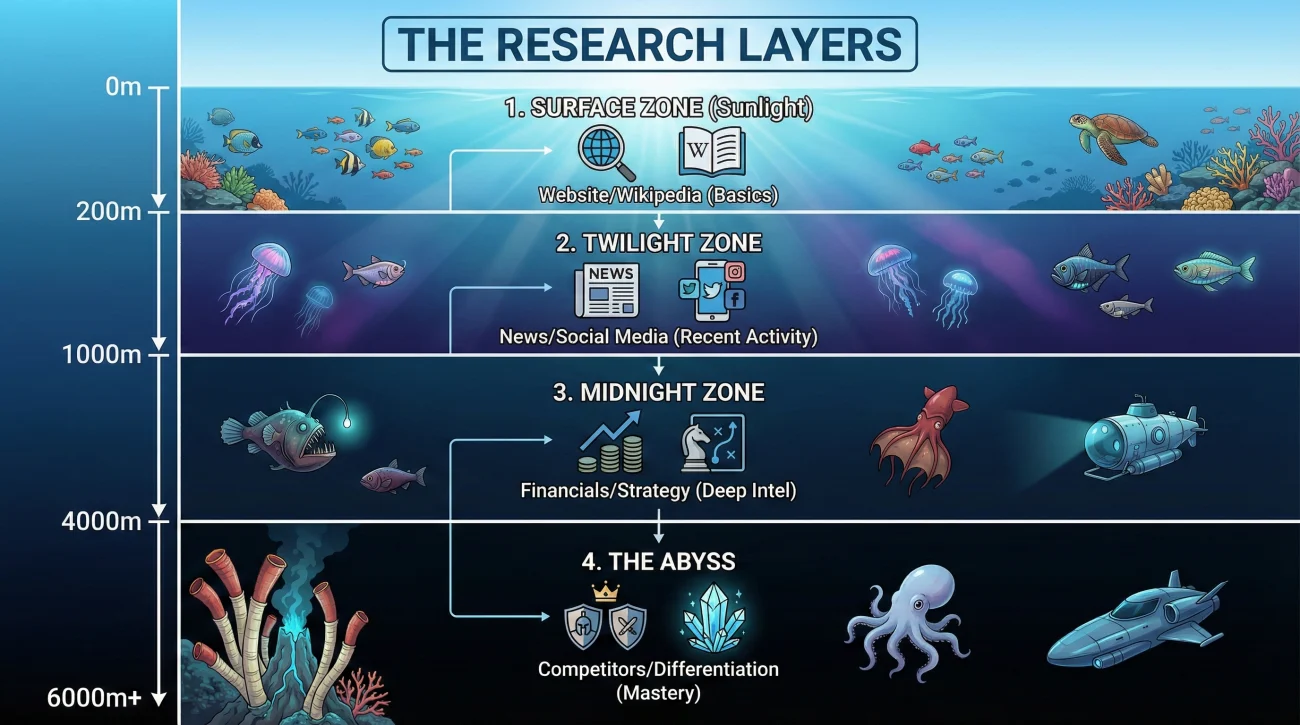
Layer 1: The Basics (What Everyone Does)
- Company website: About, Products, Leadership team
- Wikipedia entry for history and overview
- LinkedIn company page for employee count and recent posts
This takes thirty minutes and gives you enough to not embarrass yourself. It is not enough to impress anyone.
Layer 2: Recent Activity (What Good Candidates Do)
- Google News search for company name in past three months
- Press releases on the company website
- Recent blog posts or thought leadership content
- Social media activity on LinkedIn, Twitter, Instagram
This adds another thirty minutes and lets you reference specific recent events: “I saw you just opened a new office in Austin” or “Your CEO’s comments on sustainability in that Forbes interview were interesting.”
Layer 3: Financial and Strategic (What Impressive Candidates Do)
For public companies:
- Annual report or 10-K filing (find on investor relations page)
- Recent earnings calls (transcripts often available free)
- Stock performance and analyst ratings
For private companies:
- Crunchbase for funding history and investors
- News about funding rounds or acquisitions
- Industry reports mentioning the company
💡 Pro Tip: The “Risk Factors” section of annual reports reveals what the company is worried about. Mentioning these concerns thoughtfully shows serious business understanding.
Layer 4: Competitive Landscape (What Exceptional Candidates Do)
- Identify three to five main competitors
- Understand how the company differentiates itself
- Read news about competitive battles or market shifts
- Check industry analyst reports if accessible
Being able to discuss competitors intelligently signals that you understand the business context, not just the company in isolation.
Where to Find the Good Stuff
| Source | What You Will Find | Best For |
|---|---|---|
| Google News | Recent headlines, PR coverage, controversies | Any company |
| Employee posts, company culture signals, hiring patterns | Any company | |
| Glassdoor | Employee reviews, salary data, interview experiences | Understanding culture |
| Crunchbase | Funding rounds, investors, acquisitions | Startups and private companies |
| SEC filings | Financial performance, strategy, risks | Public companies |
| Industry publications | Market trends, competitive analysis | Understanding context |
| YouTube | Executive interviews, company events, product demos | Leadership style, culture |
Turning Research Into Interview Gold
Raw information is useless if you cannot deploy it naturally in conversation. The goal is weaving your research into answers and questions without sounding like you memorized a fact sheet.
Answering “Why This Company?”
This question exposes weak research instantly. Generic answers like “I admire your innovation” mean nothing. Specific answers demonstrate genuine interest.
Weak: “I am excited about your company because you are a leader in the industry.”
Strong: “Your recent expansion into Southeast Asia caught my attention, especially how you adapted the product for local markets. That kind of strategic flexibility is exactly what I want to be part of.”
Asking Informed Questions
The questions you ask reveal your preparation level more than the answers you give. Reference specific things you learned:
- “I read about your acquisition of [company]. How has integrating their team affected the department I would be joining?”
- “Your CEO mentioned prioritizing sustainability in the last earnings call. How does that translate to day-to-day decisions in this role?”
- “I noticed [competitor] just launched a similar product. How is your team thinking about differentiation?”
True Story: “A candidate asked me about a challenge mentioned in our annual report that I had forgotten about. I had to pause and think carefully about my answer. That question told me he had done more homework than most of my colleagues.”
Red Flags Your Research Might Reveal
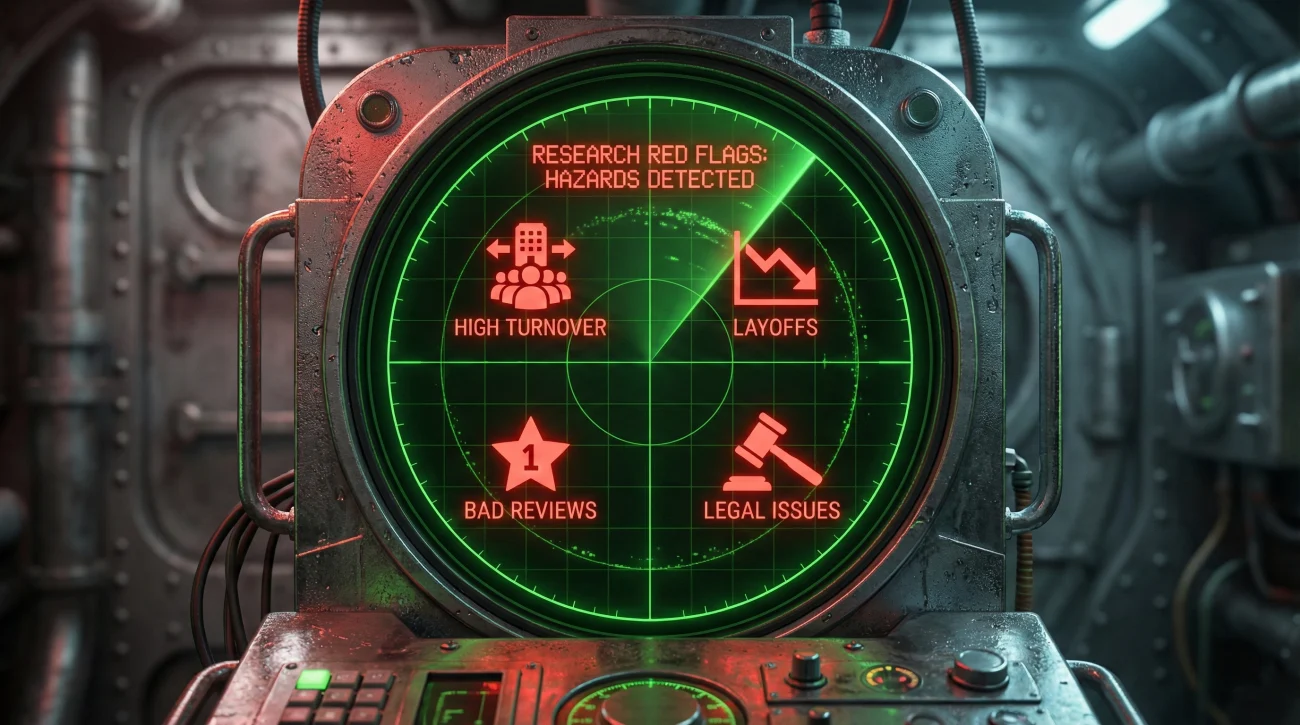
Sometimes research uncovers reasons not to take the job. Pay attention to warning signs:
- High executive turnover in recent years
- Patterns of layoffs or restructuring
- Consistent negative themes in employee reviews
- Declining financial performance or market share
- Legal troubles, regulatory issues, or PR crises
These findings do not mean you should not interview, but they give you important questions to ask and factors to weigh in your decision.
Warning: Do not bring up negative findings accusatorially in the interview. Frame them as genuine curiosity: “I noticed some organizational changes recently. Can you tell me about the direction the team is heading?”
Organizing Your Findings
Raw research is useless if you cannot access it when needed. Create a simple reference document you can review before the interview.
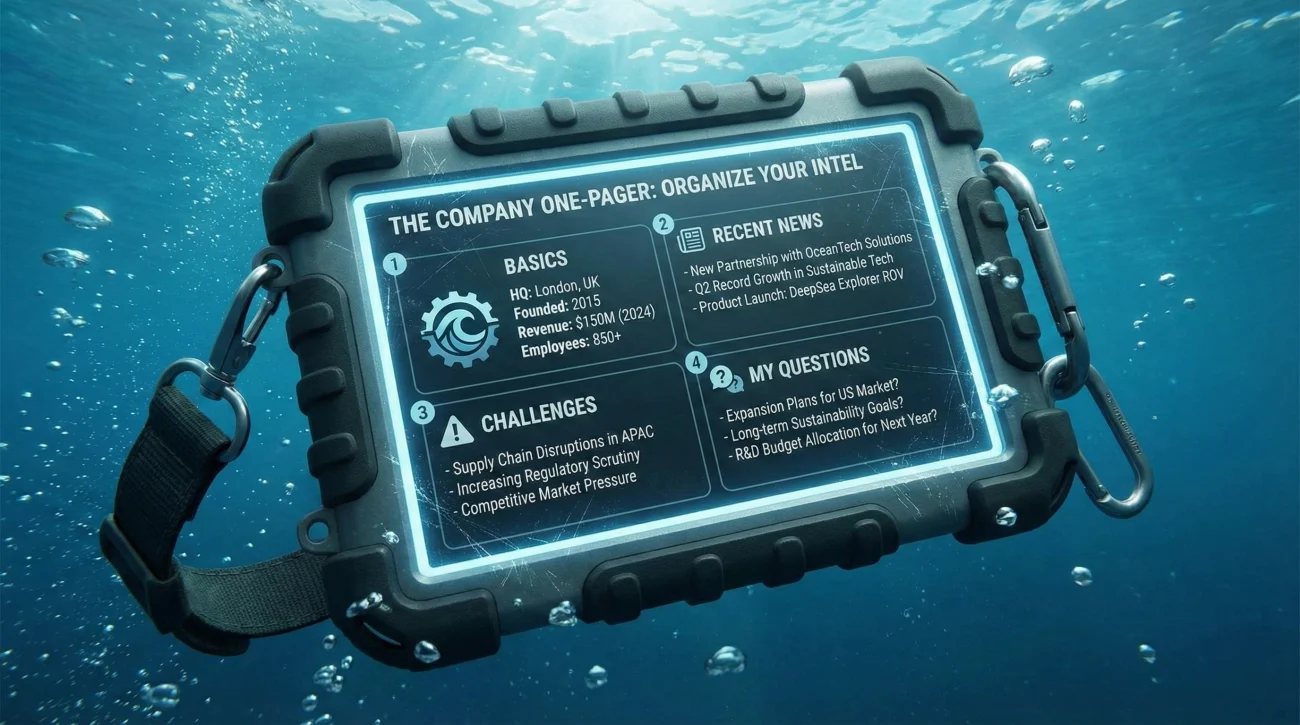
The Company One-Pager
Summarize your research on a single page with sections for:
- Company basics: Founded, headquarters, employee count, revenue if public
- Recent news: Three to five headlines from the past three months
- Products/services: Main offerings and any recent launches
- Competitors: Names and key differentiators
- Challenges: What the company or industry is struggling with
- Your questions: Two to three informed questions to ask
Review this document the morning of your interview. The structure helps you recall key points even when nervous.
What Not to Bring Up
Some research is better kept to yourself. Avoid mentioning:
- Negative news or controversies unless directly relevant
- Executive compensation or stock performance
- Layoff histories or restructuring details
- Anything that suggests you are skeptical rather than interested
Your research should make you seem informed and enthusiastic, not like an investigative journalist preparing an exposé.
💡 Pro Tip: Email yourself the one-pager so you can review it on your phone while waiting in reception.
❓ FAQ
⏰ I have an interview tomorrow. What is the minimum research I need?
One hour focused: company website overview, Google News for recent headlines, Glassdoor for culture snapshot, LinkedIn profiles of your interviewers. Prioritize anything from the last three months.
🔒 The company is private and I cannot find financial information. Now what?
Focus on Crunchbase for funding history, LinkedIn for growth signals (headcount changes), news for any press coverage, and industry reports that might mention them. Private companies leave fewer traces but not zero.
📚 How much research is too much? I do not want to seem obsessive.
There is no such thing as too much research, only poor delivery. Knowing everything but mentioning only relevant points shows judgment. Dumping every fact you learned shows poor social calibration.
🗣️ Should I mention that I researched them?
Let it show naturally rather than announcing it. Saying “I did a lot of research” sounds try-hard. Referencing specific facts organically sounds informed. Show, do not tell.
😬 I found something negative. Do I bring it up?
Only if it genuinely affects your decision to work there. Frame it as seeking understanding, not confrontation. “I saw some news about X and wanted to understand the context” works better than “Why did you do X?”
Final Thoughts
Deep company research separates serious candidates from casual applicants. When you can discuss recent news, understand competitive dynamics, and ask questions that reference specific strategic initiatives, interviewers recognize someone who actually wants to work there rather than someone who just needs a job.
Investing time in understanding how to research a company properly transforms interviews from interrogations into conversations. You stop being a candidate hoping for approval and start being a professional evaluating mutual fit. That confidence shift changes how interviewers perceive you. For more interview preparation strategies, check out our comprehensive interview guides.
⚠️ Disclaimer: The interview strategies, sample answers, and negotiation tips provided in this guide are for educational purposes only. Hiring decisions are subjective and vary by company and industry. While these strategies are based on professional HR standards, they do not guarantee a specific job offer or result.