- Core idea: Interview success depends on matching answer length to context, because the same content can feel confident or tone-deaf depending on timing.
- Context rules: Formal interviews reward 60 to 120 second answers, while networking and quick recruiter touchpoints demand a tight 30 to 45 second pitch.
- Two-minute structure: Use a clear time budget for Present, Past, and Future so you sound substantial without rambling.
- Read the room: Engagement signals mean you can go deeper, while disengagement cues mean you should compress and land the point fast.
- Practice for flexibility: Rehearse multiple lengths, build exit ramps, record yourself, and trim repetition so you can expand or compress naturally.
Why Answer Length Determines Interview Success
Interview effectiveness hinges on matching answer duration to context expectations. Understanding interview answer length separates candidates who control conversation pacing from those who lose interviewer attention through rambling monologues or frustratingly brief responses lacking substance. The same content delivered in 30 seconds versus two minutes creates completely different impressions – concise efficiency in appropriate contexts, comprehensive expertise when depth suits, or tone-deaf rambling when timing misses the mark.
Most candidates struggle with length calibration: either cramming too much information into insufficient timeframes creating rushed unclear delivery, or stretching simple points across excessive duration boring listeners. Strong timing instincts require understanding which contexts demand brevity versus depth, how to compress or expand core messages strategically, and recognizing real-time signals indicating adjustment needs. When exploring broader tell me about yourself preparation, timing mastery ensures you never fumble the critical opening moments through answers that run too long or feel disappointingly shallow.
Context Determines Appropriate Duration
Understanding how long should interview answers be requires reading situational cues that signal whether brevity or comprehensive detail serves you better.
Formal Interview Settings
Structured interviews with dedicated time blocks allow longer comprehensive answers. When interviewers schedule 30-60 minute sessions explicitly for getting to know candidates, they expect substantive responses providing enough detail to assess qualifications thoroughly. Overly brief answers in these contexts seem evasive or insufficiently prepared.
| Interview Type | Optimal Answer Length | Reasoning |
|---|---|---|
| Initial phone screen | 60-90 seconds | Build interest without overwhelming, leave room for questions |
| Behavioral interview | 90-120 seconds | STAR format requires sufficient detail for credibility |
| Panel interview | 90-120 seconds | Multiple listeners need comprehensive understanding |
| Executive interview | 60-90 seconds | Senior leaders value conciseness, want quick assessment |
Networking and Informal Situations
Career fairs, networking events, chance encounters with recruiters, and casual conversations demand ruthless brevity. People forming quick impressions before moving to next interactions have minimal patience for comprehensive backgrounds. These contexts reward punchy memorable summaries over exhaustive detail.
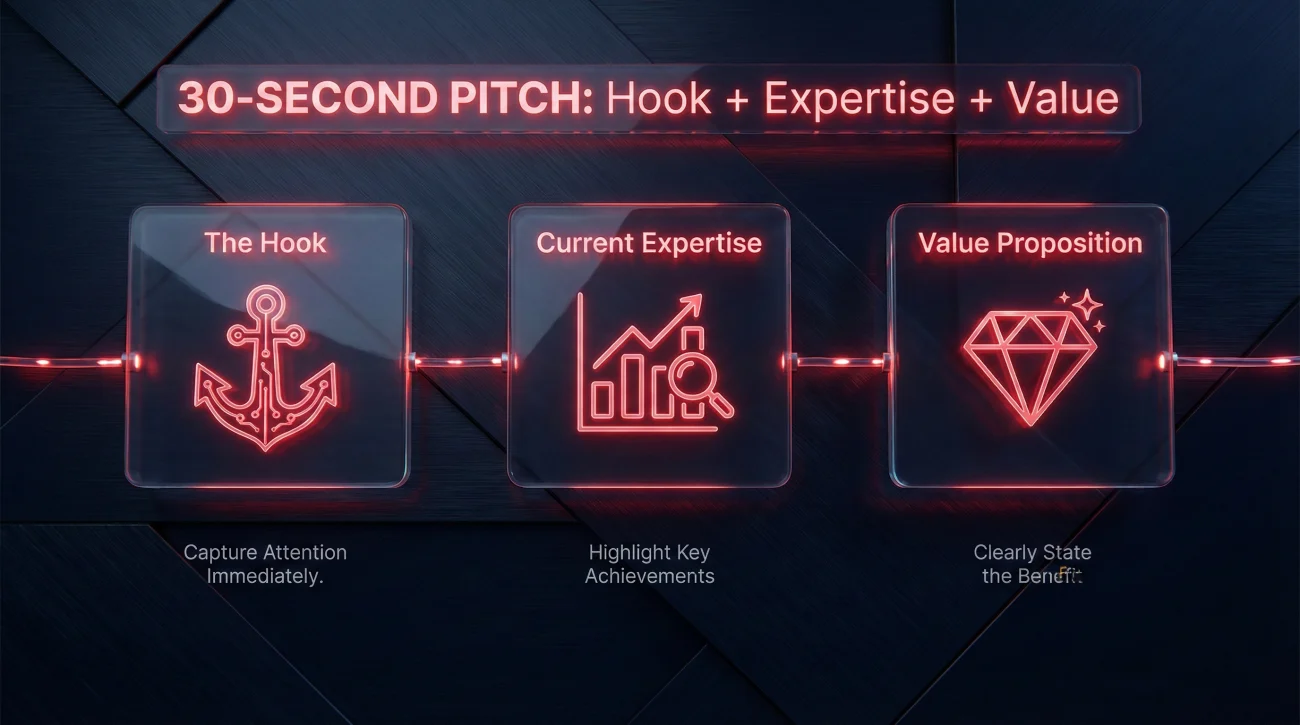
- 🎯 Networking events: 30 seconds maximum – hook and value proposition
- ⚡ Career fairs: 45 seconds – current expertise plus clear interest
- 📞 Cold recruiter calls: 60 seconds – enough to warrant conversation continuation
- ☕ Coffee chats: Flexible based on interest signals and question depth
💡 Pro tip: Prepare both 30-second and 90-second versions of your core introduction. Practice transitions between them so you can expand or compress naturally based on context. The 30-second version becomes your foundation – the 90-second adds supporting detail without changing core message.
The 30-Second Elevator Pitch
Understanding elevator pitch length requires mastering compression techniques that communicate essential value propositions without sacrificing clarity or impact.
Essential Components Only
Elevator pitches aren’t abbreviated full introductions – they’re strategically different frameworks focusing exclusively on immediate relevance. Include only current expertise, standout differentiator, and clear value proposition. Skip career history, detailed motivation, and comprehensive skill inventories.
Expert advice: Time yourself delivering your elevator pitch naturally, not at rushed pace. If it consistently exceeds 45 seconds, you’re including too much. Effective elevator pitches land between 25-35 seconds when delivered conversationally. This forces ruthless prioritization about what actually matters for first impressions.
Hook and Value Proposition
Start with attention-grabbing context establishing expertise area, then immediately articulate value you provide. Generic openings like “I’m a marketing professional with five years experience” waste precious seconds. Stronger hooks create curiosity or demonstrate immediate relevance.
- “I help SaaS companies reduce customer acquisition cost through conversion optimization”
- “I build machine learning systems that predict equipment failures before they happen”
- “I turn complex financial data into executive dashboards non-technical leaders actually use”
- “I scale customer success operations from startup chaos to enterprise process”
Memorable Closing
End with specific relevant interest or clear call to action rather than trailing off. Strong closes make you memorable while creating natural conversation continuations. Weak endings leave awkward silences where neither party knows what comes next.
Don’t try cramming your entire background into 30 seconds by talking faster. This creates rushed unclear delivery that overwhelms listeners. Instead, accept that elevator pitches introduce only your headline – interested parties will ask for elaboration.
The Two-Minute Comprehensive Response
Understanding interview response duration for formal settings requires strategic depth allocation ensuring you provide sufficient detail without rambling beyond interviewer patience thresholds.
Time Budget Per Component
Within two minutes, allocate approximately 40 seconds per major section – present role and achievements, relevant background, future motivation. This creates natural pacing preventing rushed delivery or excessive dwelling on less critical elements.
| Component | Time Budget | Content Focus |
|---|---|---|
| Present | 35-45 seconds | Current role, key responsibilities, recent standout achievement |
| Past | 40-50 seconds | Relevant experience, transferable skills, career progression logic |
| Future | 25-35 seconds | Why this role, authentic interest drivers, value you’ll bring |
Balancing Detail and Conciseness
Two minutes allows meaningful detail without comprehensive career inventories. Mention specific companies, actual metrics, concrete examples – but resist temptation explaining every job chronologically or listing every skill possessed. Strategic selection of most relevant points beats exhaustive cataloging.
Expert advice: Record yourself delivering two-minute answers and transcribe them. Read transcriptions critically – where do you repeat yourself? Which details add minimal value? Where could you replace vague descriptions with specific examples? Written analysis reveals bloat your ear misses during live delivery.
Maintaining Natural Pacing
Two minutes delivered conversationally feels different than two minutes of dense information dumps. Include brief transitions between sections, strategic pauses emphasizing important points, and vocal variety preventing monotone delivery. Timing targets assume natural speaking pace, not rushed sprints cramming maximum words into minimum time.
Reading Interviewer Engagement Signals
Understanding interview timing guide principles includes recognizing real-time feedback indicating whether you should expand, compress, or wrap up answers regardless of planned duration.
Signs of Strong Engagement
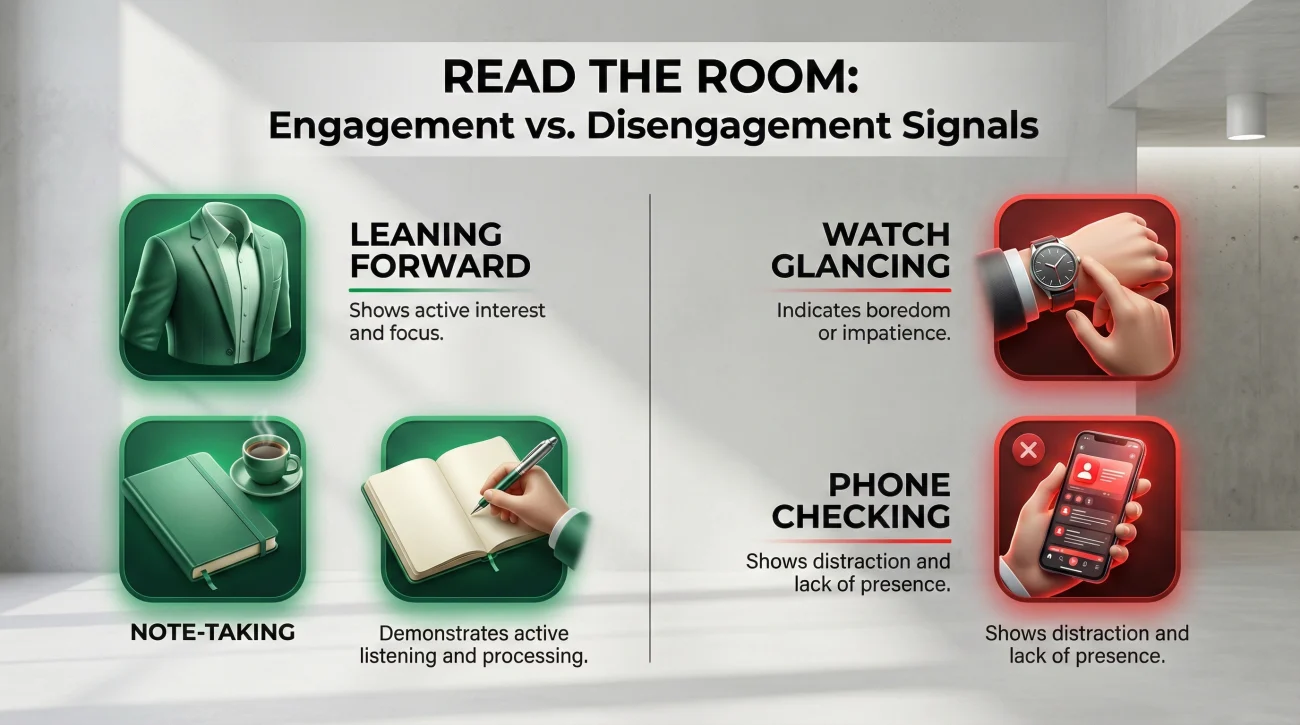
Interviewers leaning forward, maintaining eye contact, nodding along, or taking notes signal your content resonates. These cues suggest continuing with planned depth rather than cutting short. Engaged interviewers often ask follow-up questions before you finish – welcome these interruptions as success signals.
- ✅ Leaning forward: Physical engagement showing interest
- ✅ Note-taking: Recording details suggests they find value
- ✅ Nodding: Agreement or understanding signals
- ✅ Questions mid-answer: Curiosity about specific points
Warning Signs Requiring Adjustment
Glancing at watches, shuffling papers, breaking eye contact frequently, or checking phones indicate you’ve exceeded patience limits. These signals demand immediate compression – wrap up current thought quickly and offer to elaborate if they’re interested rather than powering through remaining planned content.
💡 Pro tip: Build natural exit ramps into longer answers – points where you can wrap up gracefully if reading disengagement. After each major section, include brief transition phrases like “and that background led me to…” which can either continue smoothly or become ending points if you detect waning interest.
Handling Explicit Time Constraints
When interviewers say “we only have a few minutes” or “can you give me the quick version,” abandon two-minute plans immediately. Compress ruthlessly to core essentials – current expertise, one key achievement, clear interest. Trying to squeeze comprehensive content into insufficient time makes you seem tone-deaf to explicit guidance.
Practicing Timing Calibration
Natural timing instincts require deliberate practice building internal clocks that guide duration without conscious tracking during actual interviews.

Using Timers During Rehearsal
Practice answers with visible timers until duration becomes instinctive. Deliver your introduction watching countdown – this builds awareness of how much content fits comfortable within different timeframes. Eventually you’ll develop intuitive sense of pacing without needing actual timing devices.
Expert advice: Practice the same answer targeting different durations – 30 seconds, 60 seconds, 90 seconds, two minutes. This builds compression and expansion flexibility so you adapt naturally to different contexts. Notice which details drop first when compressing and which add value when expanding. This strategic awareness prevents panicked editing mid-interview.
Getting Timing Feedback
Ask practice partners whether your answers feel too long, too brief, or appropriately paced. Outside perspectives reveal timing issues you miss internally. If multiple people mention answers feel rushed or rambling, trust their assessment over your own perception.
Analyzing Recorded Practice
Record practice interviews and watch with focus solely on timing. Where do you speed up or slow down? Which sections consume disproportionate time relative to their importance? Where could you trim without losing substance? Video reveals pacing patterns your conscious awareness misses.
Common Timing Mistakes to Avoid
Recognizing these patterns helps prevent duration errors that undermine otherwise strong content.

Frontloading Too Much Background
Starting with comprehensive career histories before reaching present situation buries relevant qualifications under unnecessary chronological detail. Interviewers lose patience before you reach current expertise. Lead with present relevance, then selectively reference past supporting it.
Don’t begin answers chronologically from college graduation working forward. This wastes time on ancient history while potentially never reaching current qualifications if you run long. Start with present, selectively reference past, end with future.
Rushing Important Endings
Realizing you’ve talked too long then speeding through conclusions creates weak unsatisfying finishes. If you notice you’re running long, wrap up gracefully at next natural stopping point rather than racing through remaining content. Better to end strong slightly early than trail off weakly after exceeding limits.
Over-Explaining Simple Points
Some candidates repeat the same point using different words assuming repetition aids understanding. This consumes time without adding value. State points clearly once, provide concrete example if beneficial, then move forward. Trust interviewers will ask clarifying questions if needed rather than pre-emptively over-explaining everything.
❓ FAQ
🎯 How do I know if my answer is too long without a timer?
Watch for engagement signals – if interviewers maintain eye contact, nod along, and seem attentive, your pacing likely works. If they glance away, check phones, or shuffle papers, you’ve exceeded patience limits. Build practice until you develop intuitive timing sense. Recording yourself helps calibrate internal clock against actual duration.
💼 What if I have a lot of relevant experience to cover?
Prioritize ruthlessly rather than cramming everything into answers. Select most relevant achievements and experiences directly supporting your qualification for current opportunities. Comprehensive doesn’t mean exhaustive. Interviewers will ask follow-up questions about areas they want deeper exploration – your introduction plants seeds for that deeper conversation.
⏰ Should I prepare different length versions of every answer?
Prepare 30-second and 90-second versions of your core introduction. For other answers, understand which details are essential versus supplementary. This lets you expand or compress naturally based on context without completely different scripted versions. Flexibility matters more than multiple memorized alternatives.
📋 What if the interviewer asks me to elaborate after a brief answer?
This validates your initial brevity worked – they want more detail. Expand on specific aspects they’re curious about rather than repeating your entire answer with more words. Their questions guide which areas deserve deeper exploration. Starting brief with willingness to elaborate beats starting long with nowhere to expand.
✨ How does answer length differ across interview formats?
Phone screens reward slightly shorter answers (60-90 seconds) since building rapport without visual cues is harder. Video allows standard timing. In-person permits slight expansion if strong engagement shows. Panel interviews need comprehensive responses ensuring all listeners understand qualifications. Adjust based on medium and dynamics you observe.
Final Thoughts
Mastering interview answer length determines whether you control conversation pacing effectively or lose interviewer attention through duration mismatches. Context determines appropriate timeframes – formal structured interviews allow 90-120 second comprehensive responses while networking events demand 30-second elevator pitches focusing exclusively on current expertise and value proposition. Strong candidates prepare both compressed and expanded versions of core messages, building flexibility to adapt naturally based on situational cues rather than rigidly following single planned duration regardless of context.
Effective timing requires strategic component allocation within available timeframes. Two-minute answers budget roughly 40 seconds each for present role, relevant background, and future motivation, creating natural pacing that provides meaningful detail without exhaustive cataloging. Thirty-second pitches strip to essential hook and value proposition, accepting that brevity introduces only headlines with interested parties requesting elaboration. Understanding which details drop first when compressing and which add value when expanding builds adaptation capability preventing panicked mid-interview editing.
Reading real-time engagement signals matters as much as planned timing. Interviewers leaning forward and taking notes signal content resonates, warranting continuation with planned depth. Glancing at watches or breaking eye contact frequently indicates exceeded patience requiring immediate compression. Strong candidates build natural exit ramps into longer answers – transition points allowing graceful wrapping if detecting waning interest – rather than forcing remaining content despite disengagement warnings. Practice with timers builds internal clocks guiding duration instinctively, while feedback from recordings and practice partners reveals pacing patterns conscious awareness misses during delivery.
⚠️ Disclaimer: The interview strategies, sample answers, and negotiation tips provided in this guide are for educational purposes only. Hiring decisions are subjective and vary by company and industry. While these strategies are based on professional HR standards, they do not guarantee a specific job offer or result.