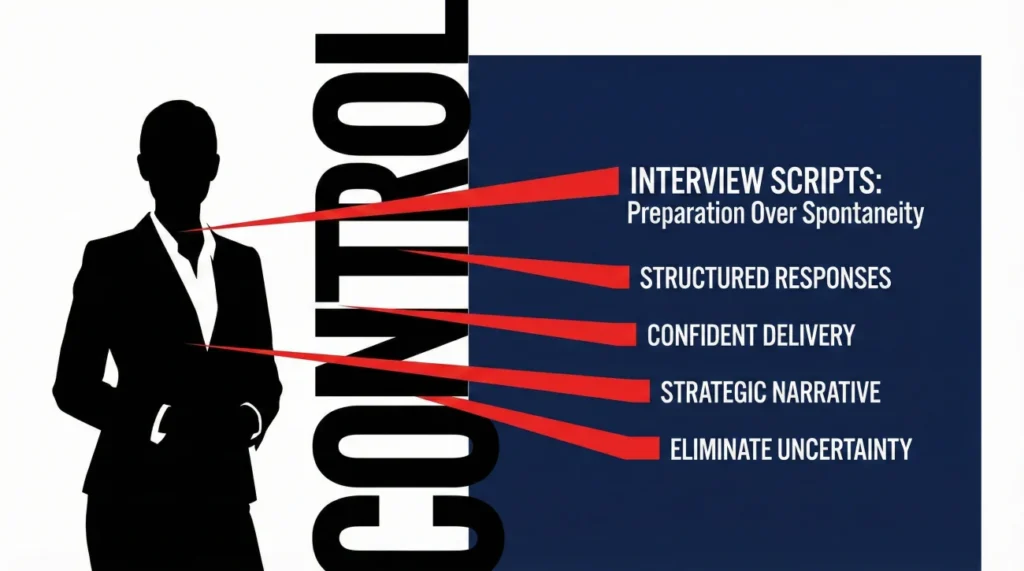
- Why scripts work: Prepared frameworks prevent awkward freezes and let you focus on confident delivery instead of scrambling for words.
- Framework over memorization: Learn the structure (what goes where), then speak it naturally, so you avoid sounding robotic.
- Use the right template: Keep one standard Present-Past-Future version and one situation-specific version for pivots, no experience, executives, or gaps.
- Match length to context: Use 30 seconds for networking, 60 to 90 for screens, and 90 to 120 for formal interviews, and shorten if the room is impatient.
- Practice and avoid traps: Rehearse out loud until you can vary wording, do not overload details, tailor to the role, and end with a clear bridge that invites the next question.
Why Scripts Beat Winging It
Job interviews reward preparation disguised as spontaneity. Candidates who sound naturally confident usually practiced structured frameworks repeatedly until delivery became effortless. Understanding interview introduction scripts requires recognizing that templates don’t make you robotic – they free mental bandwidth from worrying about what to say next so you focus on how to say it compellingly. The difference between candidates who navigate interviews smoothly and those who stumble through awkward silences often comes down to having practiced frameworks for common scenarios.
Most people resist scripts believing memorization creates stiff unnatural delivery. This happens when people memorize word-for-word instead of internalizing structural patterns. Effective scripts provide frameworks showing which elements belong where, not exact phrasing requiring verbatim recitation. When exploring broader tell me about yourself strategies, having specific templates for different situations ensures you never freeze when asked to introduce yourself, whether in 30 seconds at networking events or two minutes during formal interviews.
Understanding Different Template Categories
Understanding interview templates fill in blank approaches requires knowing which template serves which purpose. Different interview scenarios demand different introduction strategies, making template variety essential rather than optional.
Standard Professional Templates
Most interview situations call for classic Present-Past-Future structure covering current role, relevant background, and why you’re interested in this opportunity. This format works universally because it mirrors how hiring managers naturally want to understand candidates – where you are now, how you got here, where you’re heading.
- 📊 Present component: Current role, key responsibilities, recent achievements
- 🎯 Past component: Relevant experience highlighting transferable skills
- ⚡ Future component: Why this role aligns with career direction
Situation-Specific Templates
Career changers, recent graduates, executives, and professionals returning from career breaks need templates addressing their unique circumstances. Generic scripts fail these candidates because they ignore the elephant in the room – why someone switches industries, lacks experience, or has employment gaps matters more than standard career progression.
| Situation | Template Focus | Key Elements |
|---|---|---|
| Career change | Transferable skills bridge | Connect past competencies to new role requirements |
| No experience | Potential and energy | Emphasize learning ability, relevant projects, enthusiasm |
| Executive level | Vision and metrics | Strategic thinking, measurable impact, leadership philosophy |
| Career gap | Confident comeback | Address gap directly, emphasize current readiness |
💡 Pro tip: Prepare both a standard template and a situation-specific version. Many interviews start with “tell me about yourself” before drilling into your particular circumstances. Having both ready ensures smooth transitions without awkward pivots between frameworks.
The 70/30 Personalization Rule
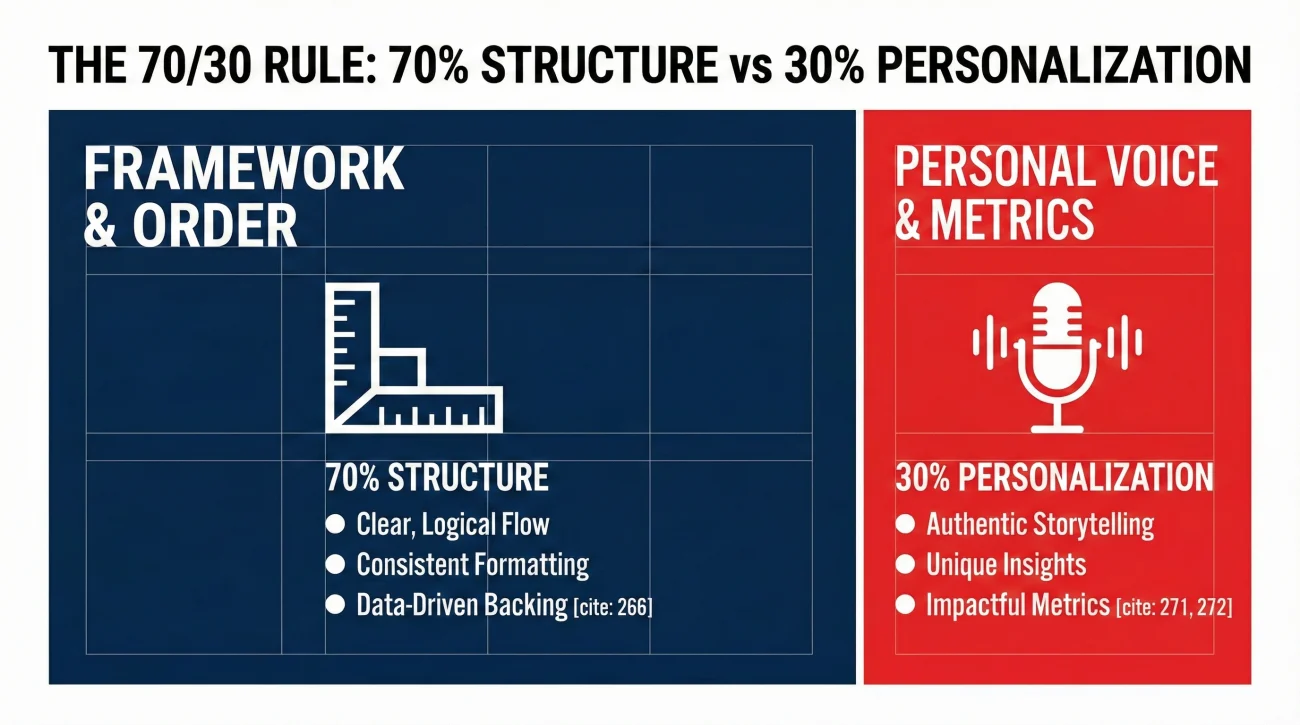
Understanding interview script examples requires balancing structure with authentic voice. Templates should guide content organization while leaving room for personal style and specific details that make your story uniquely yours.
70% Structure and Framework
The framework provides proven organization ensuring you hit essential points without rambling. This includes component order, time allocation per section, and types of information belonging in each part. Structure prevents common mistakes like burying your strongest selling points in the middle or ending without clear connection to the role.
Expert advice: Memorize the framework, not the words. Know that you’ll cover present role first, then relevant background, then future motivation. Within each section, understand what belongs – achievements in present, transferable skills in past, authentic interest in future. How you phrase these elements should vary naturally across different conversations.
30% Personal Details and Voice
This includes specific company names, actual project results, genuine reasons you’re interested in opportunities, and conversational phrasing matching how you naturally speak. Generic placeholders like “major tech company” or “successful project” waste the personalization budget. Replace every template placeholder with concrete details from your actual experience.
- Specific metrics from real achievements
- Actual company names and titles held
- Genuine reasons for career decisions made
- Natural phrasing matching your speaking style
Matching Script Length to Context
Understanding professional introduction templates requires knowing when to deploy 30-second elevator pitches versus two-minute comprehensive introductions. Context determines appropriate length, and mismatching creates problems – rambling when brevity suits or rushing through shallow summaries when depth would impress.
30-Second Elevator Pitch Scenarios
Networking events, career fairs, casual encounters with recruiters, and initial phone screens often call for abbreviated versions hitting only essential points. These situations reward conciseness – people forming quick impressions before moving to next conversations.
Elevator pitches aren’t abbreviated full introductions – they’re strategically different frameworks. Don’t try cramming two-minute content into 30 seconds. Instead, focus solely on hook, current expertise, and clear value proposition. Skip career history and detailed motivation.
Two-Minute Full Introduction Scenarios
Formal interview openings, panel interviews, and situations where interviewers specifically request full background allow comprehensive storytelling. These contexts reward strategic depth showing how your background uniquely qualifies you for opportunities.
| Context | Optimal Length | Focus |
|---|---|---|
| Networking event | 30 seconds | Current expertise, memorable hook |
| Phone screen | 60-90 seconds | Present role, one key achievement, interest |
| Formal interview | 90-120 seconds | Full career arc, transferable skills, motivation |
| Executive panel | 90 seconds | Strategic thinking, measurable impact, vision |
Practicing Until Scripts Sound Natural
Understanding interview answer templates includes mastering delivery so templates enhance rather than constrain performance. The goal isn’t perfect recitation – it’s confident flexible communication where structure supports rather than dictates what you say.
Moving from Memorization to Internalization
Memorizing word-for-word creates robotic delivery. Instead, practice until framework becomes instinctive while actual phrasing varies naturally. Record yourself delivering the same template five times using different words each iteration. Variation proves internalization – if you can’t vary phrasing while maintaining structure, you haven’t truly internalized it yet.
Expert advice: Practice out loud, not silently. Your brain processes spoken language differently than internal monologue. Silent rehearsal feels smooth but often reveals awkward phrasing when vocalized. Practice in front of mirrors, record video, or rehearse with friends. The discomfort now prevents fumbling during actual interviews.
Recognizing When to Adapt
Templates provide starting frameworks but interview dynamics require real-time adjustment. If interviewers interrupt with specific questions, abandon your script and answer directly. If they seem impatient, accelerate through less critical components. Strong candidates read room dynamics and adjust accordingly rather than forcing prepared content regardless of context.
Using Conversational Bridges
Smooth transitions between template components prevent jarring shifts that expose scripted preparation. Natural bridges like “What really drew me to this industry…” or “Looking back at my experience…” create flow between sections. These connecting phrases vary based on conversation energy while maintaining structural integrity.
Common Template Mistakes to Avoid
Even with solid templates, execution mistakes undermine effectiveness. Recognizing these patterns helps avoid pitfalls that weaken otherwise strong introductions.
Overloading Templates with Detail
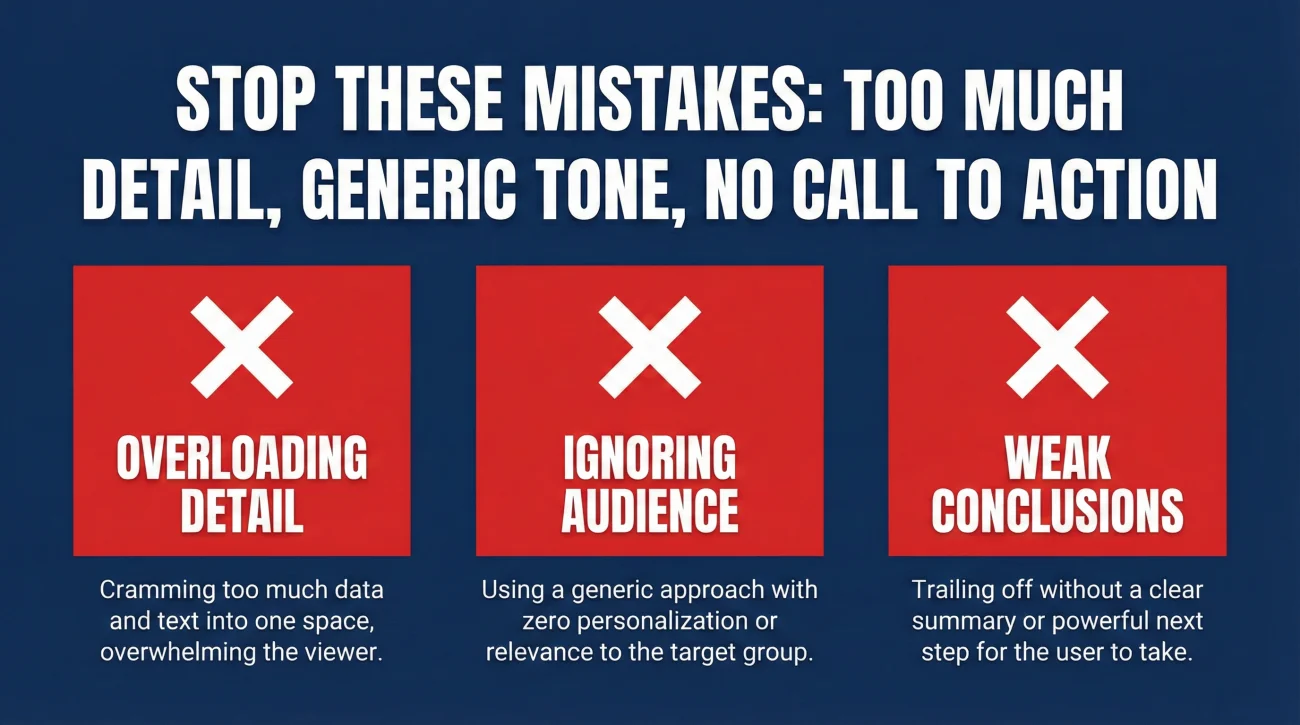
Cramming every achievement and skill into introductions overwhelms listeners rather than impressing them. Templates should highlight strategic selections of most relevant points, not comprehensive career inventories. If you can’t deliver your introduction in under two minutes, you’ve included too much.
Don’t list every job title chronologically from college onward. This wastes time on irrelevant history while boring interviewers. Select only experiences directly supporting your qualification for current opportunities.
Ignoring Audience and Role
Generic templates applied identically across different interviews miss opportunities for strategic positioning. Tailor component emphasis based on role requirements and company culture. Technical roles want deeper skill discussion; leadership roles need more vision and impact metrics. One-size-fits-all approaches signal lazy preparation.
Ending Without Clear Next Steps
Strong templates conclude by bridging to interview conversation naturally. Weak endings trail off or force interviewers to restart momentum. Your introduction’s last sentence should invite questions about specific areas or explicitly express enthusiasm about diving deeper into role requirements.
❓ FAQ
🎯 Won’t using templates make me sound robotic?
Only if you memorize word-for-word instead of internalizing frameworks. Templates provide structure showing which elements belong where, not exact phrasing requiring verbatim recitation. Practice until the framework becomes instinctive while actual wording varies naturally. Record yourself delivering the same template five times using different phrases – variation proves genuine internalization.
💼 How many different templates should I prepare?
Prepare one standard professional template plus one situation-specific version addressing your unique circumstances. Career changers need pivot templates, recent graduates need underdog templates, executives need leadership templates. Having both ensures you handle standard “tell me about yourself” requests plus follow-up questions about your particular background without awkward transitions.
⏰ Should I change my template for different companies?
Keep the core framework consistent but adjust the 30% personalization based on role requirements and company culture. Technical roles need deeper skill discussion; creative roles benefit from storytelling emphasis. Your template structure remains stable while specific examples and emphasis shift strategically. This targeted personalization shows preparation without requiring complete rewrites for each interview.
📋 What if the interviewer interrupts my prepared introduction?
Abandon your script immediately and answer their question directly. Templates serve you, not vice versa. Strong candidates read room dynamics and adjust accordingly rather than forcing prepared content regardless of context. If interrupted, respond to their question, then ask whether they’d like you to continue or if they have other questions. Flexibility matters more than complete recitation.
✨ How do I know if my template is too long?
Time yourself delivering it naturally – if it consistently exceeds two minutes, you’ve included too much. Most formal interview introductions should land between 90-120 seconds. Networking elevator pitches need compression to 30 seconds maximum. If you can’t deliver your introduction comfortably within appropriate timeframes, eliminate less critical details until timing works. Conciseness impresses more than comprehensiveness.
Final Thoughts
Mastering interview introduction scripts requires recognizing that templates don’t create robotic delivery – they free mental bandwidth from worrying about what to say next so you focus on compelling delivery. Effective scripts provide frameworks showing which elements belong where without requiring verbatim memorization. The 70/30 rule balances proven structure with authentic personalization, ensuring introductions feel natural while hitting strategic points that demonstrate qualification for opportunities.
Different situations demand different template approaches. Standard Present-Past-Future formats work universally for most professional contexts, but career changers, recent graduates, executives, and professionals returning from breaks need situation-specific templates addressing unique circumstances directly rather than hiding challenges. Template variety ensures you never freeze when asked to introduce yourself, whether delivering 30-second elevator pitches at networking events or comprehensive two-minute narratives during formal interviews.
Natural delivery requires moving from memorization to internalization through deliberate practice. Recording yourself delivering templates multiple times using different phrasing proves genuine internalization while preventing robotic recitation. Strong candidates adapt templates based on interview dynamics, abandoning scripts when interrupted and adjusting emphasis based on role requirements and company culture. Templates serve as starting frameworks that guide without constraining, enabling confident flexible communication where structure supports rather than dictates what you ultimately say.
⚠️ Disclaimer: The interview strategies, sample answers, and negotiation tips provided in this guide are for educational purposes only. Hiring decisions are subjective and vary by company and industry. While these strategies are based on professional HR standards, they do not guarantee a specific job offer or result.