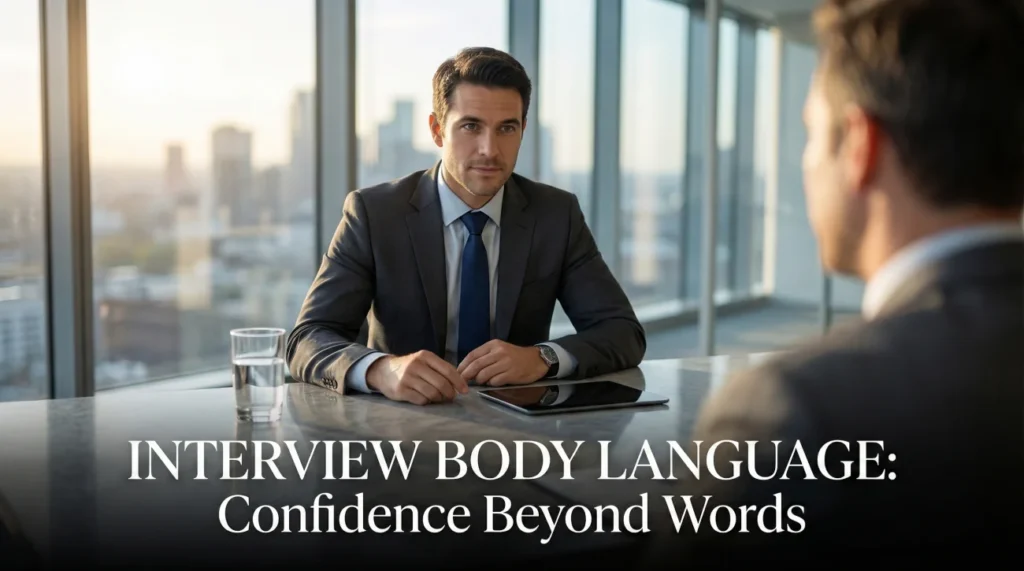
- Why it matters: Strong questions can backfire if your nonverbal signals look closed, nervous, or mismatched to your words.
- Eye contact rules: Use natural 3 to 5 second contact with brief breaks, avoid staring or avoiding, and adapt to panels, video calls, and cultural norms.
- Posture and presence: Sit upright with a slight forward lean, keep arms open and feet grounded, and avoid fidgeting or leaning away when you ask.
- Hands and notes: Keep hands visible, gesture with control, take brief key-phrase notes without hiding behind them, and pause calmly before your next question.
- Face and virtual setup: Show active listening with a neutral engaged expression, remove negative tells, and in video interviews fix camera height, framing, lighting, and on-screen movement.
Why Body Language Matters More When Asking Questions
Your nonverbal signals while asking questions reveal more about your confidence and engagement than the words themselves. Interviewers subconsciously evaluate candidates based on how they physically present during the question-asking phase, making interview body language a critical component of closing strategy. Candidates who ask excellent questions while displaying closed or nervous body language undermine their own competence signals.
Research in nonverbal communication shows that body language accounts for 55% of how others perceive your confidence level, while tone contributes 38% and actual words only 7%. When you ask closing questions, interviewers assess whether your physical presence matches your verbal message. Strong questions paired with confident body language create lasting positive impressions. Poor posture or nervous gestures while asking thoughtful questions create disconnect that triggers interviewer doubt about your readiness for the role.
Eye Contact Strategies for Question Delivery
Effective body language during interview questions begins with strategic eye contact that demonstrates confidence without creating discomfort.
Maintaining Natural Eye Contact
Hold steady eye contact for 3-5 second intervals while asking questions, then allow brief natural breaks by glancing at your notes or the interviewer’s hands. Continuous unbroken staring creates tension. Complete eye avoidance signals insecurity or dishonesty. The rhythm matters – look at the interviewer when asking the question’s core, glance away briefly during transitional phrases, then return eye contact when finishing your question.
| Scenario | Eye Contact Strategy | Signals Sent |
|---|---|---|
| Asking your first question | Direct eye contact, 4-5 seconds before brief glance at notes | Confidence, preparation |
| Listening to response | Consistent eye contact with occasional note-taking breaks | Active engagement, respect |
| Panel interviews | Address question asker primarily, brief eye contact with others | Respect for hierarchy, awareness of group |
| Virtual interviews | Look at camera when asking, screen when listening | Technical competence, adaptability |
Cultural Eye Contact Differences
Western business culture typically values direct eye contact as confidence signal. Some Asian and Middle Eastern cultures interpret sustained direct eye contact as aggressive or disrespectful. Research the company’s cultural norms when interviewing for international organizations or diverse teams. When uncertain, follow the interviewer’s lead – match their eye contact patterns rather than imposing your own cultural defaults.
Avoid staring at notes while asking questions – this signals you’re reciting rather than genuinely inquiring.
Posture and Physical Positioning
How you hold your body while asking questions communicates your confidence level and professional presence more powerfully than most candidates realize.
Optimal Sitting Position
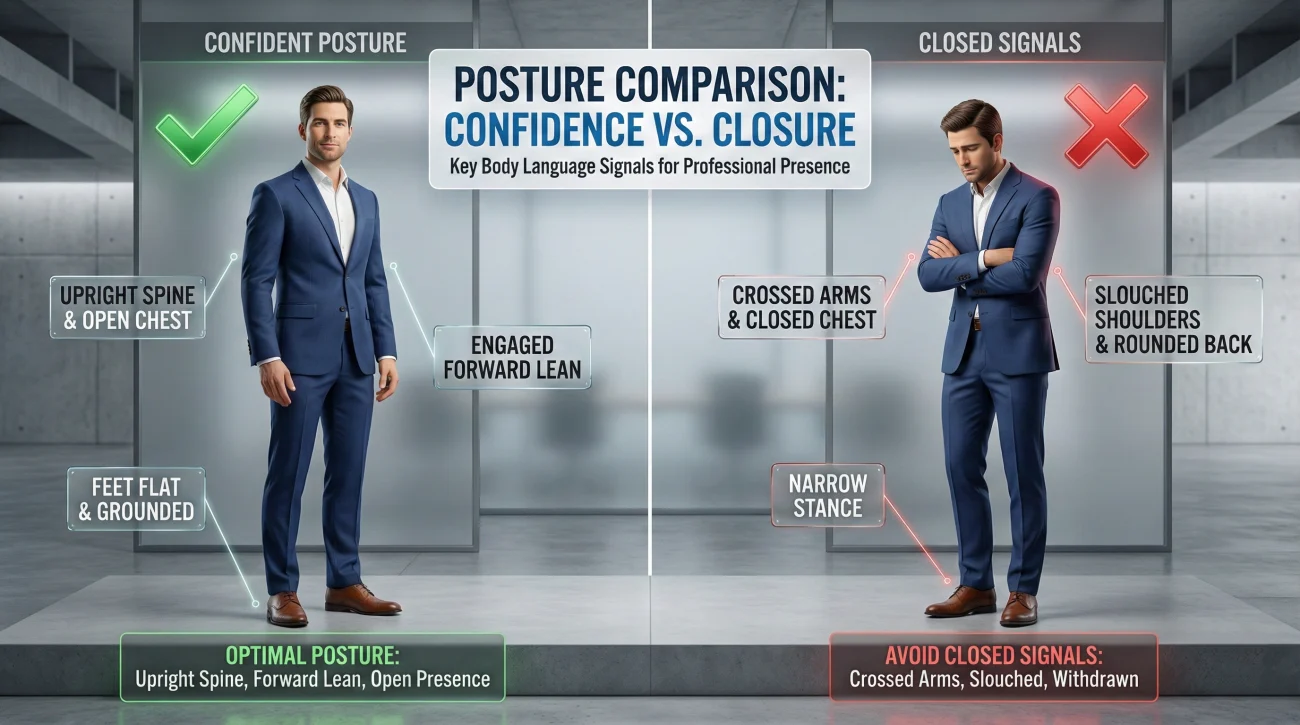
Sit upright with slight forward lean when asking questions to demonstrate engagement. Avoid slouching backward, which signals disinterest or excessive casualness. Keep both feet flat on the floor rather than crossing legs, which can appear defensive or too relaxed. Position yourself at a 45-degree angle to the interviewer rather than directly face-to-face when possible – this creates collaborative rather than confrontational energy.
- ✅ Confident posture: Shoulders back, spine straight, slight forward lean during questions
- ✅ Open positioning: Arms uncrossed, hands visible, body oriented toward interviewer
- ✅ Grounded stance: Both feet on floor, weight evenly distributed
- ❌ Closed signals: Crossed arms, hunched shoulders, leaning away
- ❌ Nervous tells: Fidgeting, bouncing leg, excessive shifting
Standing Interview Dynamics
Some interviews occur while standing – networking events, career fairs, or facility tours. Maintain shoulder-width stance with weight slightly forward on your toes rather than back on heels. This ready position signals engagement. Keep hands at sides or in natural gesture positions rather than in pockets or crossed over chest. Mirror the interviewer’s energy level – match their stance openness and movement patterns.
Expert advice: Practice asking questions while seated in front of a mirror. You’ll quickly identify nervous habits like leg bouncing, hair touching, or closed posture that undermine your message.
Strategic Hand Gestures and Note-Taking
Your hands convey confidence or nervousness more visibly than any other body part. Understanding nonverbal communication interview tactics for hand management prevents common mistakes that undermine otherwise strong question delivery.
Purposeful Gesture Use
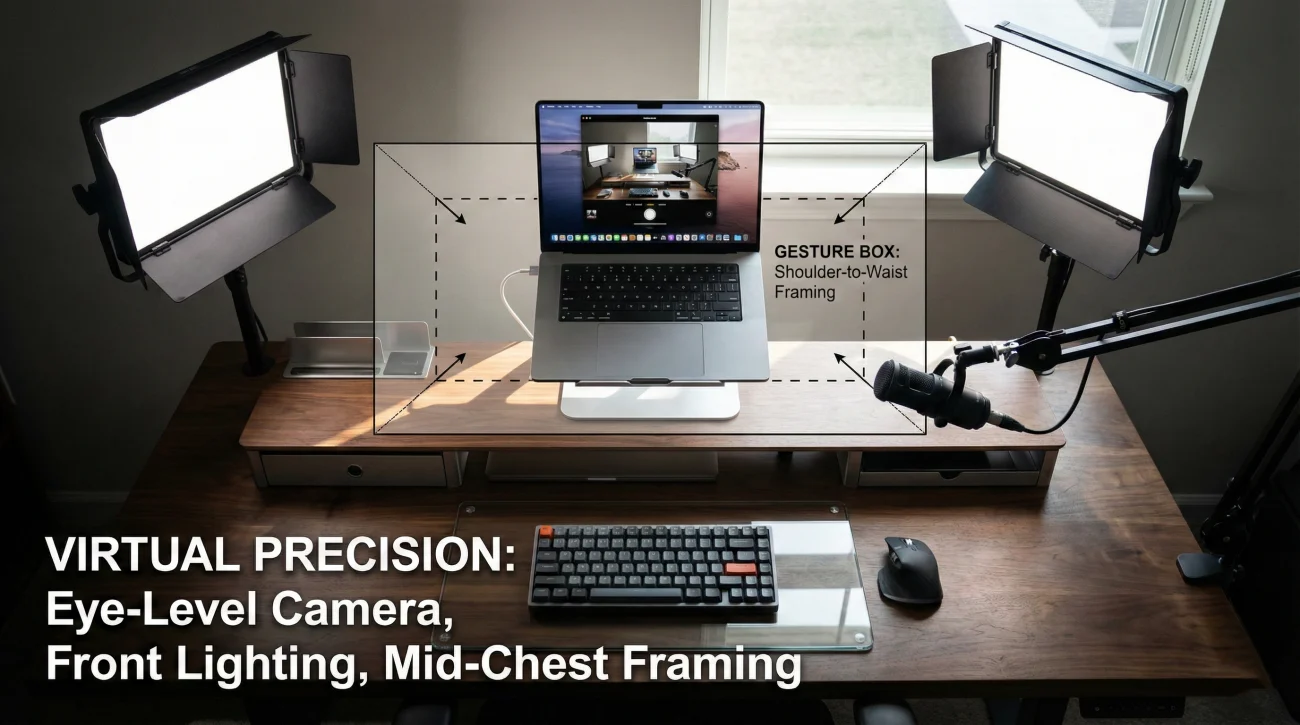
Use controlled, deliberate hand gestures that emphasize key points in your questions rather than constant movement that distracts. Keep gestures within your “gesture box” – the space between your shoulders and waist. Movements outside this zone appear either too animated or awkwardly constrained. Point your palms upward when asking questions to signal openness and curiosity rather than palms down, which can appear demanding.
| Hand Position | Message Sent |
|---|---|
| Steepled fingers (fingertips touching) | Confidence, analytical thinking |
| Open palms, visible hands | Honesty, openness, trustworthiness |
| Hands resting on table | Groundedness, calm confidence |
| Hidden hands (under table, in pockets) | Nervousness, something to hide |
| Fidgeting, playing with objects | Anxiety, lack of focus |
Professional Note-Taking Technique
Taking notes during interviewer responses demonstrates active listening and preparation. Hold your pen in a relaxed grip rather than death-gripping it. Write key phrases rather than transcribing everything – this allows you to maintain more eye contact. When finishing a note, place your pen down deliberately rather than continuing to hold it, which prevents unconscious pen-clicking or fidgeting that distracts interviewers.
💡 Pro tip: Before asking your next question, glance briefly at your notes while taking a breath. This natural pause demonstrates thoughtfulness rather than rushing through a memorized list.
Facial Expressions and Listening Signals
Your face reveals your genuine engagement level regardless of what you say. Mastering confident body language questions requires controlling facial expressions that signal interest and professionalism.
Demonstrating Active Listening
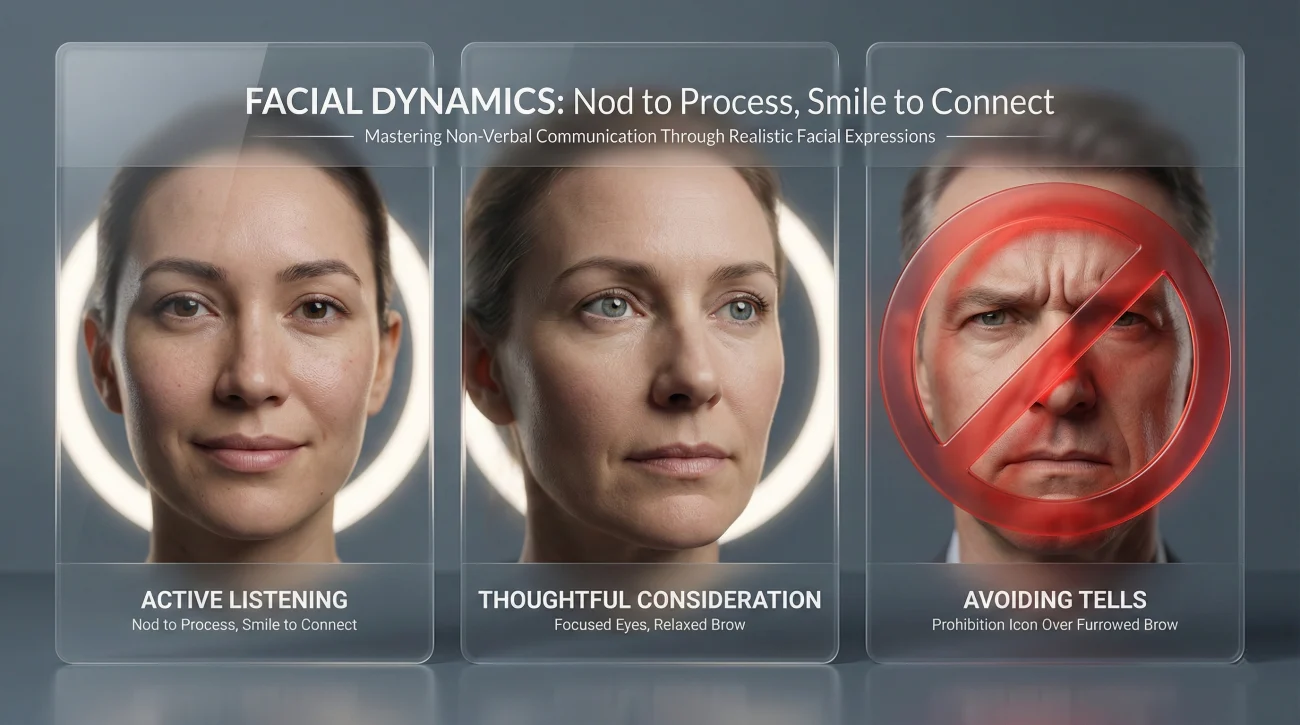
Nod slightly at natural points during the interviewer’s response to show you’re processing their answer. Maintain an interested, neutral expression rather than forced smiling or blank staring. Allow your facial expression to respond naturally to what they’re saying – mild surprise at unexpected information, thoughtful consideration of complex points, or gentle smiling at appropriate moments creates authentic connection.
Avoiding Negative Facial Tells
Eliminate unconscious expressions that undermine your professionalism. Common negative tells include raised eyebrows (appears skeptical), pursed lips (signals disagreement), looking down when hearing difficult information (suggests weakness), or maintaining frozen expressions that appear robotic. Practice neutral interested expression as your baseline, allowing natural appropriate variations rather than exaggerated reactions.
Don’t furrow your brow or look confused when the interviewer responds – this signals poor comprehension or disagreement with their perspective.
Virtual Interview Body Language Adaptations
Video interviews require adapted body language techniques that account for camera constraints and digital communication limitations.
Camera and Framing Strategy
Position your camera at eye level to avoid unflattering angles that make you appear to be looking down. Frame yourself from mid-chest up so hand gestures remain visible without requiring you to sit unnaturally far from the screen. Ensure adequate lighting from front or side rather than behind, which creates silhouette effect that hides facial expressions.
Digital Engagement Signals
Look directly at the camera when asking questions rather than at the interviewer’s image on screen. This creates eye contact effect for them. When listening to responses, you can look at their video to observe their expressions. Minimize on-screen movement – even small fidgets appear amplified on camera. Keep your background static and professional to avoid distracting from your presence.
- Test your setup before interviews to ensure proper framing and lighting
- Close unnecessary programs to prevent notification distractions
- Disable self-view during the interview to avoid self-consciousness
- Maintain energy level slightly higher than in-person to compensate for screen distance
❓ FAQ
🎯 Should I maintain eye contact the entire time I’m asking questions?
No, continuous unbroken eye contact appears unnatural. Maintain eye contact for 3-5 second intervals with brief natural breaks when transitioning thoughts or glancing at notes.
💼 Is it okay to take notes while the interviewer answers my questions?
Yes, taking notes demonstrates active listening and preparation. Write key phrases rather than everything, allowing you to maintain regular eye contact throughout their response.
⏰ What should I do with my hands when asking questions?
Keep hands visible and use controlled gestures within your shoulder-to-waist “gesture box.” Rest hands on the table or hold a pen naturally when not gesturing. Avoid fidgeting or hiding hands.
📋 How can I tell if my body language is coming across as nervous?
Common nervous signals include rapid blinking, touching your face or hair, bouncing your leg, or excessive shifting in your seat. Practice in front of a mirror or record yourself to identify your specific nervous habits.
✨ Does body language matter as much in phone interviews?
Yes, your posture affects your voice quality and confidence level even when not visible. Stand or sit upright, smile naturally while speaking, and use hand gestures to maintain energy in your voice.
Final Thoughts
Mastering your physical presence during question-asking separates candidates who appear genuinely engaged from those who seem to be checking boxes. Your body language either reinforces or contradicts the confidence your questions attempt to demonstrate. Interviewers make split-second assessments about your readiness based on nonverbal signals that most candidates never consciously control.
Understanding interview body language transforms your closing moments from potentially awkward exchanges into confident professional dialogue that leaves lasting positive impressions. Practice these techniques until they become natural rather than performed. The goal isn’t perfect execution but authentic confident presence that allows your genuine interest and qualifications to shine through without nonverbal interference.
Record yourself asking questions, observe your patterns, eliminate distracting habits, and develop body language that authentically reflects your competence and enthusiasm for the opportunity.
⚠️ Disclaimer: The interview strategies, sample answers, and negotiation tips provided in this guide are for educational purposes only. Hiring decisions are subjective and vary by company and industry. While these strategies are based on professional HR standards, they do not guarantee a specific job offer or result.