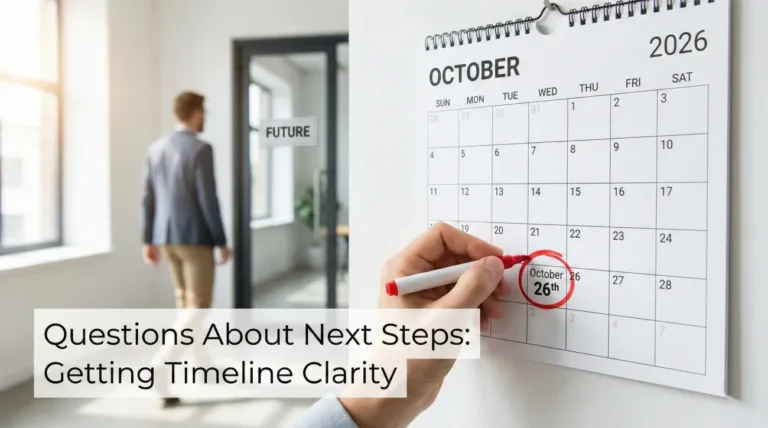
- Why The Last Minutes Matter: The final five minutes shape how interviewers remember you, so strong closing questions can reinforce your value while weak ones can create doubt even after a great interview.
- Time It Right: Watch for closing signals like time references or wrap-up body language, then prioritize your best 2 questions and allow 2–3 minutes per question for a real answer.
- Pick High-Impact Question Types: Use categories like success criteria, company evolution, problem-solving, next steps, and personal connection based on the interview stage and what you still need to learn.
- Ask With Confidence: Keep eye contact, avoid hedging language, and connect your question to something already discussed so it feels like a natural conversation, not a checklist.
- Avoid Momentum Killers: Don’t repeat answered topics, don’t ask yes/no questions, and avoid premature salary questions unless they invite it, because bad closing questions signal poor judgment or low interest.
Why the Interview Close Determines Hiring Decisions
The final five minutes shape how interviewers remember you after you leave. Strong candidates waste this critical window asking generic questions that demonstrate surface-level interest. Understanding closing interview questions transforms the end of your conversation from polite formality into strategic opportunity. Interviewers form lasting impressions based on your final moments together, making your closing questions more influential than many candidates realize.
Research shows interviewers evaluate candidates more favorably when they ask thoughtful final questions rather than passively accepting the conversation’s end. Your closing questions signal confidence, genuine interest, and strategic thinking. Poor closings create doubt even when earlier answers impressed. Effective closings reinforce your value proposition and maintain positive momentum through the decision-making process. Exploring broader questions to ask in an interview provides foundational strategy, but mastering your exit requires specific tactical approaches that leave interviewers eager to extend an offer.
Strategic Timing for Closing Questions
Recognizing the transition to closing matters as much as the questions themselves. Most interviewers signal this shift with phrases like “Do you have any questions for me?” or “We’re running close on time.” Understanding when to deploy end of interview questions prevents awkward silences or rushed exchanges that undermine your presentation.
Reading Interviewer Signals
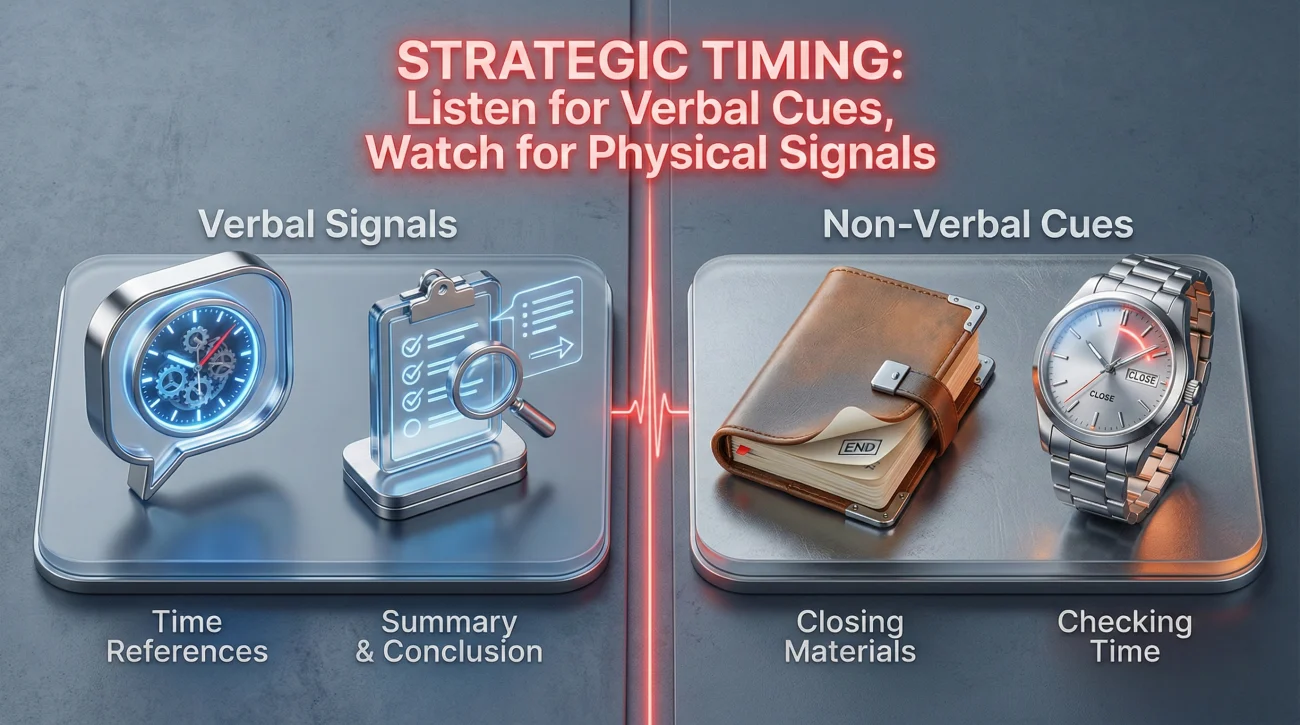
Interviewers telegraph the approaching close through verbal and nonverbal cues. Verbal signals include time references, summarizing the conversation, or asking about your availability for next steps. Nonverbal cues involve closing notebooks, checking watches, or shifting body language toward wrapping up. Skilled candidates prepare closing questions in advance but adapt delivery based on these signals.
💡 Pro tip: When an interviewer says “We only have a few minutes left,” prioritize your two most strategic questions rather than rushing through multiple mediocre ones.
Allocating Your Closing Time
Different interview formats require different closing approaches. Phone screens typically allow 3-5 minutes for closing questions. In-person meetings generally provide 5-10 minutes. Panel interviews often compress this window as multiple interviewers manage time constraints. Calculate your question count based on available time, allowing 2-3 minutes per substantive question including the interviewer’s response.
Categories of High-Impact Closing Questions
Effective questions to ask at end of interview fall into distinct strategic categories. Understanding these categories helps you select questions that align with your goals and the interview context.
| Category | Purpose | Best For |
|---|---|---|
| Personal Connection | Build rapport beyond professional discussion | Final rounds, culture-focused roles |
| Company Evolution | Demonstrate long-term thinking and strategic interest | Leadership positions, strategic roles |
| Success Criteria | Clarify expectations and demonstrate results orientation | Performance-driven roles, unclear job descriptions |
| Next Steps | Gain timeline clarity and demonstrate eagerness | All interviews, especially early rounds |
| Problem-Solving | Showcase analytical thinking and initiative | Roles requiring problem-solving, consulting positions |
Matching Questions to Interview Stage
Early-stage phone screens benefit from questions about role clarity, team structure, and next steps in the process. Second-round conversations allow deeper questions about challenges, company evolution, and success metrics. Final interviews support personal connection questions and bold inquiries that demonstrate confidence. Understanding final interview questions to ask for each stage prevents asking premature or redundant questions.
Expert advice: Ask progressively deeper questions as you advance through interview rounds. Surface-level questions in final rounds suggest you haven’t been paying attention or lack genuine interest.
Delivering Questions with Maximum Impact
How you ask matters as much as what you ask. Strong delivery transforms good questions into memorable moments that differentiate you from other candidates.
Projecting Confidence Through Questions
Maintain eye contact when asking closing questions rather than reading from notes. Use clear, direct language without hedging phrases like “I was just wondering” or “This might be a silly question.” Pause briefly after the interviewer responds to show you’re genuinely processing their answer rather than waiting to ask your next prepared question.
Creating Natural Conversational Flow
Reference earlier conversation points when possible to demonstrate active listening. Instead of launching into disconnected questions, create transitions: “You mentioned the team recently expanded – what skills proved most valuable during that growth phase?” This approach feels like continuation rather than interrogation.
| Weak Delivery | Strong Delivery |
|---|---|
| “I guess I’m wondering about, um, what success looks like?” | “What would success in this role look like six months in?” |
| “Do you have any concerns about my background?” | “Based on our conversation, what aspects of this role should I prepare for most thoroughly?” |
| “When will I hear back?” | “What’s the timeline for next steps in your process?” |
Avoiding Closing Question Mistakes
Understanding what not to ask prevents undermining strong interview performance with poor closing execution.
Premature Salary Questions
Asking about compensation during your closing questions in early rounds signals prioritization of money over fit. Save detailed compensation discussions for offer negotiations or when the interviewer raises the topic. If asked about salary expectations earlier, you’ve already addressed this – bringing it up again in your closing appears transactional.
Don’t ask “What’s the salary range?” as your closing question unless the interviewer has specifically invited compensation discussion.
Previously Addressed Topics
Asking questions already covered during the conversation demonstrates poor listening. If you genuinely need clarification on a previous topic, frame it as seeking deeper understanding: “Earlier you mentioned the team structure – could you tell me more about how collaboration works across departments?”
Yes/No Questions That Kill Momentum
Closed questions that elicit one-word answers waste your closing opportunity and create awkward silences. “Do you like working here?” generates a predictable yes. “What aspects of your role have surprised you most since joining?” invites authentic sharing that builds connection.
❓ FAQ
🎯 How many closing questions should I ask?
Prepare 5-7 questions but typically ask 2-3 based on available time. Quality beats quantity – two thoughtful questions create stronger impressions than five superficial ones.
💼 What if the interviewer already answered my prepared questions?
Have backup questions ready and acknowledge what was covered: “You addressed my questions about team structure earlier – I’d love to hear about the biggest challenge the team will tackle this year.”
⏰ Should I ask about the decision timeline?
Yes, asking about next steps and timeline demonstrates interest without appearing pushy. Frame it professionally: “What’s the timeline for next steps in your process?”
📋 Can I ask about interviewer concerns?
Yes, but frame it proactively rather than defensively: “Based on our conversation, what aspects of this role should I prepare for most thoroughly if selected for next rounds?” This shows confidence and eagerness to grow.
✨ What if I don’t have questions because everything was covered?
Never say you have no questions – this signals disengagement. Instead, ask for personal perspective: “What surprised you most when you joined the company?” or “What do you wish you’d known before starting this role?”
Final Thoughts
Your closing questions represent the last opportunity to shape interviewer perception before they make hiring decisions. Weak candidates treat this moment as formality. Strong candidates leverage it strategically to reinforce their value, demonstrate genuine interest, and maintain positive momentum through the selection process.
Mastering closing interview questions requires understanding timing, selecting appropriate question categories, and delivering with confidence that demonstrates both interest and analytical thinking. The questions you ask reveal how you think, what you value, and whether you approach opportunities strategically or passively. Interviewers remember candidates who ask insightful questions that spark genuine conversation rather than those who check boxes with generic inquiries.
Prepare thoroughly, adapt dynamically based on conversation flow, and close every interview with questions that leave interviewers eager to continue the conversation through next steps.
⚠️ Disclaimer: The interview strategies, sample answers, and negotiation tips provided in this guide are for educational purposes only. Hiring decisions are subjective and vary by company and industry. While these strategies are based on professional HR standards, they do not guarantee a specific job offer or result.