One Question, Unlimited Insight
Most interview questions yield predictable answers. Candidates ask about responsibilities, culture, and growth. Interviewers provide prepared responses. Everyone stays within comfortable bounds.
The magic wand interview question breaks this pattern. By asking what someone would change if they could change anything, you invite honest reflection that bypasses rehearsed answers. The response reveals real frustrations, hidden priorities, and the challenges that keep leaders up at night.
This question works because it’s unexpected and imaginative. It creates a moment of genuine thought rather than recitation. And the answer tells you something profound about the organization you’re considering joining.
The Question
The Classic Version
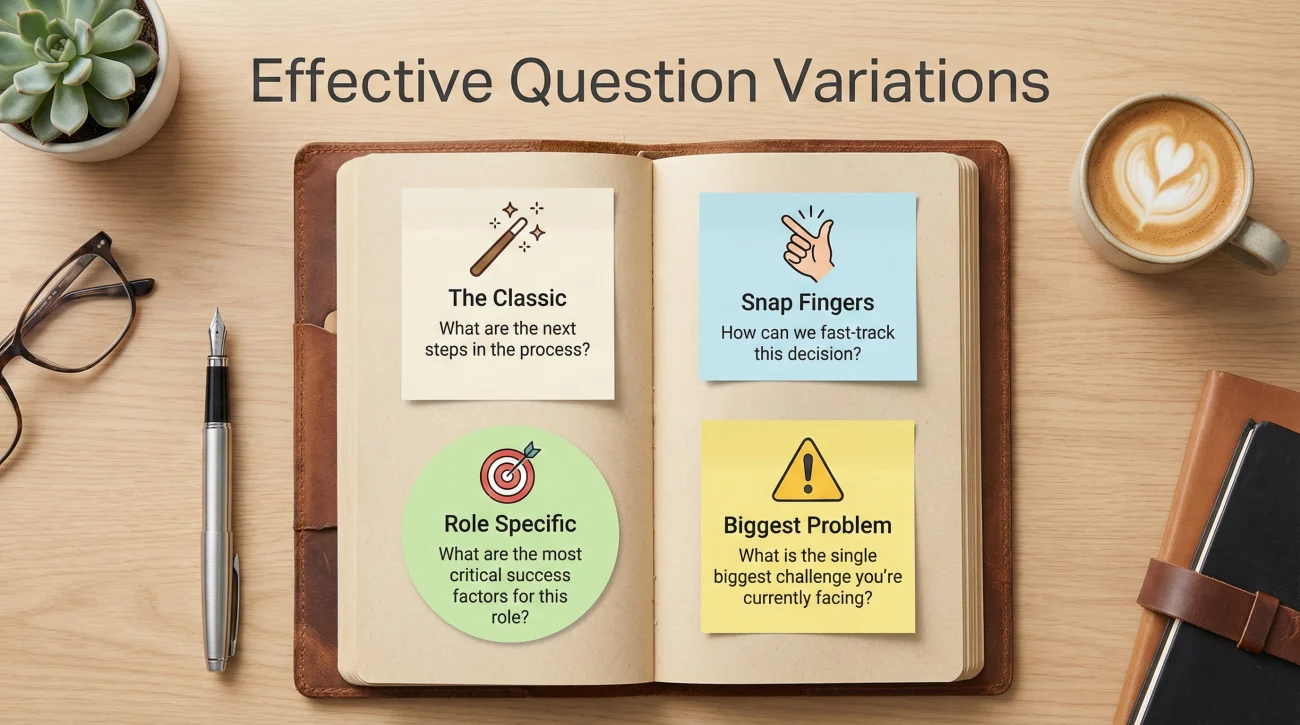
“If you had a magic wand and could change one thing about this company or team, what would it be?”
This is the standard formulation. The magic wand metaphor gives permission to think without constraints. The “one thing” focus forces prioritization, revealing what matters most.
Effective Variations
- “If you could snap your fingers and fix one thing here, what would it be?”
- “What’s the one thing you wish was different about working here?”
- “If you could change anything about this role or team without consequences, what would you change?”
- “What’s the biggest problem you wish someone would just solve?”
When to Ask
This question works best toward the end of the interview when rapport is established. It requires some vulnerability from the interviewer, which comes more easily after comfortable conversation. Don’t open with this question.
Why This Question Works

Inviting Honesty
The hypothetical framing makes criticism feel safer. They’re not complaining about their employer. They’re playing an imagination game. This psychological distance often produces more honest answers than direct questions about problems.
Revealing Priorities
The “one thing” constraint forces prioritization. They could list many issues, but identifying the single most important reveals what actually matters most to someone living inside this organization.
Exposing Culture
What people wish they could change reveals cultural pain points. If multiple interviewers mention the same issue, that’s a significant signal about organizational challenges you’d inherit.
Identifying Opportunity
Sometimes the thing they want to change is something you could actually help with. This creates opportunity to position yourself as the solution: “That’s actually something I’ve dealt with before…”
Interpreting the Answers
| Type of Answer | What It Reveals |
|---|---|
| Process or bureaucracy complaint | Organizational inefficiency; possible frustration |
| Resource or budget limitation | Constraints you’d likely face too |
| Communication or alignment issue | Organizational coordination challenges |
| Technology or tools complaint | Infrastructure limitations in your future work |
| Cultural or behavioral wish | Deep cultural dynamics worth understanding |
| “Nothing, it’s great here” | Either genuinely satisfied or unwilling to be honest |
Note: If they refuse to answer or seem uncomfortable, don’t push. Some people aren’t comfortable with hypotheticals or criticism, even when framed safely.
How to Respond to Their Answer
Listen Without Judgment
They’re being vulnerable by sharing what they wish was different. Receive their answer with genuine interest, not evaluation. Your reaction affects whether they continue being honest.
Ask Thoughtful Follow-Ups
- “That’s interesting. What’s prevented that from changing so far?”
- “Is that something the company is actively working on?”
- “How does that affect day-to-day work?”
Connect to Your Experience
If relevant, share your own experience with similar challenges: “I’ve seen that challenge before. At my last company, we addressed it by…” This demonstrates empathy and potential value you could bring.
Thank Them for Honesty
Acknowledging that they shared something real builds connection: “I appreciate you being candid about that. It helps me understand the environment better.”
Patterns Across Multiple Interviews
Consistent Answers
If multiple interviewers mention the same magic wand wish, it’s a genuine organizational issue. This consistency tells you the problem is real and widely felt.
Different Answers
Different people wanting to change different things might indicate a healthy organization with normal variety in priorities, or it might indicate lack of shared understanding about key challenges.
Refusal to Answer
If multiple interviewers refuse to engage with this question, that itself is information about the culture. It might suggest an environment where criticism isn’t welcome or where people feel they can’t be honest.
For more creative interview strategies, see our comprehensive interview questions guide.
Using What You Learn
In Your Decision
The issues they wish they could change are issues you’d likely encounter. Consider whether you want to deal with those challenges. Are they problems you’re energized to solve, or problems that would drain you?
Positioning Yourself
If their magic wand wish relates to something you can help with, reference it in thank you notes or subsequent interviews: “I’ve been thinking about the communication challenges you mentioned. Here’s how I might approach that…”
In Negotiations
Understanding real challenges can inform negotiation. If you know they desperately need someone to solve a specific problem, and you can solve it, that strengthens your position.
❓ FAQ
🎯 Is this question too informal for senior interviews?
It can work at any level, but adjust delivery. With executives, you might phrase it more seriously: “What’s the one thing you’d prioritize changing if resources were unlimited?” The playful “magic wand” framing can be replaced with more business-like language.
💼 What if they say nothing needs to change?
This might indicate genuine satisfaction, extreme loyalty, or unwillingness to be critical. Try a gentler follow-up: “Even small things? What would make a great workplace even better?” If they still won’t engage, accept it and move on.
⏰ Can this question backfire?
Rarely, but some interviewers might find it uncomfortable or too casual. Read the room. If the interview has been very formal, consider skipping it. If there’s been good rapport, it usually works well.
📋 Should I ask this of every interviewer?
Asking multiple people reveals whether issues are consistent. But vary your phrasing so it doesn’t feel rehearsed if interviewers compare notes. The insight from multiple perspectives is valuable.
✨ What if their magic wand wish is concerning?
Take it seriously. If they wish they could change something fundamental that concerns you, that’s valuable information for your decision. Better to know now than discover it after accepting.
Reveal What Matters
The magic wand interview question cuts through rehearsed answers to reveal real frustrations and priorities. Ask what the interviewer would change if they could change anything. Listen carefully to what they wish was different. Look for patterns across multiple interviewers. Use what you learn to inform your decision, position yourself as someone who can help, and negotiate from a position of understanding. This simple question often reveals more about an organization than hours of traditional interview conversation. What people wish they could change tells you what living inside this organization actually feels like.
⚠️ Disclaimer: The interview strategies, sample answers, and negotiation tips provided in this guide are for educational purposes only. Hiring decisions are subjective and vary by company and industry. While these strategies are based on professional HR standards, they do not guarantee a specific job offer or result.