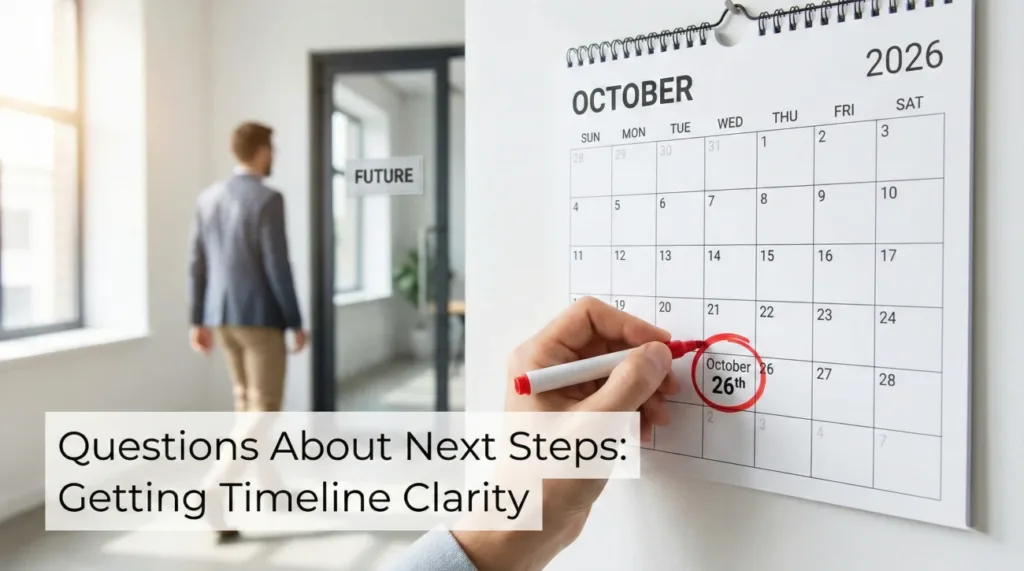
Eliminating Post-Interview Uncertainty
The interview ends. You thank them. You leave. And then begins the torture of waiting without knowing what’s happening or when you’ll hear something. Did they move forward with other candidates? Are they still deciding? Did they forget about you? The uncertainty is often worse than rejection.
Asking questions about next steps before leaving the interview eliminates much of this uncertainty. You learn what happens next, when to expect communication, and what the decision-making process looks like. This information transforms anxious waiting into informed patience.
These questions also demonstrate professionalism. Candidates who ask about process show they’re organized, forward-thinking, and genuinely interested in the opportunity. It’s a small signal, but it reinforces positive impressions.
Why Timeline Questions Matter

Managing Your Search
If you’re interviewing at multiple companies, knowing timelines helps you coordinate. You might need to ask one company to accelerate because another is moving faster. You can’t manage these dynamics without information.
Planning Follow-Up
When should you follow up if you haven’t heard back? Knowing their expected timeline tells you. Following up appropriately demonstrates interest without seeming pushy or desperate.
Setting Expectations
If they say decisions take three weeks, you can relax for three weeks instead of checking your email anxiously every hour. Realistic expectations reduce stress and let you focus on other things.
Showing Interest
Asking about next steps signals you’re interested in moving forward. It’s a subtle way to express enthusiasm without explicit statements that might seem presumptuous.
Essential Questions to Ask
The Process Question
“What does the rest of the hiring process look like from here?”
This opens the conversation about what comes next. You might learn there are additional interviews, assessments, reference checks, or other steps before a decision. Understanding the full process helps you anticipate what’s coming.
The Timeline Question
“What’s the expected timeline for making a decision?”
Get specific about when they expect to decide. “Soon” is vague. “We’re hoping to make a decision within the next two weeks” gives you actual information to work with.
The Communication Question
“When should I expect to hear back, regardless of the decision?”
Some companies only contact candidates who advance. Others communicate with everyone. Knowing which to expect affects your waiting experience significantly.
The Additional Steps Question
“Are there additional interviews or steps after this one?”
Understanding how many more stages exist helps you calibrate expectations. One more interview is different from four more rounds.
The Information Question
“Is there any additional information I can provide that would be helpful for your decision?”
This offers to help them while gathering information about what else might influence their decision.
Interpreting the Responses
| What They Say | What It Might Mean |
|---|---|
| Detailed process with specific timeline | Organized process; they’re taking hiring seriously |
| “We’ll be in touch soon” | Vague; might mean uncertain process or polite brush-off |
| They describe additional interviews | Process continues; you’re likely being considered |
| “We’re interviewing other candidates first” | Honest about competition; timeline depends on others |
| Immediate discussion of next steps | Strong interest; they’re already thinking ahead |
| Enthusiasm about moving quickly | Possible urgency; might be able to accelerate |
Note: Vague answers about timeline often indicate either an undefined process or that you’re not the top candidate. Don’t over-interpret, but do note when specificity is lacking.
After You Have the Information
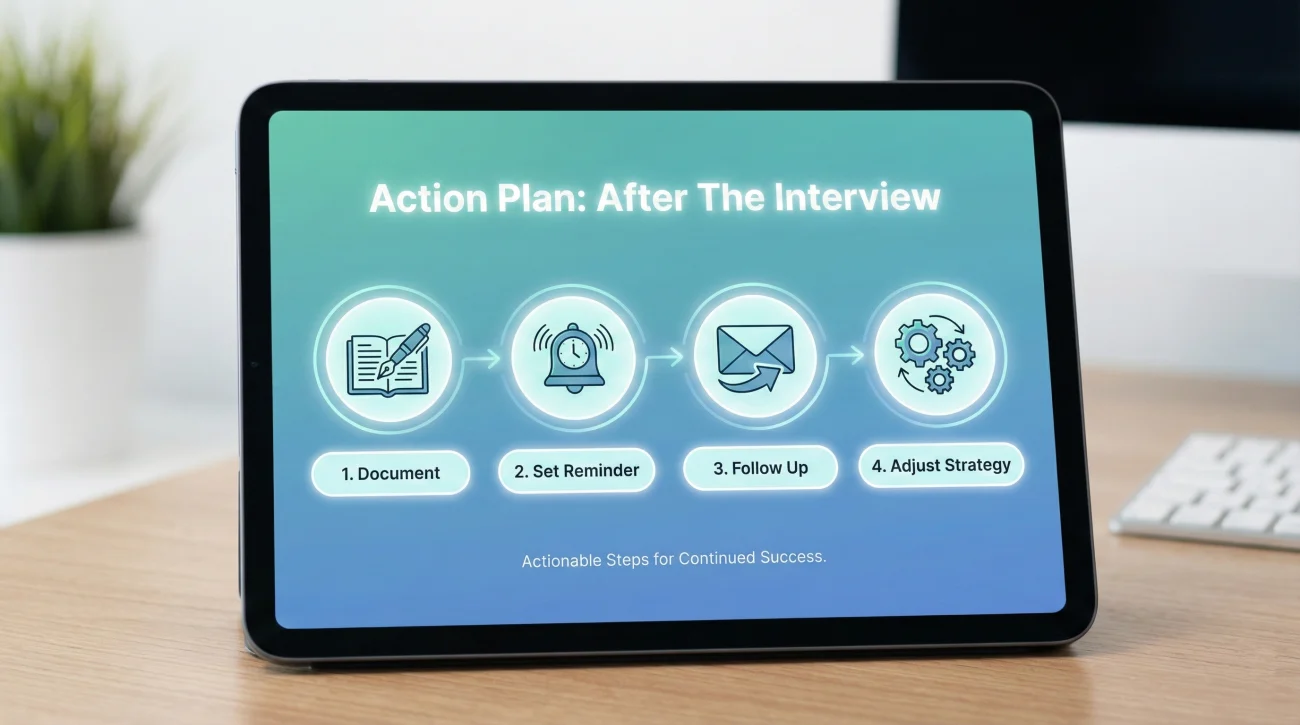
Document What You Learned
Write down the expected timeline and process immediately after the interview. Memory fades, and having accurate notes helps you follow up appropriately.
Set Calendar Reminders
If they say two weeks, set a reminder for day fourteen to follow up if you haven’t heard. Don’t rely on memory; automate the tracking.
Follow Up Appropriately
When the stated timeline passes without communication, a brief follow-up is appropriate. Reference the timeline they gave: “You mentioned decisions would be made within two weeks. I wanted to check in on the status.”
Adjust Your Other Processes
If another company is moving faster, you might need to communicate urgency to slower companies. The information from timeline questions enables these strategic decisions.
Coordinating Multiple Opportunities
Managing Competing Offers
If you have an offer deadline but are waiting to hear from a preferred company, timeline information helps you decide whether to ask for extensions, expedite decisions, or accept what you have.
Communicating Urgency
When you need a company to move faster, specific information helps: “I have another offer with a deadline of Friday. Is there any way to accelerate your timeline?” This is only possible if you know their original timeline.
Realistic Expectations
Some companies simply can’t move quickly due to internal processes. Knowing their constraints helps you make realistic decisions rather than hoping for impossible acceleration.
For more interview strategies, see our comprehensive interview questions guide.
❓ FAQ
🎯 What if their timeline keeps slipping?
Slipping timelines are common. Each time they give a new date, note it. After multiple slips, you might decide to deprioritize this opportunity or ask directly about what’s causing delays. Chronic timeline problems suggest organizational issues.
💼 Should I follow up if I haven’t heard by their deadline?
Yes, one day after the stated deadline is appropriate. Keep it brief and professional: “I wanted to follow up as we discussed a decision by [date]. I remain very interested in the opportunity.” Give them another day or two before following up again.
⏰ What if they won’t give a specific timeline?
Some organizations genuinely don’t have fixed timelines. Ask for a rough estimate instead: “Even approximately, when might I expect to hear something?” Any information is better than none.
📋 How often should I follow up if I don’t hear back?
Follow up once when their stated timeline passes. If no response after a week, follow up once more. After two unanswered follow-ups, assume silence is the answer and move on. Excessive following up doesn’t help.
✨ Does their timeline response indicate their interest level?
Sometimes. Enthusiasm about moving quickly often indicates interest. Vague timelines might indicate lower priority. But process complexity, other candidates, and organizational factors also affect timelines. Don’t over-interpret.
Know What Comes Next
Asking questions about next steps transforms uncertain waiting into informed patience. Learn what the rest of the process looks like, when they expect to decide, and how they’ll communicate with you. Document the information, set reminders, and follow up appropriately when timelines pass. Use timeline information to coordinate multiple opportunities strategically. The interview doesn’t end when you leave the room. Knowing what comes next helps you manage the period between interview and decision effectively.
⚠️ Disclaimer: The interview strategies, sample answers, and negotiation tips provided in this guide are for educational purposes only. Hiring decisions are subjective and vary by company and industry. While these strategies are based on professional HR standards, they do not guarantee a specific job offer or result.