
Beyond the Transaction
Most interview conversations stay strictly professional. Candidates ask about responsibilities. Interviewers evaluate qualifications. Everyone performs their roles in a predictable dance that reveals little about the humans involved.
But hiring decisions aren’t purely rational. People hire people they like, trust, and can imagine working alongside. The candidates who stand out often create genuine moments of human connection that transcend the interview script.
Asking thoughtful personal questions for interviewer creates these moments. When you show genuine curiosity about their experience and perspective, you shift from applicant to potential colleague. You become someone they can picture in meetings, at lunches, and in the daily interactions that make work enjoyable or miserable.
Why Personal Connection Matters
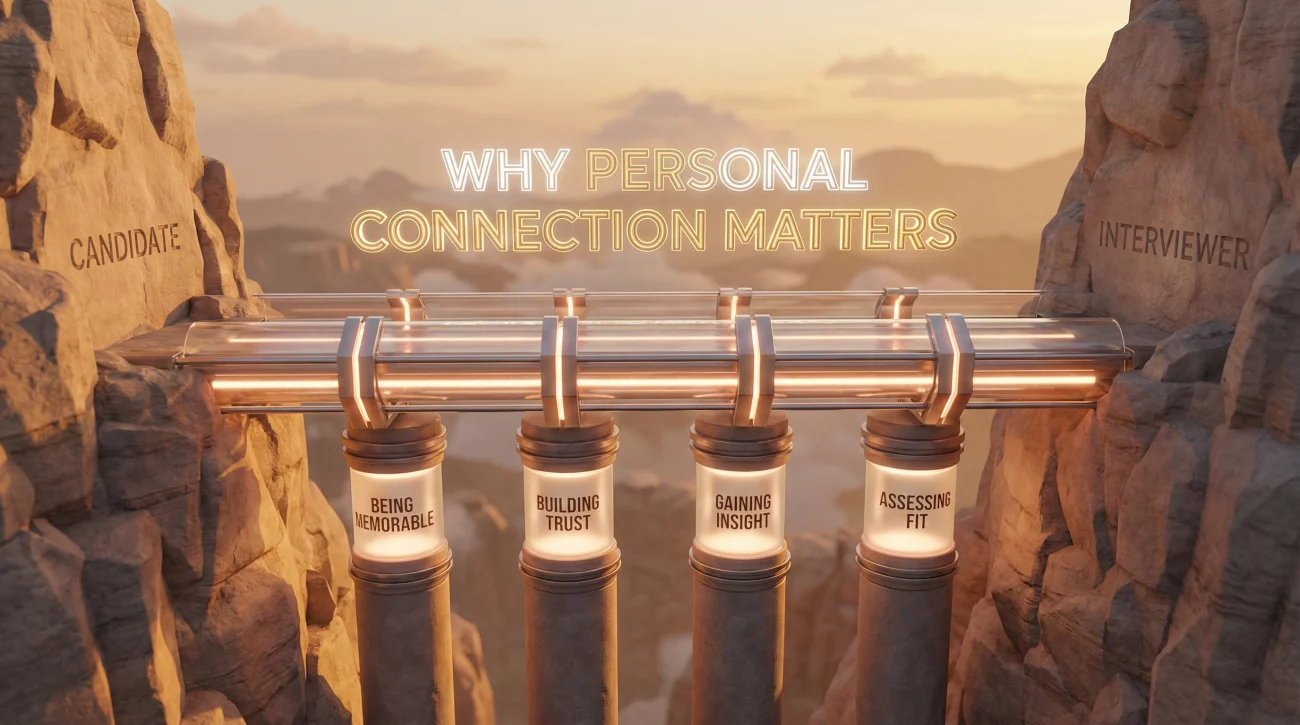
Being Memorable
Interviewers meet many candidates with similar qualifications. Technical skills blend together. But the candidate who asked a thoughtful question about their career journey, who seemed genuinely interested in their answer, who created a moment of real conversation becomes distinct in memory.
Building Trust
People trust those who show interest in them. When you ask about someone’s experience and listen attentively, you demonstrate the interpersonal skills that matter in collaborative environments. You show you’re not just focused on yourself.
Gaining Insight
Personal questions reveal information that formal questions don’t. Why someone has stayed at a company for years, what they find fulfilling, how they’ve grown tells you about the environment in ways that policy descriptions can’t.
Assessing Fit
You’re evaluating them too. Understanding the interviewer’s experience and perspective helps you assess whether this is somewhere you’d want to work and people you’d want to work with.
Effective Personal Questions
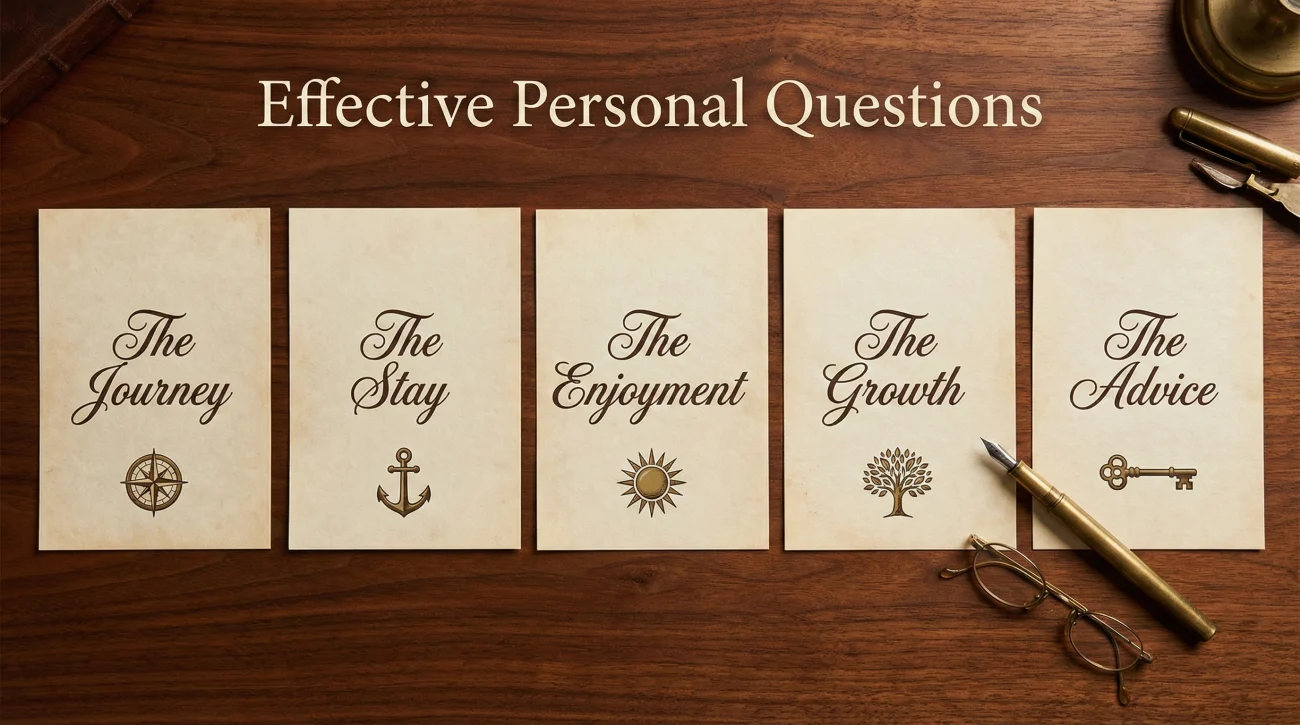
The Journey Question
“What’s your own story here? How did you end up in this role?”
This invites them to share their path. People generally enjoy talking about their careers when asked genuinely. Their story reveals organizational culture, growth opportunities, and what kind of trajectories are possible here.
The Stay Question
“What keeps you at this company? What’s made you stay?”
This surfaces what they genuinely value about the organization. The reasons someone stays reveal more than marketing materials ever could. Listen for enthusiasm versus obligation in their response.
The Enjoyment Question
“What do you enjoy most about working here? What energizes you?”
This focuses on positive experience. Their answer tells you what’s rewarding about this environment and whether those rewards align with what you’re seeking.
The Growth Question
“How have you grown or changed since you’ve been here?”
This reveals whether the organization develops people. If they can point to specific growth, that’s evidence the environment supports development. Vague answers might suggest limited growth opportunities.
The Advice Question
“What do you wish you’d known when you started here?”
This invites practical wisdom. Their answer helps you understand what successful integration looks like and what challenges new people typically face.
How to Ask Personal Questions
Be Genuinely Curious
Personal questions only work if you actually care about the answers. False interest is obvious and counterproductive. If you’re not genuinely curious about people, skip these questions rather than faking engagement.
Listen Actively
When they answer, pay full attention. Maintain eye contact. Respond to what they say rather than waiting for your turn to speak. Ask brief follow-up questions that show you’re processing their response.
Choose the Right Moment
Personal questions work best toward the end of interviews when formal evaluation is mostly complete. Starting with personal questions before establishing professional credibility can seem presumptuous.
Be Ready to Reciprocate
Personal questions sometimes prompt personal questions in return. Be prepared to share briefly about your own motivations, interests, or experiences if invited.
Personal questions should feel natural, not scripted. If a question feels forced in context, skip it rather than awkwardly inserting it.
Respecting Boundaries
Keep It Professional Personal
Personal doesn’t mean private. Questions about their career experience, professional growth, and work satisfaction are appropriate. Questions about family, relationships, or personal life outside work are not.
Read the Room
Some interviewers welcome personal conversation. Others prefer staying strictly professional. Pay attention to how they respond. If answers are brief and they redirect to formal topics, respect that preference.
Consider Cultural Context
Personal conversation norms vary across cultures and industries. What feels warm in one context might feel intrusive in another. Adapt to the environment you’re in.
| Appropriate | Avoid |
|---|---|
| Career journey and growth | Family or relationship status |
| What they enjoy about work | Personal finances or salary |
| Professional development | Age or health-related topics |
| Why they chose this company | Political or religious views |
| Advice for success here | Gossip about colleagues |
Adapting to Different Interviewers
Potential Peers
With people who’d be colleagues, ask about day-to-day experience and team dynamics. “What’s it actually like working here?” feels natural between potential peers.
Potential Manager
With your potential boss, ask about their leadership experience and what they look for. “What’s most rewarding about leading this team?” shows interest in their perspective as a leader.
Senior Leaders
With executives, focus on their vision and what attracted them to the organization. “What made you decide to join this company? What excites you about where it’s heading?”
HR Representatives
HR professionals see the organization from a unique angle. Ask about what they observe: “What do employees seem to value most about working here?”
For more strategies on closing interviews effectively, see our comprehensive interview questions guide.
Following Up on Personal Connections
In Thank You Emails
Reference the personal conversation in your follow-up: “I particularly appreciated you sharing your own career journey and what drew you to this company.” This reinforces the connection you created and shows you were genuinely listening.
LinkedIn Connections
After interviews where you had meaningful personal conversation, connecting on LinkedIn feels natural. Include a personalized note referencing your discussion. This extends the relationship beyond the interview process.
Being Remembered
When decisions are close between candidates with similar qualifications, interviewers often advocate for people they connected with personally. The relationship you built through genuine conversation becomes an asset that pure credentials can’t match.
❓ FAQ
🎯 Won’t personal questions seem too casual or unprofessional?
Not if asked appropriately. Professional curiosity about someone’s experience is different from inappropriate familiarity. The key is genuine interest delivered with appropriate boundaries. Most interviewers appreciate candidates who show human curiosity.
💼 What if the interviewer gives very short answers?
Some people prefer professional distance. If they’re not expanding on personal questions, respect that preference. Move on to other questions without pushing. Their communication style itself is information about how they operate.
⏰ When in the interview should I ask personal questions?
Typically toward the end, after you’ve established credibility through substantive discussion. Starting with personal questions before proving your qualifications can seem like you’re trying to charm your way through rather than demonstrate competence.
📋 How many personal questions should I ask?
One or two meaningful questions with good follow-up is usually right. The goal is creating a genuine moment of connection, not conducting a personal interview. Quality of engagement matters more than quantity of questions.
✨ What if I’m genuinely not interested in their personal experience?
Then skip these questions. Fake interest is worse than no interest. Focus on other questions where your curiosity is genuine. Authenticity matters more than covering all possible question types.
Human First, Candidate Second
Asking thoughtful personal questions for interviewer transforms transactional interviews into human conversations. When you show genuine curiosity about someone’s experience, you become memorable in ways that credentials alone can’t achieve. Ask about their journey, what keeps them engaged, and how they’ve grown. Listen actively and respond authentically. Respect boundaries while creating space for real connection. The interviewers who eventually become your colleagues will remember the candidate who treated them as a person, not just a gatekeeper. That connection often makes the difference when decisions are close.
⚠️ Disclaimer: The interview strategies, sample answers, and negotiation tips provided in this guide are for educational purposes only. Hiring decisions are subjective and vary by company and industry. While these strategies are based on professional HR standards, they do not guarantee a specific job offer or result.