

- Influence vs authority: Authority gets compliance from title, influence earns followership through credibility, relationships, and value.
- How influence is built: Use expertise, relationship capital, information flow, a clear vision, and a visible track record to become someone people choose to follow.
- Peer leadership tactics: Frame initiatives around others’ benefits, start with pilots and quick wins, and lead by removing friction instead of giving orders.
- Coalitions that move work: Map stakeholders, activate champions, address blockers early, and build reciprocity by helping people before you need support.
- Common mistakes and interview proof: Do not overstep or wait forever for permission, avoid transactional “influence extraction,” and tell one outcome-based story showing your tactics and lessons learned.
Why Influence Matters More Than Authority
The most impactful organizational contributions often come from people lacking formal power over outcomes or team members. Understanding leadership without authority becomes essential as organizations flatten hierarchies, increase cross-functional collaboration, and recognize that innovation rarely respects reporting structures. Individual contributors who wait for management titles before attempting to lead miss years of influence-building that separates those who eventually earn authority from those who remain perpetually waiting for permission.
Authority provides shortcut to compliance through positional power – people follow directives because organizational structure demands it. Influence without authority requires earning followership through credibility, relationship capital, and value creation that makes others want to support your initiatives. This harder path builds more durable leadership capability because it relies on genuine persuasion rather than hierarchical coercion. When you eventually gain formal authority, the influence skills you’ve developed multiply your effectiveness beyond what title alone provides.
Building Influence Without Positional Power
Effective leading without authority relies on multiple influence sources that create credibility and followership when you lack formal control.
Expertise as Influence Currency
Deep knowledge in areas critical to organizational success creates influence independent of title. When you consistently provide insights that solve problems, identify opportunities, or prevent disasters, people seek your input and support your initiatives regardless of reporting relationships. This expertise-based influence requires maintaining cutting-edge knowledge, delivering reliable analysis, and building reputation for sound judgment that proves more valuable than formal authority.
Relationship Capital Development
Trust-based relationships create influence through reciprocity and goodwill that positional power cannot replicate. Investing time understanding others’ priorities, offering help without immediate return expectation, and demonstrating genuine care for colleagues’ success builds relationship capital you can leverage when pursuing initiatives requiring their support. This slow-building approach pays compounding returns as your network becomes increasingly willing to champion your ideas and provide resources without formal obligation.
| Influence Source | How to Build It | When It Works Best |
|---|---|---|
| Expertise | Deep knowledge, proven results, reliable judgment | Technical decisions, complex problem-solving, strategic analysis |
| Relationships | Trust-building, helping others, understanding priorities | Cross-functional initiatives, change management, coalition-building |
| Information | Connecting people, sharing insights, bridging silos | Organizational navigation, stakeholder alignment, context-building |
| Vision | Compelling future, clear strategy, inspiring narrative | Innovation projects, culture change, voluntary participation |
| Track Record | Consistent delivery, visible wins, reputation management | High-stakes initiatives, resource requests, executive sponsorship |
Information and Network Position
Occupying central positions in information flow creates influence through visibility and connectivity. When you connect people across silos, share critical insights before others access them, or provide context that helps stakeholders navigate complex situations, you become valuable regardless of formal authority. This information-based influence requires investing energy in broad networking, active listening, and generous knowledge-sharing that builds reputation as helpful connector rather than information hoarder.
Expert advice: The most effective influence without authority comes from consistently making others successful rather than hoarding credit or resources for yourself – generosity compounds influence faster than self-promotion.
Practical Strategies for Leading Peers
Understanding influence without power requires translating conceptual knowledge into specific tactics that drive results when you lack formal control.
Strategic Initiative Framing
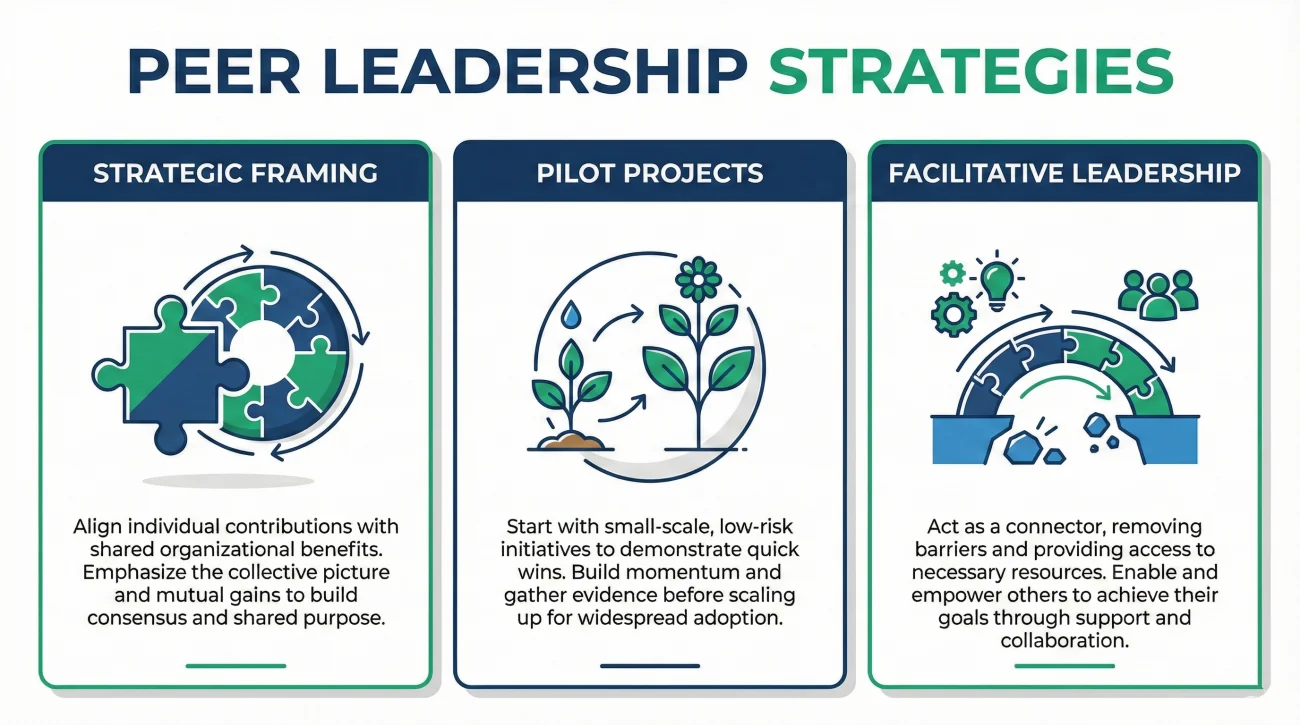
How you frame proposals determines whether peers support or resist your ideas when you cannot compel compliance. Successful framing emphasizes benefits to others rather than your goals, addresses stakeholder concerns proactively, and aligns initiatives with organizational priorities that command resources. Instead of “I want to implement this new process,” reframe as “This approach solves the bottleneck you mentioned last quarter while reducing everyone’s administrative burden.” This stakeholder-centric framing builds coalition support that authority-based directives cannot match.
- ✅ Effective framing: “This solves your team’s pain point while advancing our division goals”
- ✅ Coalition building: “I’ve talked with teams across functions who face similar challenges”
- ✅ Value emphasis: “Early results show 40% reduction in cycle time”
- ❌ Self-centered: “I think we should do it this way because it’s better”
- ❌ Authority appeal: “Management wants this” (when you’re not management)
Pilot Projects and Quick Wins
Demonstrating value through small-scale successes builds influence more effectively than proposing large transformations requiring massive buy-in. Launch pilot projects with willing early adopters, generate measurable results quickly, then expand based on proven outcomes rather than theoretical benefits. This incremental approach reduces risk for stakeholders hesitant to support unproven initiatives while building your credibility through visible wins that create momentum for broader adoption.
💡 Pro tip: When leading peers, volunteer for work others avoid but that creates high visibility if executed well – success in challenging areas builds influence faster than easy wins in low-stakes domains.
Facilitative Rather Than Directive Leadership
Without authority to direct actions, effective leadership comes from facilitating others’ success rather than commanding compliance. Ask questions that help teams discover solutions instead of prescribing answers. Remove obstacles rather than creating tasks. Connect people with resources instead of controlling allocation. This facilitative approach builds voluntary followership because team members recognize you’re enabling their success rather than pursuing your agenda through their efforts.
Building and Managing Cross-Functional Coalitions
Most initiatives requiring peer leadership strategies demand coalition support from stakeholders with competing priorities and limited incentive to help.
Strategic Stakeholder Analysis
Identify whose support proves essential versus merely helpful, what motivates each stakeholder, and what concerns might generate resistance. This analysis reveals where to invest relationship-building energy, which benefits to emphasize with different audiences, and what objections require proactive addressing. Treating all stakeholders identically wastes influence capital that targeted approaches preserve for critical relationships.
| Stakeholder Type | Engagement Strategy | Key Tactics |
|---|---|---|
| Champions (high support, high influence) | Activate and leverage | Ask them to evangelize, provide platform for advocacy |
| Blockers (low support, high influence) | Understand and address concerns | One-on-one meetings, incorporate feedback, find common ground |
| Allies (high support, low influence) | Build coalition size | Gather testimonials, demonstrate broad support |
| Neutral (medium support, variable influence) | Convert to supporters | Share quick wins, emphasize relevant benefits |
Creating Reciprocity Networks
Build influence capital before you need it by helping others succeed without immediate return expectation. When you eventually require support for your initiatives, this accumulated goodwill creates reciprocity obligation that generates assistance authority cannot compel. The most effective influence-builders maintain mental ledgers of who they’ve helped, ensuring they can request reciprocal support when pursuing important initiatives requiring coalition backing.
Avoiding Influence Without Authority Mistakes
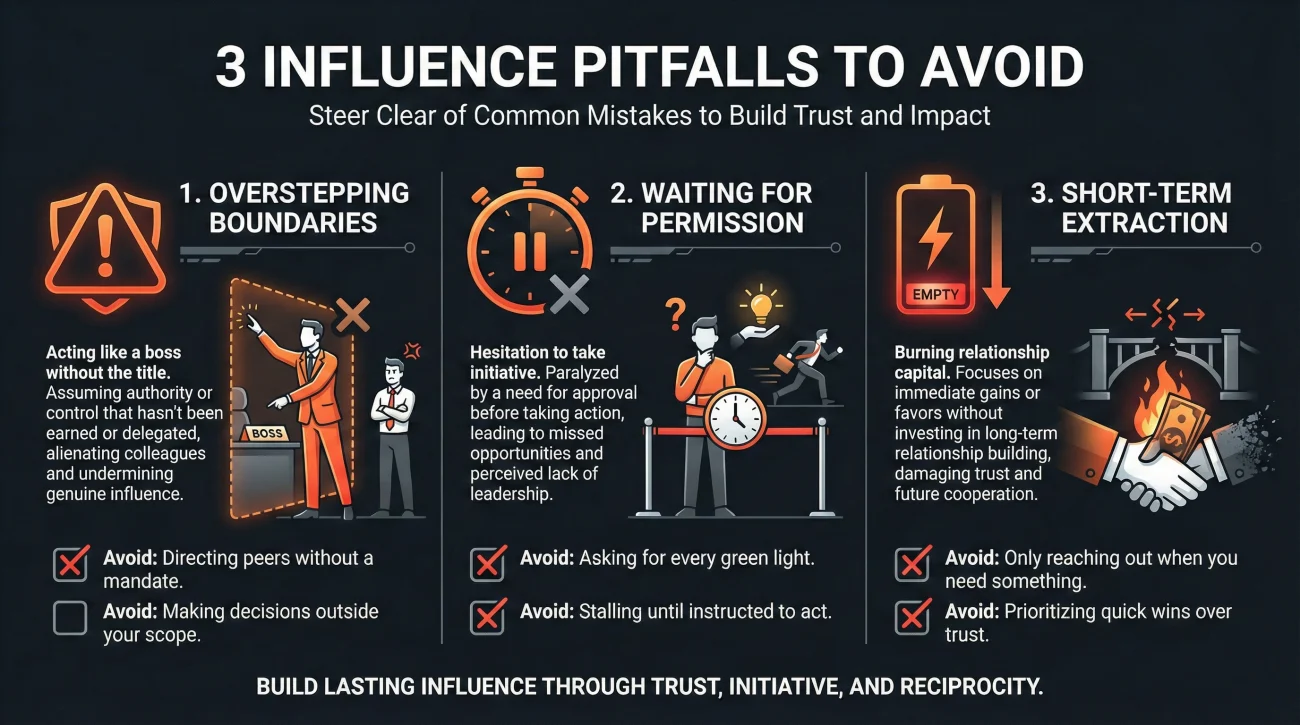
Several predictable errors undermine influence-building efforts that would otherwise generate significant followership and impact.
Overstepping Informal Authority
Acting as if you possess formal authority when you don’t generates resentment and resistance that destroys influence. Making unilateral decisions affecting others, speaking on behalf of teams without permission, or claiming credit for collective work signals ego over collaboration. Maintain clear boundaries around what influence enables versus what authority permits – propose rather than direct, suggest rather than demand, facilitate rather than control.
Waiting for Perfect Permission
The opposite error – excessive deference and permission-seeking – prevents influence from developing. Taking initiative within reasonable boundaries, offering help without explicit invitation, and proposing solutions without guaranteed buy-in demonstrate leadership that waiting for permission never builds. Balance respect for others’ autonomy with willingness to act when opportunities arise, asking forgiveness when necessary rather than waiting for unlikely perfect permission.
Never claim or imply authority you don’t possess – this destroys credibility faster than almost any other influence mistake.
Short-Term Influence Extraction
Viewing influence as transactional resource to extract rather than long-term asset to cultivate creates sustainability problems. Burning relationship capital for immediate wins, over-leveraging stakeholder goodwill, or prioritizing your success over others’ needs depletes influence faster than it rebuilds. Treat influence as renewable resource requiring ongoing investment through continued value creation and relationship maintenance.
Demonstrating Leadership Without Authority in Interviews
Interview responses about informal leadership require specific examples demonstrating influence capability rather than theoretical understanding.
Structuring Influence Stories
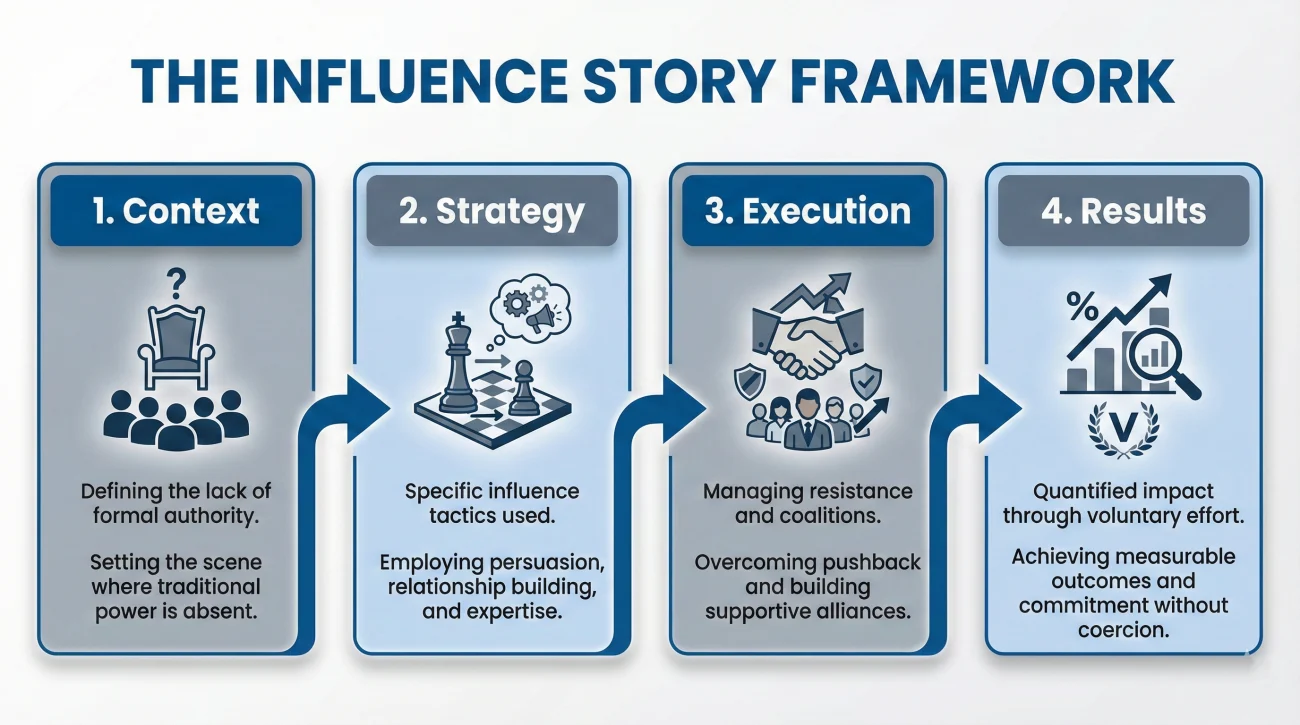
Effective examples establish why you lacked formal authority, clarify the challenge requiring cross-functional support, detail how you built coalition backing, and quantify outcomes achieved through influence rather than directive power. Emphasize the influence tactics you employed – stakeholder analysis, benefit framing, relationship leverage, pilot demonstration – rather than claiming you “just convinced people” through undefined charisma.
Including Reflection and Learning
Strong influence stories include what you learned about building followership without authority and how those lessons shaped subsequent approaches. This reflection demonstrates growth mindset and influence sophistication that claiming perfect execution cannot convey. Discuss situations where initial influence attempts failed, what you adjusted, and how refined approaches generated better outcomes – this honest assessment signals authentic experience versus theoretical knowledge.
- Quantify the stakeholder complexity (cross-functional teams, competing priorities, resistant individuals)
- Explain specific influence tactics rather than vague “persuasion”
- Acknowledge initial resistance and how you addressed concerns
- Share measurable outcomes achieved through voluntary participation
❓ FAQ
🎯 Can you lead effectively without any formal authority?
Yes, many impactful organizational contributions come from individual contributors who build influence through expertise, relationships, and value creation rather than positional power. This influence-based leadership often proves more durable than authority-based compliance.
💼 What if people ignore my suggestions because I’m not their manager?
Build influence capital first through helping others succeed, developing recognized expertise, and creating relationship trust. Once established, frame suggestions around stakeholder benefits rather than your preferences. Influence takes longer to build than authority but creates more sustainable followership.
⏰ How long does it take to build influence without authority?
Initial influence develops within months through consistent value delivery and relationship investment. Deep influence requiring significant coalition support typically takes 1-2 years of sustained credibility-building and reciprocity network development.
📋 Should I focus on influence or pursuing formal authority?
Build both – influence without authority creates foundation that makes formal authority more effective when earned. Those who wait for titles before developing leadership capability struggle more than those who build influence first then add positional power.
✨ What’s the difference between influence and manipulation?
Influence creates mutual value and respects stakeholder autonomy while manipulation serves only your interests through deception or coercion. Ethical influence helps others succeed while advancing shared goals – manipulation exploits relationships for one-sided benefit.
Final Thoughts
The most valuable leadership capability you can develop isn’t commanding compliance through formal authority but rather building voluntary followership through earned influence. Organizations increasingly flatten hierarchies and distribute decision-making, making influence without positional power more critical than ever. Individual contributors who master this capability advance faster and contribute more significantly than those waiting for management titles before attempting to lead.
Mastering leadership without authority requires patient investment in expertise development, relationship building, and value creation that generates influence capital you can leverage when pursuing important initiatives. This harder path builds more durable leadership foundation because it relies on genuine persuasion rather than hierarchical coercion. When you eventually gain formal authority, the influence skills you’ve developed multiply your effectiveness beyond what title alone provides.
During interviews and throughout your career, demonstrate influence capability through specific examples of driving results despite lacking formal control. Emphasize the tactics you employed, coalition support you built, and measurable outcomes achieved through voluntary participation rather than directive power. This authentic influence demonstration signals leadership readiness that theoretical knowledge or title-waiting cannot match.
⚠️ Disclaimer: The interview strategies, sample answers, and negotiation tips provided in this guide are for educational purposes only. Hiring decisions are subjective and vary by company and industry. While these strategies are based on professional HR standards, they do not guarantee a specific job offer or result.