The First First Responder
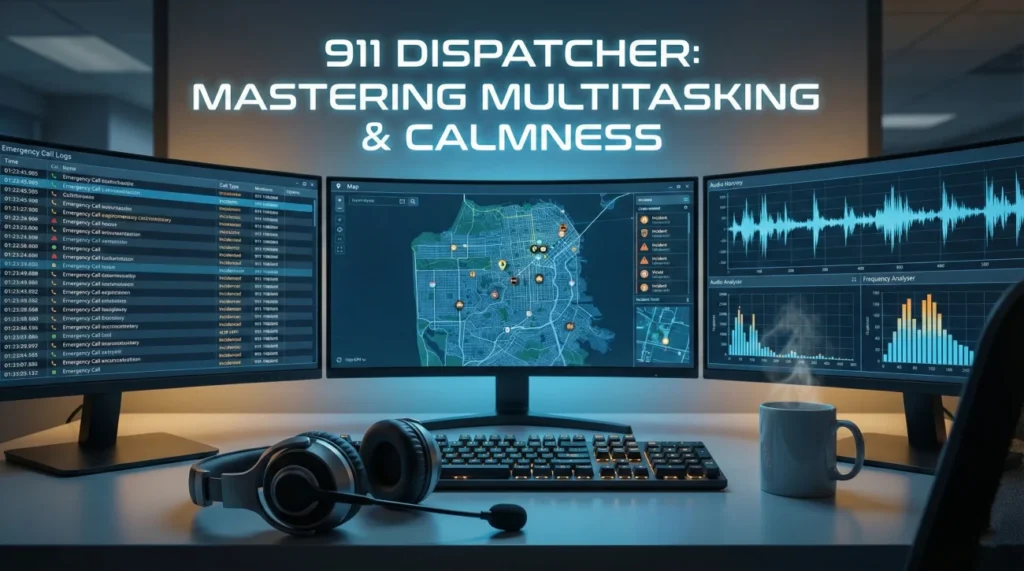
Before the police arrive, before the ambulance siren is heard, and before the fire truck leaves the station, there is the voice on the other end of the line. A 911 Dispatcher, or Public Safety Telecommunicator, is the true first responder. This role is not just about answering phones; it is about managing chaos from a distance. It requires the ability to type 60 words per minute while talking a mother through CPR, monitoring radio traffic for officer safety, and remaining the calmest person in a world that is falling apart.
Hiring managers for emergency communications centers are looking for a very specific psychological profile. They need candidates who possess “split-ear” listening skills, who can assert control over hysterical callers without being rude, and who can make life-or-death decisions based on voice inflection alone. They will test your ability to prioritize conflicting emergencies, your aptitude for learning complex Computer Aided Dispatch (CAD) systems, and your resilience in the face of tragedy.
To earn the headset, you must be prepared to answer 911 dispatcher interview questions that probe your multitasking limits, your ethical boundaries, and your coping mechanisms for stress. This guide provides the deep, scenario-based answers you need to prove you have the mental bandwidth and the steady nerves to be the lifeline for your community.
Multitasking and Core Competencies
Q: Describe your ability to multitask in a high-pressure environment.
I view multitasking not as doing two things at once, but as rapid task-switching with retained accuracy. In my previous role (or training), I developed a system for triage. If I am on a call with a frantic reporting party, I am simultaneously listening to their description, typing it into the CAD system for the officers, and monitoring my radio ear for unit availability. I prioritize based on life safety. Officer safety traffic always overrides a non-emergency admin line. I practice “active listening” with my hands moving constantly. I understand that in 911, a delay in typing information can mean a delay in response time, so my typing speed of 70 WPM allows me to keep pace with the caller’s speech without asking them to repeat themselves.
Q: How do you handle a hysterical caller who is screaming and not answering questions?
My goal is to break the hysteria loop. I use a technique called “Repetitive Persistence.” I state a firm command calmly and repeatedly using the same wording until they hear me. “Ma’am, stop screaming and listen to me. Ma’am, stop screaming and listen to me.” Once I get a second of silence, I pivot immediately to a simple, direct question: “What is the address of the emergency?” I change my tone to be authoritative but reassuring. I avoid saying “calm down,” which rarely works. Instead, I give them a job to do, like “I need you to go unlock the front door,” which refocuses their brain from panic to action.
Q: What is your strategy for determining the location of a caller who doesn’t know where they are?
Location is the single most critical piece of information. If I don’t know where they are, I can’t send help. If they don’t know the address, I switch to landmarking. I ask, “What do you see around you? Any street signs, businesses, or mile markers?” If they are inside, I ask for mail on the counter. I utilize the Phase II wireless data or RapidSOS data on my map to get a GPS ping, but I always verify it verbally because GPS can drift. If they are in a moving car, I ask for the last exit passed and direction of travel. I stay on the line until I have a verified location, using every tool and question available.
Q: How do you maintain accuracy when typing information into the CAD system?
Accuracy saves lives. A typo in a house number sends police to the wrong door. I use standard abbreviations to type faster but ensure they are universally understood codes (like ‘RP’ for Reporting Party). I verify critical details by reading them back: “You said 1-5-0 Main Street, correct?” I type exactly what the caller says for descriptions (e.g., “White male, red hoodie”) without interpreting or summarizing, which avoids bias. I double-check my entries before hitting “Enter” to dispatch, knowing that speed is important, but accuracy is non-negotiable.
Critical Incidents and Decision Making
Q: You receive a call for a baby not breathing. Walk me through your actions.
This is a high-priority EMD (Emergency Medical Dispatch) call. I start the call immediately by verifying the address to get units rolling. I then ask, “Is the baby conscious? Is the baby breathing?”
If the answer is no, I launch the CPR protocol immediately. I tell the caller, “Listen carefully, I’m going to tell you how to do chest compressions.” I count with them out loud (“1, 2, 3, 4”) to set the rhythm. I stay on the line, encouraging them (“You are doing great, keep going”) until paramedics physically take over. I do not let my own emotion interfere; I become the calm instructor they need to save that life.
Q: An officer calls “Shots Fired” on the radio. What do you do?
My adrenaline spikes, but my voice must remain flat and clear. I immediately activate the emergency tone to clear the air. I ask for the officer’s status and location if not known.
I dispatch all available backup units to their location “Code 3” (lights and sirens). I start a timer for safety checks. I listen intently for any further transmission. I notify the supervisor. I restrict radio traffic to only emergency communications. My job is to be the lifeline, ensuring help gets there and tracking every resource so no one is lost in the chaos.
Q: You have a suicidal caller with a gun. How do you keep them on the line?
I focus on building a rapport. I use a low, slow, and empathetic tone. I ask for their name and use it. I ask open-ended questions: “John, tell me what happened today that made you feel this way?”
I validate their pain (“That sounds incredibly heavy to carry”). I avoid arguing or guilt-tripping. I ask direct safety questions: “Where is the gun right now?” I try to get them to put it down or step away from it. I signal my partner to dispatch police quietly to avoid spooking them with sirens. My goal is to keep them talking until help arrives, buying time for de-escalation.
Q: A caller reports a domestic violence incident in progress but hangs up. What do you do?
A hang-up on a domestic call is a huge red flag. I dispatch officers immediately to the location derived from ANI/ALI (Automatic Number/Location Identification).
I attempt to call back once. If someone answers, I ask yes/no questions (“Are you safe? Is he still there?”) in case they cannot speak freely. I listen for background noise. If it goes to voicemail, I leave a generic message or no message to avoid alerting the abuser. I enter notes into the call for officers: “History of DV at this address, female sounded distressed before disconnect.” Information is safety.
Q: You have a caller reporting a fire and a caller reporting a burglary at the same time. Who gets priority?
I prioritize based on immediate threat to life. A structure fire is an immediate threat to life and property with high potential for escalation. A burglary, if the suspect has left (cold report), is property crime.
However, if the burglary is “in progress” with residents home (home invasion), it becomes a life safety issue too. I would dispatch the fire call first (or simultaneously if I have a partner) because fire spreads exponentially. I use the “triage” protocols of my agency, but generally, Life > Property. I might put the cold burglary on a brief hold to dispatch the fire tones.
Q: How do you handle a “swatting” call or a prank call?
I treat every call as real until proven otherwise. If a caller reports a hostage situation, I dispatch it as such. However, I look for red flags: a robotic voice, a caller who refuses to answer basic questions, or inconsistencies in the story.
I check the history of the address for prior false alarms. I relay these suspicions to the responding supervisor so they can approach with caution but not complacency. If it is confirmed as a prank, I flag the number and document it for investigation, as swatting is a felony that endangers lives.
Stress Management and Resilience
How do you decompress after a traumatic call, like the death of a child?
I acknowledge that I am human and that the call affected me. I do not bottle it up. After the call is cleared, I might take a “micro-break” – step outside for fresh air or splash water on my face for two minutes.
I utilize peer support. I talk to my supervisor or a partner: “That was a rough one.” Long term, I have healthy coping mechanisms outside of work – exercise, spending time with family, and hobbies that have nothing to do with emergency services. I avoid using alcohol to cope. I know that carrying the trauma home eventually breaks you, so I actively process it to leave it at the console.
This job requires shift work, weekends, and holidays. How will you manage the lifestyle?
I have researched the schedule and I am prepared for the sacrifice. I understand that crime and emergencies happen 24/7. I have discussed this with my family and we have a plan for managing childcare and holidays.
I view the schedule as a trade-off for a meaningful career. I am disciplined about my sleep hygiene; blackout curtains and white noise are essential for night shifts. I plan my meals to stay healthy. I am committed to being reliable, knowing that my partners cannot go home until I relieve them.
How do you handle being verbally abused by a caller?
I do not take it personally. I realize they are not yelling at me; they are yelling at the situation and I am just the voice they hear. They are having the worst day of their life.
I remain professional and do not argue back. I say, “Sir, I am trying to help you, but I need you to answer these questions.” I focus on the task. Once the call is over, I shake it off. I don’t let one angry caller ruin my empathy for the next caller who genuinely needs help.
You make a mistake that delays a response. How do you handle it?
I own it immediately. Integrity is paramount. I tell my supervisor, “I sent the unit to 100 North instead of 100 South. I have corrected it, but there was a 2-minute delay.”
I do not try to cover it up. Hiding a mistake is a fireable offense and a liability issue. I accept the consequences and remedial training. I then analyze why I made the mistake (fatigue? rushing?) and put a system in place to prevent it from happening again. I learn from it to become a better dispatcher.
Technical and Legal Knowledge
Q: What is “CAD” and how does it function?
CAD stands for Computer Aided Dispatch. It is the central nervous system of the comm center. It allows me to enter call details, see the status of all units (available, on scene, transporting), and track times automatically. It often interfaces with the map and the NCIC (crime database). My job is to feed the CAD accurate data so it can recommend the closest units and maintain a permanent legal record of the incident. I am comfortable learning new software and navigating multiple screens simultaneously.
Q: Explain the difference between “primary” and “secondary” PSAPs.
A Primary PSAP (Public Safety Answering Point) is the first point of reception for a 911 call. A Secondary PSAP is where a call might be transferred for specific dispatch. For example, a cell phone call might hit the Highway Patrol (Primary) and then be transferred to the local city police or fire dispatch (Secondary). Understanding this helps me explain delays to callers (“I am transferring you to the fire department now…”) and coordinate seamlessly with other agencies.
Q: What is “NCIC” and why is it strictly regulated?
NCIC is the National Crime Information Center. It is a federal database containing files on wanted persons, stolen vehicles, missing persons, and protection orders. Access is strictly regulated because it contains sensitive personal information. Misusing it (e.g., looking up a neighbor or ex-boyfriend) is a federal crime and grounds for immediate termination. I understand that every query I run is logged and audited, and I treat that access with the highest level of confidentiality and professional purpose only.
Q: How do you handle a “Silent Call” or “Open Line”?
I never just hang up. It could be a domestic violence victim hiding, a medical emergency where the person collapsed, or an abduction. I listen to the background noise for breathing, arguing, or traffic.
I ask, “If you can hear me, press a button” (using the TTY protocol). I check the TCC (Text-to-911) capability. I dispatch an officer to the coordinate location to investigate (“check the welfare”). I verify if it was a pocket dial only after an officer confirms or I make contact with the owner. Silence is treated as an emergency until proven otherwise.
Dispatcher Skills Quiz
20 Practice Questions
1. “CAD” stands for:
- Call And Dispatch
- Computer Aided Dispatch
- Central Area Department
- Caller Assistance Data
2. What is the most important info to get first?
- The caller’s name
- The location of the emergency
- The phone number
- The nature of the problem
3. “CYMBALS” is used to describe:
- A suspect’s clothing
- A vehicle description
- A fire location
- A medical symptom list
4. A “Code 3” response means:
- Routine response, no lights
- Emergency response (Lights & Sirens)
- Silent approach
- Delay response for backup
5. “ANI/ALI” provides:
- Criminal history data
- Phone number and Location address
- Medical instructions
- Police unit status
6. “EMD” stands for:
- Emergency Medical Doctor
- Emergency Medical Dispatch
- Early Morning Duty
- Electronic Map Data
7. Which call gets priority?
- A car theft that happened yesterday
- A baby choking / not breathing
- A noise complaint
- A non-injury fender bender
8. “10-4” typically means:
- Repeat the message
- Message received / Acknowledged
- Officer in trouble
- Arriving on scene
9. “TTY” is used for:
- Tracking police cars
- Communication with Deaf/Hard of Hearing
- Talking to the fire chief
- Recording the call audio
10. “Phonetic Alphabet” (Alpha, Bravo…) helps to:
- Code secret messages
- Clarify spelling over the radio
- Speak faster
- Sound more professional only
11. A “PSAP” is a:
- Police Station Area Patrol
- Public Safety Answering Point
- Public Service Announcement Post
- Phone System Access Protocol
12. “Officer Safety” checks involve:
- Checking if they have lunch
- Radio status checks at set intervals
- Checking their driving speed
- Calling their family
13. “MDT” stands for:
- Main Dispatch Tower
- Mobile Data Terminal (Car Computer)
- Medical Doctor Team
- Manual Dispatch Tool
14. What is “Swatting”?
- Killing a fly in the center
- Prank call reporting fake serious crime
- Calling the SWAT team correctly
- Sweeping the floor
15. “MO” (Modus Operandi) means:
- Medical Officer
- Method of Operation
- Monday Off
- Main Operator
16. “Simulcasting” is:
- Watching TV while working
- Broadcasting on multiple radio channels
- Talking to two callers at once
- Testing the siren
17. “VOIP” stands for:
- Voice Over Internet Protocol
- Voice Over Internet Protocol
- Video On Internet Page
- Very Old Internet Phone
18. Who is the “RP”?
- Responding Police
- Reporting Party (Caller)
- Responsible Person
- Radio Patrol
19. “Mutual Aid” allows:
- Sharing lunch with partners
- Sharing resources between agencies
- Calling friends for help
- Dispatchers to go home early
20. “Burnout” in dispatch is caused by:
- Too much coffee
- Chronic stress and secondary trauma
- A fire in the center
- Boredom
❓ Frequently Asked Questions
⌨️ How fast do I need to type?
Most agencies require a minimum of 40-50 WPM, but 60-80 WPM is preferred. Accuracy is just as important as speed. You often have to type while listening to a caller and reading map data simultaneously (split-brain function).
🎓 Do I need a degree?
Usually, a high school diploma or GED is the minimum. However, you will undergo extensive on-the-job training and certification (like POST dispatcher courses or EMD certification). A degree in Criminal Justice or Communications can be helpful for promotion.
👮 Is the background check strict?
Yes, very. You have access to sensitive criminal databases (NCIC). You will likely face a polygraph, drug test, psychological eval, and a thorough background investigation. Recent drug use or felony convictions are automatic disqualifiers.
🌙 What are the hours?
Emergency services never close. You will work nights, weekends, holidays, and birthdays. Shifts are often 10 or 12 hours. Mandatory overtime is common due to staffing shortages. It is a lifestyle, not just a job.
🚀 Is there room for advancement?
Yes. You can become a Communications Training Officer (CTO), Shift Supervisor, or Center Manager. Some dispatchers transition into sworn officer roles, emergency management, or work for CAD software companies.
The Unseen Hero
911 dispatchers are the “thin gold line” that holds the emergency response system together. You are the first voice of hope in a crisis and the calm anchor for the officers in the field. When you walk into the interview, show them your mental toughness. Demonstrate that you can handle the multitasking, the stress, and the emotional weight of the job.
By preparing with these 911 dispatcher interview questions, you show that you understand the gravity of the position. You are ready to be the professional who stays calm when everyone else is panicking, ensuring that help is always on the way.
⚠️ Disclaimer: The interview strategies, sample answers, and negotiation tips provided in this guide are for educational purposes only. Hiring decisions are subjective and vary by company and industry. While these strategies are based on professional HR standards, they do not guarantee a specific job offer or result.