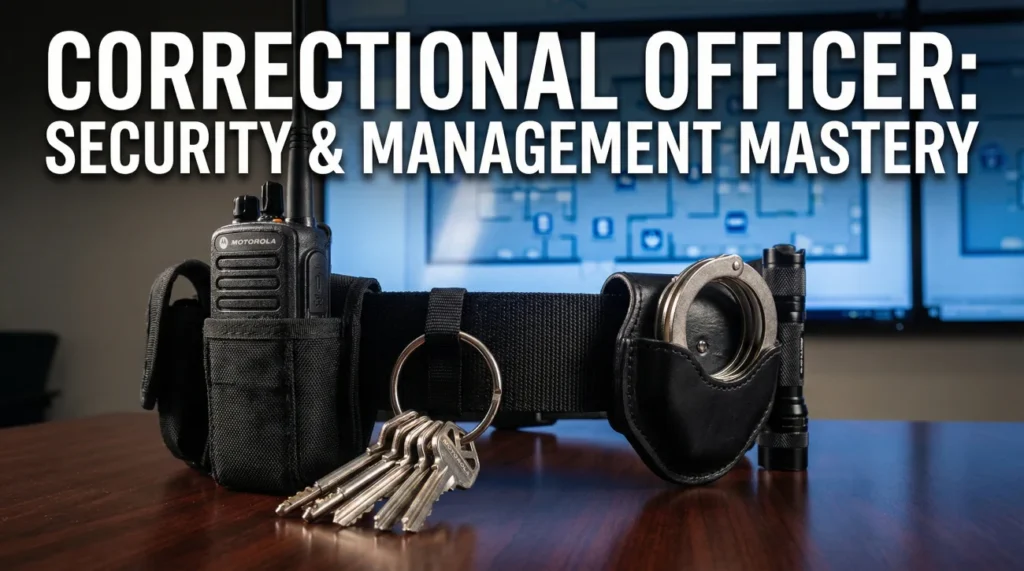
The Guardian Behind the Walls
The role of a Correctional Officer (CO) is one of the most demanding and essential positions in the criminal justice system. You are the unseen guardian who maintains order within the walls, ensuring the safety of staff, inmates, and the public. To secure your badge, you must be prepared to answer correctional officer interview questions that delve into your philosophy on rehabilitation versus punishment, your reaction to finding contraband, and your strategy for managing stress in a high-pressure environment.
Hiring panels for correctional facilities are looking for candidates who can demonstrate more than just toughness. They need professionals who can de-escalate a volatile situation with words before resorting to force, who can spot a hidden weapon in a cell search, and who can treat inmates with dignity without being manipulated. They will test your ability to follow strict protocols, your judgment in ethical gray areas, and your commitment to the chain of command.
This guide provides the detailed, scenario-based answers you need to prove you are ready to walk the tier. It covers everything from handling non-compliant inmates to writing disciplinary reports that stick. By preparing with these questions, you will demonstrate the mental resilience and professional integrity required to succeed in one of the toughest work environments imaginable.
Security Protocols and Contraband Control
Q: What is your primary responsibility as a Correctional Officer?
My primary responsibility is the safety and security of the facility. This includes protecting my fellow officers, the civilian staff, the inmates, and ultimately the public. While rehabilitation is a goal of the system, it cannot happen without a secure environment. I achieve this by strictly enforcing rules, conducting thorough searches, maintaining accurate headcounts, and remaining vigilant against any threats to the orderly operation of the institution. I understand that complacency is the biggest enemy of security, so I treat every shift with the same level of alertness as my first.
Q: How do you conduct a cell search for contraband?
I am methodical and thorough. I start by removing the inmates from the cell and searching them to ensure they aren’t hiding anything on their person. I then search the cell systematically, often dividing it into quadrants. I check the obvious places like mattresses and toilets, but I also check the less obvious: inside hollow table legs, behind light fixtures, in the seams of clothing, and even inside food items. I use tools like mirrors and probes responsibly. I treat the inmates’ property with respect; I don’t trash the cell, but I leave no stone unturned. Any contraband found is documented, bagged, and reported immediately.
Q: You find a small amount of drugs during a search. The inmate begs you to flush it and give them a break. What do you do?
I follow the zero-tolerance policy. I confiscate the drugs immediately as evidence. I do not flush it; that is destroying evidence and violating protocol. I write a disciplinary report (ticket) and process the evidence according to the chain of custody. Granting a “break” for contraband compromises my integrity and gives the inmate leverage over me for future manipulation (“You did it last time”). Consistency is key to respect in a prison. If I break the rules once, I become a target for compromise.
Q: How do you handle a “count” that doesn’t clear?
The count is the most critical operational task. If my count doesn’t match the roster, I do not guess or assume. I recount immediately. If it still doesn’t clear, I lock down my unit and physically verify every inmate again, checking photo IDs and looking for “dummies” in bunks. I notify the control center immediately that the count is not clearing. I do not hide the discrepancy to save face. A wrong count could mean an escape or a medical emergency in a cell. I follow the emergency count procedures until every inmate is accounted for.
Inmate Management and De-escalation
Q: An inmate refuses to return to their cell during lockdown. How do you handle it?
I use the “Ask, Tell, Order” method. First, I ask respectfully: “It’s time to lock in, please step into your cell.” If they refuse, I tell them: “You need to go in now so we can complete the count.”
If they still refuse, I give a direct order: “I am ordering you to enter your cell now.” I keep my distance and my hands ready but non-threatening. If they fail to comply, I call for backup. I do not go in alone to force them, as that creates an unnecessary fight. Often, the presence of a supervisor or backup team convinces them to comply without force.
Q: How do you deal with an inmate who is verbally abusive towards you?
I have thick skin. I understand that inmates often vent frustration at the uniform, not me personally. I do not engage in a shouting match or take the bait.
I remain professional and stern. I might say, “I am doing my job. You need to lower your voice.” If they continue but are not a threat, I might walk away to deny them the audience they want. However, if the abuse includes threats or incites others, I will issue a disciplinary report. My goal is to maintain control of my emotions, which maintains control of the block.
Q: Two inmates start fighting in the dayroom. What is your immediate reaction?
My first action is to call a “Code” (or 10-10) on the radio to alert control and get backup. I order the other inmates to “lock in” or get on the ground to clear the area.
I give loud verbal commands to the fighters to stop. I do not jump in alone immediately, as getting knocked out leaves my keys and weapons vulnerable. I wait for backup unless there is an immediate threat of death (like a shank). Once backup arrives, we use the necessary force to separate and secure them. Safety in numbers is the rule.
Q: How do you build rapport with inmates without crossing boundaries?
I treat inmates with “firm, fair, and consistent” respect. I call them by their last name or “Mr.” rather than derogatory nicknames. I listen to their legitimate concerns (e.g., “My toilet is broken”) and follow up on fixing them.
However, I keep it strictly professional. I do not share personal details about my family or life. I do not do favors. I maintain the “professional distance” that allows me to be an authority figure while acknowledging their humanity. This balance earns respect, which is a better tool for control than fear.
Q: What is “manipulation” in a prison setting and how do you avoid it?
Inmates have 24 hours a day to study staff. Manipulation starts small, asking for a harmless favor (extra food) or sharing a “secret” to build a bond (“we are the same”).
This is the “ducking” process. Once I break a small rule, they own me. I avoid it by knowing the rules inside out and never bending them. If an inmate tries to flatter me (“You’re the only cool CO”), I recognize it as a tactic. I report any attempts at “grooming” to my supervisor immediately. Transparency kills manipulation.
Q: How do you handle a medical emergency in a cell?
I call a medical emergency code immediately on the radio. I assess the scene for safety through the window: is it real, or a trap to get the door open?
I wait for backup before opening the door. Once open, I secure the inmate (if necessary) and clear the way for medical staff. I provide first aid/CPR if trained and safe to do so until medical arrives. I maintain security of the scene, ensuring other inmates don’t interfere. I treat it as real until proven otherwise, but security protocols always apply.
Ethical Scenarios and Use of Force
You see a fellow officer use excessive force on a restrained inmate. What do you do?
I have a “duty to intervene.” I would physically step in to stop the assault, saying “Stop! He’s restrained!” or “I’ve got him!” to de-escalate the officer.
Once the situation is safe, I must report the incident to my supervisor. The “Code of Silence” ends where criminal acts begin. Beating a restrained inmate is a crime and a civil rights violation. Protecting a rogue officer endangers everyone and destroys the public trust. I would write an honest report stating exactly what I saw.
An inmate offers you information about an escape plot in exchange for special privileges. How do you respond?
I listen to the information but promise nothing. I say, “I cannot authorize privileges, but I will pass this information to the investigators.”
I report the intel immediately to the Shift Commander or the Intelligence Unit. They are the ones who handle deals and verify snitches. I do not make deals myself. If the intel is good, the administration can decide on a reward, but I stay within my role as a security officer, not a negotiator.
You realize you forgot to lock a cell door during your rounds. What do you do?
I go back and check it immediately. If the inmate is still there, I lock it and document the error in my personal log to learn from it.
If the inmate is out, I call it in immediately. I do not try to hide the mistake. A breach of security must be addressed instantly. I take responsibility. “I missed check 402.” Integrity means admitting errors before they become tragedies. Hiding a security breach is a fireable offense; making a mistake is a training issue.
How do you handle the stress of working in a negative environment?
I leave work at the gate. I have hobbies and friends outside of corrections. I exercise to manage the cortisol spikes.
I use the Employee Assistance Program (EAP) if I feel myself becoming cynical or burned out. I also rely on my shift partners for support; we debrief after hard shifts. I maintain a positive mindset by focusing on the importance of my role in keeping the community safe, rather than the negativity of the inmate population.
Corrections Knowledge Quiz
20 Practice Questions
1. What is “Contraband”?
- Authorized personal items
- Any item prohibited by policy
- Only drugs and weapons
- Food form the cafeteria
2. “PREA” stands for:
- Prison Reform Enforcement Act
- Prison Rape Elimination Act
- Prisoner Rights Equal Act
- Public Release Early Act
3. The most important tool for a CO is:
- The baton
- Communication / Verbal skills
- Pepper spray
- Handcuffs
4. A “Sally Port” is:
- A female inmate housing unit
- A secure controlled entry/exit point
- A type of prison food
- A boat dock for prison transport
5. “Administrative Segregation” (Ad-Seg) is for:
- Punishing rule breakers only
- Safety/Security separation from gen pop
- Inmates who are sick
- Visitors waiting to enter
6. “Direct Supervision” means:
- Officers are behind glass walls
- Officers are in the unit with inmates
- Cameras watch the inmates
- The Warden watches the officers
7. What is a “Shakedown”?
- An inmate dancing
- A thorough search of a cell/area
- Extorting money from inmates
- A medical exam
8. “Chain of Command” ensures:
- Everyone gets paid equally
- Orders flow clearly up and down
- Inmates are chained together
- The prison gates stay locked
9. A “Kite” in prison slang is:
- A toy made of paper
- A written note or request
- A type of drug
- An escape attempt
10. “Recidivism” is:
- Learning a new trade skill
- Return to criminal behavior/prison
- Getting released early
- Reporting a bad officer
11. “Protective Custody” (PC) is for:
- Violent gang leaders
- Inmates at risk of being attacked
- Officers under investigation
- Visitors to the prison
12. Which is a sign of “manipulation”?
- An inmate cleaning their cell
- An inmate overly complimenting you
- An inmate asking for a lawyer
- An inmate reading a book
13. “Use of Force” must be:
- Maximum force to scare them
- Reasonable and necessary
- Used every single day
- Decided by the other inmates
14. A “Trusty” is:
- A trustworthy officer
- An inmate with special work privileges
- A bank account for inmates
- A legal document
15. “Classification” determines:
- The inmate’s favorite food
- Security level and housing assignment
- The length of the sentence
- The officer’s pay grade
16. “Counts” are conducted to:
- Practice math skills
- Verify all inmates are present
- Count the food trays
- Check officer attendance
17. “Grievance” is:
- A sad feeling
- A formal complaint filed by an inmate
- A type of prison punishment
- A guard’s uniform
18. “Lockdown” means:
- The prison is closed for holidays
- Inmates restricted to cells for security
- The keys are lost
- Officers cannot leave work
19. “Frisk Search” (Pat down) checks for:
- Internal injuries
- Weapons/contraband on outer clothing
- Tattoos on the body
- Mental health status
20. “Due Process” for inmates means:
- They can leave when they want
- Fair procedures before punishment
- Paying their dues on time
- Processing their mail quickly
❓ Frequently Asked Questions
💪 Is there a physical fitness test?
Yes, most departments require a physical agility test (PAT). This often includes running, stair climbing, dragging a dummy (simulating a rescue), and obstacle courses. You need to be fit enough to respond to alarms and potentially physically restrain an inmate.
🌙 What are the shifts like?
Corrections is a 24/7 operation. New officers often work the least desirable shifts: nights, weekends, and holidays. Shifts are typically 8, 10, or 12 hours. Mandatory overtime is common in facilities with staffing shortages.
🔫 Do COs carry guns?
Inside the facility, usually no. Officers do not carry firearms in cell blocks because they could be taken by inmates. Officers rely on pepper spray (OC), batons, tasers, and physical numbers. Firearms are used only by perimeter patrols, tower guards, or transport teams.
🎓 Do I need a degree?
Usually, a high school diploma or GED is the minimum. However, a degree in Criminal Justice or Psychology is helpful for promotion to case manager, counselor, or administration. Federal prisons (BOP) may have higher requirements.
🚀 What is the career path?
You start as a CO. You can promote to Sergeant, Lieutenant, Captain, and Warden. You can also specialize in units like CERT (Special Operations), K-9, Investigations, or Transport. Some use the experience to transition to police or parole.
The Professional in the Tough Environment
Correctional work is not for everyone. It requires you to walk into a hostile environment every day and maintain your composure, your ethics, and your humanity. When you interview, show them that you are not there to be a “punisher” but a professional.
By mastering these correctional officer interview questions, you demonstrate that you are ready for the responsibility. You are ready to hold the line, protect your partners, and ensure the facility remains safe and secure.
⚠️ Disclaimer: The interview strategies, sample answers, and negotiation tips provided in this guide are for educational purposes only. Hiring decisions are subjective and vary by company and industry. While these strategies are based on professional HR standards, they do not guarantee a specific job offer or result.