You Walk In and Everything Is Already Happening
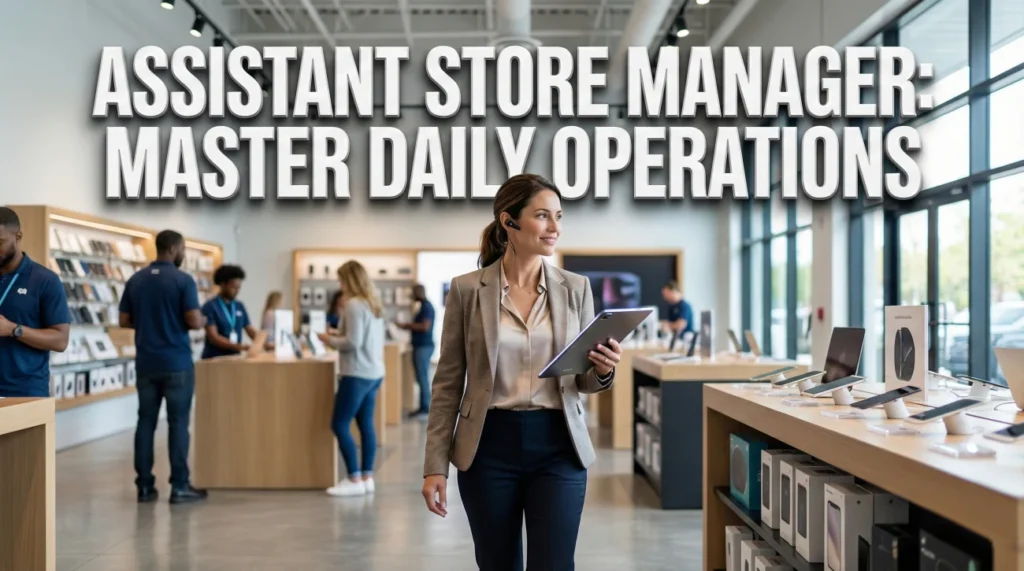
It is 5:10 PM. The fitting rooms are full. A new hire is on the register looking panicked. Two associates are debating who should cover the floor. This is the real exam behind assistant store manager interview questions.
The interviewer is trying to see whether you can pick the next right move without making noise. Who do you send where? What do you say in ten seconds so the team resets? How do you protect customer experience while keeping operations tight? Answer like you are already the MOD: clear priorities, calm voice, and quick follow-through.
Situational Leadership & Conflict
Two associates are arguing on the sales floor in front of customers. What do you do?
I intervene immediately but calmly. I do not scold them publicly. I walk over and quietly say, “Let’s pause this. Please take a 5-minute break in the backroom, and we will discuss this off the floor.” My priority is protecting the customer experience.
Once off the floor, I speak to them individually to get both sides. I make it clear that public conflict is unacceptable regardless of who is right. I then facilitate a mediation to find a resolution so they can finish their shift professionally. If the behavior was egregious (cursing, threats), I involve the Store Manager and HR for formal discipline.
The Store Manager calls in sick on a critical promotion day. You are in charge.
I step up without hesitation. I review the “Game Plan” for the day – sales goals, break schedules, and specific promo tasks. I hold a morning huddle to energize the team and clarify priorities: “Since [Manager Name] is out, I need everyone to be extra sharp on the registers today.”
I position myself on the floor, not in the office, to act as the “quarterback.” I monitor the traffic flow and move staff where they are needed most. At the end of the day, I send a detailed email to the Store Manager summarizing the sales results and any issues so they are fully updated when they return.
An employee refuses to do a task you assigned (insubordination).
I check my communication first. Did I explain why it needs to be done? I approach them privately and ask, “Is there a reason you can’t complete this task?” Sometimes it’s a lack of training or a safety concern.
If it is simple refusal, I restate the expectation clearly: “I need you to recover the denim wall because it’s a safety hazard right now.” If they still refuse, I issue a formal warning according to company policy. I cannot allow insubordination to undermine my authority, but I always try to coach before I correct.
Daily Operations: Opening & Closing
Q: Walk me through your store opening routine.
Why they ask: A bad opening ruins the whole day. They want structure.
Sample Answer: I arrive early to do a perimeter check for safety and cleanliness. I count the safe and prepare the registers. I walk the floor to identify any “recovery opportunities” missed the night before.
I review the sales from yesterday and the goal for today. When the team arrives, I hold a “5-minute startup” meeting to communicate targets and assign zones. I ensure the music is on, the lights are set, and the doors open exactly on time. An organized start sets the tone for a productive day.
Q: How do you handle a “Call-Out” (employee calling in sick) on a busy Saturday?
Why they ask: Resource management under pressure.
Sample Answer: I don’t panic or guilt-trip the employee. I accept the call professionally. I immediately look at the schedule to see who is off and might want extra hours. I call/text available staff.
If no one can cover, I adjust the floor plan. I might pull someone from the stockroom to the floor or delay a non-urgent task (like processing returns) to prioritize customer service. As the ASM, I am prepared to fill the gap myself if necessary, jumping on a register or fitting room to keep the flow moving.
Q: What is your process for closing the store?
Why they ask: Closing is about security and preparation for tomorrow.
Sample Answer: My goal is “Clopening” success – leaving the store perfect for the opener. I supervise the recovery process, ensuring every aisle is zoned. I verify that all fitting rooms are empty and no customers are left in the building.
I reconcile the registers and secure the deposit in the safe, double-checking the math. I arm the alarm system and do a final walk-around. I leave a note for the opening manager about any unresolved issues so there are no surprises in the morning.
Q: How do you manage break schedules legally and efficiently?
Why they ask: Labor law compliance is critical.
Sample Answer: I create a “Break Board” at the start of the shift so everyone knows their time. I stagger breaks to ensure we always have coverage on the floor during peak hours (e.g., no breaks between 12-2 PM if that’s our rush).
I enforce compliance strictly. If an employee misses a meal break, the company gets fined. I monitor the time and remind staff, “Hey, you need to clock out for lunch in 10 minutes to stay compliant.” I protect the company from liability and the staff from burnout.
Management Skills & KPI Analysis
Q: How do you drive UPT (Units Per Transaction) on the floor?
I lead by example. I don’t just stand at the podium; I actively sell. I observe interactions and give “in-the-moment” feedback. “Great job showing that shirt, next time try suggesting the matching belt.”
I run mini-competitions. “First person to add a pair of socks to a shoe sale gets a Starbucks card.” Making it fun and competitive keeps the team focused on building the basket.
Q: What is your approach to theft prevention (Loss Prevention)?
I preach “Customer Service” as the best deterrent. Shoplifters hate attention. I ensure my team greets every person who enters.
I manage the “high-risk” zones (like corners or exits). If I see suspicious behavior, I perform a “recovery statement” like, “Can I take those items to the register for you so you don’t have to carry them?” I follow company policy strictly – observe and report, never chase.
Q: How do you handle cash handling errors by cashiers?
If a register is short, I investigate immediately. Was it a counting error? A change error? Or theft? I review the electronic journal.
For a first minor offense, I retrain the associate on proper counting methods. For repeated errors or large amounts, I document it formally and involve the Store Manager. Cash accuracy is non-negotiable.
Q: How do you support the Store Manager’s vision?
I am their “Right Hand.” I ensure their strategic goals are executed tactically. If the SM wants to focus on “Clienteling,” I am the one checking the client books daily.
I also protect their time. I handle the minor fires (schedule swaps, supply orders) so they can focus on high-level planning. We present a “United Front” to the team – I never badmouth the Manager’s decisions to the staff.
Q: How do you schedule effective floor coverage?
I use the “Zone Defense” strategy. I assign each associate a specific zone (e.g., Fitting Room, Men’s, Cash Wrap) and hold them accountable for maintaining it.
I flex the coverage based on traffic. If a bus of tourists arrives, I pull the stock person to the floor. If it’s dead, I send floor staff to tidy the back. Flexibility is key to efficiency.
Q: How do you evaluate employee performance?
I look at both “Hard Numbers” (Sales, KPIs) and “Soft Skills” (Teamwork, Attitude). A top seller who is toxic to the team is not a high performer.
I keep a “Performance Log” to document wins and opportunities throughout the year, so the annual review isn’t a surprise. I believe in continuous feedback, not just once-a-year feedback.
Team Development & Coaching
Q: Describe a time you coached an associate to improve their performance.
Why they ask: Can you develop talent?
Sample Answer: I had an associate who was great at tasks but terrified of selling. Her conversion rate was low. Instead of writing her up, I role-played with her.
I taught her simple “ice-breaker” questions so she didn’t feel pushy. I shadowed her for a week, giving a “thumbs up” when she engaged well. Within a month, her confidence grew, and her sales numbers met the store average. She just needed tools, not criticism.
Q: How do you handle onboarding a new hire?
Why they ask: First impressions matter for retention.
Sample Answer: I make their first day special. I have their locker ready, their name tag printed, and a welcome note. I assign them a “Buddy” (a seasoned peer) so they aren’t alone.
I follow a structured training checklist so we don’t miss anything (safety, POS, policy). I check in with them at the end of every shift for the first week to ask, “How are you feeling? What questions do you have?” This reduces early turnover significantly.
Q: How do you deal with “Burnout” in your team?
Why they ask: Retail is exhausting. Empathy is required.
Sample Answer: I watch for signs like irritability or lateness. If I see it, I pull them aside and ask, “You seem off, is everything okay?”
I try to be flexible with the schedule if they need a mental health day or a specific weekend off. I also recognize their hard work publicly. A simple “Thank you for crushing that shipment today” goes a long way. People stay when they feel appreciated.
Assistant Manager Competency Quiz
Take the 20-Question Challenge
1. The primary role of an ASM is to:
- Replace the Store Manager immediately
- Support the Store Manager and execute daily operations
- Do all the work so associates can rest
- Stay in the office
2. “Zoning” the floor involves:
- Calculating time zones
- Assigning staff to specific areas and ensuring products are straightened
- Sleeping
- Closing the store
3. If a register crashes during a rush, you should:
- Scream
- Calm the customers, move them to another line, and call IT support
- Close the store
- Ignore it
4. “SPH” stands for:
- Sales Per Hour
- Sales Per Hour
- Staff Per Hour
- Service Per Head
5. “Shrink” is primarily caused by:
- Hot weather
- Internal theft, external theft, and paperwork errors
- High sales
- Vendor bonuses
6. A “Deposit” must be:
- Taken home by the manager
- Counted, verified, secured in a tamper-proof bag, and logged
- Left in the drawer
- Spent on pizza
7. “Visual Standards” refer to:
- The manager’s outfit
- How the merchandise is presented (folding, hanging, signage)
- Eye exams
- The security cameras
8. If an associate is rude to a customer, you should:
- Yell at them in front of the customer
- Intervene to help the customer, then coach the associate privately
- Ignore it
- Join in
9. “Floor Coverage” ensures:
- The floor is carpeted
- There are enough staff to serve customers and prevent theft
- The lights are on
- The roof doesn’t leak
10. A “Planogram” is a guide for:
- Employee vacations
- Product placement and display layout
- Emergency exits
- Financial planning
11. “Onboarding” is the process of:
- Boarding a plane
- Integrating and training a new employee
- Firing someone
- Taking inventory
12. “KPI” stands for:
- Key Person In-store
- Key Performance Indicator
- Keep People Inside
- Key Product Item
13. The “MOD” is the:
- Minister of Defense
- Manager On Duty
- Man Of Day
- Month Of December
14. If a shipment arrives damaged, you must:
- Accept it and say nothing
- Document the damage, notify the vendor/HQ, and adjust inventory
- Sell it at full price
- Throw it in the trash immediately
15. “Payroll Management” involves:
- Paying cash to staff
- Scheduling within a set budget of hours
- Rolling dice
- Asking staff to work for free
16. A “Write-Up” or “Coaching Form” is used to:
- Write a novel
- Document performance issues and steps for improvement
- Compliment someone
- Take a lunch order
17. “Comp Sales” compares sales to:
- Competitors
- The same period last year
- The weather forecast
- Online prices
18. To de-escalate an angry customer, use the method:
- FIGHT (Fight, Ignore, Go, Hide, Tell)
- LAST (Listen, Apologize, Solve, Thank)
- YELL (Yell, Explain, Loudly, Leave)
- RUN
19. “Petty Cash” is used for:
- Small, incidental store expenses (e.g., buying stamps or cleaning supplies)
- Personal lunch money
- Employee bonuses
- Paying rent
20. The ASM should always lead by:
- Fear
- Example
- Force
- Email only
❓ FAQ
🧠 What is the quickest way to prove leadership, not just seniority?
Describe how you reset a shift. Mention one moment where you reassigned coverage, set a short goal, and the floor improved within minutes. Concrete actions beat vague claims every time.
🧯 If two associates argue on the floor, what should I say?
Keep it private and fast. Separate them, state the standard, give the immediate direction, then follow up after the rush. The key is ending the conflict without humiliating anyone.
🧾 What opening and closing details should I mention?
Talk like a checklist: safety scan, register readiness, quick huddle and zone assignments for open; deposits, counts, recovery, lock-up and handoff notes for close.
🪙 How do I talk about numbers without sounding like a robot?
Connect metrics to behaviors. For example, conversion improves when you tighten coverage and coach greet timing. UPT improves when you train bundles and product knowledge.
🧩 What is a clean way to show I can coach?
Use a simple loop: observe, give one focus point, demonstrate, then check in later. Mention that you praise in public and correct in private.
Final Thoughts
Think of this interview as a shift handoff. Your answers should show that you can take control quietly and keep the store running clean. That is the real purpose behind assistant store manager interview questions.
If you want a fast way to close strong, point the conversation back to outcomes and execution: calmer floor, tighter coverage, cleaner recovery, fewer issues repeated. Then send them to the full interview question hub and keep your close confident and simple.
⚠️ Disclaimer: The interview strategies, sample answers, and negotiation tips provided in this guide are for educational purposes only. Hiring decisions are subjective and vary by company and industry. While these strategies are based on professional HR standards, they do not guarantee a specific job offer or result.