The Job With a Stopwatch
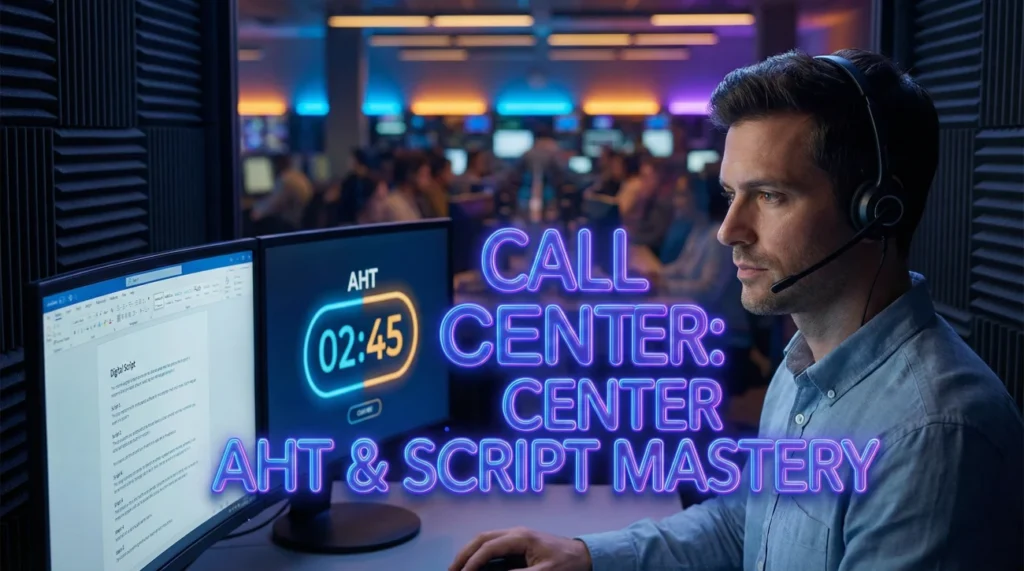
In a call center, you are not only solving problems, you are solving them on the clock. That is why call center representative interview questions try to reveal what happens when the queue is full, systems are slow, and the customer is already fed up.
Hiring managers are listening for controlled pace and clean process. Can you verify fast without sounding like a robot? Can you guide a rambling caller back to the point without sounding rude? Can you document accurately while still keeping your voice calm and steady? The best reps sound unhurried even when they are moving quickly.
This page helps you talk about metrics, scripts, and resilience like someone who has done the work. You will learn how to explain call control, quality habits, and how you keep energy consistent across a long shift.
High-Pressure Scenarios & Scripting
A customer interrupts your mandatory script. How do you handle it?
I pause and let them speak. Interrupting them back creates conflict. Once they finish, I acknowledge their point but gently steer back to the compliance requirement.
I might say, “I completely understand your urgency, and I’m going to help you with that right now. For your security, I just need to quickly read this disclosure so we can proceed.” I make the script sound like a benefit to them (security/protection) rather than a bureaucratic hurdle. I never skip the script if it’s a legal requirement (like in banking or healthcare).
You are on a long call that is ruining your AHT (Average Handle Time). What do you do?
I do not rush the customer or hang up, as First Call Resolution (FCR) is more important than AHT for that single call. However, I use “Call Control” techniques.
I avoid open-ended questions like “Is there anything else?” if we are going in circles. Instead, I recap and close: “So, we have resolved X and Y for you today. I’ll send that confirmation email now.” I take control of the conversation’s pace. I will make up the time on simpler calls later in the day.
Your system freezes while a customer is venting. How do you manage the silence?
Dead air kills rapport. I inform the customer immediately: “Bear with me one moment, my system is just updating your account details.” I do not say “My computer crashed,” which ruins confidence.
While I wait for the reboot or unfreeze, I use the time to build rapport or summarize the issue again. I keep talking to reassure them I am still there. If the delay is long, I offer to call them back so they aren’t wasting their minutes, provided company policy allows outbound calls.
Phone Skills & Process Adherence
Q: How do you handle a “Micromanaged” environment with strict adherence schedules?
Why they ask: Call centers track every second (bathroom breaks, lunch). Can you handle the structure?
Sample Answer: I appreciate the structure because I know that “Adherence” ensures the queue is managed and my teammates aren’t overwhelmed. If I am late from break, the hold times go up for everyone.
I treat my schedule like a flight plan. I log in 5 minutes early to troubleshoot IT issues. I watch the queue board. If I need a personal moment, I communicate with my Team Lead rather than just disappearing. I understand that my availability directly impacts the service level.
Q: How do you maintain energy on call #80 of the day?
Why they ask: “Compassion Fatigue” is real. They need consistency.
Sample Answer: I use the “Reset” technique. As soon as a call ends, I take a deep breath and let go of that interaction. When the next beep sounds, I treat it like the first call of the day.
I also use my posture. Sitting up straight or standing (if I have a standing desk) changes my voice tone. I smile while talking because it genuinely changes how my voice sounds (“Smiling Dialing”). To that 80th customer, I am their first interaction with the company, and they deserve my best energy.
Q: Describe your experience with Quality Assurance (QA) scoring.
Why they ask: Can you take feedback? QA scores determine your bonus.
Sample Answer: I view QA as a coaching tool, not a punishment. In my last role, we were scored on greeting, empathy, verification, solution accuracy, and closing.
If I lost points, for example, for forgetting to brand the closing (“Thank you for choosing [Company]”), I would put a sticky note on my monitor as a reminder until it became a habit. I actively asked to listen to my own calls during coaching sessions to hear what the customer hears.
Q: How do you handle a customer who demands a supervisor immediately?
Why they ask: Escalations cost money. They want you to de-escalate.
Sample Answer: I try to save the call once. I say, “I can certainly get a supervisor for you, but they will likely have to ask you the same questions to understand the issue. Since I’m already here and have access to your account, may I try to resolve this for you first?”
If they insist, I don’t argue. I place them on a brief hold, brief the supervisor (so the customer doesn’t have to repeat themselves), and transfer warmly. Blocking a customer only makes them angrier.
Metrics (KPIs) & Industry Terms
Q: What is “AHT” and how do you lower it without rushing?
AHT (Average Handle Time) includes talk time, hold time, and after-call work. I lower it by controlling the conversation flow.
I use “Signposting” to tell the customer exactly what I am doing so they don’t ask unnecessary questions. I also multitask – typing notes while they are talking – to reduce the After Call Work (ACW) time. Efficient system navigation reduces AHT more than speaking fast does.
Q: What is “First Call Resolution” (FCR)?
FCR measures the percentage of calls resolved without the customer needing to call back. It is the most critical metric for customer satisfaction.
I improve FCR by anticipating the “Next Question.” If they call to activate a card, I also help them set up the online app so they don’t call back later for login help. I ask, “Is there anything else?” before hanging up.
Q: What does “Adherence” mean in a call center?
Adherence is the percentage of time I am actually doing what my schedule says I should be doing. If I am scheduled to be on the phones at 8:00 AM, being “Available” at 8:00 AM is 100% adherence.
Logging in at 8:02 AM hurts the team’s service level. I respect the Workforce Management (WFM) planning by sticking to my assigned breaks and lunch times to the minute.
Q: Explain “After Call Work” (ACW) or “Wrap Time”.
ACW is the time spent after the customer hangs up to finish notes or tasks. High ACW kills productivity because I am not available for the next call.
I keep ACW low by taking detailed notes during the call using shorthand. I aim to click “Ready” for the next call within 30 seconds of hanging up. I don’t use ACW as a break time.
Q: What is “Service Level” (e.g., 80/20)?
Service Level is a goal to answer X% of calls within Y seconds (e.g., 80% of calls in 20 seconds). It measures the center’s accessibility.
While I can’t control the volume, I contribute to Service Level by being available when scheduled and keeping my AHT efficient. If the queue is backing up, I know I need to be more concise to help clear the line.
Q: How do you handle “Authentication” or “Verification”?
This is the security step (asking for Name, DOB, last 4 of SSN). I do it immediately at the start of the call.
If a customer refuses or fails verification, I cannot discuss the account. I explain politely, “To protect your privacy, I cannot access the details without verification.” I stick to the script strictly here because a breach is a fireable offense.
Problem Solving & Resilience
Q: Describe a time you dealt with an angry customer who was shouting.
Why they ask: Resilience check. Do you cry or cope?
Sample Answer: I had a caller furious about a billing error. He was shouting over me. I let him vent for about 30 seconds without interrupting – sometimes they just need to be heard.
When he paused for breath, I lowered my voice (which forced him to listen harder) and said, “I can hear how frustrating this is, and I want to fix this billing error for you right now.” By naming the problem and offering an immediate action, I shifted him from “emotional brain” to “problem-solving brain.” We resolved it in 5 minutes.
Q: How do you navigate a Knowledge Base (KB) while on a call?
Why they ask: Multitasking and resourcefulness.
Sample Answer: I use keywords. I don’t read the article silence. I say, “I’m just pulling up the specific article on that model to make sure I give you the right steps.”
I scan for the solution while engaging the customer. If the KB is unclear, I use my team chat to ask a quick question to a senior rep. I prioritize giving the correct information over a guess, as guessing leads to callbacks.
Q: What do you do if you realize you gave the customer the wrong information?
Why they ask: Integrity vs. Ego.
Sample Answer: If they are still on the line, I correct it immediately: “I apologize, I misspoke. I just double-checked, and actually…”
If the call ended, I notify my supervisor immediately. We usually have a process to do an “outbound recovery call” or send a correction email. Hiding the mistake is worse because the customer will find out eventually and lose trust in the brand.
Call Center Competency Quiz
Take the 20-Question Challenge
1. “AHT” stands for:
- All Handle Time
- Average Handle Time
- After Hours Time
- Agent Help Ticket
2. “Dead Air” is:
- A dropped call
- Silence on the line that makes the customer wonder if you are there
- A rude customer
- The end of the shift
3. “ACW” (After Call Work) should be used to:
- Take a break
- Complete notes and tasks related to the previous call
- Call your mom
- Check social media
4. “Verification” or “Authentication” protects:
- The company’s time
- The customer’s privacy and data security
- The phone lines
- The manager
5. If you put a customer on hold, you must first:
- Say nothing
- Ask permission and provide a time estimate
- Sigh loudly
- Press the mute button only
6. “FCR” means:
- Fast Call Response
- First Call Resolution
- Free Customer Refund
- Final Call Review
7. “Adherence” measures:
- How nice you are
- How closely you stick to your assigned schedule
- How fast you type
- How many sales you made
8. A “Script” is used to ensure:
- Robotic responses
- Consistency, compliance, and legal protection
- Agents don’t have to think
- Calls are long
9. “Talk Time” is:
- Time spent gossiping
- The duration the agent is speaking with the customer
- Time spent on hold
- Time spent in training
10. If a customer is abusive, you should:
- Yell back
- Follow the abusive caller protocol (warn/terminate)
- Cry
- Take it personally
11. “Escalation” means:
- Going up an elevator
- Transferring the call to a higher level of support or management
- Hanging up
- Speaking louder
12. The “Mute” button allows you to:
- Listen without being heard (for coughing/sneezing)
- Listen without being heard (for coughing/sneezing)
- Ignore the customer
- Put the customer on hold music
13. “IVR” stands for:
- International Voice Recording
- Interactive Voice Response (the automated menu system)
- Internal Verification Rule
- Internet Voice Relay
14. “Queue” refers to:
- A straight line
- The line of customers waiting to be answered
- The letter Q
- The exit
15. “QA” stands for:
- Question Answer
- Quality Assurance
- Quick Action
- Quiet Area
16. To control a rambling customer, you should:
- Interrupt rudely
- Acknowledge their point and pivot to a closed question
- Hang up
- Let them talk forever
17. “Empathy” is:
- Agreeing with the customer’s demands
- Understanding and validating the customer’s feelings
- Feeling sorry for them
- Reading a script
18. “Multitasking” in a call center means:
- Talking to two customers at once
- Typing notes and navigating systems while listening and talking
- Eating while talking
- Texting friends
19. If you don’t know the answer, you should:
- Guess
- Use your resources (KB, Team Lead) to find the correct answer
- Make something up
- Say “I don’t know” and silence
20. The most important voice quality is:
- Volume
- Tone and clarity
- Speed
- Accent
❓ FAQ
⏱️ What do interviewers mean by “call control”?
Call control is how you keep the conversation moving toward a solution. It includes asking closed questions, summarizing often, setting next steps, and preventing long detours without making the customer feel rushed.
🧾 How do I talk about AHT without sounding like I rush people?
Frame efficiency as clarity. You lower AHT by reducing confusion, not by speeding your voice. Mention quick verification, accurate troubleshooting, and writing notes during the call so wrap time stays short.
🎧 What if I have never worked with QA scoring before?
Show that you like feedback and standards. Explain that you can follow scripts, accept coaching, and self-correct. If you can describe how you would review a call and improve one behavior, you will sound coachable.
🧊 How do I handle a caller who is angry from the first second?
Acknowledge emotion, then anchor the next step. A simple line like “I hear you, let me pull up the account so we can fix this” resets the tone. Keep your voice lower and slower, and avoid debating blame.
📞 When should I escalate to a supervisor?
Escalate when policy requires it, the customer requests it after you have tried one resolution path, or the case involves risk like fraud or safety. In interviews, emphasize that you brief the supervisor so the customer does not repeat the story.
Final Thoughts
To stand out in a hiring process, your answers to these call center representative interview questions should prove you can be consistent under volume. Teams want reps who follow verification and compliance, keep notes clean, and still sound patient on the toughest calls.
If you can explain how you manage time without sacrificing accuracy, handle conflict without taking it personally, and treat quality checks as coaching, you will come across as the steady voice a call center needs every day.
⚠️ Disclaimer: The interview strategies, sample answers, and negotiation tips provided in this guide are for educational purposes only. Hiring decisions are subjective and vary by company and industry. While these strategies are based on professional HR standards, they do not guarantee a specific job offer or result.