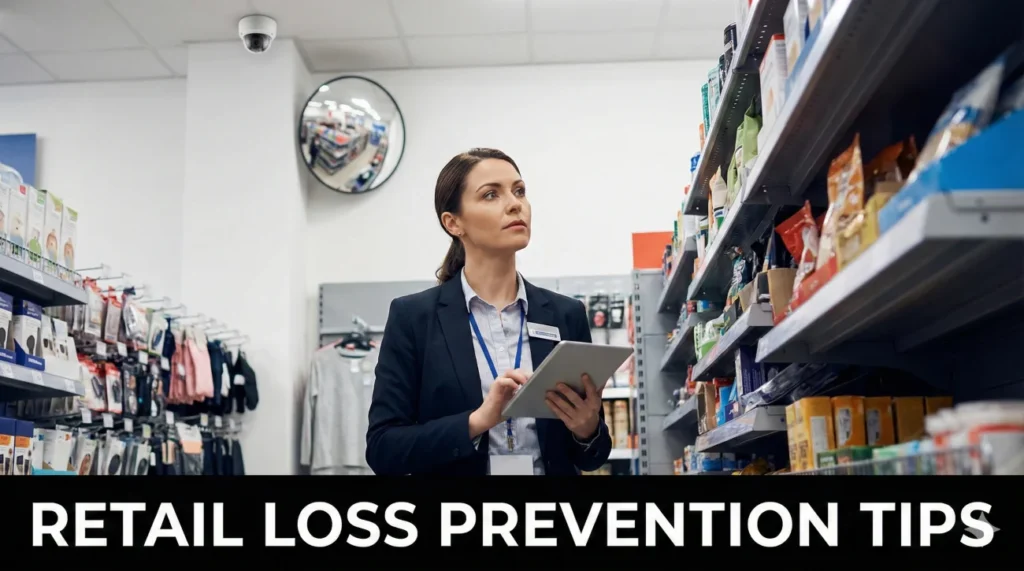
- Why it matters: Retail loss prevention tips reduce shrink and protect profitability, pricing stability, and employee safety.
- What to watch: Spotting shoplifters should focus on observable behaviors, staff scanning, blind-spot looping, concealment setups, and distraction pairs, never profiling.
- How theft happens: Common methods include concealment, bag or tag switching, walkouts, fitting room theft, return fraud, and self-checkout fraud.
- What to do safely: Use strong customer service, stay visible, document facts, alert management, and follow protocol, without accusing, detaining, touching, or chasing.
- Build deterrence and readiness: Improve layout visibility and high-value controls, tighten daily routines and internal theft safeguards, and explain a balanced service-first mindset in interviews.
Recognizing Suspicious Behavior Patterns
Professional spotting shoplifters relies on recognizing behavioral patterns rather than profiling based on appearance or demographics.
Common Theft Indicators
Certain behaviors statistically correlate with theft attempts, warranting increased attention without accusation.
| Behavior Category | Specific Indicators | What It Suggests |
|---|---|---|
| Awareness of staff | Constantly looking for employees, watching cameras, nervous when approached | Attempting to identify surveillance gaps and monitoring employee positions |
| Selection patterns | Handling many items but not examining closely, picking same item repeatedly, selecting without regard to size/fit | Focused on concealment opportunity rather than genuine shopping interest |
| Movement patterns | Wandering aimlessly, lingering in blind spots, repeatedly entering/exiting same area | Seeking concealment opportunities and testing staff awareness |
| Concealment attempts | Using large bags/strollers unnecessarily, wearing bulky clothing in warm weather, holding merchandise awkwardly | Creating hiding places for stolen merchandise |
| Group dynamics | One person distracts staff while others move freely, excessive talking/noise drawing attention | Coordinated theft with distraction tactics splitting employee attention |
Never profile based on age, race, gender, appearance, or economic indicators. Shoplifters span all demographics. Focus exclusively on observable behaviors: what people do, not who they are. Profiling is ineffective, illegal, and creates discrimination claims damaging business and reputation.
Common Theft Methods
Understanding how merchandise gets stolen enables recognizing attempts in progress.
- Concealment: Hiding items in bags, pockets, clothing, or other merchandise before exiting without payment
- Bag switching: Placing store items in personal bags or switching tags between items
- Walkout theft: Simply walking out with unpaid merchandise, often high-value visible items
- Fitting room theft: Wearing store clothing under personal clothes, removing tags in privacy
- Return fraud: Returning stolen merchandise for cash/credit, using fake receipts, wardrobing (wearing then returning)
- Self-checkout fraud: Not scanning items, scanning cheaper items, manipulating weight sensors
Expert advice: The best theft deterrent is excellent customer service. Greeting customers promptly, maintaining floor presence, offering assistance frequently makes would-be shoplifters uncomfortable and often causes them to leave. Thieves prefer stores where employees ignore customers or hide in back rooms. Your attentive service protects inventory more effectively than aggressive surveillance.
Safe Response Procedures
Security protocols retail environments prioritize employee safety while protecting assets through systematic, professional responses.
Observation and Documentation
When suspicious behavior observed, systematic documentation enables effective response and potential prosecution.
| Documentation Element | What to Record | Why It Matters |
|---|---|---|
| Physical description | Height, build, clothing, distinguishing features, no assumptions about identity | Enables identification if person leaves then returns, helps loss prevention or police |
| Actions observed | Specific behaviors: “placed phone in jacket pocket,” not “acted suspicious” | Objective observations create credible reports, vague impressions lack legal weight |
| Time and location | Exact timestamps, store areas, witness names | Correlates with security footage, verifies continuous observation for prosecution |
| Merchandise details | Items concealed, quantities, values, condition | Establishes theft value determining legal consequences, proves inventory loss |
Customer Approach Guidelines
Most retailers prohibit employees from directly confronting suspected shoplifters due to safety and liability concerns.
- ✅ Do: Provide excellent service approaching suspiciously acting customers offering help, which often deters theft
- ✅ Do: Maintain visibility staying in area, straightening merchandise, showing active presence
- ✅ Do: Alert management/security immediately when observing theft indicators or active concealment
- ✅ Do: Document thoroughly writing down observations for loss prevention team
- ❌ Don’t: Accuse customers even when certain theft occurred, accusations create legal liability
- ❌ Don’t: Pursue or detain unless specifically trained and authorized as loss prevention officer
- ❌ Don’t: Touch customers or physically block exits, preventing battery and false imprisonment claims
- ❌ Don’t: Chase into parking lot extreme danger from vehicles, weapons, accomplices
Incident Response Protocol
When theft occurs, systematic response protects people while preserving evidence and enabling investigation.
- Prioritize safety: No merchandise worth injury or death, let thieves go if confrontation escalates
- Call authorities immediately: Dial 911 for robberies (theft with threat/force), contact police for serious theft
- Preserve evidence: Don’t touch areas suspect touched, save security footage, photograph damage
- Witness statements: Interview employees and customers who observed incident while memories fresh
- Complete reports: Fill out all company incident documentation thoroughly and honestly
- Follow-up cooperation: Assist police investigation, provide requested materials, testify if needed
💡 Pro tip: Your safety matters more than any amount of stolen merchandise. Companies carry insurance for inventory loss but cannot replace injured employees. If situation feels dangerous, back away, call police, let professionals handle it. No employer should want you risking harm for products.
Creating Deterrent Environment
Proactive loss prevention techniques reduce theft through environmental design, operational practices, and employee awareness.
Store Layout and Design
Physical environment design significantly impacts theft opportunity and detection likelihood.
| Design Element | Loss Prevention Impact | Implementation |
|---|---|---|
| Clear sightlines | Eliminates blind spots enabling concealment | Low shelving, strategic mirror placement, organized merchandise not creating barriers |
| High-value placement | Keeps expensive items under surveillance | Locate near registers or in locked cases, security tags on all high-value merchandise |
| Fitting room control | Reduces concealment in private spaces | Count items in/out, maintain room checks, limit quantities, attendant presence |
| Exit positioning | Enables observation of all departing customers | Single controlled exit when possible, cashier view of doors, greeters monitoring |
| Camera visibility | Visible surveillance deters opportunistic theft | Obvious camera placement supplementing hidden cameras, signage about surveillance |
Operational Theft Prevention
Daily practices and procedures reduce theft opportunity systematically.
- Customer greetings: Acknowledge every customer entering, making potential shoplifters feel noticed and watched
- Floor coverage: Maintain employee presence in all areas, rotate positions preventing predictable gaps
- Bag checks: Inspect large bags, backpacks at entrance when permitted by policy and signage
- Receipt verification: Check receipts for high-value items leaving store, professional and courteous approach
- Inventory accuracy: Regular counts identifying shrinkage patterns, targeting problem areas and times
- Return scrutiny: Verify receipts for returns, check item condition, watch for fraud patterns
Internal Theft Awareness
Employee theft often exceeds shoplifting losses, requiring different prevention approaches.
- 🔍 Common methods: Cash theft, fraudulent refunds/voids, employee discounts for friends, taking merchandise directly
- 🚨 Warning signs: Lifestyle inconsistent with salary, defensive about procedures, excessive voids/discounts, accessing areas unnecessarily
- ✅ Prevention: Dual control for cash, manager approval for large transactions, bag checks for all employees, rotation of duties
- ⚖️ Response: Report suspicions to management privately, never confront coworkers directly, cooperate with investigations
Expert advice: Strong loss prevention culture comes from top down. Management must demonstrate commitment through adequate staffing, proper training, enforcing policies consistently, and prosecuting theft regardless of amount. Employees take cues from leadership: if managers ignore small thefts or cut floor coverage to save labor costs, staff won’t prioritize prevention either.
For comprehensive retail safety training and interview preparation, review our detailed career development guides covering security scenarios and customer service strategies.
Loss Prevention Interview Topics
Retail interviews often assess loss prevention awareness through scenario questions and knowledge checks.
Typical Loss Prevention Questions
Prepare thoughtful responses demonstrating balanced approach to theft prevention and customer service.
- “What would you do if you saw someone shoplifting?” Emphasize safety first, following company protocol, documenting observations, alerting management, never confronting directly
- “How do you balance customer service with theft prevention?” Explain that excellent service deters theft, maintaining friendly presence without profiling, treating all customers respectfully
- “Describe signs of potential shoplifting.” Focus on behaviors not demographics, give specific examples, note you’d observe not accuse
- “How would you handle a customer setting off exit alarms?” Approach professionally, check bags/tags courteously, assume innocence while verifying, call management if needed
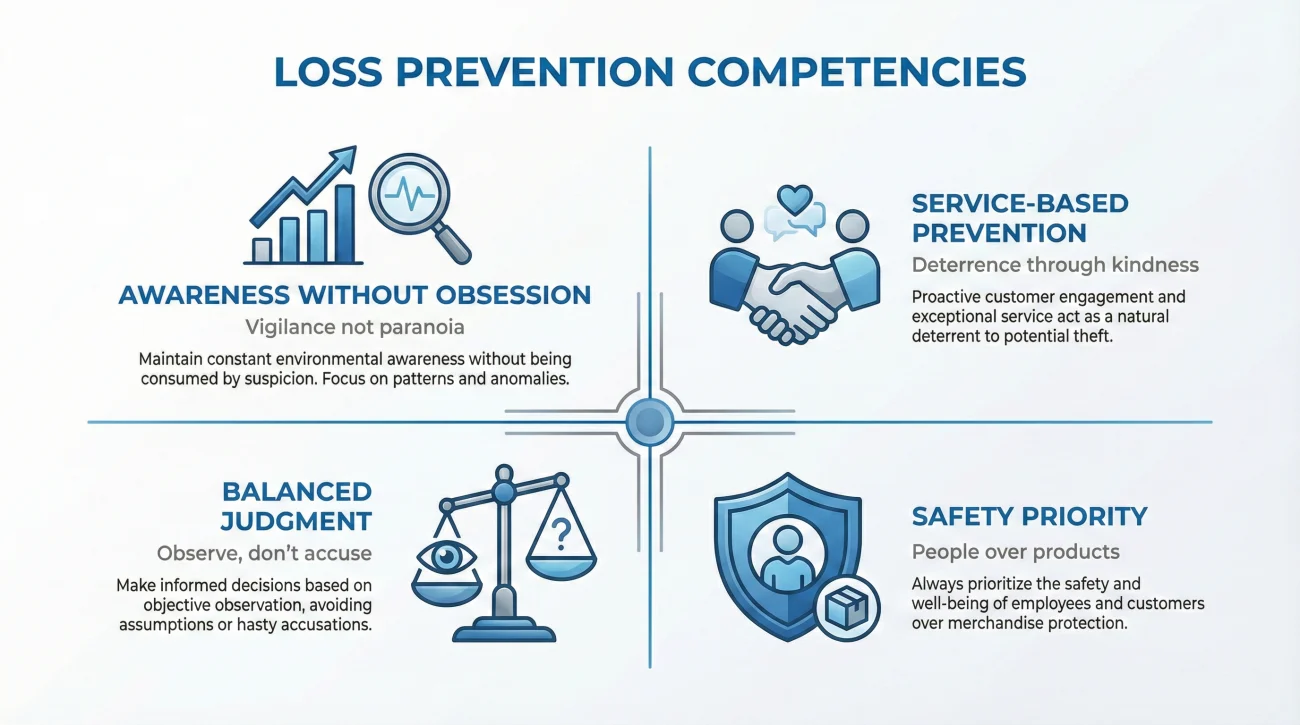
Demonstrating Loss Prevention Competency
Show understanding without appearing paranoid or likely to create hostile environment for innocent customers.
- 📊 Awareness without obsession: Acknowledge theft happens but emphasize serving honest customers well
- 🤝 Service-based prevention: Explain how attentive customer service naturally deters theft through presence
- ⚖️ Balanced judgment: Recognize suspicious behavior merits attention without jumping to accusations
- 🛡️ Safety priority: Make clear you’d never risk personal safety for merchandise protection
❓ FAQ
🎯 Can I be fired for not stopping a shoplifter?
Most retailers prohibit employees from physically confronting shoplifters, so you cannot be fired for following policy and prioritizing safety. However, you can be disciplined for ignoring obvious theft without alerting management or documenting incident. Employers expect awareness and appropriate response (service, documentation, notification), not heroics. Your job is observing and reporting, not enforcement.
💼 What if I’m wrong about someone shoplifting?
This is why most retailers prohibit employee accusations or detention. Only trained loss prevention officers with clear observation protocols should approach suspected shoplifters. As regular employee, your role is documenting suspicious behavior and alerting management, not making accusations. If you follow proper procedures (observe, document, report), being wrong about suspicions creates no liability because you never confronted or accused the person.
⏰ Should I chase someone who runs out with merchandise?
Absolutely not. Parking lots present extreme danger: vehicles, weapons, accomplices, and unknown variables. No merchandise justifies risking your life. Let them go, immediately call police with description and direction of travel, preserve any evidence left behind, document what occurred. Employers universally prohibit pursuit beyond store perimeter, and you’d likely be fired for violating policy even if successful.
📋 How do I handle suspected employee theft?
Report suspicions to management privately and immediately, providing specific observations not general feelings. Never confront coworker directly: this creates hostile environment, tips them off enabling evidence destruction, and potentially endangers you if accusation angers them. Management and loss prevention professionals have investigative tools and authority you lack. Your responsibility is reporting concerns, not conducting investigations or playing detective with colleagues.
✨ How do I discuss loss prevention in interviews without seeming paranoid?
Frame loss prevention as natural part of good customer service rather than primary focus. Emphasize that excellent service (greeting customers, maintaining presence, offering assistance) naturally deters theft while creating positive shopping experience for honest customers. Mention awareness of common theft indicators but stress you’d never profile customers or make accusations. Show balanced perspective: acknowledge theft exists requiring vigilance while maintaining welcoming environment for legitimate shoppers.
Final Thoughts
Effective retail loss prevention tips balance protecting inventory with maintaining welcoming environment and prioritizing safety. Strong prevention comes through excellent customer service making shoplifters uncomfortable, environmental design eliminating concealment opportunities, and systematic operational practices reducing theft without creating fortress mentality alienating honest customers.
⚠️ Disclaimer: The interview strategies, sample answers, and negotiation tips provided in this guide are for educational purposes only. Hiring decisions are subjective and vary by company and industry. While these strategies are based on professional HR standards, they do not guarantee a specific job offer or result.