The Guardian of Profitability
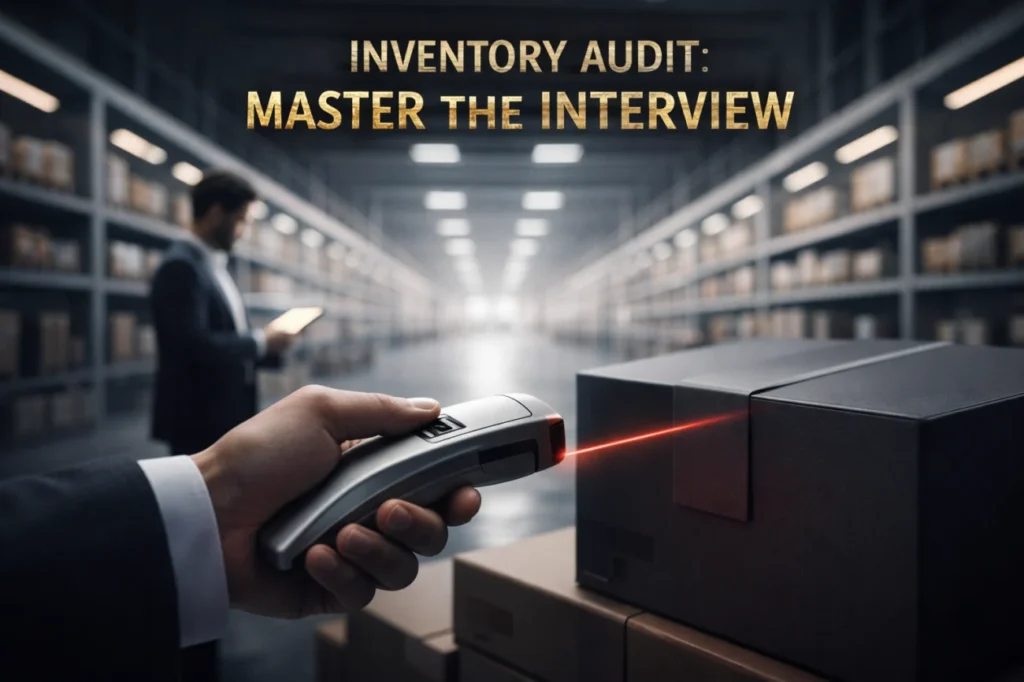
Inventory specialist interview questions are designed to find the meticulous professionals who stand between a company’s profit and its losses. In the fast-paced retail and logistics environment, an Inventory Specialist is not just someone who counts boxes. They are data analysts, investigators, and operational auditors all rolled into one. With the rise of Omnichannel retailing, where a single unit of stock might be sold in-store, online, or via a third-party marketplace, the accuracy of inventory data has never been more critical.
Hiring managers are looking for candidates who understand “Inventory Velocity” and “Shrinkage Analysis.” They want to know: Can you trace a discrepancy back to a receiving error from three months ago? Can you operate complex Warehouse Management Systems (WMS) like SAP, Oracle, or NetSuite? Can you lead a physical inventory audit without shutting down operations? This guide covers the essential Audits & Accuracy strategies to prove you are the reliable backbone of the supply chain.
Scenario-Based: Integrity & Pressure
A Warehouse Manager asks you to adjust a count to match the system so they can hit their bonus targets.
This is a critical integrity test. I would respectfully but firmly decline. I would say, “I understand the pressure to hit targets, but my role exists to ensure the data reflects reality. If I falsify the count now, it will only create a larger write-off later, which will look even worse.”
I would then offer to help find the actual missing inventory. Perhaps it was misplaced in a different bin or is sitting in the returns pile unprocessed. I focus on solving the root problem rather than covering it up. If they persist, I would document the conversation and report it to the Operations Director or HR, as falsifying company records is fraud.
You discover a large discrepancy in a high-value item just hours before a major shipment is due.
Panic is the enemy of accuracy. I immediately freeze movement for that SKU. I verify the physical count personally to ensure it wasn’t a counting error. I then run a “Transaction History” report in the WMS to see all recent movements.
Often, high-value items are staged in a secure cage or have been “allocated” to an order but not physically moved. I check the staging lanes and the packing area. If the items are truly gone, I notify the shipping manager immediately so we can short-ship the order proactively and inform the customer, rather than sending a “ghost shipment.” Transparency preserves the customer relationship.
A sales associate keeps taking items from the stockroom without scanning them out “for a quick demo.”
I approach them with an educational mindset, not a punitive one. I explain the downstream impact: “When you grab a demo unit without scanning it, the system thinks it’s still here. If a customer orders it online for pickup, they will come in and we won’t have it, which causes a complaint.”
I set up a dedicated “Demo Bin” in the system and transfer specific units to it. This allows the sales team to do their job without wrecking my inventory accuracy. I create a process that is easy for them to follow, so compliance becomes the path of least resistance.
Technical Audits & Methodologies
Q: What is Cycle Counting and why is it superior to an Annual Physical Inventory?
Cycle Counting is the continuous process of auditing a small subset of inventory daily, ensuring that every item is counted at least once over a set period (e.g., quarterly). This is superior to an Annual Physical because it identifies errors in real-time.
With an annual count, an error could exist for 11 months, causing lost sales and reordering issues. Cycle counting fixes the error immediately and allows us to identify the cause (e.g., a new employee making receiving errors) and correct it before it affects thousands of other items. It also eliminates the need to shut down the business for 3 days to count everything at once.
Q: Explain the “ABC Analysis” method in inventory management.
ABC Analysis categorizes inventory based on value and turnover importance. “A” items are high-value/high-velocity (top 20% of items accounting for 80% of value). “B” items are moderate. “C” items are low-value/slow-moving.
I use this to prioritize cycle counts. “A” items might be counted weekly because a variance there is expensive. “C” items might only be counted twice a year. This ensures we focus our labor hours where the risk is highest, rather than counting boxes of paperclips with the same frequency as iPhones.
Q: How do you investigate “Phantom Inventory”?
Phantom Inventory occurs when the system thinks we have stock, but the shelf is empty. This kills sales because the automated reordering system won’t trigger a buy. I investigate by checking three places: Mis-picks (was it shipped instead of another item?), Mis-receivings (was it keyed in but never arrived?), and Theft.
I look for patterns. If phantom inventory spikes after a specific truck delivery, I audit the receiving process. Once confirmed missing, I perform a negative adjustment immediately to trigger a replenishment order. “Clean data” is more important than hiding a loss.
Q: What is your experience with WMS (Warehouse Management Systems)?
I am proficient in [Insert System: e.g., SAP, NetSuite, Blue Yonder]. I understand that a WMS is only as good as the data entered. I am comfortable using RF scanners, generating variance reports, and performing bin transfers.
I also understand the “Logic” behind the WMS – specifically how it prioritizes picking logic (FIFO vs. FEFO). In my last role, I was a “Super User” who helped troubleshoot scanner connectivity issues and trained new hires on the proper sequence of keystrokes to prevent data corruption.
Q: How does RFID technology change inventory auditing?
RFID (Radio Frequency Identification) allows for non-line-of-sight counting. Instead of scanning every barcode individually, I can wave an RFID reader and count hundreds of items in seconds. This increases count frequency and accuracy dramatically.
However, RFID has challenges, such as “tag collision” or reading items through walls. I ensure accuracy by cross-referencing RFID scans with spot-checks. I also verify that tags are properly encoded at receiving. RFID makes inventory faster, but human oversight ensures it is actually correct.
Q: What is the difference between FIFO and LIFO, and when do you use them?
FIFO (First In, First Out) is standard for retail, especially perishables or items with expiration dates. We ship the oldest stock first to prevent spoilage or obsolescence.
LIFO (Last In, First Out) is rare in physical retail operations but used in accounting or for non-perishable bulk commodities (like gravel or coal) where you grab from the top of the pile. As an Inventory Specialist, I enforce FIFO strictly in the warehouse by organizing pallet flow racks so the picker naturally grabs the oldest box first.
Root Cause Analysis & Problem Solving
Q: We have a high rate of shipping errors. How do you investigate?
Why they ask: They want a problem solver, not just a reporter. Errors cost money in returns and shipping fees.
Sample Answer: I start by analyzing the error data. Is it a specific SKU? A specific picker? A specific shift? If it’s a specific SKU, I check the “Pick Face.” Often, two similar-looking products are slotted right next to each other, causing visual confusion.
I would propose separating those items or using “scan verification” where the system alerts the picker if they scan the wrong barcode. If it’s a specific employee, I would observe their process to see if they are skipping the verification step. I look for systemic fixes – like better signage or bin labeling – rather than just blaming the staff.
Q: How do you handle “Damaged in Transit” goods arriving at the dock?
Why they ask: Accepting damaged goods means the company pays for them. This is a financial control question.
Sample Answer: I inspect the freight before the driver leaves. If a pallet looks crushed or tampered with, I note the specific damage on the Bill of Lading (BOL) and have the driver sign it. This is crucial for filing a claim later.
I then segregate the damaged product into a “Quarantine” area so it doesn’t get mixed into sellable inventory. I take photos and notify the purchasing department immediately. I do not enter it into the WMS as “Available”; I enter it as “Damaged/Hold” so the system knows it exists but cannot be sold.
Q: How do you explain a complex inventory variance to a Store Manager who hates math?
Why they ask: Communication skills. You need to bridge the gap between data and operations.
Sample Answer: I avoid jargon like “variance coefficients.” I use money and customer impact. Instead of saying “We have a 2% variance in category 4,” I say, “We lost $5,000 worth of denim last month because the returns weren’t processed correctly.”
I show them the physical evidence – perhaps a pile of un-scanned tags in the fitting room. I provide a simple solution: “If we add a ‘scan bucket’ at the register, we can fix this.” I frame the data as a tool to help them increase their bonus, which gets their buy-in.
Q: How do you prepare for a full Wall-to-Wall inventory count?
Why they ask: This is the Super Bowl of inventory. It requires massive logistical planning.
Sample Answer: Preparation starts 4 weeks out. I run a “Cut-Off” plan to clear all pending transactions in the system. I ensure the warehouse is “Zoned” – every rack, shelf, and bin is labeled and mapped.
I organize a “Pre-Count” of slow-moving areas (like seasonal storage) so we don’t have to count them on the main day. I verify that all scanners are charged and Wi-Fi coverage is stable. On the day of, I brief the team on the procedure: “Count, Tag, Verify.” A successful count is 90% preparation and 10% counting.
Safety & Compliance
Q: You see a pallet stored unsafely on a high rack. What do you do?
Why they ask: Safety is the #1 priority in logistics. Unsafe storage kills.
Sample Answer: I stop work in that aisle immediately. I block off the area with cones or tape so no one walks under it. I locate a certified forklift driver (or do it myself if certified) to bring the pallet down and restack it correctly.
I check the wrapping – was it loose? Was the pallet broken? I inspect the rack for damage. I then hold a brief “Safety Stand-down” with the team to remind them of the “3-inch overhang” rule and proper stacking. I report the near-miss to the Safety Officer so we can track trends.
Q: How do you manage Hazardous Materials (HazMat) inventory?
Why they ask: Compliance. Wrong storage leads to fines and fires.
Sample Answer: I ensure I have the Safety Data Sheets (SDS) readily available for every chemical. I follow segregation rules – for example, never storing oxidizers next to flammables.
I check that the HazMat area has proper spill containment pallets and fire suppression. When receiving HazMat, I verify the labeling is compliant with DOT regulations. If a label is faded or missing, I re-label it immediately before putting it away. I treat these items with extreme caution.
Inventory Management Knowledge Quiz
Take the 20-Question Challenge
1. “Cycle Counting” is best defined as:
- Counting inventory while riding a bicycle
- Counting small subsets of inventory on a rotating schedule
- Counting only once a year
- Guessing the inventory numbers
2. “WMS” stands for:
- Web Management System
- Warehouse Management System
- Work Material Supply
- Weekly Meeting Schedule
3. An “SKU” is a:
- Sales Key User
- Stock Keeping Unit (Unique Identifier)
- Safe Kitchen Unit
- Shipping Kit Usage
4. “FIFO” is used to prevent:
- Theft
- Spoilage and Obsolescence
- Over-ordering
- Under-staffing
5. “Shrinkage” in inventory refers to:
- Plastic wrap shrinking
- The difference between recorded and actual inventory (Loss)
- Products getting smaller
- Reducing staff size
6. In ABC Analysis, “A” items represent:
- The items that start with the letter A
- High-value, high-velocity items requiring strict control
- Low-value items like pens
- Broken items
7. A “Bill of Lading” (BOL) is:
- A bill for lunch
- A legal document between shipper and carrier detailing the cargo
- A list of employees
- A warehouse map
8. “Lead Time” is:
- The time the manager leads the meeting
- The time between placing an order and receiving it
- The weight of the lead in the product
- The time to count inventory
9. “Safety Stock” is held to:
- Keep the warehouse safe
- Buffer against demand spikes or supply delays
- Test safety equipment
- Fill empty shelves
10. “RFID” technology uses:
- Lasers
- Radio Waves
- Sound Waves
- Cameras
11. A “Pick Face” is:
- A happy expression
- The specific location where an item is picked for orders
- The front of the warehouse
- A picture of the product
12. If you find a “Variance,” you should:
- Ignore it if it’s small
- Investigate, recount, and document the root cause
- Hide it
- Blame the new guy
13. “Cross-Docking” involves:
- Crossing the dock safely
- Unloading materials and immediately loading them for outbound shipping with minimal storage
- Storing items for a long time
- Refusing a shipment
14. “Dead Stock” refers to:
- Dangerous chemicals
- Items that have not sold or moved for a long period
- Items that are broken
- Ghost inventory
15. The “Reorder Point” (ROP) is:
- The point where you reorganize the shelf
- The inventory level that triggers a replenishment order
- The maximum stock allowed
- The end of the aisle
16. “Palletizing” means:
- Making pallets out of wood
- Stacking and securing goods onto a pallet for transport
- Cleaning pallets
- Burning pallets
17. A “Blind Count” is when:
- You count with your eyes closed
- The counter does not know the system quantity beforehand (to ensure unbiased accuracy)
- You count in the dark
- You guess the number
18. “Obsolete Inventory” should be:
- Kept forever just in case
- Written off, liquidated, or donated to free up space/cash
- Hidden in the back
- Sold at full price
19. “Just-in-Time” (JIT) inventory aims to:
- Have massive stockpiles
- Receive goods only as they are needed to reduce holding costs
- Delay orders as long as possible
- Always be late
20. The most common cause of inventory inaccuracy is:
- The computer breaking
- Human error (data entry, picking, receiving)
- Aliens
- Power outages
❓ FAQ
🚜 Do I need a forklift license?
It is highly advantageous. While some “Inventory Specialist” roles are purely clerical (desk-based), most require you to get into the racks to verify counts. Being certified on a Reach Truck or Cherry Picker makes you much more valuable and independent.
🥶 Is the environment cold?
If you work in Food & Beverage or Cold Chain logistics, yes. You might be working in -20°F freezers auditing ice cream. Even in general warehousing, facilities are often not climate-controlled, meaning hot summers and cold winters. Dress in layers.
📊 How much math is involved?
You need strong arithmetic and basic algebra. You will constantly calculate variances, unit conversions (e.g., pallets to cases to eaches), and percentages. You also need to be comfortable with Excel (VLOOKUP, Pivot Tables) for reporting.
⏰ Are the hours standard?
Usually, yes (M-F, 8-5). However, during physical inventory audits (quarterly or annually), expect long weekends, overnight shifts, and blackout dates where no vacation is allowed. Inventory doesn’t sleep.
🔎 What if I find theft?
You report the data, not the person (unless you witness it). Your job is to highlight the discrepancy: “We received 100, sold 50, and have 0 left.” Present the evidence to Loss Prevention or Management. Do not play detective yourself; focus on the numbers.
Final Thoughts
To secure a position as an Inventory Specialist, your responses to inventory specialist interview questions must demonstrate a passion for precision. Hiring managers are terrified of “Write-offs” – the money that vanishes when inventory is lost. You need to position yourself as the solution to that fear.
By showcasing your mastery of cycle counting methodologies, your ability to navigate complex WMS environments, and your unshakeable integrity when facing discrepancies, you prove that you are not just a counter. You are a financial guardian who ensures that every physical item in the warehouse is accurately reflected in the digital ledger, protecting the company’s bottom line.
⚠️ Disclaimer: The interview strategies, sample answers, and negotiation tips provided in this guide are for educational purposes only. Hiring decisions are subjective and vary by company and industry. While these strategies are based on professional HR standards, they do not guarantee a specific job offer or result.