
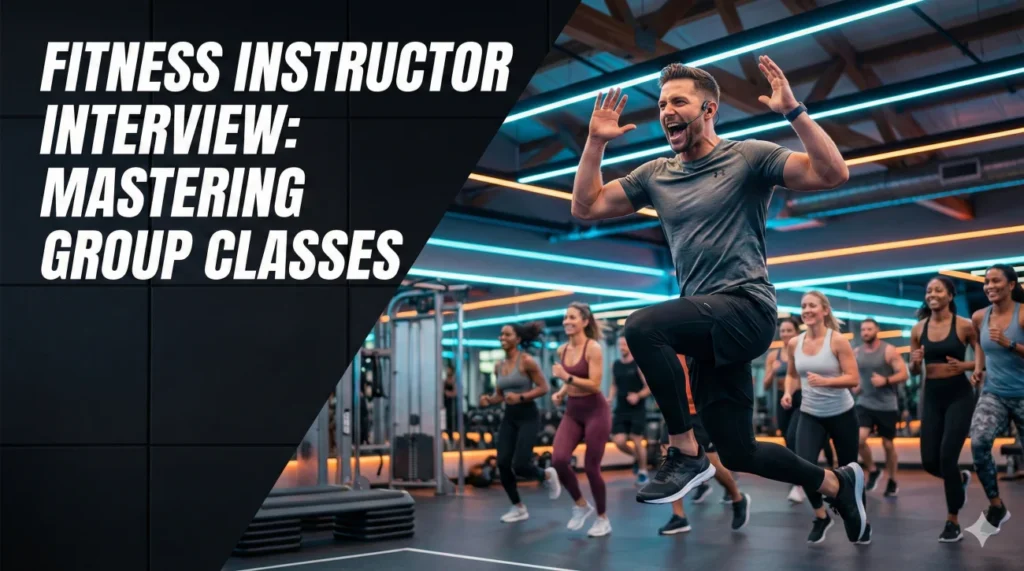
Your Voice Sets the Room
Good programming matters. Great energy matters. But the thing members remember is how you made them feel in the middle of the hard part. That is the real reason fitness instructor interview questions can sound like an audition.
Interviewers will test how you cue, how you correct form without shaming, and how you keep flow when something breaks, like music issues or a brand-new group that needs simpler moves. Answer like you can lead the room and protect it at the same time.
Class Design & Teaching Techniques
Q: Walk me through how you design and prepare for a group fitness class.
I start by understanding the class format, participant demographics, and time constraints. I structure the class with a proper warm-up to prepare the body, a main workout phase that progressively builds intensity, and a cool-down with stretching to aid recovery. I plan exercise sequences that flow logically and consider transitions between movements.
I select music that matches the energy and tempo of each phase, creating playlists that motivate without overwhelming verbal cues. I prepare modifications for each exercise so I can offer options in the moment. I arrive early to check equipment, test the sound system, and set up the space so class can start on time without technical issues.
Q: How do you cue movements effectively so participants can follow without constantly watching you?
Effective cueing combines verbal, visual, and anticipatory elements. I give verbal cues slightly before the movement change so participants can prepare. I use consistent terminology and count patterns so regulars know what to expect. I describe the movement in terms of what participants should feel, not just what to do.
Visual cueing includes demonstrating with clear, exaggerated form and using hand signals for direction changes. I position myself so most participants can see me while I can also scan the room. I mirror movements when facing the class so my right matches their right. Clear cueing builds trust and allows participants to focus on their effort rather than confusion.
Q: How do you use music in your classes?
Music sets the energy and pace. I match tempo to the exercise intensity: slower beats for warm-up and stretching, faster beats for cardio peaks. I select music that appeals to my class demographic while keeping it appropriate for a fitness environment. I time playlists so energy builds and releases align with the workout structure.
I use music to drive motivation but never let it overpower instruction. Volume should enhance, not prevent participants from hearing cues. I stay current with music that energizes people and avoid repetitive playlists that bore regulars. The right song at a challenging moment can push people through when they want to quit.
Q: What formats or styles of group fitness are you experienced in?
I have experience across multiple formats including HIIT, strength training, cycling, yoga, and dance-based cardio. Each format requires different cueing styles, music choices, and participant management. HIIT demands precise timing and intense motivation. Yoga requires calm guidance and attention to breath and alignment. Cycling needs performance metrics and energy management.
I am always expanding my repertoire through certifications and training. I enjoy learning new formats because variety keeps me engaged and makes me more versatile for facilities that need instructors across multiple class types. My strongest formats are where my personal passion shows through, but I can deliver professional instruction in formats outside my specialty.
Safety & Modifications
Q: How do you accommodate participants with different fitness levels in the same class?
I offer modifications for every exercise: an easier version for beginners or those with limitations and a more challenging progression for advanced participants. I cue these options naturally so no one feels singled out. I might say “take the low-impact version here” or “add a jump if you want more challenge” without making either feel like the wrong choice.
I observe the room constantly, watching for participants struggling with form or intensity. I approach individuals during active recovery moments to offer personalized modifications quietly. I encourage everyone to work at their own level and emphasize that modifying is smart, not weak. A class where everyone feels appropriately challenged regardless of fitness level keeps people returning.
Q: How do you ensure proper form and prevent injuries during class?
I demonstrate exercises with clear, correct form before participants begin. I provide verbal cues throughout about key alignment points: keeping knees behind toes in squats, maintaining neutral spine in planks, engaging core before lifting. I watch the room and call out reminders when I see common form breaks.
I never sacrifice form for speed or intensity. If the class is moving faster than participants can maintain proper technique, I slow down. I remind participants that form matters more than repetitions and that they should stop if something feels wrong. I know contraindications for common conditions and provide alternatives for exercises that pose risks for certain populations.
Q: A participant appears to be in distress or experiences an injury. What do you do?
I stop the class or direct them to continue with the current exercise while I assess the situation. I approach the participant calmly and ask what they are experiencing. For minor issues like a cramp, I help them stretch and hydrate. For anything more serious, I follow emergency protocols: clearing the area, calling for help, and administering first aid if trained and appropriate.
I am certified in CPR and AED and know where emergency equipment is located in every facility where I teach. After any incident, I document what happened and follow facility reporting procedures. I check in with the participant later to show concern and understand what occurred. Safety is never compromised for the sake of keeping class moving.
Q: How do you handle participants who ignore safety instructions or use improper form despite corrections?
I approach them individually during a break or transition, not calling them out publicly. I explain my concern in terms of protecting them from injury rather than criticizing their technique. I demonstrate the correct form again and ask if there is a reason they are doing it differently, since sometimes modifications are intentional due to conditions I do not know about.
If they continue risky behavior after personal conversation, I may need to involve management. I cannot force anyone to follow instructions, but I document concerns and communicate with facility leadership. My responsibility is creating a safe environment for everyone, which sometimes means difficult conversations or decisions about whether someone can participate safely.
Motivation & Engagement
How do you motivate participants during challenging moments in class?
I use a combination of verbal encouragement, energy management, and strategic timing. During peak intensity, I provide short, powerful cues: “You’ve got this,” “Ten more seconds,” “Push through.” I make eye contact with individuals who look like they want to quit. I remind them why they showed up and how good they will feel when they finish.
I time the hardest efforts to coincide with the most energizing music. I celebrate small victories along the way rather than only at the end. I share the struggle honestly, acknowledging that it is hard while modeling the effort myself. People push harder when they see their instructor working alongside them, not just standing and watching.
How do you create an inclusive atmosphere where all participants feel welcome?
I greet participants by name when possible and welcome newcomers personally before class starts. I use inclusive language that does not assume fitness level, body type, or ability. I celebrate effort over performance, praising someone working hard at a modified exercise as much as someone doing advanced progressions.
I design classes where modifications are normalized, not exceptions. I avoid comments about weight loss, burning off food, or body-shaming language even when intended as motivation. I create space for all bodies, ages, and abilities to work out together without judgment. When people feel welcome, they come back and eventually bring friends.
How do you keep classes fresh and prevent regulars from getting bored?
I vary workouts regularly, changing exercise combinations, music, and intensity patterns. I introduce new movements periodically while keeping familiar elements that participants enjoy. I create themed classes or challenges that give variety within the same format. I pay attention to what gets the best response and what falls flat.
I solicit feedback and observe energy levels. If I notice declining attendance or enthusiasm, I evaluate what needs refreshing. I take continuing education to learn new techniques and formats I can incorporate. The balance is providing enough consistency that people know what to expect while enough variety that each class feels worth attending.
A participant is consistently negative or disruptive. How do you handle it?
I address it privately, not during class where it could embarrass them and disrupt everyone else. I approach with curiosity rather than accusation, asking if something is wrong or if they are not enjoying the class. Sometimes negativity stems from frustration, intimidation, or personal issues unrelated to fitness.
If the behavior continues after conversation, I set clear expectations about maintaining a positive environment for all participants. I involve management if needed. One disruptive person can affect the experience for everyone else, and protecting the group atmosphere sometimes requires difficult action. Most situations resolve with respectful direct conversation.
Professionalism & Challenges
Q: What certifications do you hold, and how do you maintain them?
I hold certifications from recognized organizations like ACE, AFAA, NASM, or format-specific credentials like Les Mills, Zumba, or Spinning. I maintain current CPR/AED certification as required. I complete continuing education credits to keep certifications active, attending workshops, conferences, and online courses.
I pursue additional certifications to expand my teaching capabilities and stay current with industry developments. I view certifications as foundations, not endpoints. The best instructors continue learning throughout their careers, staying updated on exercise science, injury prevention, and new training methodologies that benefit participants.
Q: The sound system fails just as class is starting. What do you do?
I stay calm and adapt. I can lead an effective class without music by counting out loud, using body percussion, or creating energy through voice and coaching. I acknowledge the situation briefly, keep the atmosphere positive, and demonstrate that a great workout does not require perfect conditions. Participants often appreciate the improvisation and intimacy of a music-free class.
Meanwhile, I troubleshoot if possible or ask staff for help. If the issue is fixable quickly, I extend warm-up while it gets resolved. If not, I proceed with the class I have. Being able to deliver regardless of technical problems demonstrates professionalism and keeps participants confident in my leadership.
Q: Attendance is much lower or higher than expected. How do you adjust?
For low attendance, I increase personal attention and connection, making the small group feel like a benefit rather than disappointment. I might adjust the workout to take advantage of more space or equipment availability. I keep energy high and avoid commenting negatively on turnout, which makes present participants feel valued.
For unexpectedly high attendance, I quickly assess space and equipment limitations. I may modify exercises that require equipment everyone cannot access. I position myself to see more of the room and increase verbal cueing since visual demonstration is harder to see. I prioritize safety when space is tight and remind participants to be aware of their neighbors.
Group Fitness Knowledge Quiz
20 Practice Questions
1. Effective verbal cueing should be given:
- After the movement change
- Slightly before the movement change
- Only when participants make mistakes
- Never during music
2. When facing the class, mirroring means:
- Moving the same direction you say
- Your right matches participants’ right visually
- Only demonstrating without verbal cues
- Never turning your back to the class
3. Modifications should be offered:
- Only to beginners who ask
- For every exercise, presented as normal options
- Never, to maintain class intensity
- Only after injuries occur
4. Music tempo should:
- Stay constant throughout class
- Match the intensity phase of the workout
- Always be as fast as possible
- Overpower verbal cues
5. When a participant shows signs of distress:
- Continue class without interruption
- Stop or pause class to assess and assist
- Wait until class ends to check on them
- Assume they are fine unless they collapse
6. Proper class structure includes:
- Starting with the hardest exercises
- Warm-up, main workout with progressive intensity, cool-down
- Skipping warm-up to maximize workout time
- Ending abruptly at peak intensity
7. Form corrections during class should be:
- Called out loudly by name
- Given as general reminders or approached individually
- Ignored to avoid embarrassment
- Saved for after class only
8. If the sound system fails:
- Cancel the class
- Adapt and lead class using voice and counting
- Wait silently until it is fixed
- Have participants use their phones
9. Inclusive language in fitness avoids:
- Encouraging effort
- Body-shaming references and assumptions about ability
- Mentioning modifications
- Celebrating achievements
10. CPR and AED certification for fitness instructors is:
- Optional enhancement
- Required and must be kept current
- Only needed for personal trainers
- Replaced by calling 911
11. When attendance is unexpectedly high:
- Turn people away
- Modify exercises for space and prioritize safety
- Continue as planned regardless
- Reduce the workout intensity
12. A disruptive participant should be addressed:
- During class in front of everyone
- Privately after or before class
- Never, to avoid confrontation
- By ignoring them completely
13. Continuing education for fitness instructors:
- Ends after initial certification
- Is ongoing to maintain certifications and stay current
- Is only for advanced instructors
- Replaces practical experience
14. For low attendance classes, you should:
- Comment on the poor turnout
- Increase personal attention and keep energy high
- Cancel and reschedule
- Rush through the workout
15. Exercise contraindications are:
- Exercises everyone should do
- Movements that pose risks for certain conditions
- Optional information
- Only relevant to seniors
16. Keeping classes fresh involves:
- Doing the exact same workout every time
- Varying exercises, music, and intensity patterns regularly
- Changing everything every class
- Ignoring participant feedback
17. When a participant ignores form corrections:
- Publicly call them out
- Address privately, document concerns, involve management if needed
- Give up and let them injure themselves
- Remove them from class immediately
18. Arriving early before class allows you to:
- Just relax
- Check equipment, test sound, set up space, and greet participants
- Complete your own workout
- Avoid talking to participants
19. Motivation during peak intensity should include:
- Long explanations
- Short, powerful cues and eye contact
- Silence to let people focus
- Criticism of poor performers
20. Form should never be sacrificed for:
- Better results
- Speed or intensity
- Participant requests
- Music timing
❓ FAQ
🎙️ What makes cueing sound professional?
Short, timed cues. I teach the next move before the transition, I repeat key form points, and I avoid talking over the beat. Clear beats and clear words keep the class confident.
🧩 How do you coach different levels in one class?
I cue one baseline option, then two tracks: easier and harder. I present both as normal choices, so nobody feels singled out for modifying.
🛑 What do you do when you spot unsafe form?
I intervene quickly and respectfully. I offer a simpler variation, give one clear correction, and I watch the next few reps. Safety is priority, and tone matters.
🧯 How should you answer about injuries or emergencies?
I follow the facility protocol, assess calmly, call for help, and use CPR/AED training when appropriate. I do not improvise outside my training.
📍 What should I say about class planning?
I plan with intention: warm-up, skill build, main set, cool down. I also plan time checks so the class ends on time, because members and schedules rely on it.
Final Thoughts
When you answer fitness instructor interview questions, give them a glimpse of your coaching voice. The goal is not to sound perfect. The goal is to sound safe, clear, and motivating.
A clean close is simple: “I coach form first, I always offer options, and I keep energy steady.” Then share the interview prep hub and let your professionalism do the talking.
⚠️ Disclaimer: The interview strategies, sample answers, and negotiation tips provided in this guide are for educational purposes only. Hiring decisions are subjective and vary by company and industry. While these strategies are based on professional HR standards, they do not guarantee a specific job offer or result.