The Moment the Chair Turns
Every makeup artist knows this scene: the client sits down, the lighting is not ideal, the schedule is tight, and everyone expects you to make it look effortless. Makeup artist interview questions are built to uncover whether you can deliver that calm confidence with clean technique behind it.
Employers are watching for two things at once. First, your artistry: how you choose texture, balance, and color so a look flatters the face and matches the brief. Second, your discipline: hygiene that never slips, kit organization that saves minutes, and communication that keeps clients and creative teams aligned when tastes and timelines collide.
This guide helps you speak clearly about what you actually do: how you present a portfolio, consult a client, adapt for lighting and camera, and keep standards high on busy days. If you can explain your choices with a steady process, you will sound like an artist people want on set and on wedding mornings.
Portfolio & Artistic Range
Q: Walk me through your portfolio. What does it demonstrate about your skills?
My portfolio showcases range and versatility. It includes natural beauty looks that enhance without overwhelming, glamorous evening styles, bridal work across different skin tones, and editorial concepts that push creative boundaries. Each image demonstrates technical skill while telling a story about the overall vision.
I curate strategically, showing my strongest work rather than everything I have done. I include before and after shots when appropriate to demonstrate transformation ability. I organize by category so viewers can easily find relevant examples. My portfolio evolves constantly as I create new work and retire older pieces that no longer represent my current skill level.
Q: What makeup styles do you specialize in, and which would you like to develop further?
I have developed strong expertise in bridal makeup, where timing, longevity, and emotional stakes require particular precision. I excel at creating looks that photograph beautifully while still appearing natural in person. I am also experienced in editorial work where I can push creative boundaries and experiment with color and texture.
I want to develop my skills in special effects and theatrical makeup. While my current work focuses on beauty enhancement, I am fascinated by the transformative possibilities of prosthetics, aging techniques, and character creation. I am pursuing additional training in these areas to expand my range and career opportunities.
Q: Describe a creative project you are particularly proud of.
I collaborated on an editorial shoot inspired by renaissance paintings, translating classical art aesthetics into wearable modern makeup. The challenge was capturing the luminous skin quality and subtle color palettes of old masters while creating looks that photographed well under contemporary lighting. I researched period techniques and adapted them using current products.
The project required close collaboration with the photographer and stylist to ensure cohesive visual storytelling. We shot over two days with multiple models, and I created distinct looks that referenced specific paintings while maintaining a unified aesthetic. The images were published in a regional fashion magazine, which validated the creative risks we took.
Q: How do you continue developing your skills and staying current?
I pursue continuous education through workshops, masterclasses, and online courses from artists I admire. I attend trade shows to discover new products and techniques. I follow industry leaders on social media and analyze their work to understand what makes it effective. I practice new techniques on friends and models before using them on paying clients.
I also learn by doing. I seek out creative collaborations that push me beyond my comfort zone. Test shoots with photographers let me experiment without client pressure. I document what works and what does not, building a personal reference library. The industry evolves constantly, and artists who stop learning quickly fall behind.
Hygiene & Sanitation Protocols
Q: Describe your sanitation routine for tools and products.
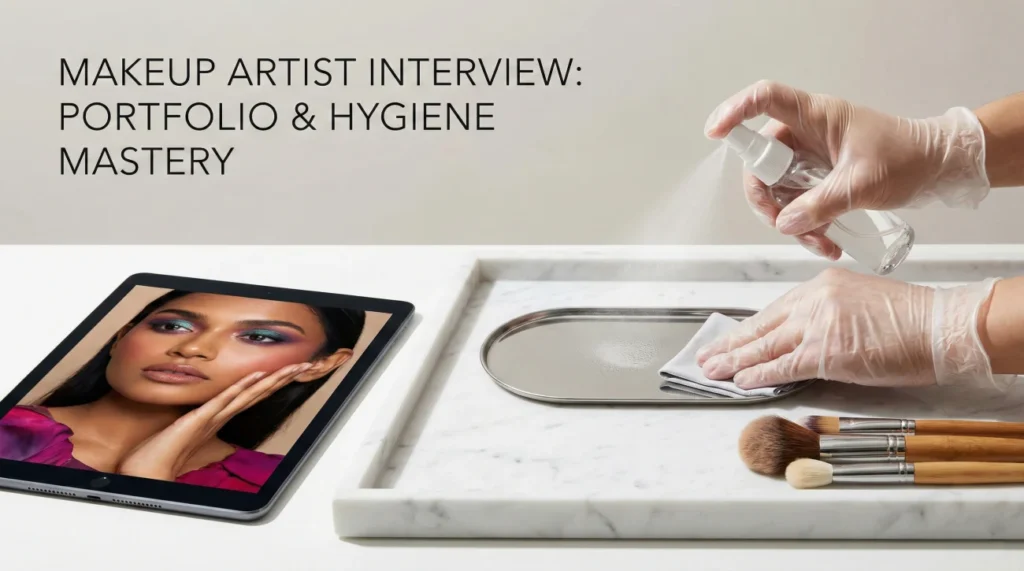
I clean brushes thoroughly between clients using professional brush cleaner that sanitizes and dries quickly. At the end of each day, I do a deep clean with brush shampoo. I sanitize hard surfaces of tools like eyelash curlers and tweezers with alcohol. I spray powder products with 70% isopropyl alcohol, which kills bacteria without damaging the product.
For cream and liquid products, I never double-dip. I dispense onto a clean palette or use disposable spatulas. Mascara wands, lip applicators, and sponge applicators are always disposable, used once and discarded. I replace products that show any signs of contamination or have exceeded their recommended shelf life regardless of how much remains.
Q: How do you maintain hygiene standards when working on location or at events?
I travel with a complete sanitation kit: brush cleaner, alcohol spray, disposable applicators, clean mixing palettes, and hand sanitizer. I set up a clean workspace even in chaotic environments, laying down a clean towel or mat to create a sanitary surface. I wash or sanitize my hands before touching each new client.
Time pressure never justifies compromising hygiene. If I am rushing between clients, I still take the moment needed to sanitize tools and switch to fresh applicators. I explain my protocols to clients when they ask, which builds trust and demonstrates professionalism. Cutting corners on sanitation risks infections and damages reputation irreparably.
Q: A client has a visible skin condition. How do you proceed?
I assess whether application is safe and appropriate. For minor concerns like a healing blemish, I work around it carefully, avoiding direct contact that could cause irritation or spread bacteria. I use extra caution with product selection, avoiding ingredients that might aggravate the condition.
For more serious concerns like active infections, open wounds, or conditions I cannot identify, I have an honest conversation with the client. I may need to decline the service for their safety and mine. I explain my concern professionally and, if appropriate, recommend they consult a dermatologist. No job is worth risking a client’s health or spreading infection to future clients through contaminated products.
Technical Skills & Color Theory
Explain how you approach color matching for different skin tones and undertones.
I start by identifying undertone: warm, cool, or neutral. I examine veins at the wrist, observe how different metals complement the skin, and look at the natural flush of cheeks. Understanding undertone guides every color choice from foundation to lip and eye colors that harmonize rather than clash.
I test foundations along the jawline in natural light whenever possible. I consider how colors will photograph under specific lighting conditions since warm tungsten light and cool daylight affect how makeup appears. I adjust my palette based on the event or shoot context, not just what looks good in the mirror at that moment.
How do you adapt makeup for different lighting situations?
Lighting dramatically changes how makeup reads. For photography with flash, I avoid products with SPF or certain mineral ingredients that cause flashback. For video under continuous lighting, I use products that will not break down under heat. For outdoor natural light, I can use softer application since daylight reveals every detail.
Stage and event lighting require bolder application because distance and bright lights wash out subtlety. I consult with photographers and lighting directors when possible to understand what we are working with. I carry a portable ring light to check how makeup will photograph when I cannot control the environment.
What techniques do you use to ensure makeup longevity?
Longevity starts with proper skin prep. I ensure skin is clean, hydrated, and primed appropriately for skin type. I use eyeshadow primer for lid work and setting powder strategically on areas prone to oil. I set everything with a quality setting spray designed for long wear.
Product selection matters. I choose long-wear formulas for events where touch-ups will be limited. I layer products: powder over cream for staying power. I explain to clients which areas might need touching up and provide them with the essential products to do so. For brides, I create a touch-up kit with lipstick, powder, and blotting papers.
How do you handle a mistake during application?
I address mistakes calmly without drawing excessive attention to them. Most errors are fixable: smudged liner can be cleaned up with concealer and a small brush, uneven eyeshadow can be blended further or corrected with additional color. I keep makeup remover, cotton swabs, and clean brushes accessible for quick corrections.
If a more significant issue arises, like a foundation reaction or color that simply is not working, I acknowledge it matter-of-factly and pivot. I explain what I am adjusting and why. Clients respect honesty more than watching me struggle silently with something that is not working. Experience has taught me that confidence in handling problems matters as much as avoiding them.
Client Consultations & On-Set Dynamics
Q: Describe your consultation process before creating a look.
I start by understanding the context: event type, dress code, photography or video involved, and how long the makeup needs to last. I ask about inspiration images they have gathered and discuss what specifically appeals to them in those references. I assess their comfort level since some clients want dramatic transformation while others prefer subtle enhancement.
I examine their skin, noting type, texture, and any concerns to address. I discuss colors that complement their coloring and the outfit they will wear. I explain my vision for their look and invite feedback. This collaborative process ensures we align on expectations before I begin application, preventing disappointment when I reveal the finished result.
Q: How do you handle a client who wants a look you think will not suit them?
I listen fully to understand what attracts them to that look. Often they want to capture a feeling rather than replicate exact details. I find ways to incorporate elements they love while adapting the execution to flatter their features. I explain my suggestions in terms of enhancing their natural beauty rather than criticizing their original idea.
If they insist on something I believe will not work, I offer to try it while preparing an alternative approach. Sometimes seeing it on their face changes their perspective. I document the conversation so expectations are clear. Ultimately, if they want something specific, I execute it professionally. My job is to serve their vision, not impose my own, though I offer honest guidance.
Q: Tell me about working under pressure on a fast-paced set or event.
I thrive in high-pressure environments because I prepare thoroughly and stay organized. I lay out my kit systematically so I can find anything instantly. I create a mental timeline working backward from when the client needs to be ready, building in buffer time for unexpected delays or last-minute changes.
I communicate clearly with other team members: photographers, hair stylists, wardrobe coordinators. When multiple models or clients need attention, I prioritize efficiently and remain calm. Panicking is contagious and unproductive. I have learned that problems feel smaller when addressed methodically. Experience has given me confidence that I can handle whatever arises.
Q: A client is unhappy with the finished look. How do you respond?
I stay calm and ask specifically what is not working for them. Sometimes the concern is easily addressed: they want more or less of something, or a specific area looks different than expected. I make adjustments without defensiveness because their satisfaction matters more than my ego.
If they want a complete change, I assess available time and offer options. I apologize for missing the mark and focus on solutions. After the event, I reflect on what miscommunication occurred during consultation and how to prevent similar situations. Negative feedback stings, but it is valuable data for improving my process.
Makeup Artistry Quiz
20 Practice Questions
1. Flashback in photography is caused by:
- Using too little product
- SPF or certain mineral ingredients reflecting flash
- Applying makeup too quickly
- Natural lighting only
2. Brushes should be sanitized between clients using:
- Water only
- Professional brush cleaner or sanitizing spray
- The same towel for all brushes
- No cleaning needed between clients
3. Skin undertone is identified by examining:
- Hair color only
- Vein color at wrist and how metals complement skin
- Eye shape
- Lip color only
4. For events requiring long-lasting makeup, you should:
- Skip primer to save time
- Use primer, long-wear formulas, and setting spray
- Apply less product overall
- Avoid powder entirely
5. Mascara applicators should be:
- Shared between clients
- Disposable, used once per client
- Cleaned with water between uses
- Used from the tube directly
6. Stage and event lighting requires:
- Very soft, minimal application
- Bolder application since bright lights wash out subtlety
- No foundation
- Only matte products
7. A diverse portfolio should demonstrate:
- Only one signature style
- Range and versatility across different looks and skin tones
- Quantity over quality
- Only editorial work
8. When a client wants an unsuitable look, you should:
- Refuse without explanation
- Listen, suggest adaptations, and ultimately execute their vision
- Insist on your preference only
- Criticize their taste
9. Cream products should be applied using:
- Direct application from container
- Product dispensed onto a clean palette or with disposable spatula
- Double-dipping is acceptable
- Fingers without sanitizing
10. For outdoor natural light photography:
- Apply very heavy makeup
- Use softer application since daylight reveals every detail
- Skip primer
- Use only dark colors
11. When a mistake occurs during application:
- Panic visibly
- Address it calmly with concealer, remover, or adjustment
- Pretend it did not happen
- Start completely over always
12. Powder products are sanitized using:
- Water spray
- 70% isopropyl alcohol spray
- No sanitization possible
- Scraping off the top layer only
13. Consultation before creating a look should include:
- No discussion, just start
- Understanding context, preferences, skin assessment, and collaborative planning
- Only showing your portfolio
- Asking about budget only
14. For video under continuous lighting:
- Any products work equally
- Use products that will not break down under heat
- Skip setting spray
- Apply extra powder
15. An active skin infection requires:
- Heavy coverage to hide it
- Honest conversation and potentially declining service for safety
- Using shared tools anyway
- Ignoring the concern
16. Continuing skill development includes:
- Learning once and stopping
- Workshops, masterclasses, test shoots, and industry observation
- Only following social media
- Avoiding new techniques
17. Working under time pressure requires:
- Skipping hygiene protocols
- Organization, clear communication, and staying calm
- Panicking visibly
- Blaming others for delays
18. A touch-up kit for brides should include:
- Complete product replacement
- Lipstick, powder, and blotting papers
- Only mascara
- Nothing, touch-ups are unnecessary
19. Client dissatisfaction should be handled by:
- Becoming defensive
- Listening, understanding concerns, and making adjustments
- Refusing to change anything
- Blaming the client’s face
20. Color theory knowledge helps with:
- Only mixing paint
- Creating harmonious looks and choosing flattering colors for skin tones
- Pricing services
- Nothing related to makeup
❓ FAQ
🗂️ What should I include in a portfolio for hiring?
Choose variety with intention. Show a clean natural look, a bridal or event look with longevity, at least one editorial or creative concept, and work across different skin tones. Add a few close-ups that prove blending and skin finish, not only full-face shots.
🧼 How do I talk about sanitation without sounding rehearsed?
Describe your routine like a checklist you actually follow: clean hands, fresh disposables, no double-dipping, and tool sanitation between clients. Mention how you handle creams and liquids on a palette, and when you retire products that are past their safe window.
💡 What is the best way to answer lighting and camera questions?
Explain how you adjust finish and intensity by context. For flash photography you avoid ingredients that can cause flashback, for video you use formulas that hold under heat, and for daylight you blend softer because details show more. If you communicate with the photographer, say so.
🗣️ What if a client wants a look that does not suit them?
Ask what they like about the reference, then translate the idea into a version that flatters their features. Offer one or two options, explain your reasoning in supportive language, and keep the final decision with the client while maintaining professionalism.
⏳ How can I prove I can work fast without sacrificing quality?
Talk about preparation and sequence. A clean kit layout, a repeatable order of steps, and a built-in buffer for touch-ups are what make speed look calm. Mention how you prioritize skin, brows, and eyes based on the time and the camera distance.
Final Thoughts
Interviewers can spot talent quickly, but they hire reliability. When you answer makeup artist interview questions, show both: your creative taste and the process that keeps it consistent. Speak to how you consult, adapt to lighting, manage timing, and keep sanitation non-negotiable.
If you communicate clearly, keep your kit disciplined, and explain your decisions in a way clients understand, you come across as the artist who makes stressful days feel controlled. That combination of artistry and professionalism is what gets you booked again and again.
⚠️ Disclaimer: The interview strategies, sample answers, and negotiation tips provided in this guide are for educational purposes only. Hiring decisions are subjective and vary by company and industry. While these strategies are based on professional HR standards, they do not guarantee a specific job offer or result.