Cold Room, Sharp Standards
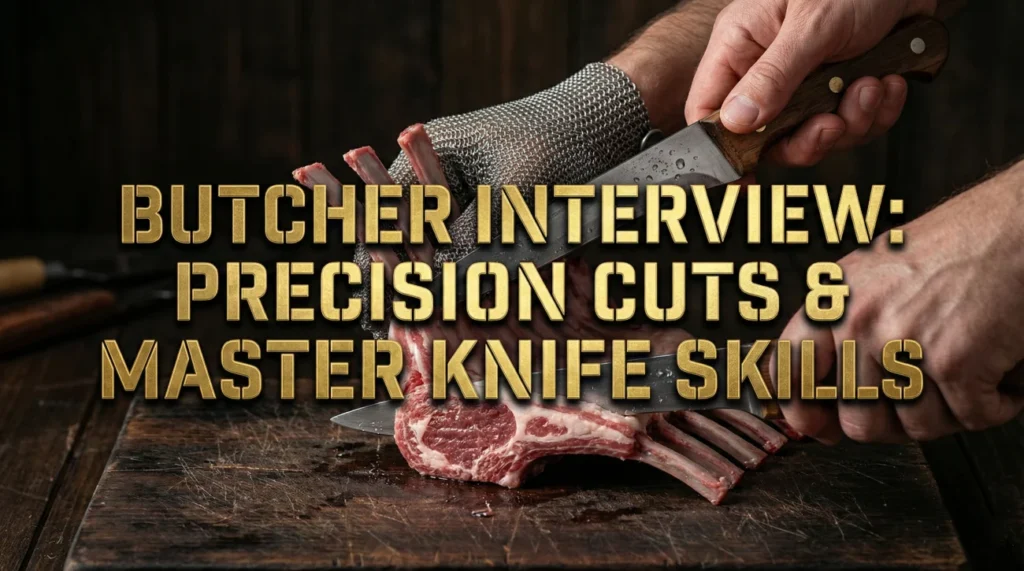
There is a moment in every meat department when the work shows who you are: a primal on the block, the case waiting, and no room for sloppy cuts. Butcher interview questions are designed to spot people who can move with precision while keeping food safety, yield, and presentation locked in.
Interviewers listen for more than “I can use a knife.” They want to hear how you break down primals without wasting value, how you keep your tools sharp and your station clean, and how you prevent cross-contamination when the pace picks up. They also care about judgment: what you trim, what you save for grind, what you label, and what you never put in the case.
This guide helps you speak like a butcher who respects the craft and the customer. Expect questions on cut selection, anatomy basics, safe handling, equipment discipline, and the communication that turns a one-time shopper into a regular who asks for you by name.
Knife Skills & Cutting Techniques
Q: What types of knives do you use and for what purposes?
Different tasks require different tools. I use a boning knife for separating meat from bone, its thin, flexible blade allowing precision around joints and contours. A breaking knife handles larger tasks like separating primal cuts. A cimeter or scimitar knife works for portioning steaks and trimming fat with its curved blade. A cleaver handles bones that need splitting.
I also maintain a steel for regular honing between cuts and whetstones for actual sharpening. A dull knife is dangerous because it requires more pressure, increasing slip risk. Sharp tools cut cleanly, work efficiently, and produce better-looking products. Knowing which knife suits each task is fundamental to the craft.
Q: Describe your technique for breaking down a primal cut.
I start by assessing the cut, identifying muscle groups, fat lines, and bone structure. I plan my cuts to maximize yield and minimize waste. I work methodically, following the natural seams between muscles where possible because seam cuts require less effort and produce cleaner separation than cutting through muscle fiber.
I remove bones carefully to preserve as much meat as possible, saving trimmings for ground products rather than discarding usable meat. I trim fat to customer preference while leaving enough for flavor and moisture during cooking. Every cut I make considers how the final product will cook and present on the plate.
Q: How do you ensure consistent portion sizes?
Consistency comes from technique and verification. I develop an eye for portion weight through practice, but I always confirm with a scale. For steaks, I measure thickness as well as weight because cooking time depends on both. I cut against the grain at consistent angles to produce uniform portions.
When filling a display case or preparing a customer order, I aim for portions that look identical. Inconsistent sizing suggests carelessness and creates problems at checkout when weights vary significantly. Precision distinguishes professional butchery from amateur cutting.
Q: How do you minimize waste when processing meat?
Waste reduction starts with skilled cutting. Every unnecessary trim is lost revenue. I follow the contours of muscles and bones precisely, removing only what needs removal. Fat trimmings go to rendering if the store processes them. Meat scraps become ground product or stew meat rather than trash.
I plan cuts to produce marketable portions from the entire piece. Odd-shaped ends become kabob meat or stir-fry cuts. Bones go to customers who want them for stock or to the prepared foods section. A good butcher sees value in every part of the animal and finds ways to sell it.
Meat Knowledge & Primal Cuts
Q: Explain the primal cuts of beef and what comes from each.
Beef has eight primal cuts. The chuck comes from the shoulder and yields pot roasts, stew meat, and ground beef. The rib section produces prime rib, ribeye steaks, and back ribs. The loin divides into short loin, which gives us T-bones and porterhouse, and sirloin for sirloin steaks.
The round comes from the rear leg, producing round steaks, roasts, and lean ground beef. The brisket is from the breast, perfect for smoking or braising. The plate yields short ribs and skirt steak. The flank gives us flank steak. The shank is for osso buco and braising. Understanding these helps me recommend appropriate cuts for different cooking methods.
Q: How do you assess meat quality when receiving shipments?
I check multiple indicators. Color should be appropriate for the species: bright red for beef that has been exposed to air, pink for pork, and light pink for poultry. I look for good marbling in beef, which indicates flavor and tenderness. Texture should be firm, not slimy or sticky.
I verify temperature immediately because meat arriving above 40 degrees has been temperature-abused. I check for off odors that indicate spoilage. I inspect packaging for damage or leakage. I reject anything that does not meet standards because accepting poor quality means selling poor quality, which damages reputation and risks customer health.
Q: A customer wants to make beef stew. What cuts would you recommend and why?
For stew, I recommend cuts with connective tissue that breaks down during long, slow cooking into rich gelatin. Chuck is my top choice because it has excellent flavor and becomes tender when braised. Bottom round works but is leaner, so it needs careful cooking to avoid drying out.
I explain that these cuts are economical and actually produce better stew than expensive tender cuts, which would become dry and stringy with long cooking. I offer to cut the meat into uniform cubes for even cooking. This kind of guidance builds trust and helps customers succeed with their cooking.
Q: What are the differences between working with beef, pork, and poultry?
Each protein has distinct characteristics. Beef has the most variation in cuts and cooking methods, from quick-searing tender cuts to long-braising tough ones. Marbling and aging significantly affect quality. Pork is more uniform but requires attention to fat distribution and proper cooking temperature to ensure safety while maintaining moisture.
Poultry requires the most careful handling due to higher contamination risks. I use separate equipment and cutting surfaces for poultry. The bone structure differs significantly from red meat, requiring different techniques for breaking down whole birds. Understanding these differences affects everything from knife selection to food safety protocols.
Equipment & Safety
What equipment do you use beyond knives, and how do you maintain it?
I work with band saws for cutting through bone, grinders for producing ground meat, and slicers for deli-style cuts. Each requires specific maintenance. Band saw blades need regular tension checks and replacement when dull. Grinder plates and blades need sharpening and must be disassembled and sanitized thoroughly after each use.
I follow manufacturer guidelines for maintenance schedules and report any equipment issues immediately. A malfunctioning band saw is dangerous. A poorly maintained grinder produces inferior product and harbors bacteria. I treat equipment care as seriously as knife maintenance because it affects both safety and quality.
Describe your approach to personal safety while butchering.
I wear cut-resistant gloves on my non-cutting hand because most injuries happen to the hand holding the meat. I use a steel mesh apron when working with larger cuts or band saws. I wear non-slip footwear because floors get wet and greasy. I keep my work area organized to avoid reaching across blades or cluttered surfaces.
I never rush, even under time pressure, because hurrying causes accidents. I stay focused on the task at hand rather than multitasking during cutting. When I am tired or distracted, I take a moment to reset before continuing. Most butcher injuries result from momentary lapses in attention, so I maintain discipline.
How do you handle knife maintenance?
I hone my knives with a steel before each use and frequently during extended cutting sessions. Honing realigns the edge without removing metal. When honing no longer restores sharpness, I sharpen on whetstones, working through progressively finer grits. Some butchers use professional sharpening services for major reconditioning.
I store knives properly in a knife roll or magnetic strip, never loose in a drawer where edges get damaged and hands get cut. I clean knives by hand rather than dishwasher to protect handles and prevent dulling. A butcher’s knives are their most important tools, so I invest time in their care.
Food Safety & Sanitation
Q: How do you prevent cross-contamination in the meat department?
I maintain strict separation between different protein types, especially between poultry and other meats. I use color-coded cutting boards: one color for poultry, another for beef, another for pork. I change gloves and wash hands when switching between products. I clean and sanitize surfaces between different items.
I never allow raw meat to contact ready-to-eat products. I store raw poultry on the lowest refrigerator shelves so drips cannot contaminate other items. I sanitize equipment thoroughly between uses and maintain separate grinder plates for different meat types when possible. Cross-contamination prevention is non-negotiable.
Q: What temperature requirements apply to meat storage and handling?
Fresh meat must stay below 40 degrees Fahrenheit at all times. I monitor cooler temperatures regularly and report any fluctuations immediately. When working, I limit how long meat sits at room temperature, returning product to refrigeration if I get pulled away for other tasks.
For ground meat, temperature control is even more critical because grinding introduces surface bacteria throughout the product. I keep grinding equipment cold and work quickly. I understand the danger zone between 40 and 140 degrees where bacteria multiply rapidly. Temperature discipline is fundamental to food safety.
Q: Describe your cleaning and sanitation routine.
I clean as I work, wiping surfaces and equipment between tasks. At designated intervals, I do thorough sanitation: disassembling equipment, washing with hot soapy water, rinsing, applying food-safe sanitizer, and allowing proper contact time before rinsing again. I pay attention to areas where meat particles accumulate.
End-of-day cleaning is comprehensive. Every surface, every piece of equipment, floors, drains. I follow the schedule precisely because skipping steps allows bacterial buildup. I document cleaning activities as required for health inspection records. A clean department passes inspections and protects customers.
Q: How do you handle product rotation and dating?
I follow FIFO religiously: First In, First Out. When stocking the display case, older product stays in front. New product goes behind. I check dates on everything and pull items approaching expiration for markdown or disposal. Ground meat and processed items have shorter shelf lives than whole cuts, so they need more frequent rotation.
I date everything I process with the grinding or cutting date. I know the expected shelf life for different products and monitor accordingly. Selling fresh, safe product is the foundation of customer trust. No sale justifies risking someone’s health with questionable meat.
Customer Service
Q: A customer is unfamiliar with different cuts. How do you help them?
I ask about their cooking method and occasion. Grilling a weeknight dinner differs from slow-cooking a Sunday roast. I explain options in accessible terms without overwhelming them with jargon. I might suggest ribeye for a simple pan-sear or chuck roast for a set-and-forget pot roast.
I offer cooking tips: how long to rest a steak, what temperature for a roast, whether to marinate. Customers appreciate guidance that helps them succeed. When they cook a great meal, they come back and often try something new based on my next recommendation. Education builds loyalty.
Q: How do you handle a customer complaint about meat quality?
I listen fully to their concern without becoming defensive. I apologize for their disappointing experience and offer immediate resolution: replacement, refund, or store credit. I ask questions to understand what went wrong because the feedback helps prevent future problems.
If multiple customers report similar issues, I investigate our supply, storage, or handling. One complaint might be an anomaly; a pattern indicates a systemic problem. I view complaints as valuable information rather than personal criticism. Turning an unhappy customer into a satisfied one often creates stronger loyalty than if nothing had gone wrong.
Q: How do you handle special requests or custom cuts?
I welcome custom requests because they demonstrate the value of having a real butcher rather than pre-packaged meat. If a customer wants a specific thickness, weight, or preparation, I accommodate when possible. I discuss the request to ensure I understand exactly what they need.
For unusual requests I have not done before, I am honest about my experience level but willing to try. I might research the cut or consult with more experienced colleagues. Special orders for events like holidays often bring repeat business if handled well. Flexibility and willingness to go beyond the display case distinguish good butchers.
Butchery Knowledge Quiz
20 Practice Questions
1. A boning knife is characterized by:
- A thick, heavy blade
- A thin, flexible blade for working around bones
- A serrated edge
- A curved cleaver shape
2. The beef primal cut that yields ribeye steaks is the:
- Chuck
- Rib
- Round
- Brisket
3. FIFO in meat rotation stands for:
- Fresh Inventory For Orders
- First In, First Out
- Final Inspection For Output
- Fast Inventory, Fast Out
4. Fresh meat must be stored below:
- 50 degrees F
- 40 degrees F
- 32 degrees F
- 60 degrees F
5. For beef stew, the best cut recommendation is:
- Tenderloin
- Chuck
- Ribeye
- T-bone
6. Marbling in beef refers to:
- External fat covering
- Intramuscular fat distribution
- Bone structure
- Meat color
7. Cross-contamination is prevented by:
- Using the same cutting board for everything
- Using separate equipment for different proteins
- Storing poultry above other meats
- Skipping glove changes
8. Honing a knife:
- Removes significant metal
- Realigns the edge without removing metal
- Replaces sharpening entirely
- Should only be done monthly
9. Raw poultry should be stored:
- On the top refrigerator shelf
- On the lowest shelf to prevent drip contamination
- At room temperature
- Mixed with beef products
10. The food temperature danger zone is:
- 0 to 32 degrees F
- 40 to 140 degrees F
- 140 to 200 degrees F
- 32 to 40 degrees F
11. Seam cutting refers to:
- Cutting straight through muscle
- Following natural separations between muscles
- Cutting bones
- Trimming fat only
12. A band saw is used for:
- Slicing deli meat
- Cutting through bone
- Grinding meat
- Tenderizing
13. When receiving meat shipments, temperature should be verified:
- After storing for an hour
- Immediately upon arrival
- Only if it looks questionable
- At the end of the day
14. The chuck primal comes from the:
- Rear leg
- Shoulder
- Belly
- Back
15. Cut-resistant gloves should be worn on:
- The cutting hand
- The non-cutting hand holding the meat
- Both hands always
- Neither hand
16. Ground meat requires extra temperature vigilance because:
- It tastes better cold
- Grinding distributes surface bacteria throughout
- It weighs more
- Customers prefer it frozen
17. Proper meat quality indicators include:
- Slimy texture and off odors
- Appropriate color, firm texture, and no off odors
- Grey color for all meats
- Warm temperature
18. Waste reduction in butchery includes:
- Discarding all trimmings
- Using trimmings for ground meat and other products
- Cutting carelessly for speed
- Ignoring odd-shaped pieces
19. When a customer complains about meat quality:
- Argue that the product was fine
- Listen, apologize, and offer resolution
- Blame the customer’s cooking
- Ignore the complaint
20. Knives should be stored:
- Loose in a drawer
- In a knife roll or on a magnetic strip
- In water
- In the dishwasher
❓ FAQ
🧊 How do I show I understand food safety without sounding scripted?
Talk in habits. Mention temperature checks, clean-as-you-go routines, changing gloves between tasks, and separating tools when working with different proteins. Specific routines sound real, and they prove you protect customers and the store.
🔪 What is a good way to explain “yield” in an interview?
Explain that yield is money and consistency. You follow seams, trim with intention, and turn trimmings into usable product like ground meat or stew cuts instead of throwing value away. Clean technique reduces waste without cutting corners on quality.
🧰 Which tools and equipment should I be ready to discuss?
Beyond knives, be ready to talk about saws, grinders, slicers, and scales. Mention safe setup, basic maintenance, and thorough sanitation. Employers want someone who treats equipment care as part of safety, not an afterthought.
🥩 Do I need experience breaking whole animals to be hired?
Not always. Many roles work with primals and subprimals, not whole carcasses. What matters is whether you can portion accurately, keep the case full and clean, and follow procedures. If you have limited experience, emphasize your learning speed and your discipline.
🏪 How can I prove I can handle customer requests and custom cuts?
Explain how you ask clarifying questions about cooking method, thickness, and portion size, then confirm the request before cutting. Mention clear labeling and friendly guidance. Custom work is where a butcher earns trust fast.
Final Thoughts
Doing well with butcher interview questions is about showing control and care in the same answer. Speak to technique, yield, and cleanliness, but also to judgment: what you check, what you document, and how you keep standards steady when the department gets busy.
The strongest candidates combine sharp skills with a calm, professional presence. If you can explain your cutting approach, your safety routines, and how you guide customers to the right cut for their meal, you will sound like the butcher a store can rely on long term.
⚠️ Disclaimer: The interview strategies, sample answers, and negotiation tips provided in this guide are for educational purposes only. Hiring decisions are subjective and vary by company and industry. While these strategies are based on professional HR standards, they do not guarantee a specific job offer or result.