- First impressions: Greet within 10 seconds with eye contact, a natural smile, and respectful distance to shape how customers browse, buy, and perceive the store.
- Why greetings work: Acknowledgment builds belonging, lowers anxiety, improves cooperation, and deters theft simply by signaling “you’ve been noticed.”
- Authentic smiles: Customers can spot fake friendliness, so use real warmth, protect your energy during long shifts, and speak up if you are not fit for front-facing work that day.
- Attentive presence: Stay visible and productive without hovering, check back at the right time, and read signals that mean “help me” versus “let me browse.”
- Consistency and recovery: Make greeting a team habit, coordinate floor coverage, rebuild trust after bad experiences with extra care, and explain your greeting system clearly in interviews.
The Power of First Impressions
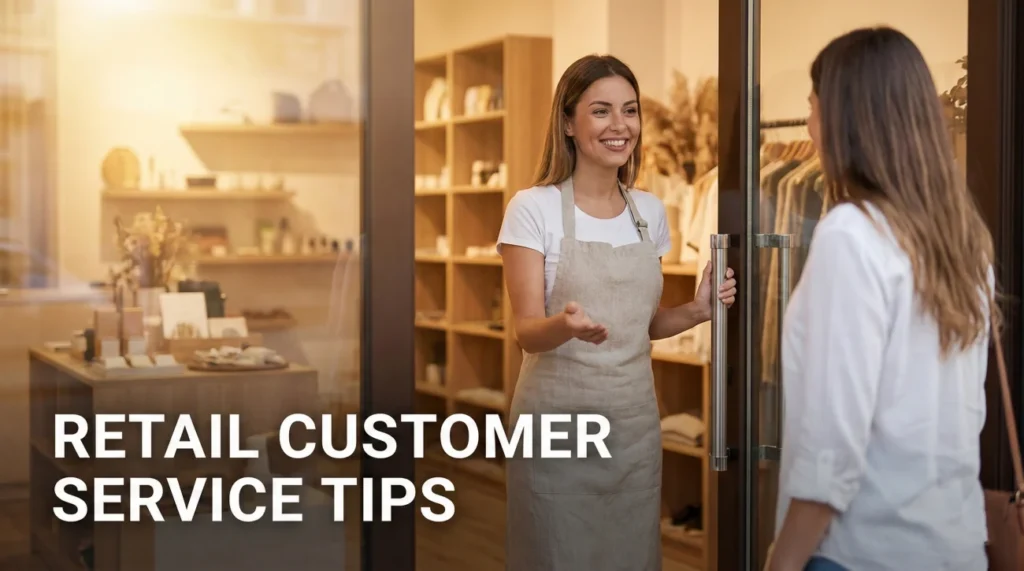
The first 10 seconds of customer interaction dramatically influence shopping behavior, purchase likelihood, and store perception. Effective retail customer service tips recognize that genuine greetings, authentic smiles, and attentive presence create welcoming environments encouraging browsing, reducing theft, and increasing sales through psychological comfort and connection.
This guide explores the psychology behind effective retail greetings and presence. You’ll learn why greetings matter beyond politeness, master smile authenticity and timing, develop presence strategies making customers feel valued, and create welcoming environments through intentional behavior patterns.
The Science Behind Greetings
Understanding the greeter effect retail psychology reveals why simple acknowledgment creates measurable impacts on customer behavior and business outcomes.
Psychological Impact of Acknowledgment
Being greeted triggers specific psychological responses affecting how customers experience the store and their purchasing decisions.
| Psychological Effect | What Happens | Business Impact |
|---|---|---|
| Recognition and belonging | Greeting signals “you’re welcome here,” activating social acceptance needs | Customers linger longer, explore more, feel comfortable making purchases |
| Reciprocity principle | Friendly greeting creates unconscious obligation to reciprocate through positive interaction | Customers respond more positively to assistance, more patient during issues |
| Theft deterrent | Being noticed makes shoplifters uncomfortable, signaling staff awareness | Shoplifting drops significantly in stores with consistent greeting practices |
| Reduced anxiety | Acknowledgment lowers social stress about entering unfamiliar environment | Customers ask more questions, try things on, engage rather than flee |
| Mood priming | Warm greeting sets positive emotional tone influencing subsequent perceptions | Products seem more appealing, prices feel more reasonable, experience rated higher |
Optimal Greeting Timing and Distance
When and from how far you greet significantly affects customer receptiveness and comfort.
- ⏱️ Within 10 seconds: Greet customers within 10 seconds of entry, establishing immediate acknowledgment
- 📏 Appropriate distance: 6-10 feet away optimal, closer feels intrusive, farther seems dismissive
- 👁️ Eye contact first: Catch eye contact then smile and greet, versus startling them with voice
- 🚶 Natural approach: Move toward them as part of normal activity, not obviously watching entrance
- ⏸️ Give space after: After greeting, allow browsing freedom unless they engage further
💡 Pro tip: The greeting works even when you’re busy helping another customer. A simple “Hi, I’ll be right with you!” acknowledgment while finishing current interaction prevents new customers feeling ignored. They’ll wait patiently knowing you’ve seen them and will help soon.
Expert advice: Customize greetings to store type and clientele. Luxury retail merits formal “Welcome to [Store], how may I assist you today?” Fast-casual retail works better with “Hey, how’s it going?” Formal greetings in casual environments feel stiff; casual greetings in luxury settings seem unprofessional. Match your greeting formality to customer expectations and brand positioning.
Mastering Authentic Smiles
Understanding smile impact sales requires recognizing that customers subconsciously distinguish genuine from fake smiles, making authenticity crucial.
Genuine vs. Forced Smiles
Duchenne smiles (genuine) involve eye muscles creating crow’s feet, while fake smiles use only mouth muscles, creating vastly different impressions.
| Smile Type | Physical Characteristics | Customer Perception |
|---|---|---|
| Genuine (Duchenne) | Eyes crinkle, cheeks raise, smile reaches eyes, natural duration, relaxed facial muscles | Warmth, trustworthiness, authentic welcome, comfortable approaching for help |
| Forced (social) | Mouth only, eyes remain neutral or cold, held too long or appears suddenly, tense facial muscles | Insincerity, going through motions, discomfort, fake friendliness, less approachable |
| No smile | Neutral or negative expression, no acknowledgment | Unwelcoming, judged, anxious, may leave immediately, hesitant to ask questions |
Cultivating Genuine Warmth
Since forced smiles feel fake to customers, developing authentic positive regard for customers creates natural, effective expressions.
- Mental reframing: View customers as guests in your home rather than interruptions to your work
- Find genuine positivity: Notice something you genuinely appreciate about each customer (style, politeness, etc.)
- Remember your why: Reconnect with why you chose customer-facing work, finding meaning in helping
- Gratitude perspective: Recognize customers enable your paycheck, without them you’d have no job
- Service mindset: Approach interactions thinking “How can I help?” versus “What do they want from me?”
Maintaining Positivity Through Difficult Shifts
Long retail shifts test anyone’s ability to stay genuinely positive, requiring intentional energy management.
- ☕ Physical care: Stay hydrated, eat properly, take breaks preventing fatigue affecting mood
- 🔄 Reset rituals: Brief practices between customers resetting emotional state (deep breath, shoulder roll, positive thought)
- 👥 Team energy: Supportive colleague interactions during lulls maintaining morale and positivity
- 🎯 Small wins focus: Notice successful interactions and satisfied customers versus dwelling on difficult ones
- ⏰ End-time awareness: Remember shift ends eventually, temporary discomfort doesn’t last forever
If you genuinely cannot muster authentic warmth due to personal crisis, illness, or exhaustion, communicate with management. Working front-facing roles while obviously miserable damages customer experience and your wellbeing. Sometimes back-room tasks or going home sick serves everyone better than forcing yourself through customer interactions spreading negative energy.
The Art of Attentive Presence
Retail presence strategies involve being visibly available and attentive without hovering or pressuring customers.
Balancing Availability and Space
Effective presence means customers can easily get help while feeling free to browse without constant attention.
| Presence Element | What It Means | How to Execute |
|---|---|---|
| Visible availability | Customers can see you’re present and ready to help | Stay on sales floor, move through different areas, maintain upright posture signaling approachability |
| Productive activity | Appear busy with legitimate work, not standing idle watching | Straighten merchandise, restock, clean displays while staying alert to customer needs |
| Appropriate distance | Close enough to help quickly, far enough to not hover | Same area but different aisle, within earshot but not shadowing their movements |
| Awareness signals | Show you notice them without being intrusive | Occasional glances their direction, positioning to observe peripherally, ready response when approached |
| Re-engagement timing | Checking back in after initial greeting without being pushy | “Finding everything okay?” after 3-5 minutes, then space again unless they engage |
Recognizing When Customers Want Help
Certain behaviors signal customer openness to assistance versus desire for independent browsing.
- Help signals: Looking around for staff, examining multiple items indecisively, reading labels confused, standing still seeming stuck
- Leave-alone signals: Headphones on, avoiding eye contact, purposeful movement, quick dismissal of initial greeting
- Approach opportunities: Customer pauses examining item closely, compares multiple options, checks phone possibly researching
- Re-engagement timing: Customer returns to area repeatedly, circles back to same items, appears to be narrowing choices
Team Coordination for Coverage
Multiple staff members require coordination ensuring comprehensive floor coverage without overwhelming customers.
- 🗺️ Zone assignment: Divide floor into sections with clear responsibility preventing gaps and duplicated approaches
- 🔄 Rotation system: Regularly switch zones preventing burnout and ensuring fresh energy throughout store
- 👀 Visual communication: Eye contact and subtle signals between staff coordinating who approaches which customers
- 📢 Handoff protocol: “My colleague can help you with that” when redirecting to specialist or manager
Expert advice: The greeting and presence sweet spot varies by merchandise category. Electronics and high-involvement purchases benefit from readily available detailed assistance. Fashion and browsing-heavy categories need more space after initial greeting. Adjust your presence intensity to product type and typical customer shopping pattern for your specific category.
Creating Welcoming Environments
Beyond individual interactions, consistent practices across all staff create store-wide welcoming atmosphere.
The Power of Consistency
Single positive greeting matters less than every customer experiencing welcome every visit from every employee.
- Universal participation: All staff greet regardless of role, not just designated greeters or sales floor
- Standard approach: Consistent greeting style creating predictable positive experience
- New hire training: Greeting and presence emphasized from day one as core job function
- Manager modeling: Leadership demonstrates greeting excellence, setting tone through example
- Recognition systems: Acknowledging staff who excel at creating welcoming experiences
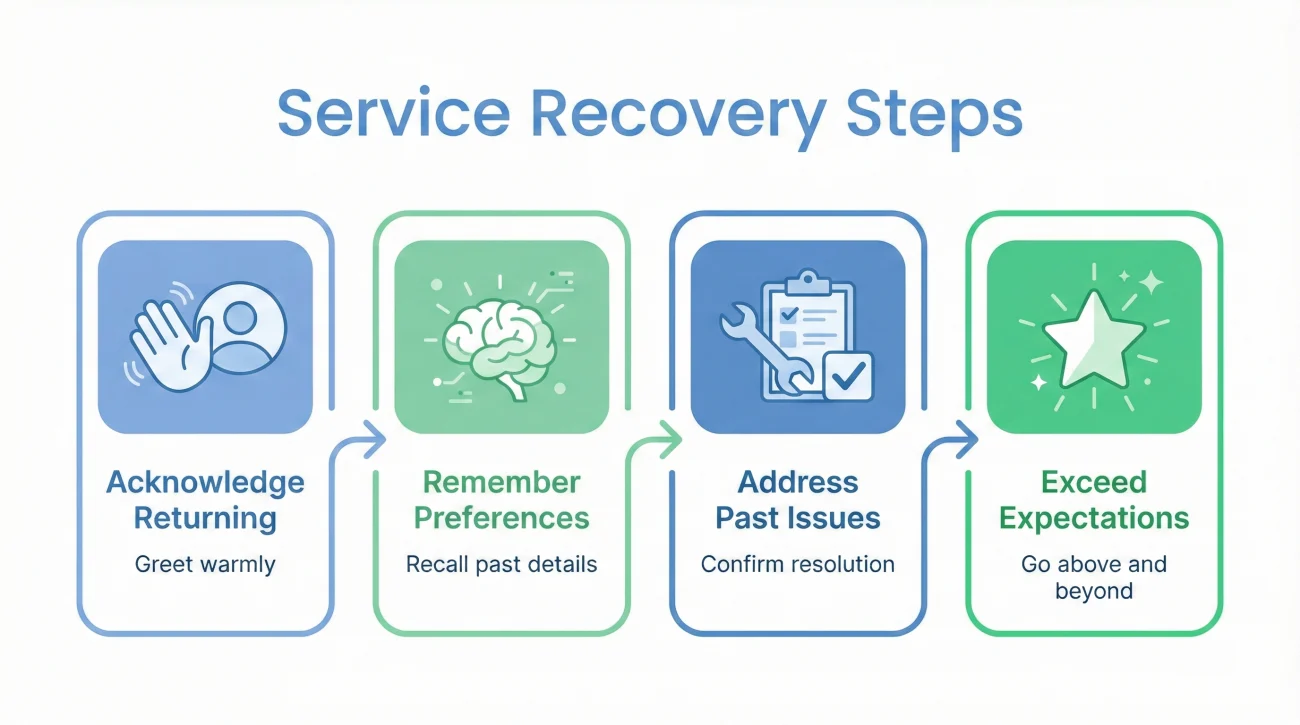
Service Recovery After Negative Experiences
When customers had previous negative experiences, extra warmth and attentiveness can rebuild trust.
- 🎯 Acknowledge returning: “Good to see you again!” makes regulars feel valued and noticed
- 💬 Remember preferences: Referencing past purchases or preferences shows genuine attention
- 🔧 Address past issues: If you know they had problem previously, check: “Hope your experience is better today”
- ⭐ Exceed expectations: Go slightly above normal service for customers who seem hesitant or cautious
For deeper exploration of customer service excellence and interview preparation, access our extensive service training materials covering advanced interaction techniques.
❓ FAQ
🎯 What if I’m naturally introverted and find greeting draining?
Introversion doesn’t prevent excellent customer service, but requires different energy management. Take breaks to recharge alone when possible, focus on quality interactions over forced chattiness, develop scripted greetings reducing mental effort, and choose shifts or roles minimizing sustained customer interaction if available. Many introverts excel at customer service through genuine listening and focused attention, different from extroverted high-energy approaches but equally effective.
💼 How do I greet customers during busy periods?
During rushes, acknowledgment matters more than full conversation. Quick “I’ll be right with you” while helping current customer prevents feeling ignored. Make eye contact and smile even when hands full. If truly overwhelmed, call for backup rather than letting customers stand unacknowledged. Brief acknowledgment prevents customer frustration better than no greeting while they wait. Customers tolerate wait time better when they feel seen and know help is coming.
⏰ What if customer seems annoyed by greeting?
Some customers find any approach intrusive, especially frequent shoppers who know layout. After initial greeting, read their signals and give space. Brief “Let me know if you need anything” then stepping away respects their preference. Don’t take it personally: their mood often unrelated to you. Maintain professional courtesy without forcing interaction they clearly don’t want. Your greeting fulfilled its purpose even if they seemed annoyed: they know help is available if needed.
📋 Should I greet customers when I’m clearly with another customer?
Yes, briefly acknowledge new customer without abandoning current one: “Hi, I’ll be right with you!” Then finish helping current customer properly before switching attention. This prevents new arrival feeling ignored while showing current customer you won’t abandon them mid-conversation either. Customers appreciate seeing you’re attentive to everyone and will help them properly when their turn comes rather than rushing current interaction.
✨ How do I demonstrate greeting skills during interviews?
Practice your greeting when meeting interviewer: warm smile, eye contact, confident tone. Describe your greeting approach using specific examples: “I greet within 10 seconds, make eye contact, smile genuinely, then give space unless they engage.” Explain understanding of greeter effect psychology showing you know why it matters beyond just being polite. If asked to role-play, demonstrate natural warmth and reading customer signals for when to approach versus when to give space.
Final Thoughts
Mastering retail customer service tips centered on greeting psychology transforms routine interactions into competitive advantages. Genuine smiles, timely acknowledgment, and attentive presence create welcoming environments increasing sales, reducing theft, and building loyalty through positive emotional experiences rather than manipulative tactics.
⚠️ Disclaimer: The interview strategies, sample answers, and negotiation tips provided in this guide are for educational purposes only. Hiring decisions are subjective and vary by company and industry. While these strategies are based on professional HR standards, they do not guarantee a specific job offer or result.