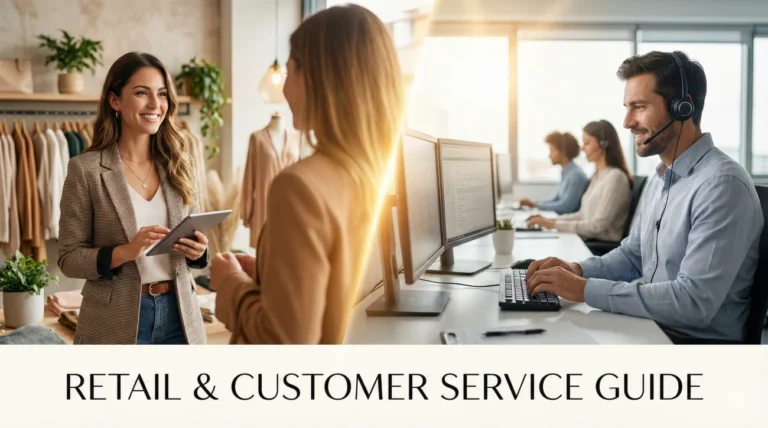
- Core Idea: Helpful selling means listening for real needs, recommending what genuinely helps, and growing basket size without pushing junk.
- Customer Signals: Identify shopper types and watch for purchase readiness cues so you help at the right moment and avoid derailing the main sale.
- Upselling Done Right: Offer upgrades only when they solve a stated concern, explain value clearly, compare options fairly, and respect firm budgets.
- Cross-Selling That Feels Natural: Suggest only 1 to 3 highly relevant add-ons after the customer commits, make acceptance easy, and accept “no” instantly.
- Ethical Long-Term Play: Build loyalty with honest representation, transparent policies, and trust-first choices that reduce returns and increase repeat business.
The Art of Helpful Selling
Effective retail sales techniques balance helping customers find solutions with achieving business objectives through additional sales. The best salespeople don’t push unwanted products: they listen carefully, recognize genuine needs, and recommend items truly benefiting customers while naturally increasing transaction value.
This guide establishes foundational sales skills for retail professionals. You’ll learn to read customer signals indicating purchase readiness, employ upselling strategies suggesting better alternatives, apply cross-selling methods recommending complementary items, and maintain ethical boundaries ensuring long-term loyalty over short-term gains.
Reading Customer Signals
Successful selling begins with understanding where customers are in their buying journey and adapting your approach accordingly.
Identifying Customer Types
Different shoppers require different approaches based on their purpose, knowledge level, and decision readiness.
| Customer Type | Recognition Signals | Effective Approach |
|---|---|---|
| Just Browsing | Wandering casually, minimal eye contact, vague responses to offers of help | Friendly greeting then space, stay visible and approachable, re-engage if they pause/examine items closely |
| Mission Shopper | Purposeful movement, searching actively, direct questions about specific items | Efficient assistance finding exact item, suggest relevant add-ons once core need met, quick checkout |
| Indecisive | Handling same items repeatedly, comparing multiple options, asking many questions | Patient guidance, narrow choices through questions, reassurance about decision, gentle recommendation |
| Expert/Enthusiast | Deep product knowledge questions, specific technical requirements, comparing features knowledgeably | Match their expertise level, discuss advanced features, ask questions showing respect for knowledge |
| Budget Conscious | Checking prices immediately, asking about sales/discounts, comparing value options | Lead with value options, explain cost-benefit honestly, highlight sales/promotions, respect budget constraints |
Recognizing Purchase Readiness
Certain behaviors indicate customer has mentally committed to purchase, signaling optimal timing for additional recommendations.
- ✅ Verbal commitment: “I’ll take this,” “Where do I pay?”, asking about stock availability
- 👜 Physical commitment: Holding item protectively, adding to basket, heading toward checkout
- 🤔 Final objections: “I’m just worried about…” addressing last concern before buying
- 💬 Ownership language: “This would go with my…” mentally integrating item into their life
- 👥 Seeking validation: Asking companion’s opinion, texting photos to friends for approval
💡 Pro tip: The best time to suggest additional items is after customer commits to initial purchase, not before. Once they’ve decided to buy, they’re psychologically open to enhancing their purchase. Suggesting add-ons too early feels pushy and may derail the primary sale they hadn’t yet committed to.
Expert advice: Listen more than you talk. Customers reveal their needs, preferences, and objections if you ask good questions and actually hear answers. New salespeople often talk too much, overwhelming customers with information. Experienced professionals ask targeted questions, listen carefully, then recommend specifically based on what customer said they need.
Effective Upselling Techniques
Upselling strategies retail environments involve suggesting better, higher-value alternatives that genuinely serve customer needs more effectively.
The Value-Based Upsell Framework
Successful upselling focuses on customer benefit, not just higher price, making recommendations feel helpful rather than manipulative.
| Upsell Type | When to Use | Example Language |
|---|---|---|
| Quality upgrade | Customer choosing budget option but expressing quality concerns | “This premium version costs $20 more but lasts twice as long and includes warranty. Many customers find it better value long-term.” |
| Feature enhancement | Customer needs specific functionality only available in upgraded model | “You mentioned needing X feature. That’s only available on this model, which also includes Y and Z you might find useful.” |
| Size/quantity upgrade | Customer buying small quantity when larger offers better per-unit value | “The medium is only $3 more and gives you 50% more product. Most people find that better value if you’ll use it.” |
| Bundle upgrade | Customer buying individual items available in money-saving package | “These three items you’re getting are available as a set for $15 less than buying separately. Would that work better?” |
| Extended protection | High-value or frequently-broken items where protection offers genuine peace of mind | “This covers accidental damage including drops and spills. Given what you’re using this for, many customers appreciate that protection.” |
Tactical Upselling Approaches
Specific techniques make upgrade suggestions natural and customer-focused rather than salesy.
- The compare method: Show both options side-by-side, highlight differences objectively, let customer decide based on value
- The third option: Present three tiers (good/better/best), most customers choose middle option avoiding extremes
- Future-proofing: “If your needs grow, this model handles that. The basic one you’d outgrow and need to replace.”
- Social proof: “This is our most popular version because…” leveraging others’ choices as validation
- Total cost of ownership: Calculate long-term costs showing higher upfront price saves money over time
Never pressure customers into upgrades they clearly cannot afford or don’t need. If customer states firm budget and you push beyond it, you risk losing the sale entirely and damaging trust. Respect stated constraints while presenting options within them.
Strategic Cross-Selling
Cross-selling methods suggest complementary items enhancing the primary purchase’s value or enabling its full use.
Types of Cross-Sell Opportunities
Different relationship types exist between primary purchase and suggested add-ons, each requiring different positioning.
| Cross-Sell Category | Definition | Example & Positioning |
|---|---|---|
| Essential accessories | Items required for product function or protection | “You’ll need batteries for this” or “Case protects your investment” – framed as necessity |
| Enhancement items | Products improving primary purchase performance or experience | “This lens attachment expands what you can shoot” – positioned as capability expansion |
| Complementary products | Items used together in same activity or occasion | “Since you’re getting shoes, these socks are designed specifically for them” – natural pairing |
| Convenience additions | Items making primary product easier to use or maintain | “This cleaning kit keeps it looking new” – framed as protecting their purchase |
| Impulse items | Low-cost items relevant to customer’s demonstrated interests | “Many customers grabbing X also pick up Y while they’re here” – low-risk suggestion |
Cross-Sell Timing and Presentation
When and how you present additional items dramatically affects customer receptiveness.
- After primary commitment: Wait until they’ve decided on main item before suggesting add-ons
- Relevance emphasis: Clearly connect suggestion to what they’re buying: “Since you’re getting X, you might need Y”
- Assumptive close: “I’ll grab you batteries for this” (then confirm) vs. asking permission for obvious needs
- Limited suggestions: Maximum 2-3 add-on suggestions to avoid overwhelming or appearing pushy
- Easy acceptance: Make saying yes simple, no requires effort: have item in hand, mention total price
- Graceful acceptance of no: If customer declines, move on immediately without pressure or disappointment
Expert advice: The difference between helpful suggestions and annoying pressure is genuine relevance. If you’d recommend the add-on to your best friend buying that item, suggest it. If you wouldn’t tell your friend they need it, you’re probably just pushing sales. This self-check keeps selling authentic and prevents damaging customer relationships for marginal transaction increases.
Building Long-Term Loyalty Through Ethical Selling
Sustainable sales success prioritizes repeat business and referrals over maximizing single transactions through manipulation.
Maintaining Ethical Boundaries
Professional selling balances sales goals with customer welfare and honest representation.
| Ethical Principle | What It Means | How to Practice |
|---|---|---|
| Honest representation | Accurately describe product capabilities, limitations, and comparisons | Never exaggerate features, admit when competitor offers better solution, acknowledge product limitations |
| Needs-based selling | Recommend what customer needs, not just highest commission items | Sometimes the right answer is “the cheaper version is fine for your needs” even when upsell opportunity exists |
| Pressure-free environment | Enable informed decisions without manipulation or urgency tactics | Give customers space to think, accept “I need to consider it” gracefully, welcome their return |
| Transparency | Clear about policies, pricing, and post-purchase expectations | Explain return policy, disclose additional costs, clarify what’s included, no surprises at checkout |
| Long-term thinking | Build relationships valuing lifetime customer value over single transaction | Sometimes recommend they wait for sale, suggest they shop around, prioritize satisfaction over immediate sale |
Addressing Objections Honestly
Customer objections provide valuable information and opportunity to build trust through authentic responses.
- 💰 “Too expensive”: Acknowledge cost, explain value, show less expensive options, respect if still beyond budget
- 🤔 “Need to think about it”: Support decision process, offer to answer questions, give them space without pestering
- 👥 “Want to shop around”: Encourage comparison, explain your advantages honestly, welcome them back after research
- ⏰ “Not sure if I need it”: Help clarify needs through questions, validate if they truly don’t need it
Measuring Selling Success
Beyond immediate sales metrics, track indicators of sustainable selling effectiveness.
- Customer return rate: How many come back for repeat purchases shows satisfaction with previous recommendations
- Referrals received: Customers recommending you to friends indicates trust in your advice
- Conversion rate: Percentage of interactions resulting in sales shows effectiveness without pressure
- Average transaction value: Successful upsell/cross-sell reflected in higher per-customer spend
- Return/exchange rate: Low returns suggest appropriate recommendations matching actual needs
For additional techniques and interview preparation covering sales scenarios, explore our comprehensive retail career guides and customer service training resources.
❓ FAQ
🎯 How do I upsell without seeming pushy?
Focus on customer benefit, not your sales target. Frame suggestions as helping them get better value, performance, or protection. Use language like “Many customers prefer this because…” rather than “You should really get this.” Present option objectively, respect their decision immediately if they decline. Pushy is when you keep suggesting after they’ve said no or pressure them beyond stated budget. Helpful is presenting one relevant upgrade option they genuinely might want.
💼 What if my manager pressures me to upsell aggressively?
Find balance between business goals and customer relationships. Focus on hitting targets through volume (helping more customers) and natural add-ons rather than pressuring individual customers. Track your results showing high customer satisfaction scores alongside decent upsell rates. If pressure continues beyond ethical comfort, consider whether company culture aligns with your values. Good retailers want sustainable customer relationships, not manipulative tactics destroying long-term loyalty for short-term gains.
⏰ Should I upsell every single customer?
No. Some situations merit simple transaction completion without additional suggestions: clearly budget-constrained customers, those in obvious hurry, customers who’ve already declined similar suggestions previously. Read the situation and customer type. Mission shoppers wanting quick in-and-out appreciate efficiency more than suggestions. Browsers who found exactly what they need don’t want additional items. Save upselling energy for customers showing openness to recommendations through questions, browsing patterns, or engagement level.
📋 How do I cross-sell without annoying customers?
Limit yourself to 2-3 highly relevant suggestions maximum. Make clear connection to primary purchase: “Since you’re getting X, you’ll need Y” not random unrelated items. Accept first “no thank you” gracefully without pushing further. Frame as helpful reminder not sales pitch: “Just so you know, batteries aren’t included” serves customer better than “Want to add batteries?” Pay attention to customer signals: if they seem annoyed or rushed, skip additional suggestions and complete their purchase efficiently.
✨ How do I demonstrate selling skills in interviews?
Prepare specific examples using STAR method: situation where you identified customer need, upsold successfully by showing value, cross-sold complementary item naturally, or handled objection converting to sale. Emphasize listening to customer, understanding their needs, recommending appropriately rather than pushing products. Discuss your approach to building relationships and repeat business. If asked to role-play, ask questions to understand “customer’s” needs before suggesting anything, showing consultative approach not aggressive selling.
Final Thoughts
Mastering retail sales techniques centers on genuinely helping customers while achieving business objectives through appropriate suggestions. Best salespeople listen carefully, read customer signals accurately, recommend items truly benefiting purchasers, and maintain ethical boundaries prioritizing long-term loyalty over short-term transaction maximization.
⚠️ Disclaimer: The interview strategies, sample answers, and negotiation tips provided in this guide are for educational purposes only. Hiring decisions are subjective and vary by company and industry. While these strategies are based on professional HR standards, they do not guarantee a specific job offer or result.