- Why it matters: Bedside manner is clinical skill, not “nice to have”, because trust and clarity directly affect compliance, satisfaction, and outcomes.
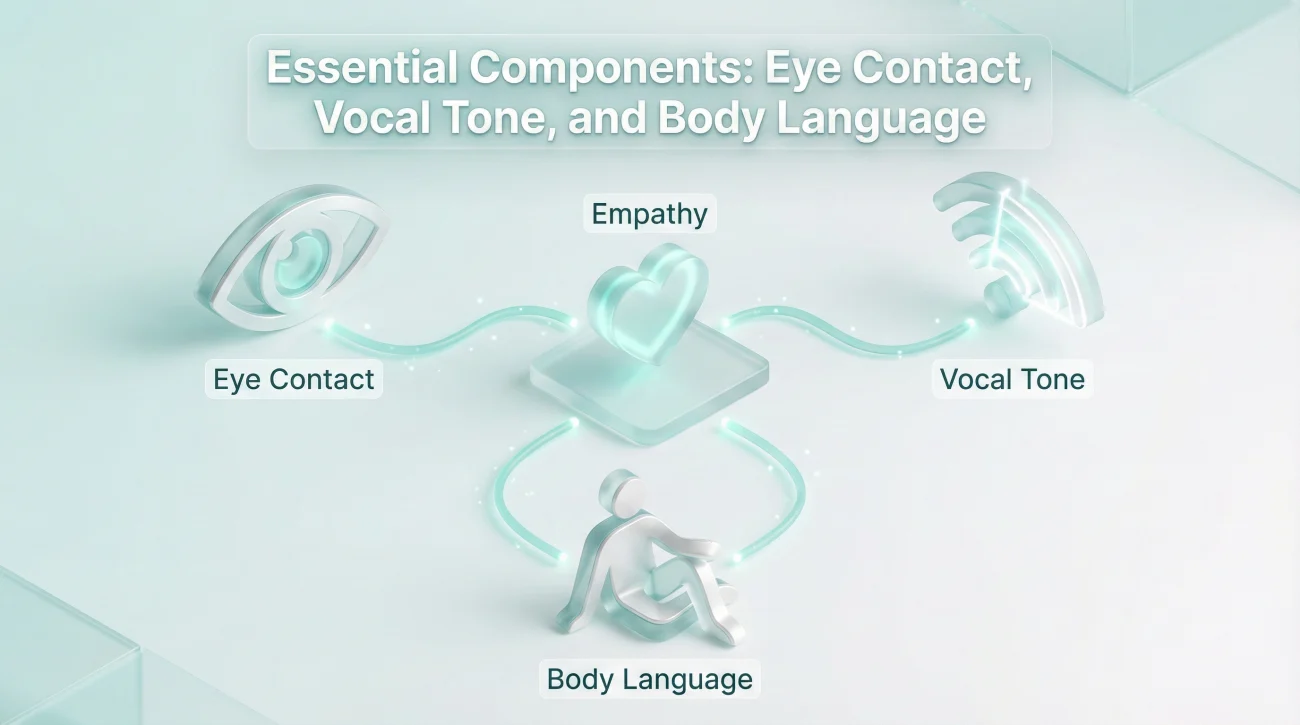
- Core building blocks: Eye contact, vocal tone and pacing, and open body language work together to make patients feel safe, respected, and heard.
- Difficult news done well: Use the SPIKES flow to set the scene, check what they understand, ask how much detail they want, explain plainly, respond with empathy, then map the next steps.
- Respect differences: Communication has to flex for culture and health literacy, so ask preferences, use interpreters when needed, and confirm understanding with teach-back.
- Pressure moments: De-escalate anger with validation and collaboration, explore barriers instead of labeling “non-compliant”, and show these habits in interviews through clear stories and scenario walk-throughs.
Why Technical Skills Aren’t Enough
Exceptional bedside manner skills separate competent clinicians from truly effective healers. You can perform procedures flawlessly and prescribe correctly, but if patients don’t trust you, feel heard, or understand their care, outcomes suffer. Bedside manner isn’t optional soft skills – it’s core clinical competence that directly impacts compliance, satisfaction, and healing.
Effective patient communication techniques require conscious skill development, not just natural warmth. The ability to make eye contact during difficult conversations, modulate your voice when delivering bad news, and use body language that conveys safety rather than rush – these are learnable techniques that transform patient experiences.
Healthcare interviews increasingly assess these interpersonal capabilities through behavioral questions and scenario responses. Demonstrating strong bedside manner in interviews signals you understand that medicine treats people, not just conditions.
Essential Components of Bedside Manner
Strong healthcare empathy skills comprise multiple specific techniques working together. Each element contributes to building the trust and rapport that enables effective care.
Strategic Eye Contact
Eye contact communicates attention and respect, but cultural norms vary significantly. In Western healthcare contexts, appropriate eye contact during conversations shows you’re fully present. However, extended staring creates discomfort, and some cultures view direct eye contact as disrespectful.
- 👁️ During initial greeting: Establish connection by making eye contact when introducing yourself
- 💬 During conversation: Maintain natural eye contact while listening, break periodically to avoid intensity
- 📝 While documenting: Look up periodically to show continued engagement despite charting
- 😔 During emotional moments: Soften your gaze, reduce intensity but maintain connection
💡 Pro tip: When delivering difficult news, maintain eye contact initially to show you’re not avoiding the conversation, then soften your gaze as emotions intensify to give patients psychological space.
Vocal Tone and Pacing
How you say something matters as much as what you say. Rushed speech signals you’re too busy to care. Overly cheerful tones feel dismissive during serious discussions. Monotone delivery makes critical information forgettable.
| Situation | Appropriate Tone | Pacing Strategy |
|---|---|---|
| Routine care | Warm, professional, conversational | Moderate pace with natural pauses |
| Patient education | Clear, patient, encouraging | Slower with frequent check-ins for understanding |
| Delivering bad news | Calm, compassionate, steady | Slow, with pauses for processing |
| Emergency situations | Confident, directive, reassuring | Quick but clear, no unnecessary words |
| Addressing fears | Gentle, validating, unhurried | Match patient’s pace, don’t rush reassurance |
Expert advice: Lower your vocal pitch slightly when delivering serious news. Higher pitches signal anxiety or uncertainty. A calm, steady, slightly lower tone conveys authority and compassion simultaneously.
Body Language Awareness
Your physical presence communicates volumes before you speak. Crossed arms signal defensiveness. Standing while patients sit creates power imbalance. Positioning yourself at eye level and keeping an open posture invites communication and builds trust.
- Sit when having important conversations rather than hovering at the door
- Position yourself at the patient’s eye level, not towering over them
- Keep your body oriented toward the patient, not the computer
- Maintain open posture – avoid crossing arms or appearing closed off
- Be mindful of personal space, especially with vulnerable populations
Glancing repeatedly at your watch or the door signals you’re mentally already gone, destroying any rapport you’ve built.
Delivering Difficult News
Few aspects of clinical communication challenge professionals more than sharing bad news. Technical accuracy matters, but so does emotional intelligence in navigating these conversations with compassion and clarity.

Preparation and Setting
Never deliver serious news in a hallway or while rushing to another task. Find a private space, eliminate distractions, and ensure you have adequate time. Bring tissues. Have support resources ready. This preparation communicates respect and allows space for emotional response.
- 🚪 Privacy: Close doors, pull curtains, eliminate interruptions
- 💺 Seating: Sit at eye level, remove physical barriers when possible
- 👥 Support: Ask if patient wants family present or prefers privacy
- ⏰ Timing: Ensure you have adequate time, won’t be interrupted mid-conversation
The SPIKES Framework
This structured approach helps navigate difficult conversations systematically while maintaining empathy. Each letter represents a critical step in the process.
| Step | Action | Example |
|---|---|---|
| Setting | Create appropriate environment | “Let’s find a private room where we can talk” |
| Perception | Assess what patient already knows | “What has Dr. Smith told you about your test results?” |
| Invitation | Ask how much detail they want | “Would you like me to explain the findings in detail?” |
| Knowledge | Share information clearly, avoid jargon | “The biopsy showed cancer cells in the tissue sample” |
| Empathy | Acknowledge emotions, validate feelings | “I can see this is overwhelming. Your feelings are completely understandable” |
| Strategy | Discuss next steps, maintain hope appropriately | “Here’s what we can do next. We have treatment options available” |
Don’t minimize bad news with phrases like “at least it’s not worse” or “others have it much harder.” This invalidates the patient’s legitimate emotional response.
Using Silence Effectively
New clinicians often fill silence with nervous chatter. Experienced ones recognize silence as necessary processing time. After delivering difficult information, pause. Let the patient absorb. Don’t rush to fill the void with more explanations or premature reassurance.
Cultural Sensitivity in Communication
Effective therapeutic communication adapts to diverse cultural norms around authority, family involvement, eye contact, physical touch, and discussion of serious illness. What feels warm and engaged in one culture may feel inappropriate or intrusive in another.
Recognizing Cultural Differences
Some cultures expect family involvement in all medical decisions. Others value individual patient autonomy above all. Some find direct discussion of death disrespectful. Others want explicit, detailed information. Cultural competence means asking about preferences rather than assuming.
- Ask about family involvement preferences early in relationship
- Offer interpreter services for limited English proficiency, even if patient seems conversational
- Learn common cultural norms for major populations you serve
- Recognize your own cultural assumptions and biases
- When uncertain, ask patients directly about their preferences
Expert advice: Never assume language proficiency equals health literacy. Even fluent English speakers may struggle with medical terminology. Always assess understanding through teach-back methods, regardless of language background.
Adapting to Health Literacy Levels
Health literacy varies dramatically even among educated populations. Medical jargon creates barriers. Explaining concepts using analogies, pictures, and teach-back techniques ensures understanding across literacy levels.
💡 Pro tip: Use the teach-back method: “I want to make sure I explained this clearly. Can you tell me in your own words what we discussed?” This assesses understanding without insulting intelligence.
Managing Difficult Patient Interactions
Strong bedside manner includes maintaining professionalism and compassion with angry, demanding, or non-compliant patients. These situations test your communication skills most severely.
De-escalating Anger
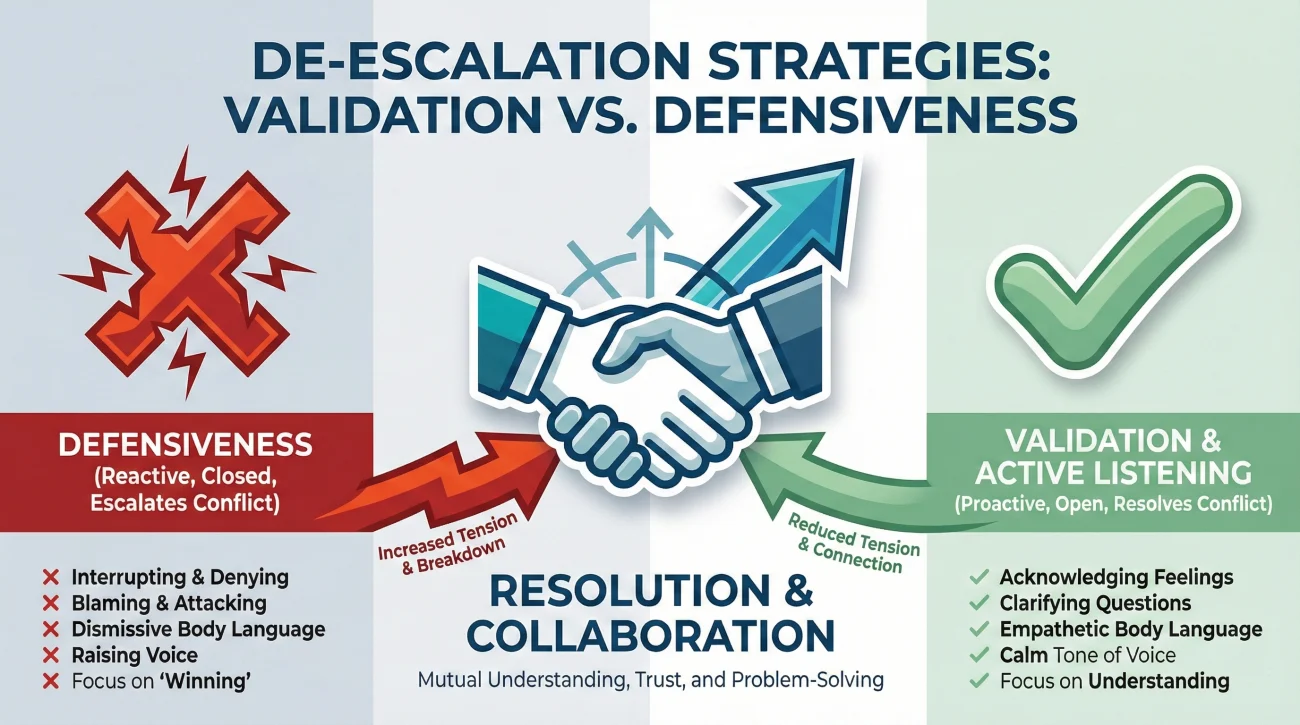
Angry patients often feel unheard, afraid, or powerless. Defensiveness escalates conflict. Acknowledgment, validation, and active listening often defuse tension more effectively than logical arguments about why they shouldn’t be upset.
| Do This | Not This | Why It Works |
|---|---|---|
| “I can see you’re frustrated. Tell me what’s happening” | “There’s no reason to be angry” | Validates emotion, invites communication |
| “That sounds incredibly difficult” | “Other patients deal with this fine” | Acknowledges their specific experience |
| “Let’s figure out what we can do” | “There’s nothing I can do” | Focuses on solutions, maintains partnership |
| “I understand this isn’t what you wanted to hear” | “You’re overreacting” | Normalizes disappointment without judgment |
Never tolerate verbal abuse or threats. Set firm boundaries while maintaining professionalism. “I want to help you, but I can’t do that if you continue yelling. Let’s both take a breath.”
Addressing Non-Compliance
Rather than labeling patients “non-compliant,” explore barriers to adherence. Financial constraints, health literacy issues, cultural beliefs, or past negative experiences often explain behavior that seems irrational from a clinical perspective.
- 🔍 Explore barriers: “What’s making it difficult to take your medication as prescribed?”
- 💰 Address practical concerns: Cost, transportation, childcare, work schedules
- 🤝 Collaborate on solutions: Involve patient in problem-solving, don’t just lecture
- 📚 Assess understanding: Ensure patient actually understands why treatment matters
Demonstrating Bedside Manner in Interviews
Healthcare interviews assess bedside manner through behavioral questions and hypothetical scenarios. Your answers reveal both your technical approach and interpersonal awareness.
Behavioral Question Strategies
When asked about difficult patient interactions, structure answers showing you understand both the clinical and emotional dimensions. Don’t just recite facts – demonstrate your thought process about how to maintain compassion under pressure.
Strong answers include specific communication techniques you used, acknowledge the emotional complexity, and show self-awareness about what you learned or would do differently.
Scenario Response Framework
Hypothetical scenarios test how you’d handle challenging communication situations. Walk through your approach systematically, showing you’d prioritize both patient safety and emotional support.
Expert advice: When describing patient interactions in interviews, always demonstrate you maintained patient dignity and confidentiality even in difficult circumstances. This shows professional maturity beyond just technical competence.
For comprehensive guidance on structuring interview answers and demonstrating professional competencies, explore interview preparation strategies for healthcare contexts.
Developing Your Skills
Bedside manner improves through conscious practice and feedback. Recording yourself during patient education, seeking feedback from colleagues, and reflecting on difficult interactions all accelerate skill development.
- Request feedback from trusted colleagues or mentors after challenging interactions
- Practice delivering difficult news with peers in simulation settings
- Study recordings of your patient education to identify areas for improvement
- Take courses in motivational interviewing or therapeutic communication
- Reflect systematically on interactions that didn’t go well, identify specific improvements
💡 Pro tip: After difficult conversations, jot down what worked and what you’d adjust. This reflective practice builds skills faster than experience alone.
❓ FAQ
🎯 How do I maintain bedside manner when overwhelmed with multiple critical patients?
Even brief interactions can convey care. Make eye contact, use the patient’s name, give a 15-second honest update: “I know you’ve been waiting. I’m managing an emergency but will be back within 30 minutes.” Acknowledgment beats silent neglect.
💼 What if my natural communication style is more reserved or formal?
Warmth doesn’t require effusive personality. Consistency, attentiveness, and following through on promises build trust. Focus on making eye contact, using patient communication techniques like teach-back, and demonstrating reliability. Quiet competence with genuine respect works as effectively as outgoing warmth.
⏰ How do I balance documentation requirements with maintaining patient connection?
Position your computer so you can see both screen and patient. Look up periodically while charting. Explain what you’re doing: “I’m documenting what we discussed so the team has accurate information.” Transparency about documentation normalizes it rather than making it feel like distraction.
📋 How should I respond when patients ask questions I don’t know the answer to?
Honesty builds more trust than bluffing. “That’s a great question. I don’t know the answer off the top of my head, but I’ll find out and get back to you.” Then actually follow through. Patients respect competence that includes knowing your limits.
✨ What if cultural norms conflict with my facility’s standard practices?
Advocate for flexibility when possible. If a family’s cultural practice doesn’t compromise safety, work with your team to accommodate it. When safety requires standard protocols, explain the reasoning compassionately and explore modified approaches that honor both safety and culture.
Final Thoughts

Exceptional bedside manner skills transform clinical competence into healing presence. The technical procedures you perform matter deeply, but so does the way patients feel seen, heard, and respected during their most vulnerable moments. These communication abilities aren’t innate gifts – they’re learnable skills that improve through conscious practice and honest reflection.
Master the fundamentals: appropriate eye contact, vocal tone matching the situation, body language conveying presence and respect. Learn frameworks like SPIKES for difficult conversations. Develop cultural humility that adapts to diverse patient needs. Practice de-escalation when emotions run high. These capabilities make you not just a competent clinician, but a trusted healer.
Healthcare interviews assess these skills because they predict real-world success. Demonstrate through your stories and scenario responses that you understand medicine treats people, not just conditions. Show you’ve thought deeply about how to maintain compassion under pressure, communicate across barriers, and preserve patient dignity even in crisis. That’s what separates good healthcare providers from exceptional ones.
⚠️ Disclaimer: The interview strategies, sample answers, and negotiation tips provided in this guide are for educational purposes only. Hiring decisions are subjective and vary by company and industry. While these strategies are based on professional HR standards, they do not guarantee a specific job offer or result.