What Pharmacist Interviews Test
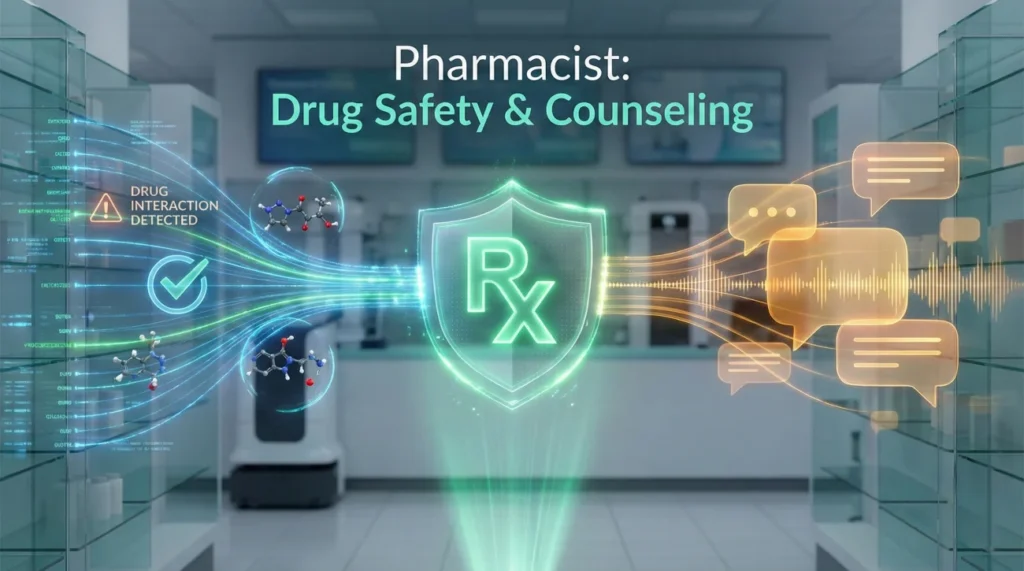
Pharmacist interview questions often test medication expertise through drug interaction identification, prescription verification accuracy, patient counseling effectiveness, medication therapy management knowledge, controlled‑substance stewardship, and clinical decision‑making. Interviewers also look for patient‑safety habits (like error‑prevention routines), clear communication when explaining complex information, collaboration with prescribers, and comfort with privacy and controlled‑medication regulations in your jurisdiction.
This guide covers prescription verification and drug interactions, patient counseling and medication education, medication therapy management and clinical services, controlled substances and regulatory compliance, and pharmacy practice management. Explore comprehensive preparation at our complete interview guide.
Prescription Verification and Drug Interactions
Q: Walk me through your prescription verification process.
Systematic verification helps prevent medication errors and protect patient safety. Confirm patient identity (for example, name and date of birth) and review documented allergies. Verify prescriber information and, when controlled medications are involved, confirm the order meets local requirements. Review the medication details – drug, strength, dosage form, quantity, and directions – and make sure they fit the indication and standard practice.
Screen for drug interactions by reviewing current medications for contraindications, duplications, or clinically significant interactions using your pharmacy’s system and clinical judgment. Verify the dose is appropriate for the patient’s age, weight (when relevant), and renal/hepatic function. Confirm coverage or prior authorization needs when applicable, counsel the patient on proper use and key side effects to watch for, and document clinical interventions and prescriber communications in the patient profile to support continuity of care.
Q: How do you identify and manage clinically significant drug interactions?
Drug interaction management requires clinical judgment and communication. Evaluate severity determining if interaction contraindicated requiring alternative, major requiring monitoring or dose adjustment, or moderate requiring patient awareness but manageable. Consider mechanism including pharmacokinetic interactions affecting absorption, distribution, metabolism, or excretion, and pharmacodynamic interactions causing additive, synergistic, or antagonistic effects.
⚠️ High-risk interactions: Warfarin + NSAIDs (bleeding), MAOIs + SSRIs (serotonin syndrome), statins + azole antifungals (rhabdomyolysis), ACE inhibitors + potassium supplements (hyperkalemia)
Contact prescriber immediately for contraindicated interactions suggesting therapeutic alternatives, recommend monitoring parameters for major interactions like INR for warfarin, liver enzymes for hepatotoxic combinations, or potassium levels for drugs causing hyperkalemia. Educate patient on interaction symptoms to watch for and when to seek medical attention, document intervention in patient record and prescription system preventing future dispensing.
Q: Describe handling a prescription you believe is incorrect or inappropriate.
Questionable prescriptions require professional judgment and tactful communication. Never dispense medication you believe unsafe or inappropriate regardless of prescriber pressure, document specific concerns including incorrect dose, wrong drug for indication, duplicate therapy, or potential interaction, and contact prescriber respectfully explaining clinical concern and requesting clarification or modification.
Offer therapeutic alternatives if appropriate suggesting evidence-based options, obtain verbal or written order modification documenting conversation including prescriber name, time, and agreed changes, and counsel patient explaining delay ensuring they understand pharmacy’s role in protecting their safety. If prescriber insists on unsafe prescription and refuses modification, decline to fill explaining professional liability and patient safety concerns, and suggest patient seek second opinion or alternative pharmacy while documenting refusal thoroughly.
Q: How do you stay current with new medications and treatment guidelines?
Continuing education maintains competency in rapidly evolving field. Subscribe to professional journals including Journal of the American Pharmacists Association, Pharmacotherapy, or specialty publications relevant to practice area, attend pharmacy conferences and CE programs meeting state licensure requirements, and participate in professional organizations providing networking and learning opportunities.
Review FDA drug approvals and safety communications monthly noting new indications, warnings, and recalls, utilize clinical decision support tools like Lexicomp, Micromedex, or UpToDate providing current evidence-based information, and participate in journal clubs or case conferences with colleagues discussing challenging cases and new evidence. Set Google Scholar alerts for topics relevant to practice receiving updates on published research automatically.
Patient Counseling and Communication
Q: How do you counsel patients with limited health literacy?
Health literacy barriers require adapted communication strategies. Avoid medical jargon using plain language like “blood thinner” instead of “anticoagulant” or “sugar pill” instead of “placebo,” demonstrate medication use with actual bottles and devices showing how to measure liquid medications or use inhalers properly, and provide written instructions with pictures or diagrams supplementing verbal counseling.
Use teach-back method asking patient to explain in their own words how they’ll take medication confirming understanding rather than just asking “do you understand,” focus on essential information prioritizing most important points about timing, food interactions, and serious side effects avoiding overwhelming detail, and offer translated materials or interpreter services for non-English speakers ensuring accurate communication. Schedule follow-up calls or visits for complex regimens checking adherence and addressing questions.
Q: Describe handling a patient who refuses to take prescribed medication.
Medication refusal requires understanding barriers not forcing compliance. Ask open-ended questions exploring reasons including cost concerns, fear of side effects, cultural beliefs, or past negative experiences without judgment. Listen actively validating concerns showing respect for patient autonomy while providing accurate information.
Address specific concerns providing evidence-based information about safety and efficacy, discuss cost barriers suggesting generic alternatives, patient assistance programs, or therapeutic substitutions, and explain consequences of non-treatment helping patient make informed decision understanding risks. Communicate patient’s concerns to prescriber recommending alternative therapy if patient adamant about refusal, and document conversation thoroughly protecting yourself legally while respecting patient’s right to refuse treatment.
Q: How do you manage patient complaints about medication side effects?
Side effect management balances safety with therapeutic benefit. Listen to symptoms carefully documenting onset, severity, and impact on daily activities, assess severity determining if symptoms minor nuisance, bothersome but tolerable, or serious requiring immediate medical attention, and review medication timing considering if side effects dose-related or timing-dependent.
Provide management strategies like taking medication with food reducing GI upset, timing doses to minimize impact like sedating medications at bedtime, or using adjunct therapies like anti-nausea medication for chemotherapy. Contact prescriber for serious or intolerable side effects discussing dose reduction, therapeutic alternatives, or discontinuation, and educate patient on expected versus concerning symptoms knowing when to seek emergency care versus when symptoms resolve with time.
Q: Explain counseling a patient on proper antibiotic use.
Antibiotic stewardship prevents resistance and ensures effectiveness. Emphasize importance of completing full course even if feeling better explaining bacteria can survive and develop resistance if treatment stopped prematurely, discuss timing with or without food as specified affecting absorption, and explain expected timeline for improvement noting symptoms should improve within 2-3 days but complete resolution may take full course.
Warn about specific side effects including GI upset, photosensitivity with tetracyclines, or yeast infections with broad-spectrum agents, caution against alcohol with metronidazole or certain cephalosporins causing disulfiram reaction, and educate about antibiotic resistance importance not saving pills for later, sharing with others, or demanding antibiotics for viral infections. Provide contact information for questions or concerning symptoms during treatment.
Medication Therapy Management
Describe your approach to comprehensive medication review.
Comprehensive medication review optimizes therapy and identifies drug-related problems. Collect complete medication list including prescription drugs, OTC medications, supplements, and herbal products asking patient to bring all bottles, review medication appropriateness for each indication ensuring evidence-based therapy, correct dosing, and no contraindications, and identify drug-related problems including duplications, interactions, adverse effects, or medications without clear indication.
Assess adherence barriers discussing cost issues, complex regimens, side effects, or forgetfulness affecting compliance, evaluate therapeutic outcomes reviewing whether medications achieving intended goals like blood pressure control, glucose management, or symptom relief, and create action plan documenting interventions, recommendations to prescribers, patient education provided, and follow-up schedule. Provide written summary to patient and prescriber facilitating coordinated care and medication optimization.
How do you collaborate with physicians and other healthcare providers?
Interprofessional collaboration improves patient outcomes. Establish professional relationships introducing yourself and your role to prescribers in your area, participate in team rounds in hospital or clinic settings contributing pharmacotherapy expertise, and communicate recommendations professionally using SBAR format (Situation, Background, Assessment, Recommendation) presenting clinical data concisely.
Document interventions thoroughly creating record of recommendations and outcomes, respond to questions promptly establishing reliability and building trust, and educate on pharmacy capabilities including medication therapy management, immunizations, or chronic disease management services expanding collaborative opportunities. Respect prescriber’s clinical judgment even when disagreeing presenting evidence respectfully and accepting final decision while documenting your professional opinion.
Describe managing a patient with polypharmacy and multiple chronic conditions.
Polypharmacy management prevents adverse events and improves quality of life. Review each medication assessing if still necessary, if dose appropriate, and if therapeutic goals being met without excessive burden, identify potentially inappropriate medications using Beers Criteria for elderly patients or STOPP/START criteria, and deprescribe when possible eliminating unnecessary medications with prescriber approval.
Simplify regimen synchronizing refills to single pick-up date, consolidating to once or twice daily dosing when possible, and recommending combination products reducing pill burden. Provide adherence tools like pill organizers, medication calendars, or smartphone apps, coordinate care between multiple providers ensuring all aware of complete medication list preventing duplications or interactions, and monitor closely for adverse effects in vulnerable populations scheduling regular follow-up assessing efficacy and safety.
Controlled Substances and Compliance
Q: How do you identify and handle potentially fraudulent prescriptions?
Prescription fraud detection protects patients and pharmacy license. Red flags include altered prescriptions with changes to quantity, drug, or strength, excessive quantities inconsistent with legitimate medical use, multiple prescriptions from different prescribers for same controlled substance, and patients paying cash for expensive medications refusing insurance creating no paper trail.
Behavioral indicators can include patients demanding immediate filling, unusual familiarity with specific drug names and strengths, out‑of‑area prescriptions without a reasonable explanation, or insisting on a particular manufacturer. Verify suspicious prescriptions by calling the prescriber using a number from a trusted, independent source (not the one printed on the prescription). When available, consult a prescription monitoring program to review controlled‑medication history. If you can’t confirm legitimacy, follow pharmacy policy, document your decision, and escalate or report concerns through the appropriate channels.
Q: Explain proper handling and storage of controlled substances.
Controlled‑medication management requires strict compliance. Store controlled medications securely with access limited to authorized staff, maintain accurate inventory and dispensing records, and follow your organization’s policies for receiving, dispensing, returns, and disposal.
Know the schedule‑specific prescribing and refill rules that apply in your jurisdiction, and make sure documentation is complete for every transaction. Perform routine reconciliations, investigate discrepancies promptly, and report suspected diversion or loss according to required procedures.
Q: How do you counsel patients on opioid safety?
Opioid counseling addresses addiction risks and overdose prevention. Discuss addiction risk factors including personal or family history of substance abuse, mental health conditions, or previous addiction educating honestly about dependence versus addiction, explain proper use taking lowest effective dose for shortest duration, never increasing dose without prescriber approval, and never combining with alcohol or benzodiazepines risking fatal respiratory depression.
Provide safe storage recommendations keeping locked away from children and others with substance abuse history, discuss disposal options using take-back programs or FDA-approved disposal systems not flushing or trash disposal, and offer naloxone coprescribing explaining overdose reversal use and training family members. Assess for signs of misuse including early refills, lost prescriptions, or seeking from multiple prescribers intervening early and coordinating with prescriber when concerns arise.
Q: What are your responsibilities under HIPAA?
HIPAA compliance protects patient privacy and pharmacy reputation. Maintain confidentiality discussing patient information only with authorized individuals on need-to-know basis, ensure secure prescription handling keeping patient names and medications invisible to others in waiting area, and obtain written authorization before releasing records to insurance, employers, or family members except legally authorized representatives.
Protect electronic health information using secure passwords, logging out when leaving computer, encrypting electronic transmissions, and restricting system access to minimum necessary for job function. Train staff regularly on privacy policies and procedures, report breaches immediately following facility protocol, and maintain documentation of authorization forms and privacy practices. Violations result in significant fines, license sanctions, and criminal penalties making compliance non-negotiable professional responsibility.
Clinical Pharmacy Knowledge Check
20 Practice Questions
1. Schedule II controlled substances?
- Allow unlimited refills
- Require original prescription, no refills
- Can be called in
- Have no restrictions
2. Most important step in prescription verification?
- Check for drug interactions and allergies
- Process quickly
- Verify insurance only
- Count pills
3. Warfarin + NSAIDs interaction causes?
- No significant interaction
- Increased bleeding risk
- Reduced effectiveness
- Liver damage
4. Teach-back method means?
- Repeating same information louder
- Asking patient to explain in their own words
- Giving written materials
- Having patient sign form
5. Patient complains antibiotic not working after 1 day. You?
- Immediately refund
- Explain antibiotics take 2-3 days, complete full course
- Switch to different antibiotic
- Tell them it’s viral
6. HIPAA requires?
- Sharing all information with family
- Protecting patient health information privacy
- Public disclosure of prescriptions
- No privacy restrictions
7. Suspicious prescription red flags include?
- Alterations, excessive quantities, cash payment
- Using insurance
- Patient asking questions
- Local prescriber
8. Medication therapy management includes?
- Just dispensing medications
- Comprehensive review, identifying problems, optimizing therapy
- Counting pills only
- Billing insurance
9. Beers Criteria are used for?
- Beer and medication interactions
- Identifying potentially inappropriate meds for elderly
- Pediatric dosing
- Pregnancy categories
10. Patient refuses medication due to cost. You?
- Insist they must take it
- Suggest generics, patient assistance, discuss with prescriber
- Do nothing
- Give them free samples
11. Pharmacist licensure requires?
- PharmD degree and passing NAPLEX
- High school diploma only
- Associate degree
- No requirements
12. Counseling patients on opioids includes?
- Encouragement to share with family
- Addiction risks, safe storage, naloxone availability
- Increasing dose as needed
- Combining with alcohol is safe
13. Prescriber writes unclear prescription. You?
- Guess what they meant
- Call prescriber for clarification
- Dispense most common dose
- Refuse without explanation
14. Generic drugs must be?
- Different from brand name
- Bioequivalent with same active ingredient
- Less effective
- Unapproved by FDA
15. Continuing education is required for?
- First year only
- License renewal, ongoing competency
- Never required
- Only if employer requires
16. Drug interaction severity is classified as?
- All interactions equally serious
- Contraindicated, major, moderate, minor
- Only life-threatening matters
- No classification system
17. Prescription monitoring programs (PMP/PDMP) help?
- Track controlled substance prescriptions, identify misuse
- Monitor all OTC medications
- Only for law enforcement
- Not required for pharmacists
18. Proper antibiotic counseling includes?
- Stop when feeling better
- Complete full course even if improved
- Save extras for later
- Share with family
19. Pharmacist role in immunizations?
- Not allowed to administer
- Can administer vaccines with proper certification
- Only dispense, not administer
- No involvement with vaccines
20. When patient has medication allergy, you?
- Dispense anyway
- Flag profile, contact prescriber, suggest alternative
- Ignore if different drug class
- Let patient decide
❓ FAQ
🎯 What’s the difference between retail and clinical pharmacist roles?
Retail pharmacists focus on dispensing, patient counseling, and inventory management in community pharmacy settings. Clinical pharmacists work in hospitals or clinics providing medication therapy management, participating in rounds with medical teams, and specializing in areas like oncology, infectious disease, or critical care. Clinical roles typically require residency training and board certification.
🚀 How should I prepare for clinical scenario questions?
Review common drug interactions, therapeutic guidelines, and evidence-based treatment protocols. Practice using SBAR format presenting clinical recommendations professionally. Prepare examples of difficult situations you’ve managed using STAR method. Stay current with recent drug approvals, safety alerts, and practice-changing studies demonstrating commitment to evidence-based practice.
💼 What certifications enhance pharmacist career prospects?
Board certification through BPS in specialties like ambulatory care, oncology, pharmacotherapy, or critical care demonstrates advanced expertise. Immunization certification expands clinical services. MTM certification supports comprehensive medication review services. Additional certifications in diabetes education, anticoagulation management, or travel health create niche opportunities and competitive advantages.
📚 How do I demonstrate patient-centered care philosophy?
Share examples of going beyond dispensing to solve patient problems like finding financial assistance, coordinating care between providers, or simplifying complex regimens. Discuss using teach-back methods, providing personalized counseling, and following up on medication concerns. Emphasize collaboration with patients as partners in their care rather than just following doctor’s orders.
🌐 What questions should I ask the interviewer?
Ask about pharmacist-to-technician ratios and prescription volume gauging workload expectations, opportunities for clinical services like MTM or immunizations, continuing education support and advancement opportunities, technology systems used, and staff retention rates indicating workplace culture. Questions demonstrate genuine interest while gathering information to evaluate if position fits your career goals.
Final Thoughts
Success with pharmacist interview questions requires demonstrating clinical expertise in pharmacotherapy, commitment to patient safety through medication error prevention, and effective communication skills counseling diverse patients. Focus on drug interaction identification with evidence-based management, prescription verification thoroughness, medication therapy management capabilities, controlled substance regulatory knowledge, and interprofessional collaboration strengthening healthcare teams.
Employers value pharmacists who stay current with pharmaceutical developments, balance efficiency with accuracy, and advocate for patients navigating complex medication regimens. Prepare by reviewing clinical guidelines and recent drug approvals, practicing STAR method responses to behavioral questions, bringing current license and certifications, and researching facility’s services and patient population demonstrating genuine interest in contributing clinical expertise, patient-centered care, and professional excellence to their pharmacy team.
⚠️ Disclaimer: The interview strategies, sample answers, and negotiation tips provided in this guide are for educational purposes only. Hiring decisions are subjective and vary by company and industry. While these strategies are based on professional HR standards, they do not guarantee a specific job offer or result.