- What makes healthcare hiring different: It tests clinical competence, ethics, patient communication, and crisis judgment at the same time, with safety always in the background.
- Question types you will face: Clinical and protocol scenarios, bedside manner and tough conversations, ethical dilemmas, team collaboration, and high-pressure crisis decisions.
- Role changes the interview fast: Direct care roles get heavier clinical probing, pharmacy leans on medication safety, allied health balances technique with patient education, admin roles focus on privacy, compliance, and operations.
- How to prep without sounding scripted: Refresh core knowledge, practice talking through your reasoning step by step, and build a few STAR stories that highlight patient safety, teamwork, and accountability.
- What separates strong candidates: Research the facility and patient population, ask smart questions about ratios, success metrics, and team dynamics, and avoid bluffing, oversimplifying, or ignoring documentation and HIPAA boundaries.
The Unique Challenge of Medical Hiring
Preparing for healthcare interview questions demands more than generic interview skills. Medical hiring evaluates clinical competence, ethical judgment, patient communication, and crisis management simultaneously. A wrong answer doesn’t just cost you the job – it reveals gaps in knowledge that could affect patient safety.
Effective medical interview preparation requires understanding what distinguishes healthcare interviews from other industries. Technical questions probe clinical knowledge specific to your role. Behavioral questions assess how you handle high-pressure situations where lives hang in balance. Ethical scenarios test your judgment when policies conflict with patient needs.
This guide breaks down the landscape of healthcare interviews across roles, from front-line clinical positions to administrative leadership, helping you prepare strategically for the specific challenges your role demands.
Categories of Healthcare Interview Questions
Medical interviews combine multiple question types that together create a comprehensive assessment of your capabilities. Understanding these categories helps you prepare systematically rather than hoping to guess what they’ll ask.
Clinical and Technical Knowledge
Clinical interview questions verify you possess the foundational knowledge required for patient care. These range from basic anatomy and physiology to role-specific procedures and protocols. The depth varies dramatically by position – a medical assistant faces different technical expectations than a nurse practitioner.
- 🩺 Direct clinical scenarios: How would you respond to specific patient presentations?
- 📊 Protocol knowledge: What are the steps for administering X or performing Y?
- 💊 Medication safety: Common drug interactions, dosing calculations, administration routes
- 🔬 Diagnostic reasoning: Walk through your assessment process for given symptoms
Expert advice: Clinical questions aren’t just about knowing facts – they’re about demonstrating systematic thinking. When answering, verbalize your reasoning process. Show how you’d prioritize, what you’d rule out first, and why.
Patient Communication and Bedside Manner
Technical competence means nothing if you can’t communicate effectively with patients and families. Interviewers assess your ability to explain complex medical information clearly, deliver difficult news compassionately, and build trust with diverse populations.
These questions explore how you handle emotionally charged situations, communicate across language or cultural barriers, and maintain professionalism when patients become difficult or aggressive.
Ethical Dilemmas and Professional Judgment
Healthcare constantly presents situations without clear-cut answers. Interview questions probe how you navigate conflicts between patient autonomy and safety, institutional policies and individual needs, or competing treatment priorities when resources are limited.
| Question Category | What They Assess | Example Focus Areas |
|---|---|---|
| Clinical Knowledge | Technical competence, systematic thinking | Protocols, procedures, clinical reasoning |
| Patient Communication | Empathy, clarity, cultural sensitivity | Difficult conversations, health literacy, rapport building |
| Ethical Scenarios | Moral reasoning, policy understanding | Confidentiality, consent, resource allocation |
| Team Collaboration | Interprofessional dynamics, conflict resolution | Disagreements with physicians, challenging orders, escalation |
| Crisis Management | Performance under pressure, prioritization | Code situations, multiple critical patients, emergency triage |
How Questions Vary by Healthcare Role
A healthcare job interview adapts significantly based on your specific position. Direct patient care roles face heavy clinical questioning. Administrative positions emphasize operations and compliance. Support roles focus on their specific technical domain.
Nursing Positions
Nursing interviews span from CNAs performing basic hygiene care to Nurse Practitioners diagnosing and prescribing independently. Questions scale with scope of practice – CNAs face scenario-based questions about patient dignity and safety during basic care, while NPs navigate complex clinical decision-making and diagnostic reasoning.
💡 Pro tip: All nursing roles get asked about handling difficult patients or families. Prepare a story demonstrating de-escalation skills, empathy, and knowing when to escalate to a supervisor.
Allied Health Professionals
Physical therapists, occupational therapists, respiratory therapists, and similar roles face questions balancing technical knowledge with patient motivation and education. You need to demonstrate competence in your specific modality while showing ability to explain treatments and encourage patient compliance.
Pharmacy Positions
Pharmacists and pharmacy technicians face heavy medication knowledge questions – drug interactions, contraindications, counseling points. Technicians also get tested on insurance processing and inventory management. Both roles answer questions about catching prescriber errors and communicating concerns up the chain.
Administrative and Support Roles
Medical receptionists, billers, coders, and administrators handle less direct clinical work but face intense focus on patient privacy, insurance knowledge, scheduling systems, and customer service under pressure. These interviews emphasize regulatory compliance and operational efficiency.
| Role Category | Primary Interview Focus | Key Competencies Tested |
|---|---|---|
| RN/LPN/CNA | Clinical judgment, patient safety | Nursing process, medication safety, patient advocacy |
| Physicians/PA/NP | Diagnostic reasoning, autonomy | Differential diagnosis, treatment planning, medical ethics |
| Allied Health | Modality expertise, patient education | Treatment plans, functional goals, interdisciplinary collaboration |
| Pharmacy | Drug knowledge, safety verification | Interactions, counseling, error prevention, calculations |
| Emergency Services | Rapid assessment, trauma response | Triage, protocols, high-acuity care, transport decisions |
| Administrative | Operations, compliance, privacy | HIPAA, billing/coding, scheduling, customer service |
Strategic Preparation Approach
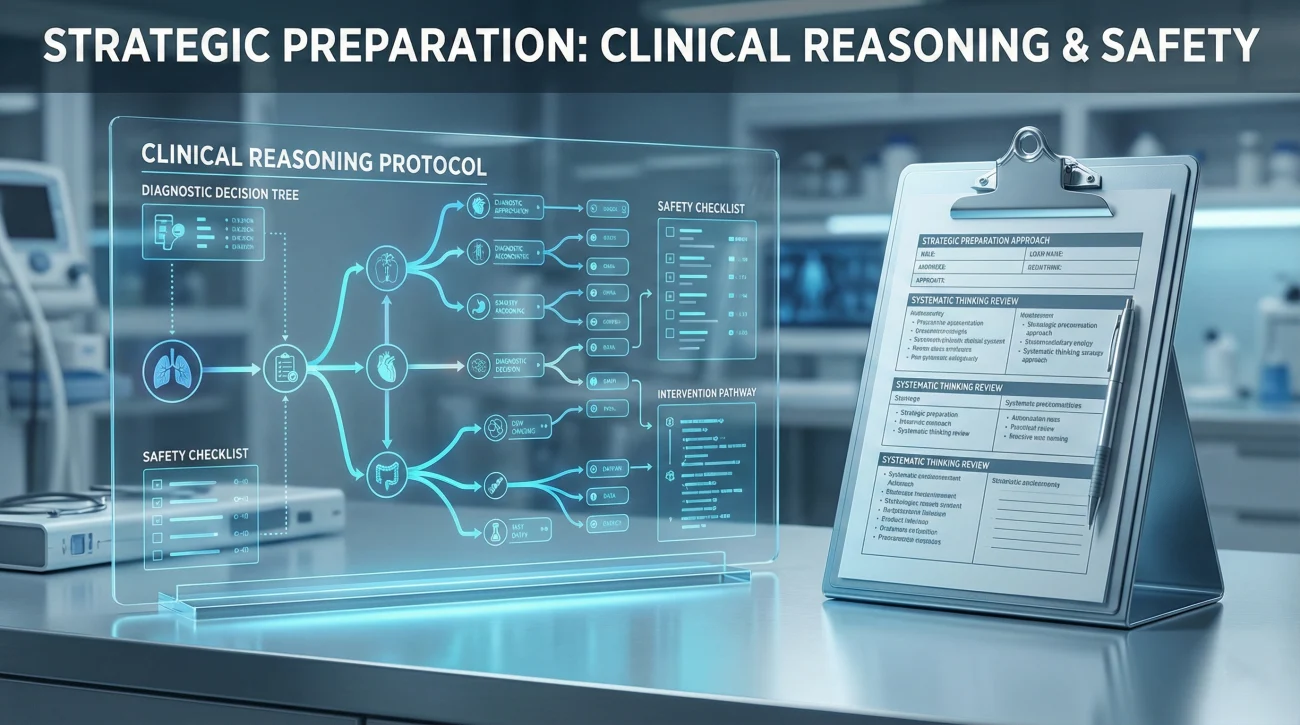
Effective preparation for nursing interview questions and broader healthcare interviews requires systematic review across multiple domains. Don’t just memorize answers – build frameworks for thinking through questions you haven’t anticipated.
Clinical Knowledge Refresh
Review core concepts relevant to your role. For nurses, this means medication administration, nursing process, common conditions. For therapists, treatment modalities and functional assessments. For pharmacy, top drug classes and interactions. Focus on foundational knowledge you use daily but might struggle to articulate clearly under pressure.
- Review protocols for common procedures you’ll perform
- Refresh emergency response algorithms (code blue, rapid response, etc.)
- Study facility-specific policies if available (infection control, fall prevention)
- Practice explaining complex medical concepts in patient-friendly language
Scenario-Based Preparation
Healthcare interviews love hypothetical scenarios. Practice walking through your thinking process out loud. “First, I would assess…” “My priority concern would be…” “I’d notify the physician if…” This demonstrates systematic clinical reasoning, not just memorized facts.
Expert advice: When faced with an ethical dilemma question, acknowledge the complexity before diving into your answer. “This situation involves competing priorities between X and Y” shows nuanced thinking rather than oversimplifying difficult decisions.
Behavioral Question Preparation
Prepare stories demonstrating patient advocacy, teamwork under pressure, handling mistakes, and maintaining professionalism during conflicts. Use the STAR method but focus on patient outcomes and safety considerations – these matter more in healthcare than in other industries.
Never fabricate clinical stories. Experienced healthcare interviewers can tell when scenarios sound fake, and getting caught lying about patient care destroys your credibility permanently.
Common Interview Mistakes in Healthcare
Healthcare candidates make predictable errors that signal lack of preparation or poor judgment. Avoiding these pitfalls immediately elevates your performance.
Clinical Knowledge Gaps
Claiming expertise in areas where you lack competence is dangerous. If you don’t know something, say so – then explain how you’d find the answer or who you’d consult. This demonstrates safety awareness and appropriate humility.
- ❌ Bluffing through clinical questions: Making up protocols you don’t actually know
- ❌ Oversimplifying complex scenarios: Acting like every situation has one obvious right answer
- ❌ Ignoring safety considerations: Focusing on speed/efficiency over patient safety
- ❌ Forgetting documentation: Not mentioning charting, reporting, or communication steps
Saying “I would just figure it out” when asked about an unfamiliar procedure signals dangerous overconfidence. Healthcare requires knowing your limits and asking for help.
Communication and Professionalism Failures
Speaking negatively about former employers, patients, or colleagues reveals poor judgment. Healthcare is a small world – insulting a previous workplace might insult someone’s friend or former colleague. Focus on what you learned and how you grew from challenges.
Compliance and Ethics Blind Spots
Not understanding HIPAA, patient rights, or scope of practice boundaries demonstrates fundamental unpreparedness for healthcare work. These aren’t optional extras – they’re core professional responsibilities.
Researching the Facility and Role
Generic healthcare answers fall flat. Strong candidates demonstrate knowledge of the specific facility, patient population, and role expectations. This research shapes how you frame your experience and interests.

Understanding the Organization
Learn the facility’s specialty areas, patient demographics, and organizational structure. A Level I trauma center values different skills than a rural community hospital. A pediatric specialty clinic serves different needs than a geriatric long-term care facility.
- Review the facility’s mission statement and values
- Understand their specialty services and patient population
- Research recent news about expansions, awards, or changes
- Note what electronic health record system they use
💡 Pro tip: If the facility emphasizes patient-centered care or trauma-informed approaches, weave those concepts into your answers naturally. This shows cultural alignment beyond technical competence.
Clarifying Role Specifics
Job descriptions in healthcare can be vague. Before your interview, research typical responsibilities, required certifications, and advancement paths for your specific role at similar organizations. Prepare questions that demonstrate you’ve thought deeply about the position.
Questions You Should Ask
Healthcare interviews expect you to ask informed questions that show professional maturity and genuine interest. Weak questions focus only on schedule and benefits. Strong questions explore patient care models, professional development, and team dynamics.
| Question Type | Strong Examples | Why It Works |
|---|---|---|
| Clinical Model | “What’s the typical nurse-to-patient ratio on this unit?” | Shows concern for safe practice conditions |
| Professional Growth | “What continuing education or certification support does the facility provide?” | Demonstrates commitment to ongoing learning |
| Team Culture | “How does the team typically handle disagreements about patient care?” | Assesses conflict resolution and collaboration |
| Success Metrics | “What does success look like in this role during the first 90 days?” | Shows goal-orientation and accountability |
| Patient Population | “What are the most common conditions or procedures I’d encounter?” | Reveals genuine preparation for role specifics |
For comprehensive guidance on structuring professional introductions and answering behavioral questions effectively, explore additional interview preparation strategies tailored to healthcare contexts.
Explore Role-Specific Guidance
Each healthcare position faces unique interview challenges. Dive into detailed preparation for your specific role:
Core Clinical Foundations
- Bedside Manner Skills – Empathy and patient communication techniques
- Medical Ethics Examples – Principles, confidentiality, patient rights
- Clinical Reasoning Cycle – Assessment to evaluation process
Nursing Positions
- Registered Nurse (RN) Interview Questions – Clinical and behavioral assessment
- CNA Interview Questions – Patient care and hygiene fundamentals
- LPN/LVN Interview Questions – Wound care and scope of practice
- Nurse Practitioner Interview Questions – Diagnosis and clinical autonomy
Medical Support Roles
- Medical Assistant Interview Questions – Clinical and administrative duties
- Medical Receptionist Interview Questions – Scheduling and patient privacy
- Phlebotomist Interview Questions – Venipuncture and safety protocols
- Medical Biller and Coder Interview Questions – ICD-10 and claims processing
Pharmacy and Medication Management
- Pharmacist Interview Questions – Drug safety and patient counseling
- Pharmacy Technician Interview Questions – Dispensing and calculations
Rehabilitation and Therapy
- Physical Therapist Interview Questions – Rehab plans and patient motivation
- Occupational Therapist Interview Questions – ADLs and functional adaptation
Dental Positions
- Dental Assistant Interview Questions – Chairside support
- Dentist Interview Questions – Procedures and pain management
- Dental Hygienist Interview Questions – Preventative care
Advanced Practice and Physician Roles
- Physician Assistant Interview Questions – Clinical judgment
- Healthcare Administrator Interview Questions – Operations and compliance
Specialized Technical Roles
- Radiologic Technologist Interview Questions – Imaging safety
- EMT & Paramedic Interview Questions – Trauma response and triage
- Surgical Tech Interview Questions – Sterile field and OR procedures
Support and Community Health
- Medical Social Worker Interview Questions – Case management
- Caregiver Interview Questions – Home care and compassion
- Veterinary Technician Interview Questions – Animal care
- Nutritionist & Dietitian Interview Questions – Nutritional counseling
❓ FAQ
🎯 How technical should I get when answering clinical questions?
Match your audience’s expertise level. When interviewing with clinical managers, use appropriate medical terminology. With HR or non-clinical administrators, explain concepts more simply. Always demonstrate systematic thinking – walk through your assessment and reasoning process, not just final answers.
💼 What if I’m asked about a procedure I haven’t performed recently?
Be honest about your experience level while demonstrating foundational knowledge. “I haven’t performed X independently in my current role, but I’m familiar with the protocol and would request supervision initially to ensure patient safety.” This shows appropriate humility and commitment to safe practice.
⏰ How should I handle ethical dilemma questions with no clear right answer?
Acknowledge the complexity first. Identify the competing values or priorities at stake. Walk through your decision-making process, showing you’d consult policies, seek guidance from supervisors, and prioritize patient safety and autonomy. Healthcare ethics often involve balancing imperfect options, not finding perfect solutions.
📋 Should I mention specific patient stories in my answers?
Yes, but maintain strict HIPAA compliance. Never share identifying information. Frame stories as “I once cared for a patient with condition X who experienced Y” without names, dates, or details that could identify individuals. Focus on your actions and decision-making, not patient specifics.
✨ How do I demonstrate cultural competence in interviews?
Share specific examples of working with diverse populations, using interpreters, or adapting communication styles. Acknowledge you’re always learning and open to feedback. Avoid claiming expertise in cultures you don’t belong to – instead, emphasize respect, curiosity, and commitment to patient-centered care regardless of background.
Final Thoughts

Succeeding in healthcare interview questions requires balancing clinical knowledge, ethical judgment, and interpersonal skills. Technical competence matters, but so does demonstrating you understand the human side of medicine – the communication, empathy, and professionalism that builds patient trust and enables effective care.
Preparation separates confident candidates from nervous ones. Review your clinical foundations, practice articulating your reasoning process, and prepare stories that show how you handle the complex, high-stakes situations healthcare presents daily. Know your scope of practice, understand patient rights and privacy, and never claim competence you don’t possess.
Healthcare hiring isn’t just about filling positions – it’s about ensuring patient safety through qualified, ethical, communicative professionals. Demonstrate you’re that professional, and the right opportunity will follow.
⚠️ Disclaimer: The interview strategies, sample answers, and negotiation tips provided in this guide are for educational purposes only. Hiring decisions are subjective and vary by company and industry. While these strategies are based on professional HR standards, they do not guarantee a specific job offer or result.