EMT and Paramedic Interview Questions: What Employers Test
EMT and paramedic interview questions test your ability to stay calm under pressure while making high-stakes decisions. Interviewers look for strong trauma assessment habits, clear triage thinking, solid protocol awareness, and communication that works on chaotic scenes. Expect scenario-based questions about multi-casualty incidents, difficult patient encounters, equipment problems, and ethical dilemmas. Strong candidates show composure, systematic clinical thinking, teamwork with other responders, and genuine respect for pre-hospital care.
This guide explores trauma response protocols, triage methodologies, scene safety procedures, patient interaction techniques, and professional resilience strategies. Strengthen your preparation at emergency services interview resources.
Trauma Assessment and Management
The ABCs of Trauma Care
Q: Walk me through your approach to a trauma patient.
I use an ABC-focused primary survey to keep care systematic and avoid missed threats. I confirm and protect the airway (with spinal precautions when indicated), assess breathing and address immediate problems, control major bleeding and evaluate circulation, check neurologic status quickly using AVPU, and expose the patient enough to identify injuries while preventing heat loss. I narrate my priorities, follow local protocols, and reassess throughout transport.
Circulation assessment controls major bleeding applying direct pressure, tourniquet for extremity hemorrhage not controlled by pressure, or hemostatic dressing for junctional wounds, checks pulse and skin condition assessing rate, quality, and perfusion through capillary refill, and establishes IV access if paramedic obtaining large-bore access for fluid resuscitation. Disability screening uses AVPU scale (Alert, Verbal, Painful, Unresponsive) for quick mental status, checks pupils for size and reactivity identifying neurological injury, and assesses motor function asking patient to move extremities when appropriate. Exposure examines entire body removing clothing to identify all injuries while preventing hypothermia covering patient after assessment maintaining body temperature critical for trauma outcomes.
Golden Hour Concepts
Q: Explain the “Golden Hour” and its implications.
The “Golden Hour” points to the first hour after major trauma, when time to definitive care can strongly affect outcomes. In the field, that means a rapid primary survey, immediate life-saving interventions within scope, and early transport – especially when the patient is unstable.
I also think about destination (trauma-capable facility when indicated), give an early pre-arrival report so the team can prepare, and keep reassessing en route. The concept is a reminder to balance thoroughness with speed: address critical threats, then move toward definitive care.
Q: How do you manage a patient in shock?
I watch for shock early – changes in mental status, a fast/weak pulse, cool clammy skin, and other signs of poor perfusion. I pair those findings with the context of the call to consider likely causes (for example: hemorrhage, cardiac issues, anaphylaxis, sepsis, or obstruction).
My priorities are to treat immediate causes within my scope (control bleeding, support airway and breathing, keep the patient warm), monitor vitals frequently, and transport for definitive care. If I’m working at the paramedic level, I follow protocol for IV access/fluids/medications as appropriate and consult medical direction when needed.
Mass Casualty and Triage Protocols
Describe how you would triage a multi-vehicle accident with 8 patients.
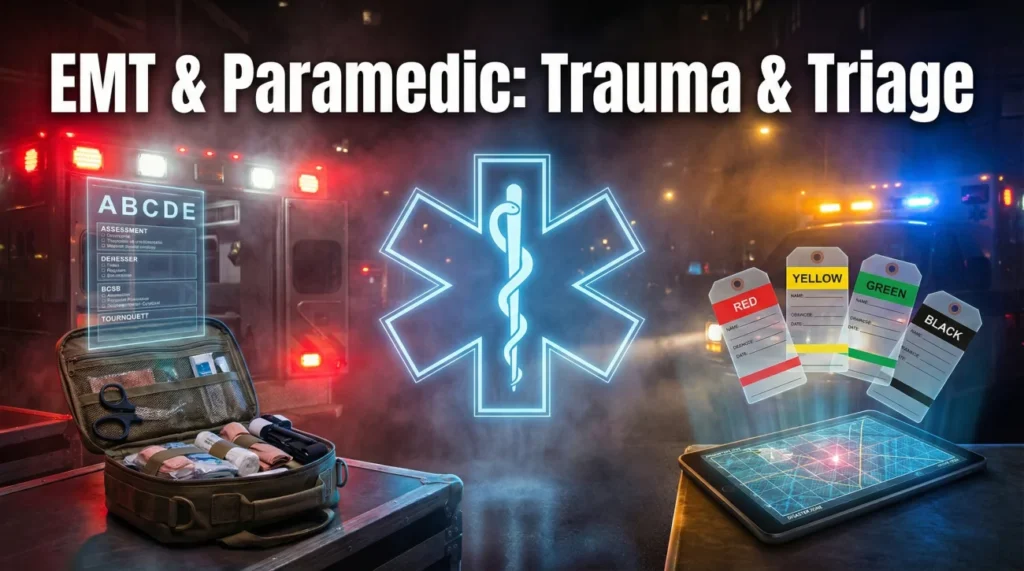
A rapid triage method such as START helps sort patients quickly and consistently. First, I direct anyone who can walk to a safe area and assign someone to supervise them. For non-ambulatory patients, I check breathing, perfusion, and mental status in a consistent order to decide who needs immediate attention (Red), who can wait briefly (Yellow), who is minor (Green), and who is expectant (Black) given available resources.
Color categories guide treatment priority with Red (immediate) for life-threatening injuries requiring immediate intervention transported first, Yellow (delayed) for serious but stable injuries can wait short time for transport, Green (minor) for walking wounded treat last or self-transport, and Black (deceased/expectant) for dead or injuries incompatible with survival given available resources. Tag placement attaches triage tags to patient using tear-off portions indicating category, documents brief assessment findings and time triaged, and reassesses regularly as patient conditions change upgrading or downgrading categories. Resource allocation coordinates with incident command requesting additional ambulances based on patient count, establishes treatment areas organizing patients by category facilitating systematic care, and communicates with hospitals alerting them to patient numbers and acuity preparing to receive mass casualties.
What’s your role in the incident command system?
ICS (Incident Command System) provides standardized organizational structure. Position assignment depends on arrival time and training with first-arriving unit often assuming initial command establishing command post and assessing scene, subsequent arrivals receiving specific assignments from incident commander like triage, treatment, or transport sectors, and specialized roles requiring additional training like safety officer or logistics coordinator. Common EMS roles include triage officer conducting initial patient categorization, treatment officer supervising patient care in treatment area, transport officer coordinating ambulances and hospital destinations, and staging officer managing incoming units preventing scene congestion.
Effective ICS participation requires clear communication using plain language avoiding codes or jargon ensuring all agencies understand, following chain of command reporting to assigned supervisor not jumping levels, and regular updates providing situation reports to incident commander tracking patient numbers and resource needs. Flexibility adapts as incident evolves transferring command when higher-ranking officer arrives, accepting reassignment moving between roles as needs change, and unified command working with fire, police, and other agencies coordinating multi-agency response. Documentation maintains accountability tracking resources used and actions taken, patient tracking ensuring no patient lost in chaos, and incident critique participating in post-incident review identifying improvements for future responses building organizational competency in mass casualty management.
Scene Safety and Situational Awareness
Q: How do you assess scene safety before approaching?
Scene size-up occurs before patient contact preventing responder injury. Environmental hazards include traffic establishing safe work zone requesting police traffic control and using apparatus to block scene, fire or smoke staging away until fire suppression clears scene, and electrical hazards identifying downed power lines maintaining safe distance calling utility company. Violence indicators watch for weapons visible on patient or bystanders, agitated crowd suggesting potential for assault, and domestic violence calls particularly dangerous requesting police presence before entry.
⚠️ Scene safety priority: Dead heroes save no one. If scene unsafe, stage at distance and request appropriate resources (police, fire, hazmat). Never compromise personal safety for patient care.
Hazardous materials maintain upwind and uphill positioning avoiding exposure to vapors or runoff, identify placards using ERG (Emergency Response Guidebook) determining substance and safe distances, and don PPE (personal protective equipment) using appropriate level protection before entry only when trained. Ongoing assessment remains alert to changing conditions like worsening fire or crowd becoming hostile, communicates concerns to partner and incident command ensuring team awareness of threats, and evacuates immediately if scene becomes unsafe returning only when neutralized recognizing personal safety enables helping patients.
Q: Describe managing a hazmat incident.
Specialized response requires additional training and equipment. Initial actions include recognition identifying potential hazmat from placards, container shapes, or patient symptoms like multiple patients with similar complaints, isolation establishing hot zone keeping people out of contaminated area, and notification calling for hazmat team with specialized training and equipment. Information gathering uses binoculars reading placards from distance avoiding contamination, interviews witnesses about substance involved or accident details, and reference materials consulting ERG or chemtrec hotline for substance-specific guidance.
Decontamination priorities remove patients from source when safe to do so preventing continued exposure, gross decontamination by removing contaminated clothing can reduce exposure significantly, and technical decontamination by hazmat team thoroughly cleaning patient before medical treatment. Medical monitoring includes treating symptomatic patients after decontamination, observing exposed but asymptomatic individuals for development of symptoms, and transport considerations alerting hospital to contamination ensuring they prepare for contaminated patient. Equipment protection avoids cross-contamination keeping ambulance clean by completing decontamination before loading patient, properly disposing contaminated materials following hazmat protocols, and documenting exposure maintaining records for responder health tracking and regulatory compliance.
Difficult Patient Situations
Q: How do you handle a combative patient?
Safety-first approach protects responders and patient. I start with calm communication and de-escalation – keep my voice low, give space, listen, and set simple boundaries. I look for medical contributors like hypoxia, hypoglycemia, head injury, intoxication, or a mental health crisis. I also adjust the environment (reduce stimulation, remove hazards) and call for additional resources early when risk is high.
If the patient still poses an immediate danger, I follow agency policy for safety measures and document the clinical/behavioral reasons clearly. Any physical interventions are a last resort, used only when necessary, with continuous monitoring and respect for the patient’s dignity.
Q: What if a patient refuses transport?
Capacity assessment determines decision-making ability. Patient must demonstrate understanding the situation explaining what happened and their condition, appreciation consequences of refusal recognizing risks of not going to hospital, reasoning through options weighing benefits versus risks logically, and communicating choice clearly expressing decision without coercion. Impaired capacity includes altered mental status from injury, drugs, or alcohol, mental illness affecting judgment, and minors requiring parent or guardian consent except emancipated minors.
Documentation requirements describe thorough assessment including vital signs and physical exam findings, explain risks discussed with patient listing specific complications that could occur, obtain signature whenever possible on refusal form witnessed when available, and provide instructions giving written information about seeking care if condition worsens with emergency contact numbers. When patient lacks capacity involves police requesting emergency detention for psychiatric holds, contacts family seeking surrogate decision-maker, or transports involuntarily when immediate life threat exists documenting rationale. Challenging scenarios include borderline capacity consulting medical direction for guidance, patient initially refuses then agrees documenting changing situation, and patient leaves scene documenting attempt to convince and notification of police for welfare check balancing patient autonomy with duty to prevent harm through thorough documentation protecting responder and showing good-faith effort to help patient.
Stress Management and Professional Wellness
How do you stay composed during traumatic calls?
In-the-moment techniques maintain focus on task. Breathing control uses deliberate deep breaths even while moving quickly regulating physiological stress response, compartmentalization separates emotional response from clinical duties acknowledging emotions exist but deferring processing until after call, and verbal protocols talk through procedures out loud ensuring steps not missed under pressure. Mental preparation includes scenario training practicing high-stress situations regularly building confidence through repetition, visualization mentally rehearsing responses to common critical calls, and positive self-talk using affirmations like “I’ve trained for this” maintaining confidence during chaos.
Team support relies on partner providing backup when overwhelmed, command structure following protocols and seeking medical direction when uncertain, and mutual understanding crew members watching each other’s stress levels offering breaks when needed. Post-incident processing happens through crew debriefing discussing call soon after returning to station helping process event, critical incident stress debriefing formal facilitated discussion after particularly traumatic calls providing peer support, and time allowing emotions to surface acknowledging it’s normal to be affected by difficult calls showing strength not weakness in seeking help when needed.
Describe coping with repeated traumatic exposures.
Long-term resilience prevents burnout and PTSD. Healthy boundaries include leaving work at work not dwelling on calls during off-time, limiting exposure knowing personal limits declining extra shifts when depleted, and maintaining outside interests having life beyond EMS preserving identity. Physical health emphasizes regular exercise reducing stress hormones improving mood, adequate sleep essential for emotional regulation typically difficult with shift work requiring sleep hygiene strategies, and nutrition avoiding alcohol or substance use as coping mechanism focusing on healthy diet fueling body properly.
Professional resources access EAP (Employee Assistance Program) utilizing confidential counseling services, peer support programs connecting with experienced providers who understand EMS culture, and continuing education including resilience training and stress management workshops. Warning signs recognize changes in yourself including irritability, nightmares, or social withdrawal indicating need for help, monitor colleagues watching partners for signs of distress offering support, and act early seeking help before crisis develops addressing problems when small rather than waiting until severe demonstrating self-awareness and professionalism understanding that caring for yourself enables caring for patients throughout long EMS career.
Emergency Response Knowledge Check
Test Your EMS Knowledge
1. ABC priority stands for?
- Airway, Breathing, Circulation
- Assess, Bandage, Comfort
- Alert, Blood pressure, Consciousness
- Ambulance, Backboard, CPR
2. AVPU scale measures?
- Blood pressure
- Level of consciousness
- Respiratory rate
- Pain scale
3. Golden Hour refers to? > Source
- First 60 minutes post-trauma when intervention critical
- Best time for non-emergency transport
- Shift change period
- Equipment check time
4. START triage assesses?
- Respirations, Perfusion, Mental status (RPM)
- Scene, Treatment, Assessment, Response, Transport
- Shock, Trauma, Airway, Respirations, Transport
- Safety, Treatment, Aid, Recovery, Transport
5. Red triage tag indicates?
- Minor injuries
- Immediate life-threatening, transport first
- Deceased
- Delayed stable injuries
6. Scene safety requires?
- Entering immediately to help patients
- Assessing hazards before approaching
- Waiting for police always
- No special precautions
7. Hazmat incident requires?
- Isolation, identification, specialized team
- Immediate patient rescue
- Standard PPE only
- Transport without decontamination
8. Shock signs include?
- Hypertension
- Altered mental status, weak rapid pulse, cool skin
- Fever
- Slow strong pulse
9. Spinal immobilization uses?
- Regular stretcher only
- Manual stabilization, collar, backboard when indicated
- Cervical collar alone
- No longer recommended ever
10. Patient refusal requires?
- Capacity assessment, documentation, signature
- Just leaving scene
- Police involvement always
- Forcing transport
11. CPR compression rate? > Source
- 60-80 per minute
- 100-120 per minute
- 140-160 per minute
- Any rate acceptable
12. Compression-to-ventilation ratio for adults? > Source
- 15:2
- 30:2
- 5:1
- Continuous compressions only
13. AED use requires?
- Unresponsive, not breathing, pads on bare chest
- Any chest pain
- Conscious patient
- Patient with pulse
14. Combative patient first step?
- Immediate restraints
- De-escalation, rule out medical causes
- Leave scene
- Forceful approach
15. Critical incident stress debriefing for?
- Processing particularly traumatic calls
- Discipline after errors
- Routine shift end
- Unnecessary practice
16. Incident command system provides?
- Chaos at scenes
- Standardized organizational structure
- Individual freelancing
- Police control only
17. EMT recertification generally involves? > Source
- Continuing education and periodic renewal per local requirements
- No ongoing requirements after the first certification
- A single one-time exam only
- Renewal is optional and never checked by employers
18. Tourniquet applied when?
- All bleeding
- Extremity hemorrhage not controlled by direct pressure
- Never appropriate
- Head or torso bleeding
19. Mass casualty is defined as?
- Exactly 10 patients
- Number of patients exceeds available resources
- Any MVA
- 5+ fatalities
20. Documentation should be?
- Subjective opinions
- Objective, thorough, timely, accurate
- Minimal details
- Copied from previous calls
❓ FAQ: Your EMS Interview Questions Answered
🧠 Should I discuss my most traumatic call?
Choose thoughtfully – pick call demonstrating clinical competence and emotional resilience, not gratuitous details. Focus on your systematic approach, teamwork, and what you learned. If call still affects you emotionally, select different example showing you’ve processed trauma appropriately. Employers want providers who can handle stress without becoming overwhelmed or desensitized.
🧰 How do I explain limited experience as new EMT?
Emphasize training scenarios practiced during EMT school including high-fidelity simulations, clinical rotations highlighting patient interactions even if basic procedures, and ride-along experiences discussing calls you observed. Show eagerness to learn, willingness to ask questions, and understanding that experienced partners will mentor you. Employers expect learning curve but want candidates who recognize limitations and seek guidance appropriately.
🤝 What if asked about disagreement with partner?
Frame professionally using specific example where you advocated for patient while respecting partner. Describe situation, your concern (e.g., partner wanted to delay transport but you felt patient critical), how you communicated (calmly presented assessment findings), and resolution (agreed on compromise or deferred to medical direction). Shows teamwork, patient advocacy, and conflict resolution skills valued in EMS.
🔧 How technical should answers be?
Match level to position – EMT-Basic questions focus on BLS skills and basic assessment, Paramedic interviews expect detailed pharmacology and advanced procedures. Use medical terminology correctly but explain clearly. If asked about unfamiliar scenario, acknowledge limitation and describe how you’d handle (consult protocols, contact medical direction) showing honesty and judgment rather than bluffing.
💪 Should I mention physical fitness?
Absolutely – EMS physically demanding requiring lifting patients, CPR endurance, and functioning in extreme conditions. Mention fitness routine, any relevant certifications (CrossFit, personal training), and understanding of body mechanics preventing injury. If overcoming injury, discuss how you maintain fitness within limitations. Employers want providers who can handle physical demands without injury risk to themselves or partners throughout career.
Your Path to EMS Success
Excelling with EMT and paramedic interview questions requires demonstrating systematic trauma assessment, triage proficiency in mass casualty situations, scene safety awareness, patient communication across diverse populations, stress management resilience, and teamwork within incident command structure. Successful candidates balance clinical competence with compassion, acknowledge limitations while showing confidence, and display genuine passion for emergency medicine despite its challenges.
Prepare thoroughly by practicing scenario responses using STAR method, reviewing protocols for common emergencies, organizing examples of difficult calls demonstrating growth, and researching department’s service area understanding call volume and patient demographics. Bring current certifications, maintain professional appearance, and ask thoughtful questions about mentorship programs and continuing education opportunities. For comprehensive guidance, explore pre-hospital career development tools demonstrating your commitment to EMS excellence and lifelong learning in emergency medical services.
⚠️ Disclaimer: The interview strategies, sample answers, and negotiation tips provided in this guide are for educational purposes only. Hiring decisions are subjective and vary by company and industry. While these strategies are based on professional HR standards, they do not guarantee a specific job offer or result.