Your Dental Hygiene Career Starts Here
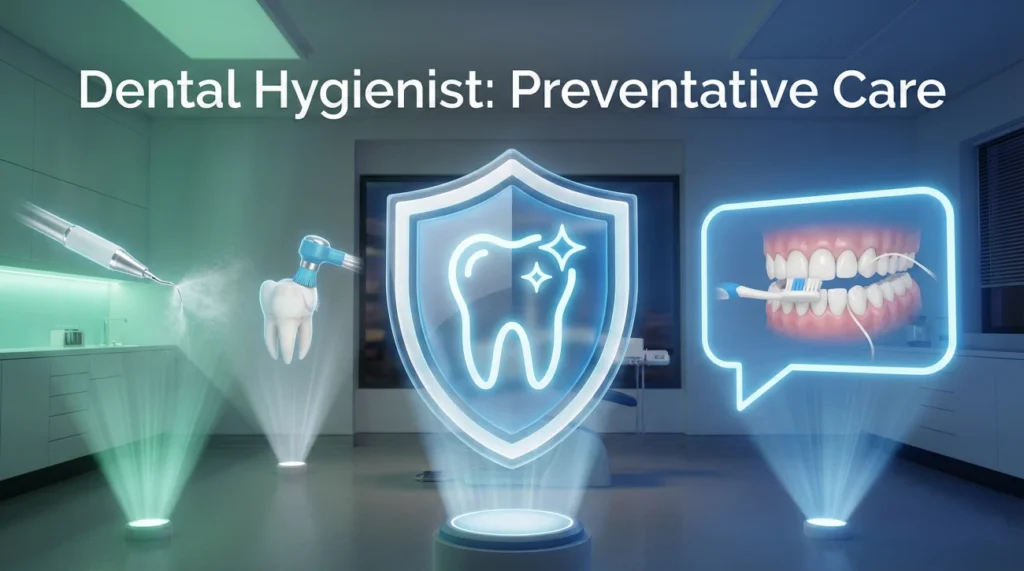
Dental hygienist interview questions evaluate clinical competence, patient education skills, and preventive care philosophy. Employers assess scaling and root planing proficiency, radiography knowledge, periodontal assessment accuracy, infection control adherence, anxious patient management, and collaborative teamwork with dentists. Successful candidates demonstrate technical expertise performing thorough prophylaxis, communication abilities explaining oral health in patient-friendly language, gentle touch maintaining patient comfort, attention to detail identifying early disease signs, and passion for prevention helping patients avoid dental problems through education and regular care.
This guide examines prophylaxis techniques, periodontal assessment protocols, patient education strategies, infection control standards, and professional development practices. Build your foundation with dental healthcare career resources.
Clinical Skills and Techniques
Walk through your process for a routine prophylaxis appointment.
Systematic approach ensures thorough care. Pre-treatment assessment reviews medical history checking for conditions that may affect treatment (for example, certain cardiac histories that may require a prescriber consult, or medications that cause dry mouth), updates health questionnaire asking about recent surgeries, new medications, or hospitalizations, and performs oral cancer screening examining tongue, floor of mouth, and soft tissues for abnormalities. Periodontal charting uses periodontal probe measuring pocket depths at six points per tooth recording measurements accurately, notes bleeding on probing indicating inflammation, and assesses recession measuring gingival margin to CEJ (cementoenamel junction) documenting attachment loss.
Scaling procedure starts with ultrasonic scaler using vibrations and water removing bulk calculus efficiently, hand instruments follow including sickle scalers for supragingival calculus and curettes for subgingival deposits ensuring complete removal, and tactile sense developed through experience feels smooth tooth surfaces confirming thorough debridement. Polishing uses prophy paste with rubber cup removing stains and plaque biofilm, selective polishing concept avoids unnecessary enamel removal polishing only stained areas, and flossing demonstrates proper technique while removing interproximal debris. Fluoride application considers patient’s caries risk selecting appropriate concentration and delivery method, applies varnish for high-risk patients providing extended fluoride release, and educates about benefits explaining how fluoride strengthens enamel preventing decay.
How do you handle calculus deposits that are difficult to remove?
Strategic approach addresses heavy buildup. Assessment determines extent examining radiographs to see subgingival calculus, evaluating tenacity testing if deposits light or heavily mineralized, and planning treatment deciding if one appointment sufficient or multiple visits needed for patient comfort. Technique modifications include instrument selection using sharp curettes maintaining cutting edge, angulation adjusting blade angle to tooth surface for effective engagement, and adaptation ensuring instrument tip conforms to tooth anatomy. Ultrasonic efficiency maximizes power settings using appropriate level for deposits without causing sensitivity, water flow adjusting cooling and lavage, and lateral strokes overlapping to ensure complete coverage.
✓ Instrumentation tip: Sharpen curettes regularly – dull instruments require excessive pressure causing patient discomfort and operator fatigue while being less effective at calculus removal.
Multiple appointments schedule when extensive calculus present dividing mouth into quadrants treating one or two per visit, allows adequate time providing quality care without rushing, and reduces patient fatigue preventing jaw soreness from prolonged appointments. Anesthesia options include topical anesthetic gel applied to gingiva before instrumentation, local anesthesia infiltration when deep pockets or sensitive areas, and discussing with dentist obtaining appropriate orders for anesthesia administration within hygienist scope. Documentation records treatment provided noting areas requiring additional attention next visit, photographs heavy calculus for patient education showing before/after improvement, and home care instructions emphasizing prevention to reduce future buildup demonstrating professional thoroughness.
Periodontal Disease Management
Recognition and Classification
Q: Describe the signs and symptoms of gingivitis versus periodontitis.
Differential diagnosis guides treatment. Gingivitis (reversible) presents with red, swollen gingiva instead of healthy pink firm tissue, bleeding on probing indicating inflammation, and no attachment loss maintaining bone and periodontal ligament support. Clinical features include plaque accumulation primary cause of inflammation, reversibility through improved home care and professional cleaning, and intact periodontium bone levels normal on radiographs. Patient education emphasizes this early stage completely reversible with proper care, twice-daily brushing and daily flossing essential, and regular professional cleanings as recommended to prevent progression.
Periodontitis (irreversible) often involves deeper pocketing that suggests attachment loss, bone loss visible on radiographs with crestal bone resorption, and tooth mobility from destroyed supporting structures. Classifications may describe more localized versus more generalized disease based on how many sites are involved, mild/moderate/severe based on the amount of clinical attachment loss and radiographic bone loss, and stages I-IV using complexity of management required. Treatment involves scaling and root planing deep cleaning removing subgingival calculus and bacterial toxins, frequent maintenance every 3-4 months monitoring disease activity, and possible surgical intervention when non-surgical therapy insufficient. Risk factors smoking most significant modifiable risk factor, diabetes affecting healing and susceptibility, and genetics some patients genetically predisposed requiring aggressive management.
Scaling and Root Planing
Q: Explain your approach to scaling and root planing procedures.
Therapeutic intervention targets disease. Pre-procedure preparation discusses procedure explaining purpose removing bacteria and calculus from root surfaces, obtains informed consent reviewing risks, benefits, and alternatives, and administers anesthesia ensuring patient comfort during deep cleaning. Instrumentation systematically works through quadrant using overlapping strokes ensuring complete coverage, adapts curettes to root morphology following tooth contours and furcations, and assesses smoothness frequently checking with explorer for remaining deposits.
Ultrasonic debridement uses thin inserts reaching deep pockets accessing areas difficult for hand instruments, lavage action flushes bacteria from pocket, and cavitation effect disrupts biofilm mechanically. Hand scaling follows using area-specific curettes designed for particular tooth surfaces, lighter pressure than with calculus removal focusing on deplaquing, and tactile feedback feeling smoothness indicating clean root surface. Post-operative instructions include expecting sensitivity warning temporary discomfort, pain management recommending OTC analgesics if needed, and home care modifications using soft toothbrush and avoiding aggressive brushing of treated areas initially.
Q: How do you educate patients about periodontal disease prevention?
Comprehensive education empowers patients. Visual aids use intraoral photos showing patient’s own inflammation or bone loss, periodontal chart explaining what pocket depths mean, and models demonstrating proper brushing and flossing techniques. Personalized approach identifies patient’s specific risks like smoking cessation critical for healing, diabetes control discussing glycemic index affecting periodontal health, and stress management as factor in disease progression. Home care instruction teaches modified Bass technique angling bristles into sulcus, interdental cleaning with floss, interdental brushes, or water flosser based on patient dexterity, and antimicrobial rinse when appropriate using chlorhexidine for active disease.
Systemic connection explains bidirectional relationship between periodontal disease and conditions like diabetes – periodontal disease worsens blood sugar control while poor diabetes control increases infection risk, cardiovascular disease with inflammation linking oral and heart health, and pregnancy complications including preterm birth and low birth weight. Maintenance importance emphasizes more frequent periodontal maintenance visits than routine cleanings when disease is active or high-risk, monitors for disease recurrence checking pocket depths and bleeding, and reinforces home care reviewing techniques and addressing barriers to compliance. Motivation techniques use positive reinforcement praising improvements, consequences discussion explaining potential tooth loss, and collaborative goal-setting having patient identify their priorities creating ownership of treatment plan.
Patient Management and Communication
Q: How do you calm an anxious or fearful patient?
Gentle approach builds trust. Pre-appointment strategies include calling patients beforehand introducing yourself and asking about concerns, scheduling appropriately giving anxious patients first appointment when you’re fresh, and creating calming environment with music, warm blankets, or aromatherapy. During treatment uses tell-show-do technique explaining what you’ll do, showing instruments, then performing procedure building predictability reducing fear, establishes hand signal allowing patient to raise hand for break giving them control, and frequent breaks pausing regularly to let patient rest jaw and rinse.
Communication techniques speak calmly using soothing tone avoiding sudden movements, explain sensations warning “you’ll feel pressure” or “cold water” so nothing unexpected, and validate feelings acknowledging “I understand this is difficult” showing empathy not dismissing concerns. Distraction methods include conversation about hobbies or family engaging their mind elsewhere, TV or headphones blocking clinical sounds, and breathing exercises teaching slow deep breaths activating relaxation response. Gradual desensitization for severe anxiety starts with examination only building tolerance, adds polishing next visit incrementing difficulty, and eventually completes full cleaning after establishing comfort. Dental sedation discusses options with dentist like nitrous oxide or oral sedation when appropriate recognizing some patients need pharmacological help managing severe dental phobia.
Q: Describe handling a patient who disagrees with your treatment recommendations.
Respectful dialogue maintains relationship. Understanding objection explores concerns asking “What worries you about this treatment?”, listens actively without interrupting hearing their perspective completely, and addresses misconceptions correcting false information with evidence. Common disagreements include frequency of cleanings patient wanting only annual visits when periodontal disease requires quarterly, radiographs objecting to x-rays due to radiation concerns, and costs balancing dental health with financial constraints.
Education emphasis provides evidence showing research on treatment benefits, visual documentation using photos or radiographs demonstrating disease, and consequences discussion explaining what happens without treatment while avoiding scare tactics. Alternatives exploration offers compromise like starting with one recommendation if not all, adjusts approach such as manual toothbrush if electric too expensive, and refers to dentist for final decision on treatment disputes beyond hygienist scope. Documentation records recommendations made protecting yourself legally, notes patient refusal using exact words when applicable, and ensures informed refusal patient understands risks of declining treatment showing you fulfilled educational duty. Maintaining relationship stays professional even if patient declines, welcomes them back without judgment, and plants seeds for future acceptance knowing patients often reconsider after time to process information.
Infection Control and Safety
What infection control protocols do you follow?
Rigorous standards protect everyone. Personal protective equipment includes mask and eyewear wearing during all patient care preventing splash exposure, gloves changing between patients using appropriate type (exam, sterile, utility), and clinical attire changing daily with lab coat covering street clothes. Hand hygiene follows CDC guidelines washing before and after patient contact, using alcohol-based hand sanitizer when soap unavailable, and avoiding jewelry on hands and wrists facilitating thorough cleaning.
Instrument processing includes pre-cleaning rinsing instruments immediately preventing debris from drying, sterilization using autoclave with routine biological monitoring (often via spore tests) to verify effectiveness, and storage maintaining sterile packages until use checking integrity before opening. Environmental surface disinfection covers operatory thoroughly between patients disinfecting all touched surfaces, uses EPA-registered hospital-grade disinfectant with appropriate contact time, and employs barriers like plastic covers on light handles or chair switches changed between patients reducing contamination. Waste management segregates sharps disposing in puncture-proof containers, infectious waste using red bags for blood-soaked materials, and regular trash for non-contaminated items following OSHA bloodborne pathogen standards.
How do you prevent disease transmission in the dental setting?
Multi-layered protection minimizes risk. Standard precautions treat all patients as potentially infectious regardless of known status, use barriers for every patient not just “high-risk” ones, and follow protocols consistently without shortcuts even when busy. Respiratory hygiene encourages coughing patients to wear masks providing surgical masks in waiting room, postpones elective treatment for actively ill patients avoiding disease spread, and maintains distance when possible during health history review.
Sharps safety uses safety-engineered devices like self-sheathing needles when available, never recaps needles manually using one-handed scoop technique if absolutely necessary, and disposes immediately placing in sharps container without delay. Aerosol reduction uses high-volume evacuation during ultrasonic scaling minimizing airborne particles, pre-procedural rinse having patients rinse with antimicrobial before treatment, and adequate ventilation ensuring good air exchange in operatory. Hepatitis B vaccination is commonly required or strongly recommended for dental healthcare workers with occupational exposure, maintains titer documentation proving immunity, and understands post-exposure protocol knowing steps if needlestick or splash exposure occurs including immediate washing, reporting to supervisor, and medical evaluation demonstrating professional commitment to safety.
Radiography and Diagnostic Skills
Q: Describe your experience taking dental radiographs.
Technical proficiency ensures diagnostic quality. Film types include bitewing radiographs detecting interproximal caries and crestal bone levels, periapical films showing entire tooth including apex for infection or pathology, and panoramic imaging providing overview of entire mouth and jaw structures. Technique considerations use paralleling technique for periapicals ensuring accurate tooth representation, bisecting angle when paralleling impossible adapting to patient anatomy, and proper exposure settings adjusting mA and kVp for patient size and density.
Patient positioning stabilizes patient’s head using headrest, instructs on biting film holder demonstrating how to close gently, and uses positioning devices like XCP instruments maintaining film placement. Image quality assessment checks for density not too light or dark viewing diagnostic areas clearly, contrast showing differentiation between enamel, dentin, and bone, and detail ensuring sharpness without blurriness. Common errors include cone cutting missing part of image from improper beam alignment, elongation or foreshortening from incorrect vertical angulation, and overlapping contacts from wrong horizontal angulation. Retakes minimize radiation following ALARA (As Low As Reasonably Achievable) principle only retaking when diagnostically necessary, analyzing error determining cause before repeating, and improving technique learning from mistakes preventing future repeats.
Q: How do you maintain radiation safety?
Protection protocols safeguard patients and staff. Patient shielding uses lead apron with thyroid collar for all intraoral radiographs, positions properly ensuring coverage without interfering with image, and removes after exposure not leaving on patient between films. Operator safety includes standing at an appropriate distance or behind a barrier during exposure, never holding film for patient using positioning devices instead, and wearing a dosimeter badge when required, reviewing exposure reports per policy.
Equipment maintenance ensures proper collimation limiting beam to film size, inspects for damage checking lead apron integrity periodically, and services/inspects the machine on a regular schedule to verify calibration and safety features. Technique optimization uses fastest film speed or digital sensors reducing exposure time, employs rectangular collimation instead of round further limiting radiation field, and follows current guidelines staying updated with American Dental Association recommendations. Patient communication explains benefits versus risks providing informed consent, addresses pregnancy concerns postponing elective radiographs when possible for pregnant patients, and reassures about safety emphasizing low doses used in dentistry compared to other sources demonstrating responsible radiographic practices.
Professional Development and Teamwork
How do you stay current with dental hygiene advancements?
Continuing education maintains competency. Formal learning includes CE courses attending seminars and workshops on new techniques or products, online webinars convenient flexible learning on schedule, and conferences like ADHA (American Dental Hygienists’ Association) annual session networking and learning from experts. License renewal stays compliant by completing the continuing education (CE) hours required by your state board, includes specific topics like infection control or radiography as mandated, and maintains documentation keeping certificates proving completion.
Professional resources read journals like Journal of Dental Hygiene reviewing research and clinical articles, belong to organizations joining ADHA or state associations accessing member benefits, and follow credible sources using ADA, CDC, and manufacturer evidence-based information. Practice integration implements new knowledge applying learned techniques with patients, shares with team presenting interesting findings at staff meetings, and evaluates outcomes assessing if new product or method improves results. Specialization interests pursue advanced certifications in periodontics, pediatrics, or public health, consider bachelor’s or master’s degree expanding career options into education or research, and develop expertise becoming resource for colleagues in particular area demonstrating commitment to lifelong learning.
Describe working effectively with the dental team.
Collaboration optimizes patient care. Dentist relationship communicates findings reporting suspicious areas or treatment needs, asks questions seeking clarification on treatment plans or protocols, and supports diagnosis providing thorough periodontal and soft tissue assessment contributing to comprehensive examination. Front office coordination maintains schedule communicating running behind or gaps in schedule, relays information sharing patient concerns or requests, and manages products requesting supplies or reporting equipment issues ensuring smooth operations.
Dental assistant partnership shares duties assisting each other with room turnover or sterilization, respects roles acknowledging different scopes of practice, and mutual support covering breaks or helping with difficult patients fostering positive work environment. Conflict resolution addresses professionally discussing disagreements privately and respectfully, focuses on solutions not blame working together to resolve issues, and involves management when necessary escalating appropriately while maintaining professionalism. Team meetings participates actively contributing ideas for practice improvement, stays engaged listening to others’ perspectives, and implements changes supporting decisions even if not personally preferred demonstrating mature collaborative mindset essential for efficient dental practice.
Dental Hygiene Knowledge Assessment
Test Your Clinical Expertise
1. Prophylaxis includes?
- Scaling, polishing, flossing, fluoride application
- Fillings and extractions
- Whitening only
- X-rays exclusively
2. Periodontal probe measures?
- Tooth length
- Pocket depths and attachment loss
- Cavity depth
- Gum thickness
3. Gingivitis is characterized by?
- Red, swollen, bleeding gums without bone loss
- Tooth decay
- Irreversible attachment loss
- Cracked teeth
4. Periodontitis differs from gingivitis by?
- Color of gums only
- Bone loss and irreversible attachment loss
- No difference
- Location in mouth
5. Scaling and root planing addresses?
- Subgingival calculus and bacterial toxins
- Tooth whitening
- Cavity filling
- Crown placement
6. Ultrasonic scaler uses?
- Vibrations and water to remove calculus
- Chemical dissolution
- Heat application
- Suction only
7. Fluoride varnish provides?
- Instant whitening
- Extended fluoride release strengthening enamel
- Pain relief
- Plaque removal
8. Standard precautions mean?
- Treating all patients as potentially infectious
- Only protecting with known diseases
- No PPE needed
- Casual hygiene acceptable
9. Autoclave sterilization verified by?
- Visual inspection
- Biological spore testing weekly
- Water test
- Not necessary
10. ALARA principle refers to?
- As Low As Reasonably Achievable radiation exposure
- Always Late Arrival Response Alert
- Anesthesia Level And Response Assessment
- Not a real term
11. Bitewing radiographs detect?
- Interproximal caries and bone levels
- Root canals
- TMJ disorders
- Tooth color
12. Periodontal maintenance recall for disease?
- Every 6 months
- Every 3-4 months
- Annual only
- As patient prefers
13. Modified Bass technique targets?
- Sulcus/gingival margin at 45-degree angle
- Chewing surfaces only
- Tongue brushing
- Any angle acceptable
14. Lead apron protects from?
- Cavities
- Radiation scatter during radiographs
- Infection
- Chemical exposure
15. Curettes are sharpened?
- Never
- Regularly to maintain cutting edge effectiveness
- Only when broken
- Annually
16. Patient refuses x-rays, hygienist should?
- Force compliance
- Educate on benefits, document informed refusal
- Dismiss patient
- Proceed without documentation
17. ADHA provides?
- Professional resources, CE, advocacy
- Dental insurance
- Job guarantee
- Equipment sales
18. Anxious patient benefits from?
- Rushing through procedure
- Tell-show-do, breaks, gentle communication
- Ignoring concerns
- Criticizing fear
19. CEJ stands for?
- Cementoenamel Junction
- Clinical Exam Journal
- Cavity Examination Joint
- Crown Edge Junction
20. Dental hygienist scope includes?
- Prophylaxis, assessment, education, radiographs
- Diagnosing cavities independently
- Performing extractions
- Prescribing medications
❓ FAQ
What credentials should I bring to the interview?
Bring current dental hygiene license, CPR certification, and radiology certification if separate from license. Include transcripts if recent graduate, proof of malpractice insurance if independently insured, and any specialty certifications (local anesthesia, nitrous oxide, laser). Having copies ready shows organization and professionalism. Many employers verify credentials, so accurate information prevents delays.
How do I explain limited periodontal experience?
Frame honestly emphasizing willingness to learn: “Most clinical experience focused on prophylaxis in healthy patients. I’m trained in SRP techniques and eager to develop periodontal expertise through mentorship and continuing education.” Mention any perio-focused coursework or interest in advanced training. Employers often value teachable attitude over extensive experience for new graduates, especially if offering strong mentorship program.
What if asked about conflict with dentist over treatment?
Use diplomatic example showing professional disagreement resolution: “I once questioned aggressive treatment recommendation for patient with minimal disease. I privately discussed concerns with dentist, presented clinical findings, and we agreed on conservative approach with close monitoring. Patient appreciated thorough consideration.” Shows advocacy without insubordination, professional communication, and patient-centered thinking valued in collaborative practices.
Should I discuss production expectations?
Yes – understanding a practice’s pacing and priorities matters. Ask questions like: “What does a typical hygiene appointment look like here?” “How do you balance schedule efficiency with thorough assessment and patient education?” and “What support exists for complex cases or patients with higher needs?” Listen for whether the schedule allows you to do quality care without feeling rushed, and clarify how the team handles delays or add-on needs in a patient-centered way.
How do I address employment gap?
Explain positively: “I took time off for family responsibilities but maintained license through required CE courses including advanced perio course. Ready to return full-time and apply updated knowledge.” Other acceptable gaps include additional education, relocation, or health recovery. Emphasize readiness to resume practice, recent CE showing current knowledge, and enthusiasm for position. Most employers understand life circumstances; honesty and preparation matter most.
Launching Your Dental Hygiene Career
Succeeding with dental hygienist interview questions requires demonstrating clinical proficiency in prophylaxis and periodontal therapy, patient education skills explaining oral health clearly and compassionately, infection control knowledge following strict safety protocols, radiography competence producing diagnostic quality images, gentle technique maintaining patient comfort throughout procedures, and collaborative attitude working effectively with dental team. Successful candidates balance technical expertise with interpersonal skills, commit to lifelong learning through continuing education, and genuinely care about improving patients’ oral health through prevention rather than just treating existing problems.
Prepare thoroughly by reviewing periodontal assessment protocols, practicing scenario responses using specific clinical examples, organizing credentials and certificates for presentation, and researching practice’s patient demographics and treatment philosophy. Bring current license and certifications, maintain professional appearance, and prepare thoughtful questions about mentorship opportunities, continuing education support, and patient care philosophy. For comprehensive guidance, explore preventive dental care career tools demonstrating your commitment to oral health promotion and helping patients maintain healthy smiles through education, prevention, and compassionate clinical care that makes dental visits positive experiences.
⚠️ Disclaimer: The interview strategies, sample answers, and negotiation tips provided in this guide are for educational purposes only. Hiring decisions are subjective and vary by company and industry. While these strategies are based on professional HR standards, they do not guarantee a specific job offer or result.