Medical Receptionist Interview Questions: What Employers Test
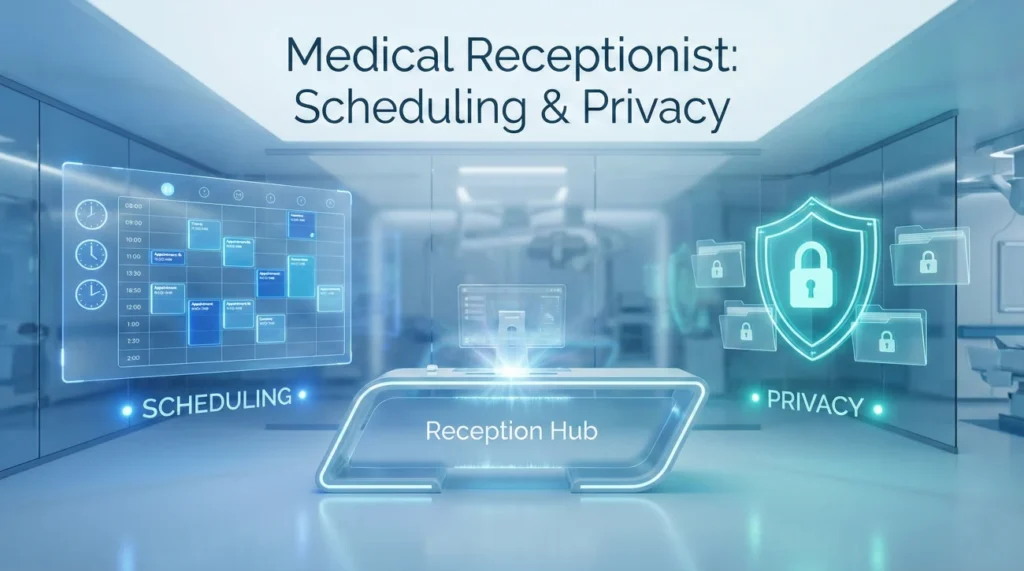
Medical receptionist interview questions check how well you can run a calm, accurate front desk in a busy healthcare setting – scheduling appointments, verifying patient details, handling insurance basics, routing calls, and protecting confidentiality under HIPAA. Interviewers also look for steady multitasking (phones + walk-ins), clear communication with anxious patients, and practical problem-solving when plans change.
This guide covers appointment scheduling and coordination, patient check-in and insurance fundamentals, phone management and message handling, HIPAA-focused confidentiality, and customer service in healthcare. For a broader prep checklist across roles, see our complete interview guide.
Appointment Scheduling and Coordination
Q: How do you manage scheduling for multiple providers with different appointment types?
Multi-provider scheduling requires understanding each provider’s preferences and patient needs. Strategy includes:
- Block scheduling: Use time blocks for different visit types (e.g., brief follow-ups, new-patient visits, and longer procedures)
- Provider preferences: Note who sees walk-ins, who runs behind schedule, who needs buffer time between patients
- Template creation: Build weekly templates accounting for procedures, hospital rounds, administrative time
- Double-booking protocols: Follow provider and office guidelines on when double-booking is appropriate and how to communicate expectations to patients
Use scheduling software efficiently creating wait lists for cancellations, color-coding appointment types for quick visual reference, and building in emergency slots daily. Communicate schedule changes immediately to clinical staff preventing confusion and maintaining smooth patient flow throughout day.
Q: How do you handle appointment cancellations and no-shows?
Cancellation management maximizes schedule utilization while maintaining patient relationships. Process includes documenting cancellation reason and time, immediately checking wait list for patients needing urgent appointments, calling wait-listed patients offering newly available slots, and sending confirmation for rescheduled appointments preventing future no-shows.
No-show reduction strategies involve confirming appointments a day or two ahead, using automated reminders when available, tracking repeat no-shows to understand patterns, and following office policy for excessive no-shows (for example, requiring manager review before booking certain slots). Document all no-shows in patient chart noting pattern affecting future scheduling decisions.
Q: Describe handling a patient requesting urgent same-day appointment.
Same-day requests require you to follow the clinic’s triage and scheduling protocol. Gather the key details the office policy asks for, then escalate clinical concerns to the nurse or provider rather than trying to judge medical urgency yourself. Check for openings, confirm with clinical staff when needed, and offer safe alternatives (telehealth or the next available slot) if same-day isn’t possible.
💡 Triage priority: If symptoms sound like an emergency (for example, chest pain or trouble breathing), follow office protocol – often directing the caller to emergency services and alerting clinical staff immediately.
For legitimate urgent needs, creative solutions include asking patient to wait for cancellations, scheduling at lunch or end of day if provider agrees, or referring to urgent care maintaining practice relationship. Never promise provider will definitely see patient without confirming availability first.
Q: How do you confirm appointments and reduce no-shows?
Confirmation systems reduce no-shows improving schedule efficiency. Methods include automated calls or texts a day or two before asking patients to confirm, personal phone calls for new patients or complex appointments explaining what to bring, and email reminders with pre-visit instructions for procedures requiring preparation like fasting.
Track confirmation responses noting which patients confirmed versus those not reached, call unconfirmed patients morning of appointment, and maintain backup wait list ready to fill expected no-shows. Document confirmation attempts in chart showing due diligence if patient misses appointment later claiming they weren’t reminded.
Patient Registration and Insurance
Q: Walk me through your patient check-in process.
Efficient check-in sets positive tone for visit. Greet patient warmly by name, verify identity asking date of birth matching chart, collect insurance cards copying front and back or scanning into system, and confirm demographic information including address, phone, and emergency contact ensuring accuracy for communications.
Update patient information reviewing medications, allergies, pharmacy, and primary care provider if specialist office. Collect copayments or outstanding balances before visit when possible, provide HIPAA privacy notice and consent forms for new patients, and give patient any required intake forms completing before rooming.
Q: How do you verify insurance coverage and eligibility?
Insurance verification prevents billing issues and patient surprises. Call insurance company or check online portal entering patient information, verify active coverage confirming policy effective dates, note copay amounts, deductible status, and any prior authorization requirements for visits or procedures.
Check if provider is in-network for patient’s plan, verify referral requirements for specialist visits ensuring proper authorization obtained, and document verification including representative name and confirmation number. Inform patient upfront about expected costs, out-of-network status, or services not covered preventing billing disputes later.
Q: What do you do when a patient can’t pay their copay?
Payment conversations require empathy and policy adherence. Explain office policy regarding payment at time of service, offer payment plan options if available, discuss whether visit can be rescheduled until payment available, or check with office manager about payment arrangements for established patients with good history.
Never make patient feel unwelcome or deny emergency care due to payment issues. Document conversation and arrangement made, provide written payment plan agreement if applicable, and follow up on promised payments professionally. Some offices allow seeing patient and billing for copay later depending on relationship and circumstances.
Q: How do you handle new patient registration?
New patient registration establishes accurate records foundation. Collect complete demographic information including full legal name, date of birth, Social Security number, address, phone numbers, email, emergency contact, and insurance details. Provide new patient paperwork including medical history forms, HIPAA privacy notice, consent for treatment, and financial policy acknowledgment.
Scan identification and insurance cards into system, create chart in EMR system entering all data accurately, schedule extra time for first visit allowing paperwork completion, and explain office policies including appointment cancellation requirements, prescription refill procedures, and after-hours contact information setting clear expectations.
Phone Management and Communication
How do you manage multiple phone lines while assisting patients at the front desk?
Balancing phones and in-person patients demands prioritization and multitasking. Answer calls professionally as promptly as possible stating office name and your name, ask if caller can hold briefly if assisting patient at desk, and prioritize in-person patients completing their check-in before taking calls when possible since they traveled to office.
Use call management system putting calls on hold rather than letting ring endlessly, return to held callers within reasonable time apologizing for wait, and take detailed messages when unable to address immediately including patient name, date of birth, callback number, and specific question or concern. Never discuss clinical information while other patients can overhear maintaining privacy.
Describe triaging incoming calls and routing them appropriately.
Phone triage determines urgency and appropriate staff member for callback. Emergency symptoms including chest pain, difficulty breathing, or severe bleeding receive immediate transfer to nurse or instruction to call 911. Clinical questions about symptoms, medication side effects, or test results route to nursing staff for callback with expected timeframe communicated to patient.
Administrative calls including scheduling, billing questions, or prescription refill requests handled by front desk staff directly. Take thorough messages for provider callbacks documenting patient concern accurately, mark urgent messages for same-day response, and follow up ensuring callbacks completed. Never provide medical advice beyond scope directing clinical concerns to licensed staff.
How do you handle angry or upset patients on the phone?
Upset patients need empathy and professionalism. Listen actively without interrupting letting them express frustration, acknowledge their feelings validating concerns without admitting fault, maintain calm tone avoiding defensiveness, and apologize for their negative experience regardless of fault showing you care about their satisfaction.
Ask clarifying questions understanding specific issue, explain what you can do to help offering concrete solutions, involve office manager or provider if issue beyond your authority, and follow up after resolution ensuring patient satisfied with outcome. Document interaction objectively noting patient complaint and resolution steps taken for future reference if issue escalates.
HIPAA Compliance and Professionalism
Q: How do you ensure HIPAA compliance in your daily work?
HIPAA protection requires constant awareness and discipline. Computer security includes logging out when leaving desk even briefly, positioning monitors away from public view preventing unauthorized viewing, using privacy screens if necessary, and never sharing passwords with colleagues.
Verbal communication requires calling patients to exam rooms by first name only not announcing full name or condition publicly, discussing patient information only in private areas never at front desk or hallways, verifying caller identity before releasing information over phone asking security questions, and obtaining written authorization before releasing records to third parties. Shred documents containing protected health information and report suspected breaches immediately.
Q: What information can you share when family members call asking about a patient?
Family inquiries require careful HIPAA compliance. Check patient chart for authorized contacts listed by patient with permission to receive information, verify caller identity asking security questions before confirming patient even had appointment, and only share information patient specifically authorized never assuming family has access rights.
If patient hasn’t designated family member, offer to take message for patient callback without confirming or denying patient relationship with practice. Explain HIPAA prevents sharing information without patient permission emphasizing protection of their privacy too. For minor children, verify parent/guardian legal authority before sharing any information.
Q: Describe handling a situation where someone requests to see another patient’s chart.
Unauthorized access requests require firm but polite denial. Explain patient information is confidential and requires written authorization from patient, request valid authorization form signed by patient specifying what information can be released and to whom, verify requestor identity with photo ID, and document request and response in both patients’ charts.
Never access charts out of curiosity including celebrities, coworkers, family, or friends. Audit trails track chart access, and unauthorized viewing can lead to serious disciplinary action and legal consequences. If legitimate need exists, ensure proper authorization obtained before releasing any information maintaining professional ethical standards.
Q: How do you maintain professionalism in a busy, stressful environment?
Professional demeanor remains constant regardless of stress level. Start each patient interaction fresh not bringing frustration from previous situation, maintain friendly greeting and eye contact making patients feel welcomed, avoid complaining about workload or coworkers within patient earshot, and take brief breaks when possible stepping away to reset mentally.
Manage stress through organization using task lists prioritizing work, asking colleagues for help when overwhelmed not trying to do everything alone, and communicating with providers about unrealistic demands or unsafe working conditions. Remember patients experiencing their own stress coming to medical office deserve patience and compassion even on difficult days.
Front Desk Skills Assessment
20 Practice Questions
1. HIPAA protects?
- Patient health information privacy
- Employee wages
- Office supplies
- Building security
2. When answering phones, you should state?
- Your name only
- Office name and your name
- Just “hello”
- Doctor’s name only
3. Patient copay should be collected?
- After the visit
- At time of check-in when possible
- Only if patient volunteers
- Never at front desk
4. When verifying insurance, you check?
- Just patient name
- Active coverage, copay, deductible, authorizations
- Only if patient asks
- Once per year regardless of changes
5. Calling patients to exam room, you should?
- Announce full name and condition
- Use first name only for privacy
- Point instead of speaking
- Call out full name loudly
6. Appointment confirmation should occur?
- Never needed
- a day or two before the appointment
- One week before
- Day of appointment only
7. When patient calls with chest pain, you should?
- Schedule for next week
- Direct to call 911 or go to ER immediately
- Take message for nurse
- Give medical advice
8. Medical records must be kept?
- Openly accessible to all staff
- Secure with access only by authorized staff
- At front desk for convenience
- In unlocked filing cabinets
9. For referral authorization, you need?
- Nothing, just schedule
- Insurance approval before specialist visit
- Patient permission only
- Specialist approval
10. Patient arrives 20 minutes late. You should?
- Always see them immediately
- Check with provider, may need to reschedule
- Refuse service rudely
- Make them wait all day
11. When taking messages, always include?
- Patient name, DOB, callback number, detailed message
- Just patient name
- Phone number only
- Vague description
12. Family member requests patient’s test results. You?
- Share freely, they’re family
- Verify patient authorized information release
- Give general information only
- Ignore request
13. Double-booking appointments?
- Never allowed
- Permitted with provider approval for specific situations
- Standard practice always
- Reception’s decision alone
14. Medical receptionist can?
- Diagnose conditions
- Prescribe medications
- Schedule appointments and verify insurance
- Provide medical advice
15. When computer monitor has patient info, you should?
- Leave it visible for efficiency
- Position away from public view or log out
- Share password with coworkers
- Print everything instead
16. No-show documentation should include?
- Date, time, attempts to reach patient
- Nothing needed
- Judgment about patient
- Just mark absent
17. Prior authorization is needed for?
- All appointments always
- Certain procedures or specialist visits per insurance
- Only hospital visits
- Never required
18. Professional phone manner includes?
- Eating or chewing gum while talking
- Clear speech, friendly tone, active listening
- Putting everyone on hold immediately
- Using speakerphone publicly
19. EMR access should be?
- Available to all staff freely
- Limited to patients you’re directly caring for
- Shared openly
- Used to look up friends
20. Best practice for wait time communication?
- Never inform patients of delays
- Update patients on expected wait, offer reschedule if long
- Blame provider for running late
- Make up shorter time
❓ FAQ
🎯 Do I need medical training to be a medical receptionist?
Formal medical training typically not required but knowledge of medical terminology, HIPAA regulations, and insurance basics is valuable. Many employers provide on-the-job training for office-specific systems and procedures. Certification programs exist but aren’t mandatory for most positions.
🚀 What software should I know?
Common systems include Epic, Cerner, Athenahealth, NextGen, and eClinicalWorks for EMR. Emphasize general computer literacy and quick learning ability if unfamiliar with specific platforms. Many scheduling functions transfer between systems so adaptability matters more than knowing every program.
💼 How do I prepare for scenario-based questions?
Practice using STAR format describing specific situations, tasks, actions, and results. Prepare examples of handling difficult patients, managing multiple priorities, resolving scheduling conflicts, and maintaining confidentiality. Focus on problem-solving and customer service skills demonstrating professionalism under pressure.
📚 What’s difference between medical receptionist and medical assistant?
Medical receptionists focus on front desk administrative duties including scheduling, registration, insurance, and phones. Medical assistants perform both administrative and clinical tasks like vital signs, injections, and assisting providers with exams. Receptionists typically don’t perform clinical procedures or enter exam rooms.
🌐 How important is customer service experience?
Customer service skills are crucial as medical receptionists are first point of contact setting tone for patient experience. Highlight any service industry experience demonstrating patience with difficult customers, multitasking under pressure, and maintaining professionalism. Healthcare adds complexity with anxious patients and medical emergencies requiring extra empathy.
Final Thoughts
Success with medical receptionist interview questions requires demonstrating administrative efficiency, patient service excellence, and HIPAA compliance understanding. Focus on scheduling coordination managing multiple providers, insurance verification preventing billing issues, phone triage routing calls appropriately, and confidentiality practices protecting patient privacy. Emphasize multitasking ability balancing competing demands professionally.
Employers value receptionists who remain calm under pressure, communicate clearly with diverse patients, and maintain organized efficient front desk operations. Prepare by reviewing HIPAA basics, practicing customer service scenarios, researching the facility’s specialty and patient population, and preparing questions demonstrating genuine interest in contributing to their healthcare team as welcoming first impression patients experience.
⚠️ Disclaimer: The interview strategies, sample answers, and negotiation tips provided in this guide are for educational purposes only. Hiring decisions are subjective and vary by company and industry. While these strategies are based on professional HR standards, they do not guarantee a specific job offer or result.