Your LPN Interview Success Guide
LPN interview questions evaluate practical nursing competencies, understanding of scope limitations, and patient care skills under RN supervision. Interviewers assess wound assessment and treatment knowledge, medication administration safety, vital signs monitoring accuracy, and collaboration with the healthcare team. Successful candidates demonstrate clinical proficiency within their license boundaries, compassionate patient interaction, attention to documentation detail, and eagerness to learn while recognizing when situations require RN or physician involvement.
This guide examines scope of practice boundaries, wound care fundamentals, medication safety protocols, patient assessment techniques, and professional communication strategies. Build your foundation with practical nursing career tools.
Scope of Practice Essentials
What’s the difference between LPN and RN scope of practice?
LPN/LVN practice occurs under RN or physician supervision implementing established care plans rather than creating initial nursing diagnoses and developing comprehensive care plans. Core LPN responsibilities include basic bedside care monitoring vital signs, assisting with ADLs (activities of daily living), and providing comfort measures, medication administration giving oral, topical, subcutaneous, and intramuscular medications per physician order, and data collection gathering objective information about patient condition reporting changes to supervising RN. RN-exclusive functions involve initial patient assessment completing comprehensive nursing admission assessment, care plan development creating individualized nursing diagnoses and interventions, and complex clinical judgment making independent decisions about patient care priorities without physician orders.
State-specific variations mean scope differs by jurisdiction with some states allowing LPN IV therapy administration after additional certification, others restricting IV responsibilities to hanging pre-mixed solutions only, and certification requirements varying for specialized skills like wound debridement or administering certain medications. Facility policies may further limit scope even within state allowances requiring competency validation for advanced skills, establishing protocols for LPN participation in procedures, and defining delegation boundaries between RN, LPN, and unlicensed assistive personnel (UAP). Understanding limits protects license avoiding practicing beyond scope, recognizing situations requiring RN assessment or intervention, and seeking clarification when uncertain about role boundaries demonstrating professional responsibility.
When should you notify the RN rather than handling independently?
Clinical changes requiring RN notification include significant vital sign alterations like blood pressure outside established parameters, acute respiratory distress, or new-onset chest pain indicating potential emergent condition, mental status changes such as sudden confusion, decreased consciousness, or behavioral shifts suggesting neurological issue, and unexpected medication reactions including allergic symptoms, adverse effects, or patient refusal requiring assessment of understanding and capacity. New symptoms appearing include acute pain onset requiring nursing assessment beyond routine pain management, bleeding or drainage not present previously, or any complaint patient describes as “different” or “worse” than baseline.
Procedural situations involve complex wound changes when wound appears infected, shows increased drainage or odor, or healing not progressing as expected, IV complications like infiltration, phlebitis, or inability to establish access when ordered, and equipment malfunction with medical devices requiring troubleshooting beyond basic checks. Patient care decisions include family concerns or questions about treatment plan requiring nursing judgment, discharge planning needs assessment of home care requirements or resource coordination, and ethical dilemmas situations involving end-of-life decisions, treatment refusal, or patient rights issues. Clear communication uses SBAR format (Situation, Background, Assessment, Recommendation) presenting organized information, documents thoroughly recording notification time and RN response, and follows up ensuring recommended interventions implemented demonstrating teamwork supporting patient safety through appropriate escalation.
Wound Care Competencies
Assessment and Documentation
Q: Describe how you assess a pressure injury.
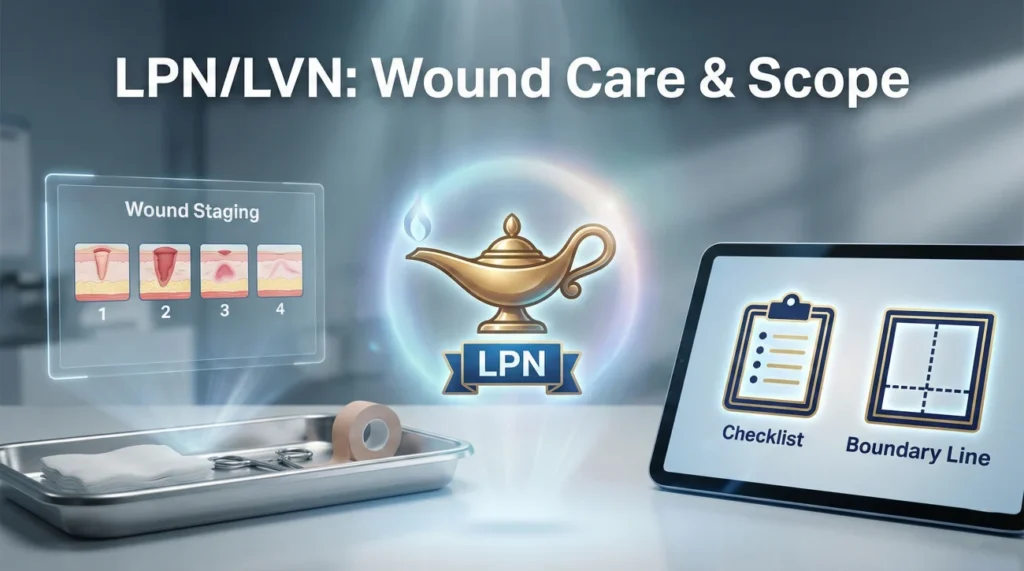
Systematic wound assessment starts with confirming the wound type and stage using your facility’s accepted pressure-injury staging criteria. Document the location clearly, then measure and record size (length × width) and, when appropriate, depth using the method your facility teaches. Note the wound bed appearance and any undermining or tunneling per protocol, and escalate to the supervising RN if findings suggest deterioration or infection.
Wound characteristics describe tissue type noting percentage of granulation (healthy red tissue), slough (yellow devitalized tissue), or eschar (black necrotic tissue), exudate amount and color documenting drainage as scant/moderate/copious and serous/serosanguinous/purulent/sanguineous, and odor presence indicating potential infection though some dressings create characteristic smell. Surrounding skin evaluates periwound area checking for maceration (white waterlogged appearance from excessive moisture), erythema or warmth suggesting infection or inflammation, and induration (firmness) indicating cellulitis or underlying infection. Signs of infection include increased pain, purulent drainage, foul odor, wound expansion, and systemic symptoms like fever – report immediately to RN for physician notification and potential culture orders.
Treatment and Dressing Selection
Q: What dressing would you use for a Stage 2 pressure injury?
Stage 2 wounds (partial-thickness) require moisture balance – supporting healing while protecting fragile new tissue. Hydrocolloid dressings can help maintain a moist environment for light drainage and reduce friction, while foam or silicone foam dressings can add cushioning and handle moderate exudate. I choose the specific product based on drainage level, periwound skin condition, patient mobility, and our facility formulary, and I reassess regularly to make sure the dressing choice still matches the wound’s current needs.
Transparent film dressings can work when drainage is minimal and the goal is protection and visibility, but they’re not appropriate for infected wounds or situations with heavier exudate. I also consider adhesive tolerance and fragile skin, then match absorbency to the wound’s current output. When in doubt, I involve the RN or wound-care lead so the dressing choice follows policy and the patient’s overall plan of care.
Q: Explain your infection control during wound care.
Sterile technique maintains wound cleanliness. Preparation includes hand hygiene performing thorough handwashing before gathering supplies, gathering sterile supplies opening packages without contaminating contents, and setting up field creating sterile area arranging items in order of use. PPE (personal protective equipment) requires gloves using clean gloves to remove old dressing then sterile gloves for wound care, gown and face shield when splash risk exists from irrigation, and proper disposal placing contaminated materials in biohazard container.
Cleansing procedure uses irrigation with normal saline or wound cleanser applying gentle pressure removing debris without damaging tissue, cleansing direction working from cleanest (wound center) to dirtiest (surrounding skin) preventing contamination, and pat-dry technique using sterile gauze avoiding rubbing that could harm fragile tissue. Dressing application maintains sterility touching only dressing edges never center that contacts wound, securing appropriately using tape, transparent film, or secondary dressing, and dating clearly labeling with date, time, and initials facilitating next assessment. Documentation records detailed description of wound appearance, treatment performed including cleansing solution and dressing type, and patient tolerance noting any pain or concerns maintaining continuity of care.
Safe Medication Administration
Q: Walk through your medication administration process.
Rights verification ensures accuracy following Five Rights system: Right Patient using two identifiers (name and date of birth) checking wristband and asking patient to state name, Right Medication comparing MAR (Medication Administration Record) to medication label three times – selecting from drawer, preparing dose, and before giving to patient, Right Dose calculating correctly especially for weight-based medications or those requiring reconstitution, Right Route confirming ordered route matches medication form like oral tablets can’t be crushed if extended-release, and Right Time administering within your facility’s defined window (and documenting any clinically necessary deviations).
✓ Three medication checks: 1) When removing from storage, 2) When preparing dose, 3) At bedside before administration. This triple-check system catches errors before reaching patient.
Additional safety includes Right Documentation charting immediately after giving medication not before, Right Reason understanding why patient receiving medication identifying therapeutic effect to monitor, and Right Response assessing effectiveness by re-checking relevant vitals or symptoms within the appropriate timeframe per policy. Patient education explains medication purpose, expected effects, and potential side effects, answers questions demonstrating understanding using teach-back method, and provides written information especially for discharge medications reinforcing verbal teaching. High-alert medications require extra caution with insulin double-checking dose and type with another nurse, anticoagulants like warfarin monitoring INR results, and opioids assessing respiratory rate before and after administration watching for depression.
Q: How do you handle a medication error?
Immediate response prioritizes patient safety stopping further error not giving additional doses, assessing patient checking vital signs and symptoms for adverse effects, and notifying charge nurse or supervisor immediately not waiting or hiding mistake. RN assessment determines severity evaluating patient’s condition, reviewing medication given versus ordered identifying discrepancy, and contacting physician reporting error requesting orders for monitoring or treatment if needed. Common errors include omission forgetting scheduled dose, wrong time giving significantly early or late, wrong dose administering incorrect amount, and wrong patient giving to incorrect person – most preventable through careful verification.
Documentation requirements include incident report completing facility form describing what happened factually without blame or excuses, medication record noting error clearly documenting actual medication given and time, and patient chart recording assessment findings and interventions taken. Learning opportunity involves self-reflection identifying why error occurred analyzing contributing factors like distraction or rushing, process improvement suggesting system changes preventing similar errors, and additional education attending training on high-risk medications or calculation skills if deficiency identified. Honesty and accountability demonstrate professionalism accepting responsibility, cooperating with investigation providing complete information, and implementing personal strategies preventing future errors like double-checking calculations or minimizing interruptions during medication preparation showing commitment to patient safety.
Patient Assessment Skills
Describe taking accurate vital signs on an elderly patient.
Age-specific considerations accommodate physical changes. For blood pressure, I use the correct cuff size and standard technique: the patient is rested, seated comfortably, arm supported at heart level, and distractions minimized. If a reading doesn’t fit the patient’s baseline or what I’m observing clinically, I repeat it and look for trends rather than relying on a single measurement.
Pulse assessment checks radial pulse for 60 full seconds in elderly patients detecting irregular rhythms like atrial fibrillation common in this population, evaluates quality noting if strong, weak, or thready indicating cardiac output, and assesses bilateral symmetry comparing both radial pulses checking peripheral circulation. Respiratory monitoring counts for full minute observing subtle changes, notes breathing pattern watching for Cheyne-Stokes or other abnormalities, and assesses work of breathing looking for accessory muscle use indicating respiratory distress. Temperature route selection avoids oral if confused or uncooperative patient might bite thermometer, considers tympanic for quick screening though less accurate, and uses rectal for most accurate core temperature when critically important. Documentation records all values including position, any deviations from normal, and compares to previous readings identifying trends more significant than single abnormal value.
What concerns would prompt immediate RN notification?
Critical vital sign changes include values outside facility parameters or a sudden shift from the patient’s baseline – such as markedly high or low blood pressure, a new rapid or very slow heart rate, signs of respiratory distress, or concerningly low oxygen saturation. Severe new pain (especially chest pain), sudden neurological changes, or uncontrolled symptoms despite ordered interventions should also be escalated promptly.
Combination findings especially concerning include altered mental status with fever suggesting sepsis or meningitis, hypotension with tachycardia indicating shock from various causes, and respiratory distress with decreased oxygen saturation requiring urgent intervention possibly intubation. Patient statements require attention like “something feels different” trusting patient’s self-knowledge, “I feel like I’m dying” taking seriously as possible impending arrest, and any sudden change in baseline recognizing patient’s normal versus current condition. Response protocol involves staying with unstable patient not leaving them alone, calling for help using emergency response system, and beginning interventions within scope like positioning, oxygen if available, while awaiting RN arrival ensuring patient safety through prompt appropriate escalation.
Professional Collaboration
Q: How do you handle disagreement with an RN’s instructions?
Professional approach maintains respect while advocating for patients. Private conversation requests to speak with RN away from patients and other staff, clarifies instructions ensuring you understood correctly by restating order, and expresses concerns respectfully explaining specific worry about patient safety or appropriateness. Specific examples include questioning medication order if dose seems excessive compared to previous administration, procedure concern if instruction conflicts with facility policy, or patient condition if RN unaware of recent change affecting plan.
Escalation pathway follows chain of command discussing with charge nurse if unable to resolve with primary RN, consulting policy manual referencing written protocols supporting concern, and documenting thoroughly recording conversation and resolution protecting everyone involved. Compromise situations might involve RN explaining rationale you didn’t understand allaying concerns through education, agreeing to monitor closely watching patient carefully for anticipated issues, or RN contacting physician verifying order when genuinely questionable. Unacceptable responses include refusing to follow orders without proper escalation potentially abandoning patient, gossiping to coworkers undermining professional relationship, and passive-aggressive compliance doing task while complaining showing immaturity – maintain professionalism even when frustrated recognizing everyone shares goal of patient safety.
Q: Describe effective UAP delegation.
Delegation principles use five rights framework similar to medication administration. Right task includes activities within UAP scope like vital signs on stable patients, ADL assistance with bathing, feeding, and toileting, and ambulation helping patient walk using proper body mechanics. Right circumstance ensures patient stability delegating only when condition predictable, task routine without requiring nursing judgment, and outcome reasonably certain.
Right person matches UAP competency verifying they’ve been trained and validated in skill, considers experience level giving complex patients to more experienced UAPs, and respects individual limits not forcing uncomfortable assignments. Right direction provides clear instructions specifying exactly what to do and when, establishes parameters for reporting like “tell me if blood pressure above 140 or below 90”, and answers questions ensuring understanding before UAP begins. Right supervision includes monitoring UAP work checking on progress periodically, being available for questions staying accessible throughout shift, and evaluating outcome reviewing results ensuring quality care delivered. LPN retains accountability remaining responsible for delegated tasks even though UAP performs them, ensuring proper completion following up on assigned duties, and intervening if problems arise taking over task or providing additional guidance maintaining patient safety through effective team leadership.
LPN Knowledge Assessment
Test Your Practical Nursing Skills
1. LPN practice occurs under?
- Independent practice
- RN or physician supervision
- Patient direction
- No supervision needed
2. Stage 2 pressure injury involves?
- Intact skin with redness
- Partial-thickness loss, exposed dermis
- Full-thickness into subcutaneous tissue
- Exposed muscle or bone
3. Five Rights of medication administration?
- Patient, Medication, Dose, Route, Time
- Safety, Speed, Sterility, Signature, Storage
- Check, Chart, Call, Clean, Count
- Order, Obtain, Open, Observe, Operate
4. Two patient identifiers are?
- Room number and diagnosis
- Name and date of birth
- Age and gender
- Physician and insurance
5. Medication error requires?
- Hiding from supervisor
- Immediate notification, patient assessment, incident report
- Documenting in chart only
- Telling patient
6. SBAR communication stands for?
- Situation, Background, Assessment, Recommendation
- Safety, Bed, Alarm, Record
- Supervise, Baseline, Alert, Report
- Sterile, Bandage, Assess, Review
7. What helps ensure an accurate blood pressure reading?
- Using any cuff size available
- Using the correct cuff size and positioning the arm at heart level
- Measuring immediately after activity without rest
- Relying on one quick reading only
8. Wound irrigation cleanses from?
- Dirty to clean
- Clean (center) to dirty (periphery)
- Top to bottom only
- Any direction acceptable
9. When should you notify the RN about oxygen saturation?
- Only if the patient asks you to
- When it is significantly below baseline or outside facility parameters
- Only if it improves after repositioning
- It never requires escalation
10. Sterile technique requires?
- Clean gloves sufficient
- Sterile gloves for wound contact
- No gloves needed
- Handwashing only
11. Delegating to UAP appropriate for?
- Vital signs on stable patient, ADLs
- Medication administration
- Wound assessment
- IV therapy
12. Hydrocolloid dressing appropriate for?
- Infected wounds
- Stage 2 wounds, light drainage
- Heavy drainage
- Arterial ulcers
13. LPN can develop initial care plan?
- Yes, independently
- No, that’s RN responsibility
- Only in long-term care
- Only for simple patients
14. Medication triple-check occurs?
- Removing from storage, preparing, at bedside
- Only at bedside
- Before and after giving
- Not necessary
15. Wound showing purulent drainage indicates?
- Normal healing
- Possible infection, notify RN
- Apply antibiotic ointment independently
- No action needed
16. High-alert medications include?
- Insulin, anticoagulants, opioids
- Vitamins, stool softeners
- Antacids, eye drops
- All oral medications
17. Disagreement with RN should result in?
- Refusing assignment
- Private discussion, seeking clarification
- Complaining to coworkers
- Going directly to physician
18. Elderly pulse should be counted for?
- 15 seconds times 4
- 30 seconds times 2
- Full 60 seconds
- Any duration acceptable
19. LPN accountability for delegated tasks?
- UAP fully responsible
- LPN retains accountability
- No one accountable
- Shared equally
20. Scope of practice determined by?
- State nursing practice act, facility policy
- Individual preference
- Years of experience
- RN assignments
❓ FAQ
How do I explain being LPN instead of RN?
Frame positively focusing on LPN strengths – hands-on patient care focus, quicker entry into nursing field allowing earlier start helping patients, and cost-effective education reducing debt burden. Mention if pursuing RN through bridge program showing growth mindset, or emphasize satisfaction with LPN scope enjoying bedside care without administrative burden. Never apologize or sound defensive – LPNs are essential team members providing quality care within their scope.
Should I discuss limited experience with certain skills?
Yes, honesty demonstrates professional integrity. Frame as “I haven’t had opportunity to perform that frequently, but I’m trained and eager to develop that skill with supervision.” Mention similar skills showing transferable knowledge, willingness to practice in simulation lab before patient care, and understanding of when to ask for help. Employers prefer honest new LPN who seeks guidance over overconfident nurse who makes dangerous assumptions.
What if asked about conflict with previous supervisor?
Stay professional avoiding badmouthing former employer. Describe situation briefly focusing on facts not emotions, explain your perspective and actions taken to resolve, and emphasize what you learned about communication or policy adherence. Example: “We had different views on delegation, so I requested meeting to clarify expectations and reviewed facility policy together, which improved our working relationship.” Shows maturity and problem-solving skills.
How technical should wound care answers be?
Balance clinical knowledge with practical application. Mention staging system and key characteristics showing assessment competence, describe dressing selection rationale demonstrating critical thinking, but focus on infection recognition and reporting showing you understand scope boundaries. Interviewers want LPNs who can perform skilled wound care under RN direction, not independent wound specialists – emphasize collaboration with wound care team.
Should I mention plans to become RN?
Handle carefully – many employers hesitate hiring someone planning to leave soon. If asked directly, be honest but emphasize commitment to the LPN role for a reasonable period, excitement about learning from experienced RN staff, and how the experience will strengthen your long-term growth. If not asked, focus on LPN position enthusiasm showing genuine interest in current opportunity not just stepping stone to RN role.
Launching Your LPN Career
Succeeding with LPN interview questions requires demonstrating clinical competence in medication administration, wound care, and vital signs monitoring, understanding scope of practice boundaries knowing when RN involvement necessary, effective communication with supervising nurses and UAP through delegation, compassionate patient care balancing efficiency with empathy, and commitment to continued learning staying current with best practices. Employers value LPNs who work collaboratively within the healthcare team, recognize their limitations while maximizing capabilities, and maintain professionalism under supervision.
Prepare thoroughly by reviewing medication calculation skills, practicing wound assessment terminology, organizing examples of patient care successes and challenges, and researching facility’s patient population and LPN responsibilities. Bring current license verification, maintain neat professional appearance, and prepare thoughtful questions about orientation process and continuing education opportunities. For additional guidance, visit licensed practical nursing resources demonstrating your dedication to bedside nursing excellence and patient-centered care delivery throughout your LPN career.
⚠️ Disclaimer: The interview strategies, sample answers, and negotiation tips provided in this guide are for educational purposes only. Hiring decisions are subjective and vary by company and industry. While these strategies are based on professional HR standards, they do not guarantee a specific job offer or result.