Surgical Tech Interview Questions: What Employers Test
Surgical tech interview questions evaluate technical competence, sterile technique knowledge, and OR teamwork abilities. Employers assess instrument identification skills, sterilization protocol adherence, surgical setup proficiency, count procedures accuracy, emergency response capabilities, and communication effectiveness. Successful candidates demonstrate meticulous attention to detail preventing contamination, anticipation skills predicting surgeon needs, calm demeanor handling high-pressure situations, teamwork mindset collaborating with surgical staff, and commitment to patient safety prioritizing protocols over convenience.
This guide examines sterile field maintenance, instrument processing, OR preparation protocols, surgical count procedures, and professional development practices. Build your foundation with surgical technology career resources.
Sterile Technique and Aseptic Practice
Explain your process for maintaining the sterile field during surgery.
Rigorous protocol prevents contamination. Pre-operative preparation includes surgical scrub using antimicrobial soap scrubbing hands and arms for the recommended duration per facility protocol with attention to nails, gowning and gloving donning sterile gown and gloves using proper technique maintaining hands above waist, and establishing sterile field arranging drapes and instruments without contamination. Sterile boundaries define the outer edge of drapes as non-sterile, the front of the gown from waist to shoulder level as the sterile zone (with hands kept in sight), and the back as non-sterile (never turning it toward the field).
Continuous monitoring watches for breaches observing all team members’ movements, addresses contamination immediately replacing contaminated items without hesitation, and maintains awareness tracking who and what enters sterile field. Common contamination risks include reaching over sterile field from non-sterile position, splashing from non-sterile surfaces onto field, and hair or jewelry touching sterile areas. Traffic control limits personnel in OR reducing unnecessary movement, restricts talking near field minimizing airborne particles, and closes doors maintaining positive pressure ventilation. Documentation importance records any breaches in OR log for quality assurance, reports to charge nurse for review, and participates in debriefing discussing improvements preventing future occurrences demonstrating professional accountability for patient safety.
How do you handle a sterile field breach during a procedure?
Immediate action protects patients. Recognition identifies breach immediately noticing unsterile item touching field, questioning doubtful situations using “when in doubt, throw it out” principle, and trusting instincts not ignoring concerns even under pressure. Communication announces breach clearly stating “contamination” to alert team, specifies location pointing to affected area, and maintains calm avoiding panic that disrupts procedure. Remediation removes contaminated items replacing with sterile equivalents, re-drapes if necessary covering compromised area, and rescrubs/regloves for personnel who broke sterile technique.
Team response shows circulator retrieves replacement items opening packages using sterile technique, surgeon pauses if needed waiting for field restoration, and documentation records incident for quality review. Prevention strategies include pre-procedure timeout confirming everyone understands sterile boundaries, environmental control maintaining appropriate temperature and humidity, and fatigue management taking breaks during long cases reducing errors from exhaustion. Learning culture participates in debriefing discussing what happened and why without blame, suggests improvements proposing system changes preventing recurrence, and shares lessons teaching others from experiences creating safer environment for all patients demonstrating mature professional commitment to continuous improvement.
Instrument Knowledge and Processing
Instrument Identification and Use
Q: Describe your familiarity with surgical instruments.
Comprehensive knowledge ensures readiness. Basic categories include cutting instruments like scalpels with common blade options appropriate to the case and scissors (Mayo for heavy tissue, Metzenbaum for delicate dissection), grasping instruments including forceps (Adson with teeth for skin, DeBakey for vascular tissue) and clamps (hemostats, Kelly clamps, Kocher for heavy tissue), and retraction instruments such as Army-Navy retractors for superficial work and self-retaining Bookwalter or Balfour for deep cavities. Specialty instruments vary by procedure like orthopedic using drills, saws, and plates, cardiovascular requiring vascular clamps and cannulas, and laparoscopic needing trocars, insufflators, and specialized long instruments.
Anticipation skills predict needs passing instruments before requested by following procedure flow, observe surgeon preference noting individual technique variations, and maintain rhythm establishing smooth handoff patterns. Handling technique includes passing safely placing handle in surgeon’s palm without slapping, orienting correctly positioning instrument ready to use, and protecting points keeping sharp instruments visible and controlled. Troubleshooting addresses malfunctions checking instrument function before surgery, recognizes damage spotting broken tips or loose joints, and requests replacements quickly communicating needs to circulator ensuring uninterrupted procedure flow demonstrating technical proficiency essential for surgical tech competency.
Q: Walk through instrument sterilization procedures.
Multi-step process ensures safety. Decontamination phase includes pre-cleaning rinsing instruments immediately after use preventing blood and tissue from drying, transporting safely using closed containers to decontamination area, and personal protective equipment wearing utility gloves, mask, and eye protection during cleaning. Manual cleaning uses enzymatic detergent breaking down protein and organic matter, brushing thoroughly cleaning serrations, box locks, and crevices, and ultrasonic cleaner using sound waves reaching difficult areas removing debris effectively.
Sterilization methods employ steam autoclave most common method using pressurized steam on a validated cycle per the instrument IFU and facility policy, ethylene oxide gas for heat-sensitive items like plastics and electronics with an extended aeration/processing cycle, and hydrogen peroxide plasma low-temperature alternative for delicate instruments. Quality assurance includes biological indicators using routine biological indicator (spore) testing verifying sterilization effectiveness, chemical indicators changing color confirming exposure to sterilization conditions, and mechanical monitors checking cycle parameters and printouts/indicators. Documentation maintains load records tracking each sterilization cycle, instrument tracking logging individual instruments through process, and recall procedures enabling retrieval if sterilization failure detected ensuring patient safety through rigorous processing standards demonstrating professional responsibility for infection prevention.
Surgical Counts and Documentation
Q: Explain the surgical count procedure.
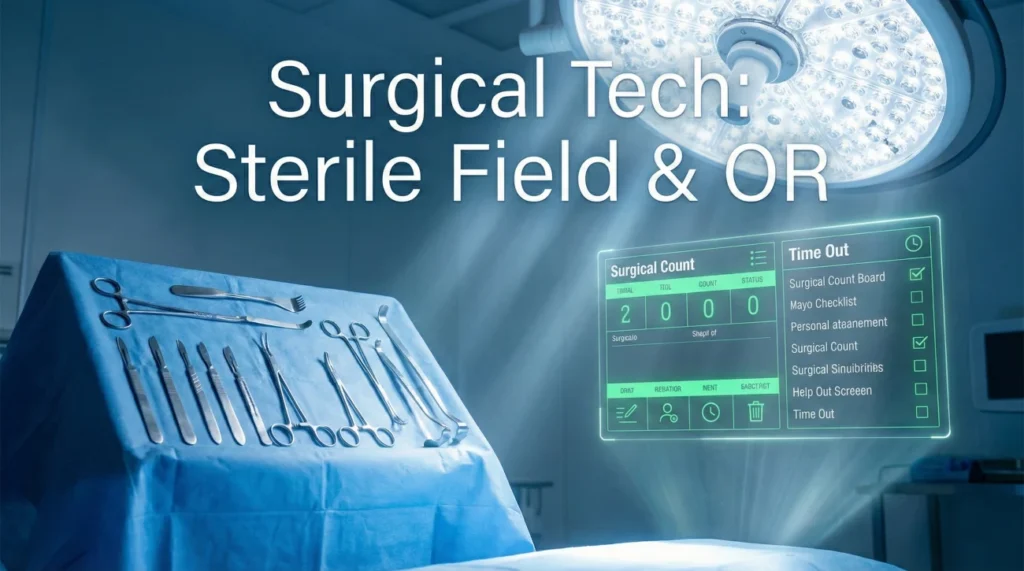
Critical safety protocol prevents retained foreign objects. Count timing includes initial count before procedure begins counting all items on sterile field with circulating nurse, closing count before closing any cavity or deep layer, and final count before skin closure ensuring everything accounted for. Items counted encompass sharps including needles, scalpel blades, and any sharp instruments, soft goods such as sponges, towels, and lap pads, and instruments all items in set including added instruments during procedure.
Count procedure methodology performs aloud both scrub tech and circulator calling out numbers simultaneously, counts twice confirming initial count before opening additional packages, and documents immediately recording on count sheet preventing memory errors. Discrepancy management initiates search thoroughly checking trash, floor, drapes, and Mayo stand, notifies surgeon halting closure until located, and obtains x-ray if not found before closing with radiograph confirming absence from patient. High-risk scenarios include emergency surgery when counts may be abbreviated documenting deviation, patient instability when count performed as situation allows prioritizing life-threatening issues, and obese patients where items more easily lost in folds requiring extra diligence. Documentation requirements include count sheet signed by both scrub and circulator verifying accuracy, incident report for incorrect counts describing circumstances and resolution, and permanent record attaching to patient chart creating legal documentation showing adherence to safety protocols.
OR Setup and Case Preparation
Q: How do you prepare an operating room for surgery?
Systematic approach ensures readiness. Pre-case review checks surgery schedule confirming procedure details, surgeon preferences noting specific equipment or instrument requests, and patient information reviewing allergies, medical history, and positioning requirements. Room setup includes furniture arrangement positioning OR table, Mayo stand, back table, and equipment appropriately, equipment check testing suction, electrocautery, lights, and specialty equipment, and supplies gathering ensuring adequate quantities of sutures, sponges, and other consumables.
Instrument preparation opens sets maintaining sterility using proper opening technique, arranges instruments organizing logically by procedure phase, and adds specialty items including procedure-specific instruments or implants. Draping preparation prepares patient drapes organizing in order of use, sets up Mayo stand covering with sterile drape and arranging instruments, and establishes back table for additional instruments and supplies. Final verification conducts timeout confirming patient identity, procedure, site, and allergies before incision, reviews count completing initial count with circulator, and confirms readiness communicating with team that all preparations complete ensuring coordinated start.
Q: Describe handling equipment malfunctions during surgery.
Quick response maintains safety. Immediate assessment determines severity evaluating if alternative exists or procedure must pause, identifies problem checking obvious issues like unplugged cords or empty tanks, and communicates clearly alerting surgeon and circulator to situation. Troubleshooting basics includes checking connections ensuring cables plugged in securely, replacing disposables swapping out defective handpieces or tips, and testing backup using redundant equipment if available.
✓ Best practice: Always test critical equipment before procedure begins – run suction, test cautery, check light functionality. Prevention better than crisis management mid-surgery.
Escalation procedure requests biomedical engineering calling for technical support, documents malfunction recording for equipment tracking and maintenance, and considers alternatives suggesting different approach if equipment unavailable. Common malfunctions include electrocautery failure often from poor grounding or dead battery, suction issues frequently from clogs or loose connections, and light problems typically requiring bulb replacement. Prevention strategies involve pre-procedure testing verifying all equipment functional, regular maintenance following manufacturer service schedules, and backup planning identifying alternatives before starting preventing delays when malfunctions occur demonstrating proactive approach to patient safety and surgical efficiency.
Emergency Response and Problem-Solving
How do you handle unexpected complications during surgery?
Calm competence stabilizes situations. Mental preparation maintains composure expecting unexpected staying mentally prepared, focuses on role continuing responsibilities supporting team, and avoids panic remaining calm preventing further confusion. Anticipation increases vigilance watching patient and monitoring more closely, prepares additional supplies having extra items ready, and stays attentive following surgeon’s directions immediately. Communication responds promptly answering requests quickly and accurately, clarifies when uncertain asking questions preventing mistakes, and keeps team informed announcing relevant information.
Common complications include hemorrhage requiring additional suction, lap sponges, and possibly vascular instruments, equipment failure needing backup devices or alternative approaches, and allergic reactions prompting medication administration and possible procedure modification. Support provision includes retrieving supplies getting additional items from circulator, adjusting setup modifying field organization for changed circumstances, and maintaining counts continuing count accuracy despite urgency. Post-event processing participates in debriefing discussing what happened and team response, learns from experience identifying personal improvement areas, and documents thoroughly recording events for quality review creating learning opportunities preventing similar issues future demonstrating professional maturity handling high-stress situations.
Describe managing conflicts with surgical team members.
Professional approach maintains function. Immediate situation stays focused prioritizing patient care over interpersonal issues, remains respectful maintaining professional demeanor regardless of provocation, and completes procedure seeing case through to safe conclusion. Communication strategies use clear language stating concerns specifically and factually, choose appropriate time addressing non-urgent issues after procedure, and assume positive intent considering others may be stressed not deliberately difficult.
Common conflicts include surgeon frustration from pressure or complications not personal attacks, preference differences when team members have varying approaches, and communication breakdowns from unclear expectations or assumptions. Resolution approaches include private discussion talking one-on-one outside OR finding common ground, mediation involving charge nurse or manager when direct resolution fails, and learning adaptation adjusting to different working styles demonstrating flexibility. Professionalism maintains boundaries not taking criticism personally, focuses on solutions suggesting improvements rather than blaming, and documents objectively recording factual accounts if formal complaint necessary. Prevention strategies build relationships getting to know team members during calm times, clarify expectations asking about preferences early, and maintain competence ensuring skills strong reducing errors that trigger conflicts creating positive OR environment through professional maturity and communication skills essential for surgical tech success.
Surgical Specialties and Continuing Growth
Q: What surgical specialties have you worked in?
Diverse experience demonstrates adaptability. General surgery includes appendectomies, cholecystectomies, hernia repairs common bread-and-butter cases, bowel resections and colectomies requiring intestinal technique, and laparoscopic procedures using minimally invasive approaches. Orthopedics encompasses total joint replacements (hip, knee) involving large implants and power tools, fracture repairs using plates, screws, and rods, and arthroscopy minimally invasive joint procedures. Cardiovascular procedures involve coronary artery bypass grafting complex cardiac surgery, valve replacements and repairs intricate techniques, and vascular procedures like carotid endarterectomy requiring delicate handling.
Specialty preferences discuss based on interest explaining what attracts you to certain specialties, experience level noting where training strongest, and growth areas identifying where seeking additional exposure. Adaptability emphasis shows willingness to learn expressing openness to new specialties, transfers knowledge applying principles across procedures, and maintains flexibility accepting assignments as needed. Learning approach includes observing procedures watching when possible to learn new specialties, asking questions seeking clarification on unfamiliar instruments or techniques, and studying independently reviewing procedure books and videos demonstrating initiative expanding surgical tech competency across multiple specialty areas.
Q: How do you stay current with surgical technology advances?
Continuous learning maintains competence. Formal education includes continuing education attending conferences, workshops, and online courses meeting certification requirements, in-services participating in hospital education on new equipment or procedures, and certification renewal maintaining CST (Certified Surgical Technologist) credential through NBSTSA, meeting continuing-education requirements on the standard renewal cycle. Professional resources read journals like AST (Association of Surgical Technologists) publications, join organizations becoming AST member accessing resources and networking, and follow manufacturers learning about new products and technologies through representatives.
Practical learning involves observing new procedures watching when hospital introduces new surgery types, hands-on training practicing with new equipment under supervision before using with patients, and mentorship learning from experienced techs and surgeons sharing their knowledge. Technology areas include robotic surgery da Vinci system requiring specialized training, advanced energy devices like LigaSure and Harmonic reducing bleeding, and 3D imaging and navigation systems enhancing surgical precision. Professional development participates in committees joining quality improvement or education committees, cross-trains in specialties expanding capabilities beyond comfort zone, and mentors others teaching new techs solidifying own knowledge while helping profession demonstrating commitment to lifelong learning essential for surgical technology career advancement.
Surgical Tech Competency Check
Test Your OR Knowledge
1. Sterile field boundaries include?
- Above waist, below shoulders, hands in sight
- Entire body sterile once gowned
- Only hands sterile
- No boundaries exist
2. Surgical scrub duration is?
- 30 seconds
- Recommended duration per facility protocol
- 10 minutes required
- No specific time
3. When in doubt about sterility?
- Continue using item
- Throw it out and replace
- Ask surgeon
- Ignore concern
4. Instrument counts performed?
- Only at end
- Initial, closing, and final counts
- When convenient
- Not required
5. Items included in surgical counts?
- Sharps, soft goods (sponges), instruments
- Instruments only
- Sponges only
- Whatever surgeon requests
6. Autoclave sterilization typically uses?
- Pressurized steam cycle per validated parameters
- Dry heat only
- Chemical bath
- UV light
7. Ethylene oxide sterilization for?
- All instruments
- Heat-sensitive items like plastics
- Emergency use only
- Not used anymore
8. If count incorrect before closure?
- Close anyway
- Search, notify surgeon, obtain x-ray if not found
- Just document
- Ignore if minor
9. Mayo scissors typically used for?
- Heavy tissue cutting
- Delicate dissection
- Suture cutting only
- Bone cutting
10. Metzenbaum scissors used for?
- Heavy tissue
- Delicate dissection
- Bone cutting
- Drape cutting
11. One-inch border around drape is?
- Treated as non-sterile per sterile-field rules
- Sterile like rest of field
- Not defined
- Surgeon decides
12. Biological indicators test?
- Chemical exposure
- Sterilization effectiveness using biological indicators
- Temperature only
- Not necessary
13. Pre-procedure timeout confirms?
- Patient identity, procedure, site, allergies
- Instrument count only
- Surgeon’s name
- Not required
14. Back considered non-sterile because?
- Cannot monitor for contamination
- Gown doesn’t cover back
- No reason
- Personal preference
15. CST certification requires?
- No renewal
- Continuing education for renewal on the standard cycle
- Annual exam
- Not standardized
16. Passing instruments safely means?
- Handle in palm, oriented correctly, points controlled
- Toss to surgeon
- Any method works
- Slap into hand
17. Decontamination PPE includes?
- Utility gloves, mask, eye protection
- Surgical gloves only
- No PPE needed
- Lab coat only
18. Enzymatic detergent breaks down?
- Metal only
- Protein and organic matter
- Plastic
- Nothing specific
19. Addressing sterile breach immediately because?
- Patient safety always trumps time pressure
- Required by law only
- Surgeon’s preference
- Can wait until closure
20. AST stands for?
- Association of Surgical Technologists
- American Surgery Team
- Aseptic Surgical Technique
- Advanced Sterilization Technology
❓ FAQ
✅ What certifications should I bring to the interview?
Bring CST (Certified Surgical Technologist) certificate from NBSTSA, current BLS (Basic Life Support) card, state certification if required, and surgical tech diploma or degree. Include specialty certifications like robotic surgery training if applicable. Some employers verify credentials before interview, but having copies ready shows organization. CST certification increasingly preferred or required demonstrating national competency standard.
🧭 How do I explain limited specialty experience?
Frame positively emphasizing transferable skills: “Clinical experience focused on general surgery, but I’m eager to expand into orthopedics. I understand sterile technique, count procedures, and surgical flow apply across specialties. I learn quickly through observation and hands-on training.” Mention any specialty exposure during training. Employers often value strong fundamentals and teachable attitude over narrow specialty experience, especially for new grads or cross-training opportunities.
🗣️ What if asked about witnessing improper sterile technique?
Use diplomatic example showing professional courage: “Once noticed physician’s sleeve brushed sterile field during positioning. I politely announced ‘contamination’ and offered replacement drape. Surgeon appreciated vigilance, field was restored, and patient remained safe.” Demonstrates patient advocacy without insubordination, clear communication, and commitment to protocols. Frame as teamwork supporting safety rather than “catching” mistakes showing mature professional approach valued in OR culture.
📅 Should I discuss call/weekend availability?
Yes, understand expectations early. Ask: “What’s the call rotation schedule?”, “How often are call-ins?”, and “Are weekends required?” Availability and expectations vary by facility and service line. Be honest about availability – unrealistic commitments cause problems later. If limited availability, explain: “Currently have childcare constraints limiting overnight call, but available for evening/weekend shifts.” Facilities value reliability over unlimited availability.
⏳ How do I address employment gap in surgical tech career?
Explain briefly and positively: “Took time for family responsibilities but maintained CST certification through continuing education. Recently completed refresher course on robotic surgery and am ready to return full-time.” Other acceptable reasons include health recovery, additional training, or relocation. Emphasize current competency, recent CE showing up-to-date knowledge, and enthusiasm for position. Most employers understand life circumstances; honesty and demonstrated readiness to resume practice matter most.
Building Your Surgical Tech Career
Succeeding with surgical tech interview questions requires demonstrating sterile technique mastery maintaining aseptic conditions throughout procedures, instrument knowledge identifying and handling surgical tools correctly, count accuracy performing meticulous surgical counts preventing retained objects, emergency composure remaining calm during complications supporting team effectively, communication skills coordinating with surgeons, nurses, and staff professionally, and safety commitment prioritizing patient protection over convenience or time pressure consistently throughout practice.
Prepare thoroughly by reviewing instrument sets and sterilization protocols, practicing scenario responses using specific examples from training or experience, organizing credentials including CST certification and BLS card, and researching facility’s surgical specialties and case volume. Bring professional portfolio with certifications and references, maintain clean professional appearance appropriate for healthcare setting, and prepare thoughtful questions about orientation programs, continuing education support, and specialty training opportunities. For comprehensive guidance, explore operating room career advancement tools demonstrating your commitment to surgical excellence and helping ensure safe patient outcomes through meticulous technique, continuous learning, and professional collaboration creating positive OR environment where surgical teams function efficiently and patients receive highest quality perioperative care.
⚠️ Disclaimer: The interview strategies, sample answers, and negotiation tips provided in this guide are for educational purposes only. Hiring decisions are subjective and vary by company and industry. While these strategies are based on professional HR standards, they do not guarantee a specific job offer or result.