
The Hidden Agenda Behind Goals Questions
Every interviewer asking about career goals interview questions has the same concern: will this person stay long enough to be worth the investment? Hiring is expensive. Training takes time. Companies want to know their new hire won’t leave in six months for something that was always their real plan.
This doesn’t mean you should pretend you’ll stay forever. It means you should demonstrate that this role genuinely fits your trajectory, that you’re not using it as a stepping stone to something unrelated, and that your ambitions can be realized within or through this organization.
A recruiting director once told me she immediately disqualifies candidates whose goals have nothing to do with the role. “When someone interviewing for a marketing position tells me their goal is to become a software engineer, I know they’re not committed to marketing. They’ll leave as soon as they find a path to their real goal.” The same applies when goals are so vague they suggest no thought about career direction at all.
Types of Career Goals Questions
Interviewers frame this question differently, and each framing tests slightly different things. Prepare for all variations.
“What Are Your Short Term Goals?”
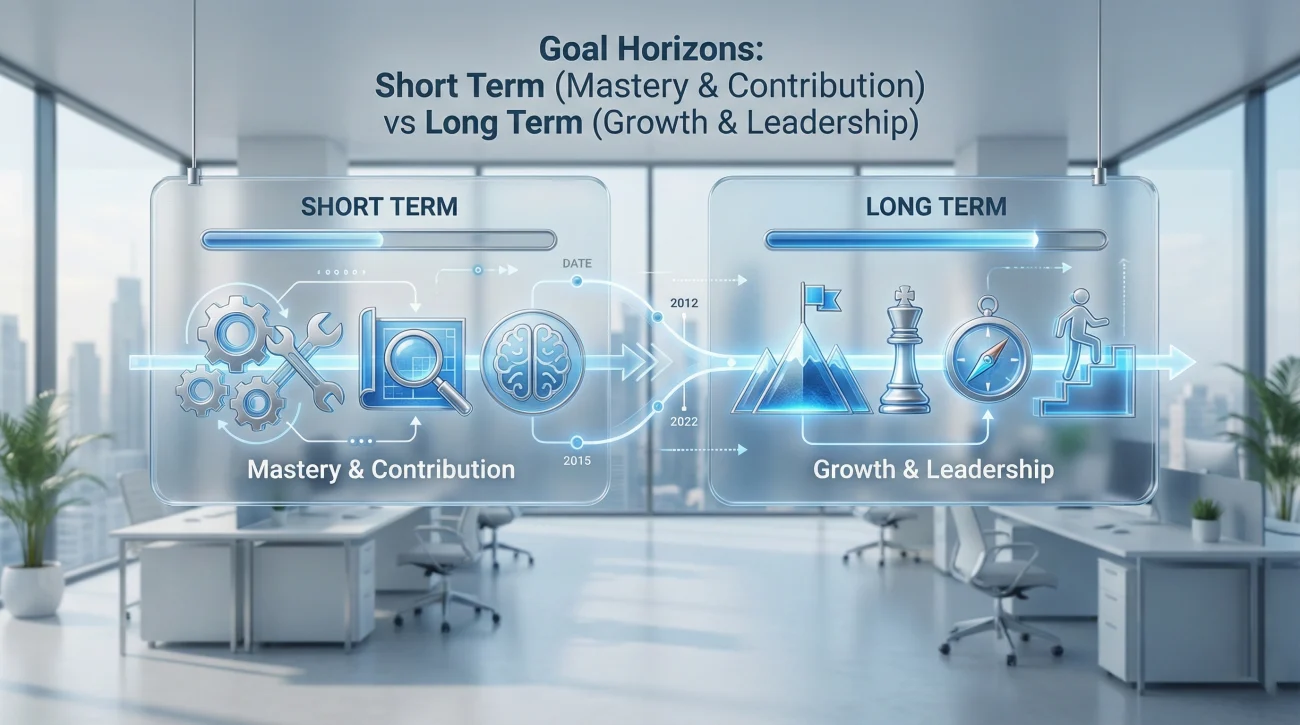
Short term typically means one to two years. Interviewers want to know what you’re trying to accomplish in the immediate role. Good answers focus on learning, contribution, and establishing yourself.
Strong short term goals include:
- Mastering the core responsibilities of the role
- Building relationships across the organization
- Contributing to specific initiatives or projects
- Developing particular skills relevant to the position
“What Are Your Long Term Goals?”
Long term means three to five years or beyond. Interviewers assess whether your ambitions can be satisfied at their company and whether your trajectory aligns with their needs.
Strong long term goals include:
- Growing into leadership or expanded responsibility
- Developing deep expertise in a relevant domain
- Contributing to larger organizational impact
- Building toward specific roles that exist at the company
“Where Do You See Yourself in Five Years?”
This classic question tests whether you’ve thought about your future and whether that future includes them. The worst answers are either “I don’t know” (suggests no direction) or something completely unrelated to the role (suggests you’ll leave soon).
| Question Variation | What They’re Testing | Answer Focus |
|---|---|---|
| Short term goals | Commitment to immediate role | Learning, contribution, mastery |
| Long term goals | Ambition and trajectory fit | Growth, leadership, expertise |
| Where in five years | Planning and alignment | Progression path at their company |
| Career aspirations | Motivation and drive | What you want to achieve and why |
Aligning Goals With the Opportunity
The critical element of any career goals answer is demonstrating how this specific role connects to your trajectory. This requires research about the company’s growth paths and honest reflection about what you actually want.

Research Their Growth Paths
Before interviewing, understand how careers progress at this organization. Look at LinkedIn profiles of current employees to see their promotion patterns. Ask recruiters about typical career paths for the role. Research whether the company promotes from within or hires externally for senior positions.
This information lets you frame goals in terms they recognize. If senior product managers at the company typically come from associate roles, you can discuss growing into that path. If they have a technical track alongside a management track, you can specify which interests you.
Connect Role to Goals
Explicitly link the position to your aspirations. Explain how the responsibilities, skills, and experiences you’ll gain in this role advance your longer-term objectives. This demonstrates that you’ve thought about why this specific job makes sense for you, not just why you want any job.
Connection formula: “This role lets me [gain specific experience/skill], which positions me to [achieve longer-term goal] because [logical connection].”
Stay Honest About Ambition
Some candidates downplay ambition thinking it seems more committed. Others exaggerate ambition thinking it seems more impressive. Neither works. Modest ambition may suggest lack of drive. Excessive ambition may suggest you’ll outgrow the role quickly or become frustrated.
Share genuine ambitions that are realistic for your experience level and the organization’s possibilities. Ambition to grow into leadership over several years is different from expecting to be CEO within five years.
Example Answers
Entry Level Position
“In the short term, my goal is to master the fundamentals of this analyst role and become someone the team can rely on for quality work. I want to learn your specific methodologies, understand the business deeply, and build strong relationships with colleagues and stakeholders.”
“Longer term, I’m interested in growing into a senior analyst role where I’m leading projects and mentoring newer team members. Eventually, I’d like to develop toward management, but I know that requires years of building expertise first. This role appeals to me because your company has clear progression paths for analysts who demonstrate strong performance.”
Mid Level Position
“My short term focus is contributing immediately to your product roadmap and earning trust as someone who delivers. I’m particularly excited about the mobile initiative you mentioned, and I’d love to be deeply involved in that work.”
“Looking ahead three to five years, my goal is to be leading a product area rather than individual features. I’ve managed small projects but want to grow into owning strategy for a larger scope. From what I’ve learned about how product leadership develops here, this role seems like the right foundation for that progression.”
Senior Position
“At this stage of my career, my short term goal is applying everything I’ve learned to help this team succeed. I’m past the phase of proving I can do the work. Now I’m focused on making meaningful impact and helping others develop.”
“Long term, I want to shape how engineering works at an organizational level. That might mean a director role, or it might mean being a principal engineer who influences technical direction without direct management. I’m open to either path depending on where I can have the most impact. What attracts me here is that you seem to value both tracks equally.”
Goals to Avoid Mentioning
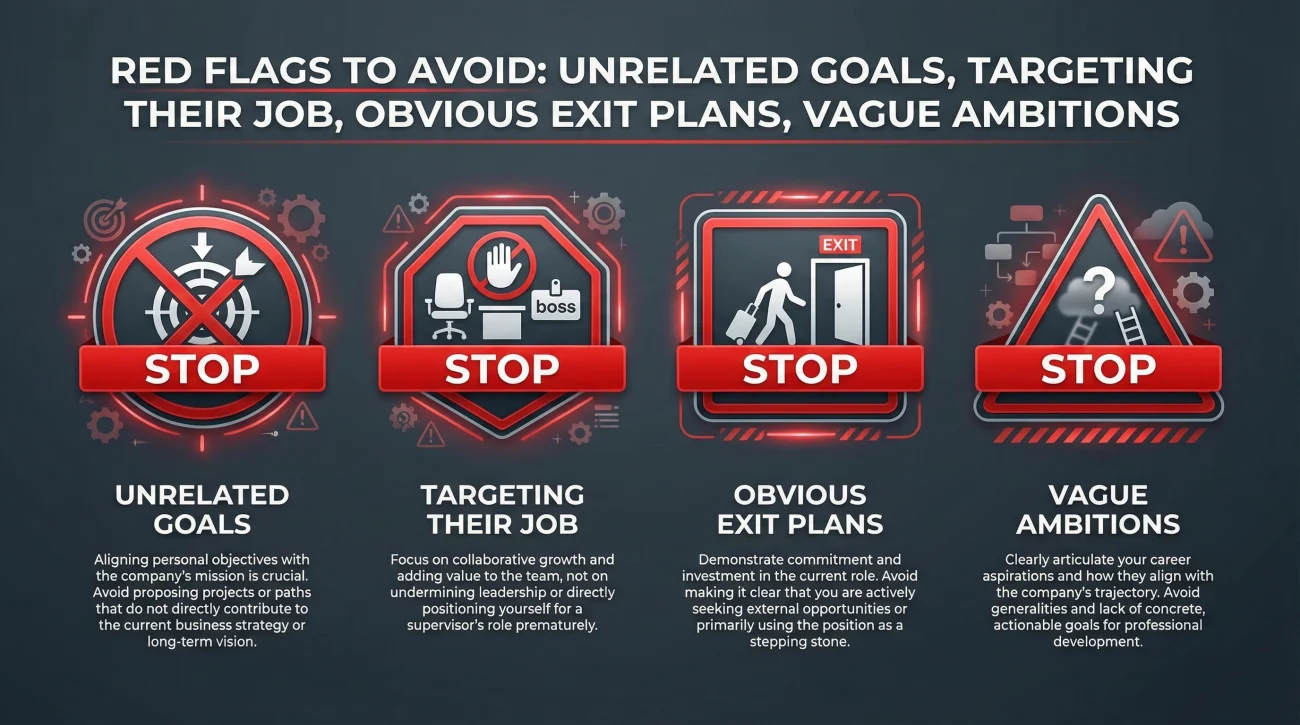
Completely Unrelated Goals
If your real goal is to become a novelist and you’re interviewing for an accounting position, don’t mention the novel. It signals you’re not committed to accounting and will leave when your writing career takes off. Keep the focus on professional goals relevant to the role.
Their Job Specifically
“My goal is to have your job someday.”
This sounds threatening rather than ambitious. Aim for the level or type of role without specifically targeting your interviewer’s position.
Obvious Exit Plans
“I want to get two years of experience here then go to business school” or “I’m planning to start my own company eventually” both signal that you’re using this role temporarily. Even if these are true, frame them differently or emphasize the current opportunity.
Completely Vague Goals
“I just want to keep learning and growing.”
Everyone says this. It means nothing specific. Have concrete aspirations even if they’re subject to change.
For additional interview strategies, explore our comprehensive interview guide.
When Your Goals Are Genuinely Uncertain
Not everyone has a clear five-year plan, and that’s legitimate. If you genuinely don’t know exactly where you want to be, honesty paired with direction is better than fabricated specificity.
Frame uncertainty as openness while showing you have direction:
“I’m early enough in my career that I’m still discovering where my strengths and interests intersect. What I know is that I want to develop deep expertise in data analysis and take on increasing responsibility over time. Whether that leads toward technical leadership, management, or something else, I’ll figure out as I gain experience. This role attracts me because it would let me develop that expertise while exploring different aspects of the field.”
This acknowledges uncertainty while demonstrating thoughtfulness about growth and genuine interest in the opportunity.
❓ FAQ
🎯 What if my real goal is to eventually leave for another company?
Focus on what you want to achieve and learn rather than where you want to go. “I want to develop expertise in enterprise sales” is honest without revealing that you might take those skills elsewhere eventually. Most people change companies. Interviewers know this.
💼 How ambitious is too ambitious?
Goals should be achievable within a realistic timeframe given your starting point. Wanting to be CEO in three years from an entry level role seems naive. Wanting to grow into a senior role over several years seems reasonable. Calibrate to your experience level.
⏰ Should I mention wanting work-life balance?
This is risky in goal questions because it can sound like low ambition. If balance is important to you, research company culture to ensure they support it, but keep your stated goals focused on professional growth and contribution.
📋 What if the company doesn’t have clear growth paths?
Focus on skills and experiences you want to develop rather than specific titles. “I want to become an expert in machine learning applications” works regardless of whether the company has defined ML career tracks.
✨ Can I ask about their expectations for the role’s growth?
Absolutely. Asking “What does success look like for someone in this role after two or three years?” shows you’re thinking about growth while gathering useful information. Turn the question into a dialogue about mutual expectations.
Goals That Build Trust
Answering career goals interview questions effectively means demonstrating that this role fits your trajectory and that you’re committed to growing with the organization. Connect your aspirations explicitly to the opportunity. Show ambition calibrated to your experience level and the company’s realistic paths. Be honest about what you want while framing it in terms that reassure interviewers you’re not planning an immediate exit. When your goals clearly align with what the role offers, you build the trust that leads to offers.
⚠️ Disclaimer: The interview strategies, sample answers, and negotiation tips provided in this guide are for educational purposes only. Hiring decisions are subjective and vary by company and industry. While these strategies are based on professional HR standards, they do not guarantee a specific job offer or result.