The Candidate Who Said Money
I once interviewed a sales candidate who answered what motivates you with refreshing honesty: “Money. I want to make a lot of it.” The room went silent. His interviewer, the VP of Sales, leaned back and said: “At least he’s honest.”
He didn’t get the job. Not because wanting money is wrong, but because that answer revealed nothing about what would make him effective, resilient, or committed when things got hard. Every salesperson wants money. The ones who succeed have something deeper driving them through the inevitable rejections, the lost deals, the quarters that start slow.
When interviewers ask about motivation, they’re trying to understand what sustains you. External rewards like compensation matter, but they’re table stakes. What interviewers really want to know is whether you have internal drivers that will keep you engaged when the work is difficult, when recognition is scarce, and when easier options exist.
Why This Question Matters More Than You Think
Motivation questions appear simple but reveal substantial information about candidates. Your answer tells interviewers about your self-awareness, your values alignment with the organization, and your likely longevity in the role.
Sustainability of Engagement
Every job includes tedious tasks, difficult periods, and moments when quitting seems attractive. People with strong intrinsic motivation push through these periods. Those motivated primarily by external factors often leave when better offers appear or when the work stops being easy.
A hiring manager told me she specifically listens for motivation that will survive the honeymoon period. “Everyone’s excited in the first few months,” she said. “I want to know what keeps someone engaged in month eighteen when the novelty has worn off and the real work begins.”
Culture and Values Alignment
What motivates you reveals what you value. A company that emphasizes collaboration wants people motivated by team success. A startup seeking disruption wants people motivated by building something new. A mission-driven organization wants people motivated by impact beyond profit.
Misalignment here causes problems for everyone. If you’re motivated by stability and predictability, a chaotic startup will frustrate you regardless of compensation. If you’re motivated by autonomy and a company micromanages everything, you’ll be miserable. The motivation question helps both sides assess fit.
Performance Prediction
Research consistently shows that intrinsic motivation correlates with higher performance, greater creativity, and stronger persistence than extrinsic motivation alone. Interviewers asking this question are trying to predict whether you’ll be a high performer or someone who does the minimum required.
| What You Say | What They Hear |
|---|---|
| “I’m motivated by solving complex problems” | You’ll persist through difficult challenges |
| “I’m motivated by helping customers succeed” | You’ll go beyond minimum requirements for clients |
| “I’m motivated by learning new things” | You’ll adapt and grow as the role evolves |
| “I’m motivated by being part of a winning team” | You’ll collaborate and support colleagues |
| “I’m motivated by compensation” | You’ll leave when someone offers more |
Finding Your Authentic Motivation
The worst motivation answers are fabricated. Interviewers detect inauthenticity, and even if they don’t, you’ll struggle to maintain enthusiasm for motivations that aren’t genuinely yours. Before crafting your answer, do honest self-reflection.
Reflection Questions
Consider these questions seriously, not to find the “right” answer but to discover your truth:
When have you felt most energized at work? What were you doing? What made it engaging?
What tasks do you voluntarily spend extra time on, even when nobody requires it?
What accomplishments are you most proud of, and what made them meaningful?
When work feels tedious, what thoughts help you push through?
What would you miss most if you retired tomorrow?
Your answers reveal patterns. Maybe you consistently feel energized when teaching others. Perhaps you’re drawn to novel challenges that require creative solutions. You might find deep satisfaction in measurable impact or in building relationships. These patterns are your authentic motivations.
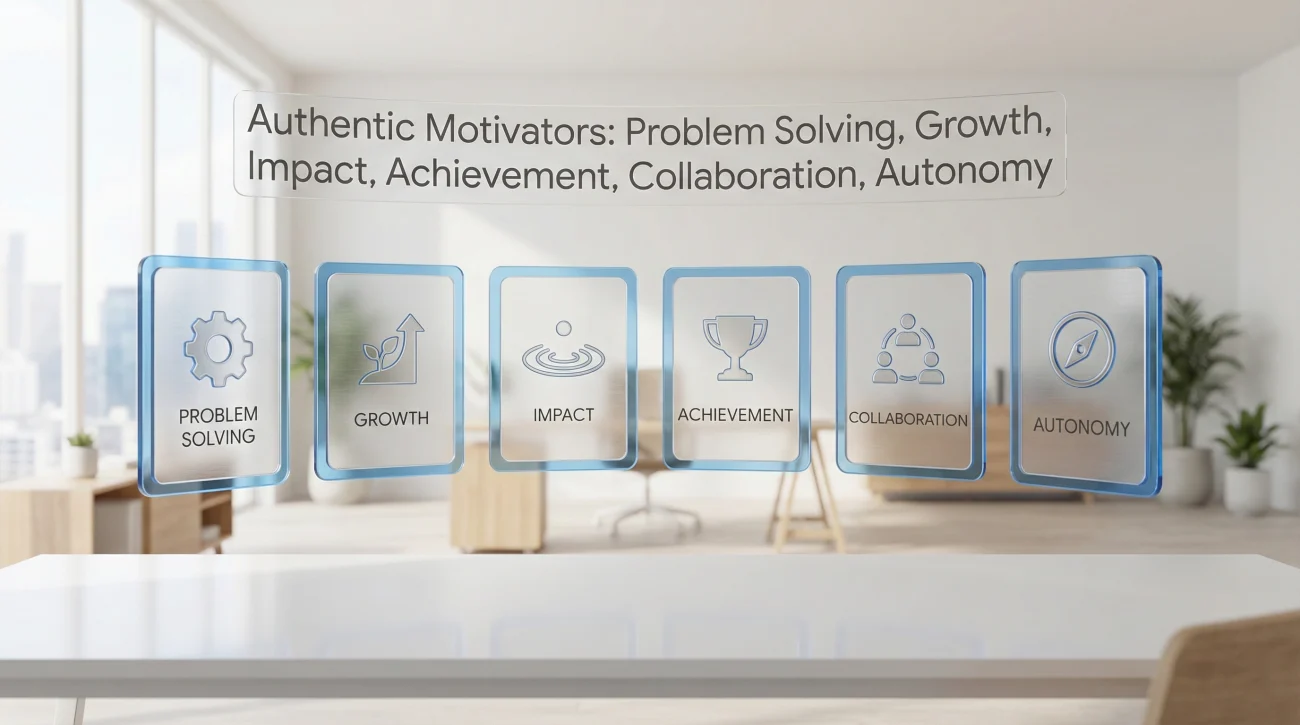
Common Authentic Motivators
- 🧩 Problem solving: The satisfaction of figuring things out, especially complex challenges others have failed to solve
- 📈 Growth and learning: Continuously developing new skills and expanding your capabilities
- 🤝 Impact on others: Helping customers, colleagues, or communities succeed
- 🏆 Achievement and excellence: Meeting high standards and being recognized for quality work
- 🔨 Building and creating: Making something new that didn’t exist before
- 👥 Collaboration and belonging: Being part of a team working toward shared goals
- 🎯 Autonomy and ownership: Having control over your work and decisions
Most people have primary and secondary motivators. A software engineer might be primarily motivated by solving complex technical problems, with secondary motivation from mentoring junior developers. A salesperson might be primarily motivated by competitive achievement, with secondary motivation from building client relationships.
Crafting Your Answer
The Motivation Answer Structure
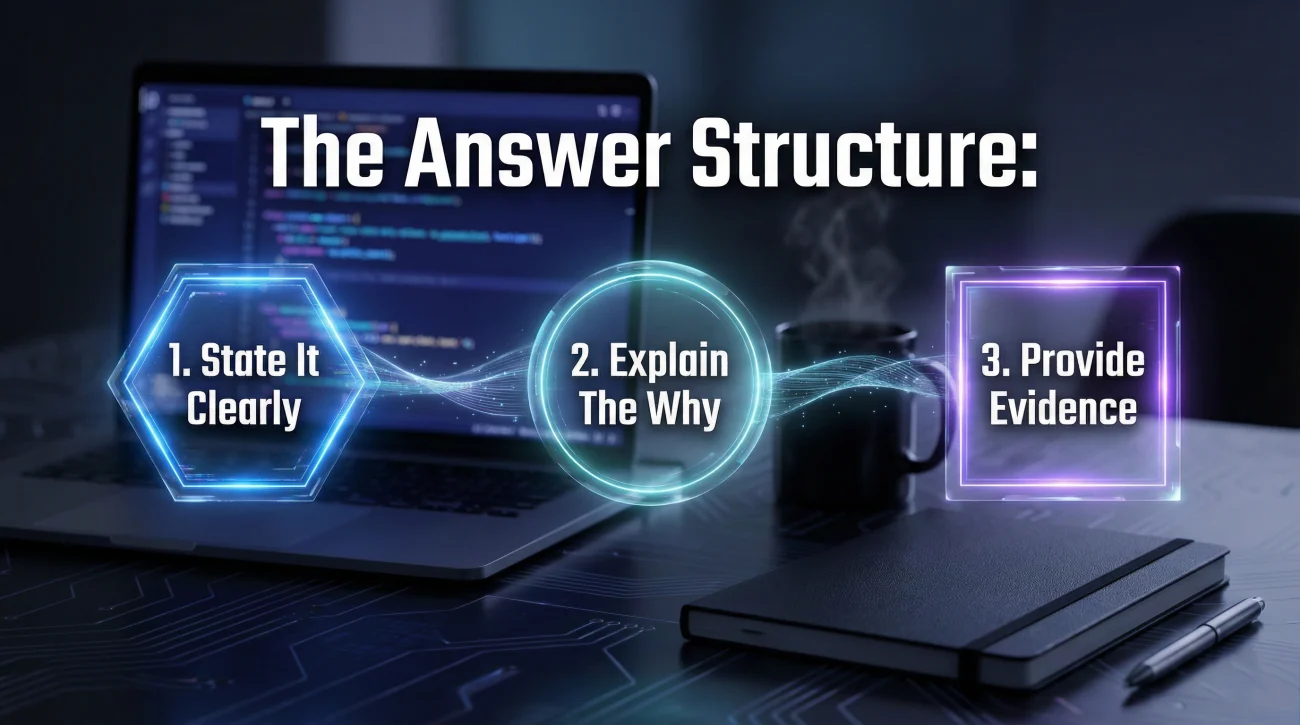
Strong motivation answers follow a pattern: state the motivation clearly, explain why it matters to you, and provide evidence through a brief example. This structure demonstrates both self-awareness and genuine experience.
State clearly: Name your motivation specifically. “Solving complex problems” is better than “challenging work.” “Helping customers achieve their goals” is better than “working with people.”
Explain the why: Connect your motivation to your values or experiences. Why does this particular thing energize you? What about it creates satisfaction?
Provide evidence: Share a brief example that demonstrates this motivation in action. This proves you’re not just saying what sounds good but describing something genuinely true about yourself.
Example Answers by Motivation Type
Problem Solving Motivation:
“I’m most motivated by solving problems that don’t have obvious solutions. There’s something deeply satisfying about taking a complex challenge, breaking it down, and finding an approach that works. In my current role, I volunteered to investigate why our customer retention was declining when all our standard metrics looked fine. Spending three weeks analyzing data and talking to customers, then identifying an issue nobody had considered, that process was energizing even when it was frustrating. When we implemented the fix and saw retention improve, that felt more rewarding than any bonus.”
Impact Motivation:
“I’m motivated by seeing tangible impact on people I work with, whether that’s customers, colleagues, or the broader community. The projects that energize me most are ones where I can see how my work actually changed something for someone. Last year, I led a process improvement initiative that reduced our team’s administrative burden by about ten hours per week collectively. Watching colleagues get time back for meaningful work, and hearing them mention how much easier their jobs became, that sustained me through the tedious parts of the project.”
Growth Motivation:
“Learning new things is what keeps me engaged over the long term. I get restless when I’m doing the same things I already know how to do. My most energizing periods have been when I was slightly out of my depth, learning a new technology or taking on responsibilities I hadn’t done before. That discomfort of not knowing yet is uncomfortable but also exciting. I specifically seek roles where I’ll be challenged to develop rather than just apply existing skills.”
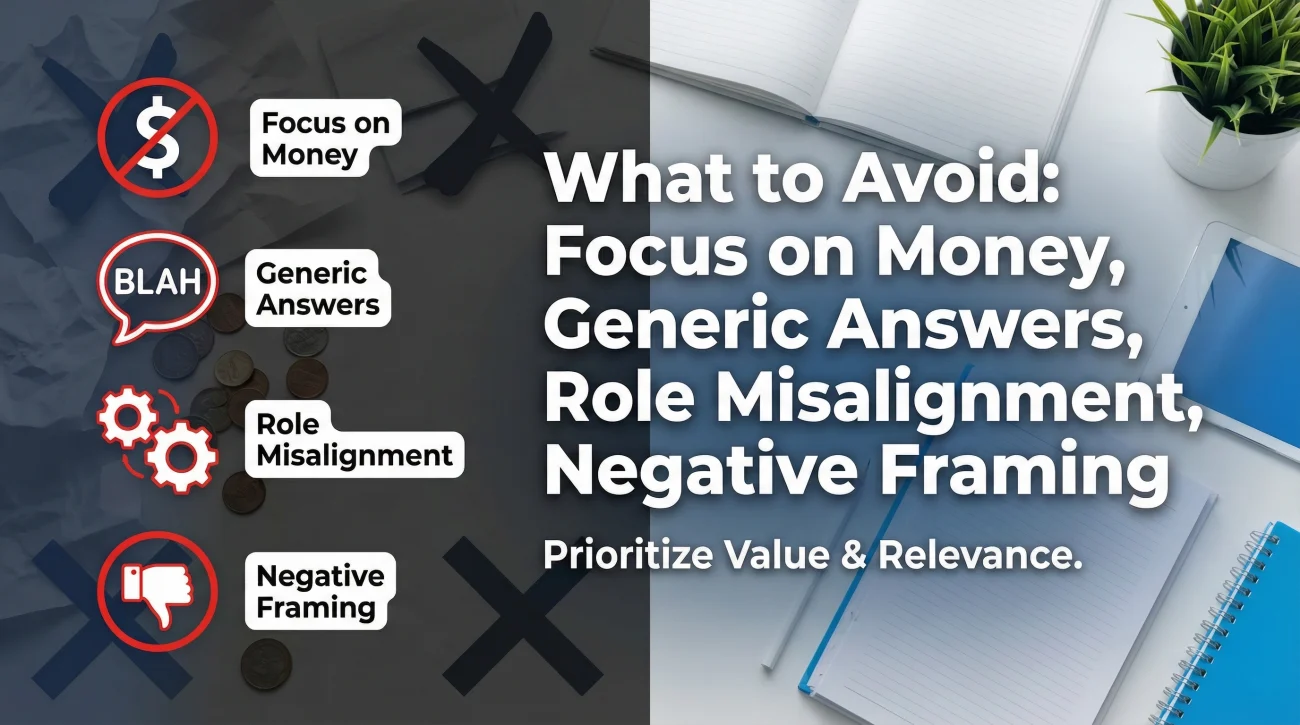
What to Avoid
Leading With Compensation
Money matters. Fair compensation is important. But leading with compensation as your primary motivation signals that you’ll leave for higher offers and that you’re not intrinsically engaged with the work itself. If asked directly about salary expectations, discuss them honestly. But when asked what motivates you, lead with something deeper.
Generic Answers Without Evidence
“I’m motivated by working hard and doing a good job.”
This says nothing distinctive. Everyone claims to want to do a good job. Without specificity and evidence, generic answers are forgettable and unconvincing.
Motivations Misaligned With the Role
If you’re interviewing for a highly collaborative role, emphasizing that you’re motivated by working independently raises fit concerns. If the role involves repetitive processes, emphasizing motivation by constant novelty suggests you’ll get bored. Research the role and ensure your authentic motivations align with what the job actually involves.
Negative Framing
“I’m motivated by not wanting to fail” or “I’m motivated by proving people wrong.”
Avoidance motivation and spite motivation might be honest, but they suggest potential issues with stress management and interpersonal relationships. Frame motivations positively even when the underlying driver has a negative component.
For more on presenting yourself authentically in interviews, explore our behavioral interview preparation guide.
❓ FAQ
🎯 Is it okay to mention salary at all?
You can acknowledge that fair compensation matters while emphasizing that it’s not your primary driver. Something like “While competitive compensation is important to me, what really gets me energized is…” shows you’re realistic without making money your central motivation.
💼 What if my honest motivation seems selfish?
Most authentic motivations benefit both you and your employer. Being motivated by achievement means you’ll strive for excellence. Being motivated by learning means you’ll continuously improve. Frame your motivation in terms of the value it creates, not just what you get from it.
⏰ How long should this answer be?
Aim for sixty to ninety seconds. State your motivation clearly, briefly explain why, and provide one short example. Longer answers lose focus. Be prepared for follow-up questions where you can elaborate.
📋 Should I mention multiple motivations?
Leading with one primary motivation is clearer than listing several. You might briefly mention a secondary motivation, but don’t turn this into a long list. Depth on one motivation is more convincing than breadth across many.
✨ What if I’m genuinely not sure what motivates me?
Spend time reflecting before interviews. Think about your best work experiences and what made them engaging. Ask trusted colleagues what they notice energizes you. The reflection process itself often clarifies motivations you hadn’t articulated before.
Motivation That Sustains
Answering what motivates you effectively requires genuine self-knowledge. Reflect honestly on what energizes you at work, identify patterns in your most engaging experiences, and articulate those motivations clearly with supporting evidence. The best answers reveal authentic drivers that align with the role and demonstrate the kind of intrinsic engagement that sustains high performance through difficult periods. When your motivation is genuine, your answer will be compelling because it comes from real experience rather than interview strategy.
⚠️ Disclaimer: The interview strategies, sample answers, and negotiation tips provided in this guide are for educational purposes only. Hiring decisions are subjective and vary by company and industry. While these strategies are based on professional HR standards, they do not guarantee a specific job offer or result.